The Complete Guide to Derma Scar Creams: Evidence-Based Efficacy
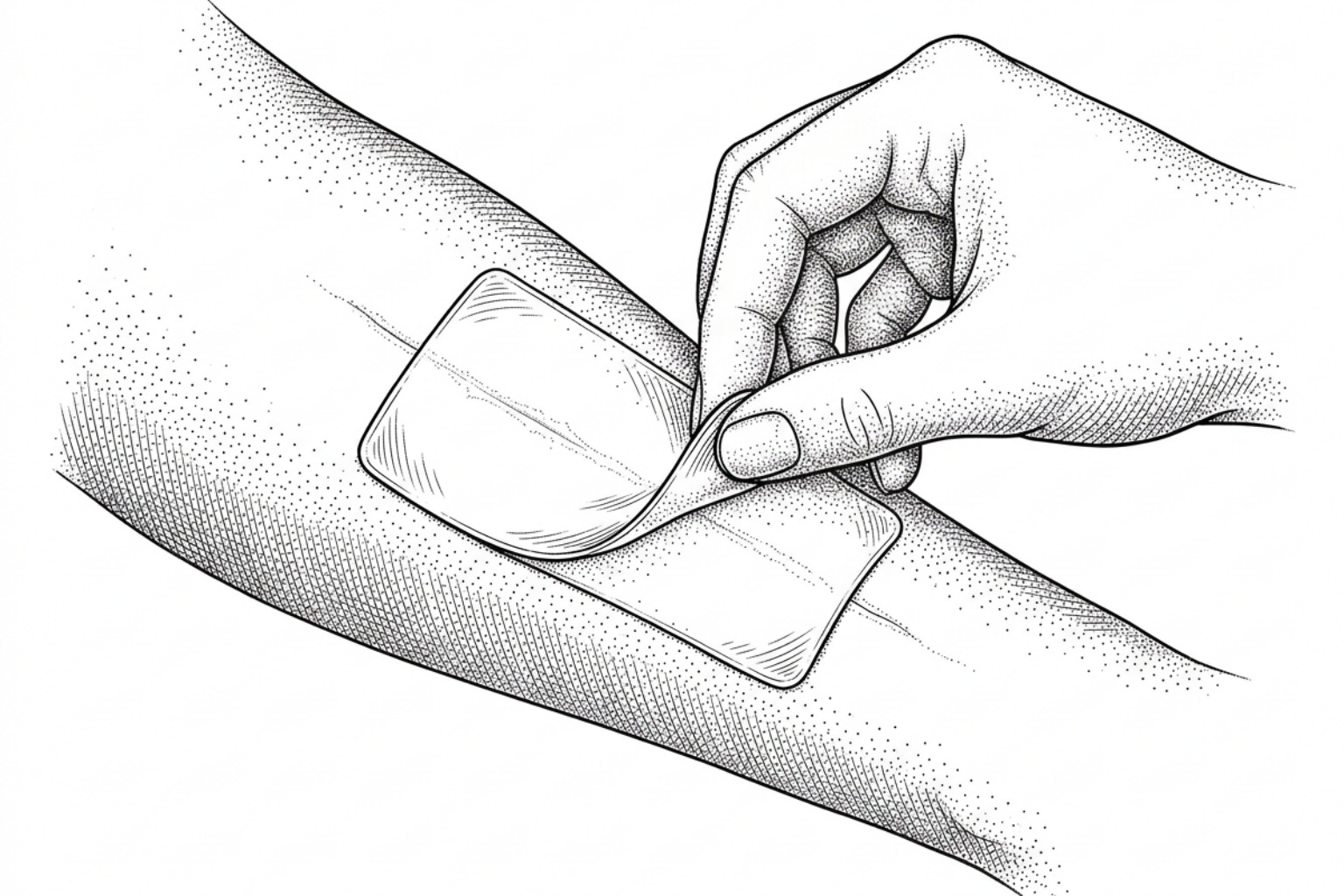
Most of what a scar cream does comes down to occlusion and hydration rather than its botanical ingredient list. Here is what the clinical evidence supports, how to apply it, and how long before you should expect a change.
Do scar creams actually work?
Derma scar cream is a broad term for topical gels and creams used on fully healed scars to improve their color, texture, softness, or visibility over time. The quick answer: evidence documented by the National Institutes of Health suggests that silicone-based scar treatments have the strongest support, especially for raised surgical scars and hypertrophic scars. Evidence for botanical ingredients, including onion extract, is more limited and mixed, though some human clinical studies indicate they may help with redness, itch, and pliability.
No over-the-counter cream can erase a scar or reliably fill deep, pitted acne scars. Scar response depends on its type, age, location, skin tension, and how consistently treatment is used. Research indicates that scar remodeling can continue for many months, so realistic evaluation requires steady use and patience.
This guide explains how to assess Derma scar cream formulations, separate stronger evidence from marketing claims, and understand when a dermatologist may be the better next step.
The Scar Healing Editorial Team provides independent, evidence-focused education on scar healing and tissue remodeling.
Derma scar cream vocab explained:
How scar creams work
A derma scar cream is a specialized topical formulation engineered to assist the skin during post-wound repair. When an injury penetrates past the epidermis into the deeper dermal layer, the body initiates a rapid repair mechanism. A topical scar treatment does not vanish an existing scar overnight; rather, clinical observations show that it functions primarily by optimizing the physiological environment of the stratum corneum—the outermost layer of the epidermis.
Topical scar creams act chiefly by modulating transepidermal water loss (TEWL). When skin tissue suffers trauma, the newly formed stratum corneum exhibits compromised barrier function, allowing excessive moisture to evaporate. This localized dehydration signals underlying dermal cells to synthesize surplus collagen, which frequently leads to raised, hyperpigmented, or rigid scar tissue. By creating an occlusive or semi-occlusive hydration seal over the affected site, topicals restore moisture levels, signaling skin cells to moderate collagen deposition and foster balanced extracellular matrix remodeling. Understanding how scars form is fundamental to choosing an effective topical intervention.
How scars form
The dermal wound healing cascade progresses through three main overlapping stages:
- Inflammatory Phase: Immediately following skin injury, blood clotting occurs alongside an influx of white blood cells to neutralize pathogens and remove cellular debris.
- Proliferative Phase: Fibroblasts migrate to the wound area, depositing a provisional scaffold of collagen and forming fragile micro-vessels (granulation tissue) to re-establish blood flow.
- Remodeling Phase: Over several months to a year, disorganized type III collagen is gradually replaced by denser type I collagen along lines of mechanical stress.
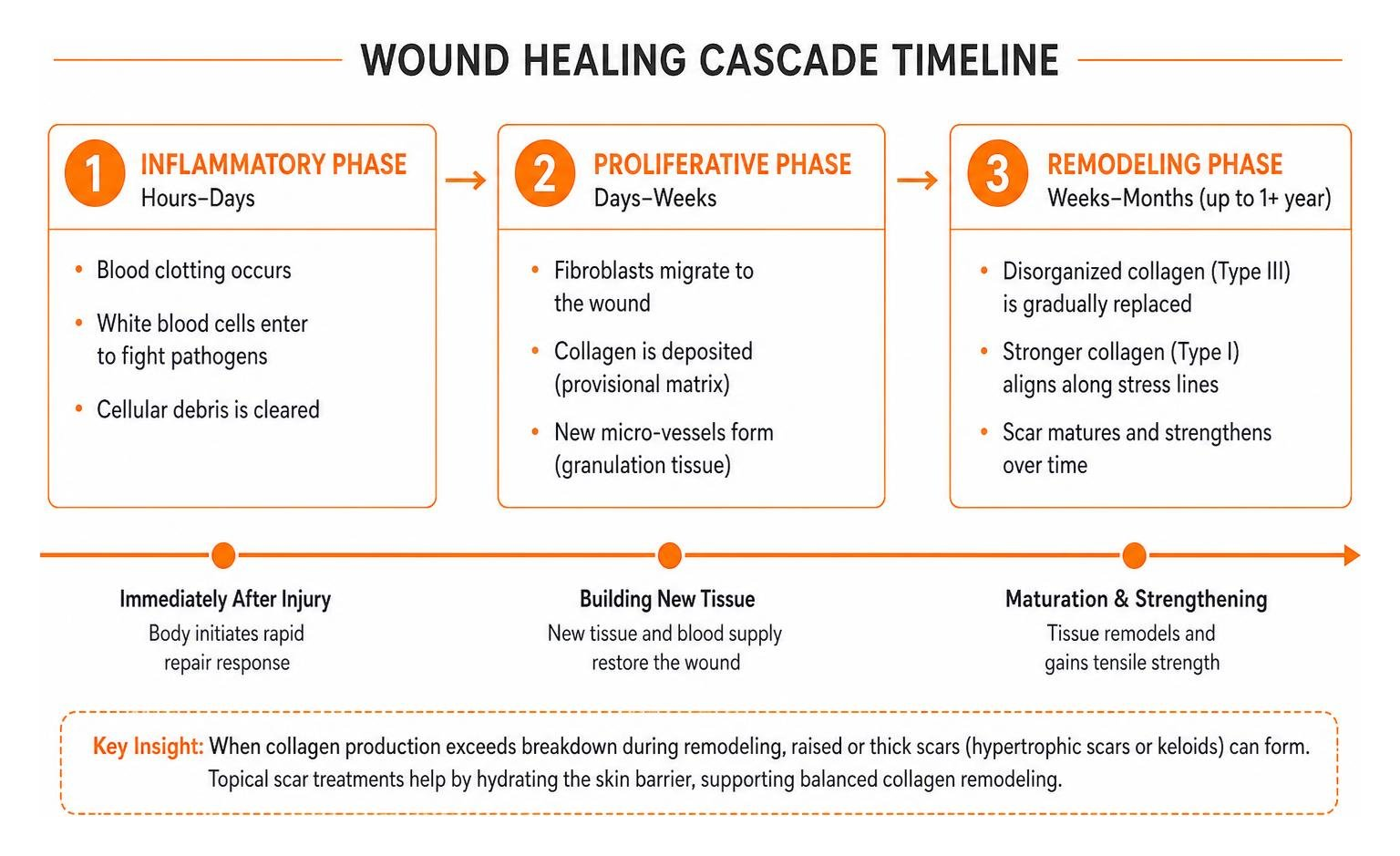
When collagen synthesis outpaces collagen degradation during this final remodeling stage, abnormal scar tissue proliferation occurs. This abnormal response produces raised hypertrophic scars or keloids. Topical scar treatments interfere with this dysregulated process by hydrating the stratum corneum, which research indicates helps normalize fibroblast signal transduction and reduce excess collagen deposition.
What's actually in the tube
Topical scar management formulations incorporate diverse active agents, each acting via distinct mechanisms:
- Medical-Grade Silicone Polymers (Dimethicone / Cyclopentasiloxane): Silicone creates a flexible, breathable, and waterproof barrier over the skin. Research shows silicone reduces transepidermal water loss, softens elevated scar tissue, and diminishes localized redness and itch.
- Allicin / Onion Bulb Extract (Allium cepa): Rich in antioxidants and flavonoid compounds, onion extract possesses anti-inflammatory properties that may help regulate fibroblast activity and suppress excessive matrix deposition.
- Allantoin: A skin-conditioning compound that promotes gentle surface exfoliation, increases extracellular matrix moisture, and soothes localized irritation.
- Panthenol (Pro-Vitamin B5): A deeply penetrating humectant that reinforces epidermal barrier integrity, improves tissue hydration, and aids smooth skin repair.
- Niacinamide (Vitamin B3): Helps diminish post-inflammatory hyperpigmentation by inhibiting melanosome transfer from melanocytes to keratinocytes.
- Hyaluronic Acid: A potent glycosaminoglycan humectant capable of binding up to 1,000 times its weight in water, maintaining an optimal fluid environment for cell turnover.
Silicone vs. botanical creams
When evaluating a derma scar cream, comparing the active agent's biological mechanism against the quality of the clinical evidence is critical. Medical-grade silicone and botanical extract blends represent the two primary categories available to consumers, but the strength of evidence is not equal across categories.
| Characteristic | Medical-Grade Silicone Formulations | Botanical Extract Formulations |
|---|---|---|
| Primary Mechanism | Occlusion and stratum corneum hydration; TEWL reduction | Anti-inflammatory and antioxidant effects proposed from ingredient research |
| Primary Active Agents | Dimethicone, Dimethicone Crosspolymer | Allium cepa (Onion extract), Allantoin, Panthenol |
| Level of Clinical Evidence | Higher: supported by 2014 international scar-management recommendations and 2015 peer-reviewed evidence reviews that synthesize multiple controlled studies | Lower and more variable: supported by smaller human studies and formulation-specific trials, with mixed results across scar scales and follow-up periods |
| Sample-Size and Study Limitations | Evidence comes mostly from reviews and guidelines rather than one large definitive trial; individual silicone studies are often small, heterogeneous, and measured with different scar-rating tools | Human trials commonly enroll limited numbers of participants and divide them across treatment arms; results should not be generalized to every botanical formula |
| Best Suited For | Raised surgical scars, keloids, hypertrophic scars | Flat hyperpigmented marks, mild post-acne redness, surface conditioning |
| Typical Daily Application | Continuous wear for sheets is often studied at 12-24 hrs/day; gels are commonly applied once or twice daily depending on the protocol | Often 2 to 3 times daily, depending on the formula and study protocol |
Selecting the best scar cream with silicone is widely considered the better-supported non-invasive option in post-surgical scar care, particularly for scars at risk of becoming raised or hypertrophic. The strongest support comes from international consensus recommendations by Gold et al. (2014) and Monstrey et al. (2014), plus evidence reviews such as Bleasdale et al. (2015) and Sidgwick et al. (2015). These publications are not single clinical trials with one participant count; they synthesize multiple studies and clinical experience. Their shared conclusion is that silicone gel or silicone sheeting may help reduce transepidermal water loss, soften raised scar tissue, and improve symptoms such as redness and itch. However, the reviews also note limitations, including small study populations in many trials, inconsistent outcome measures, variable adherence, and relatively short follow-up.
Botanical formulations rely more heavily on anti-inflammatory, antioxidant, and skin-conditioning pathways. Evidence for Allium cepa and related botanical blends is mixed. For example, Karagoz et al. (2009) compared silicone gel, silicone gel sheeting, and onion-extract gel in a human post-surgical scar study; because participants were divided across several treatment arms, each group was small, so the findings are useful but not definitive. Amici et al. (2020) evaluated a topical botanical gel containing Allium cepa and allantoin in post-surgical scar management, but its results should be interpreted as evidence for that studied formulation and protocol rather than proof that all botanical scar creams perform the same way. Overall, botanical gels may help with redness, itch, pliability, or surface texture in some scars, but current human evidence is weaker and less consistent than the evidence supporting silicone.
How long results take
Clinical trial outcomes indicate that topical scar therapies require strict adherence over extended timelines, and the expected timeline should be matched to scar age and scar type. Because many scar-cream studies enroll relatively small samples, often measured over weeks to months rather than years, percentage-based claims should be interpreted cautiously unless the exact study design, participant count, scar type, and outcome scale are known.
- 2 to 4 Weeks: Early changes, when they occur, are usually related to improved hydration, reduced dryness, less tightness, or subtle softening. Research indicates that this stage is too early to judge final scar remodeling, especially for raised or older scars.
- 8 to 12 Weeks: Many human scar studies use an 8- to 12-week follow-up period for newer scars. Evidence suggests that consistent silicone use during this window may improve scar color, pliability, thickness, and symptoms, but results vary by scar location, tension, genetics, and adherence.
- 3 to 6 Months: Mature or older scars usually require longer observation because collagen remodeling is slower after the scar has stabilized. Clinical observations show that sustained occlusion, hydration, massage, and sun protection may support gradual softening and color blending, but topical creams cannot reliably remove deep depressions, fully flatten keloids, or erase scar tissue.
Clinical evidence highlights that scar age significantly influences response. Fresh scars undergoing active tissue maturation often respond faster to topical hydration than mature scars with denser collagen architecture, while keloids and deep atrophic acne scars commonly require dermatologist-guided procedures for meaningful structural change.
Choosing a cream by scar type
Different scar presentations exhibit distinct pathological characteristics and require tailored management strategies:
- Atrophic Scars (Acne Pits, Pockmarks): Characterized by a localized loss of dermal collagen. While topical creams containing humectants and mild exfoliants can smooth surrounding tissue edges, evidence indicates that deep pitted acne scars generally require clinical procedures such as microneedling, subcision, or chemical peels for substantial structural elevation. Exploring a dedicated best cream for pimple scars guide helps set appropriate expectations.
- Hypertrophic Scars: Raised, erythematous lesions confined within the boundaries of the original incision or injury. Silicone gels and occlusive creams effectively flatten raised height and relieve itching. Refer to a comprehensive hypertrophic scar reduction cream guide for targeted intervention steps.
- Keloid Scars: Excessive, dense scar tissue growth that expands beyond the original wound perimeter. Topical scar creams may help manage surface itching and firmness, but complete keloid reduction often requires combination therapies such as corticosteroid injections, cryotherapy, or laser treatment under dermatological supervision.
- Post-Surgical Incisions and Thermal Burns: Incisions and superficial thermal burns respond favorably to topical silicone gels once complete re-epithelialization has taken place, preventing excessive tissue thickening and softening rigid incision lines.
How to apply it properly
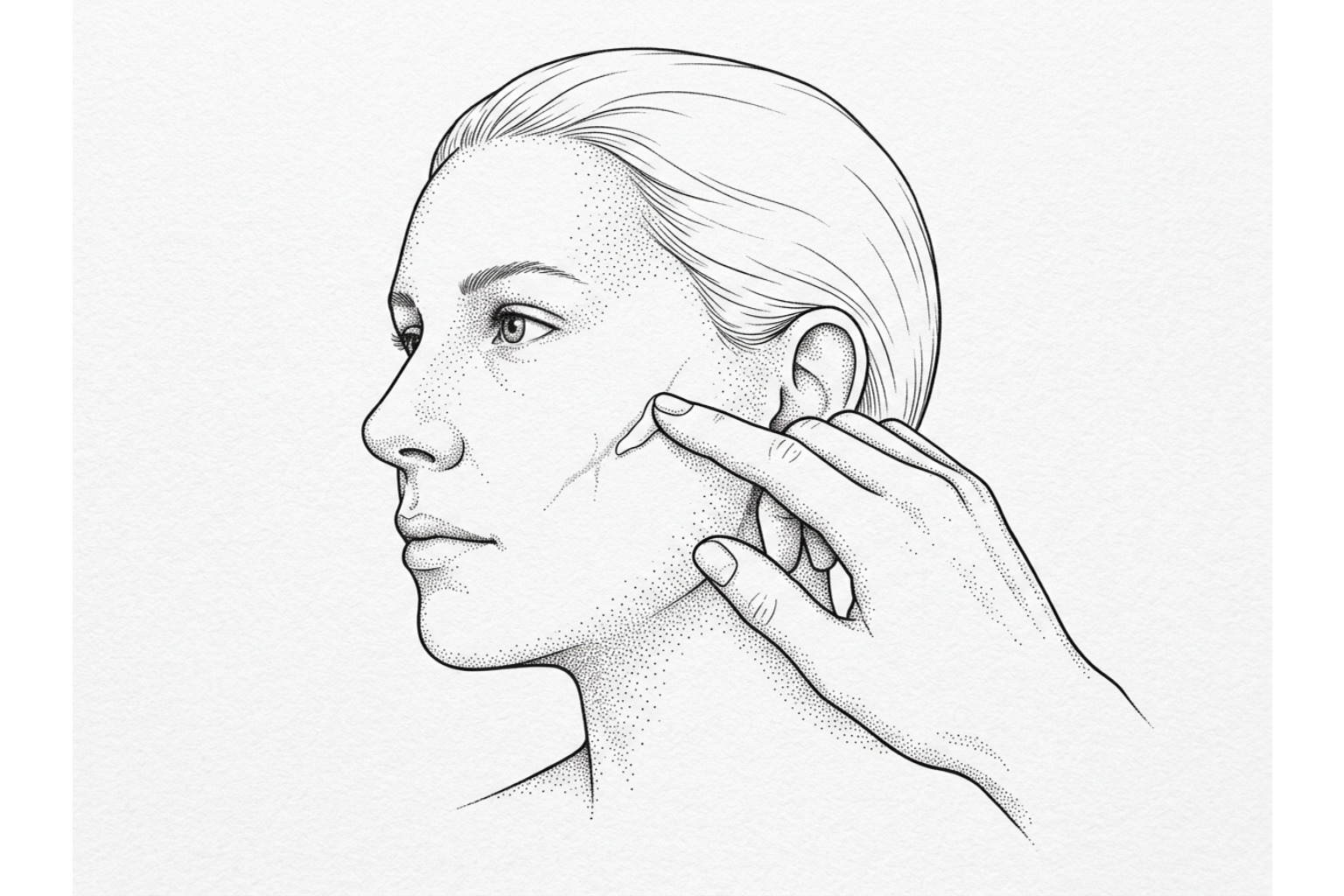
To maximize tissue absorption and protect delicate healing skin, follow a structured application routine:
- Verify Re-Epithelialization: Confirm that the target area is completely closed with no active bleeding, oozing, open raw tissue, or unhealed scabs.
- Cleanse Gently: Wash the affected site with a mild, fragrance-free cleanser and pat completely dry with a clean towel.
- Apply Minimal Quantity: Scoop a small, pea-sized amount of derma scar cream or gel onto fingertips. Excess application does not accelerate healing and may cause product pilling or skin flaking.
- Massage Tenderly: Gently rub the cream into the scar tissue using light circular pressure for 1 to 2 minutes. Physical massage aids product distribution and helps break down rigid internal collagen cross-links.
- Allow Full Drying: Permit the film to dry completely before covering with garments, applying broad-spectrum sunscreen, or putting on makeup.
- Maintain Frequency: Apply 2 to 3 times daily for new scars over an 8-week period, or twice daily for 3 to 6 months on older scars.
Understanding when to start scar treatment after surgery is paramount to avoiding wound complications and optimizing aesthetic recovery.
Safety, side effects and when to stop
Topical scar treatments are generally well-tolerated across diverse skin types, including sensitive skin. However, several safety precautions should be observed:
- Open Wound Contraindication: Never apply scar creams or gels to open wounds, unhealed surgical incisions with stitches still in place, or active scabs. Premature application can trap bacteria, precipitate localized infection, or disturb delicate new epithelial cell layers.
- Contact Dermatitis and Irritation: Certain botanical extracts, preservatives (such as parabens), or added fragrances can induce allergic contact dermatitis, localized burning, erythema, or itching. Perform a patch test on the inner forearm for 24 to 48 hours prior to facial or widespread application.
- Sun Protection Integration: Newly formed scar tissue lacks mature melanin pigment and sweat glands, rendering it highly vulnerable to ultraviolet (UV) radiation. Unprotected sun exposure can trigger post-inflammatory hyperpigmentation, permanently darkening the scar. Always layer a broad-spectrum sunscreen with SPF 30 or higher over your scar cream when outdoors.
Frequently asked questions
How long does it take to see results on old vs. new scars?
For new scars (under 6 months old), preliminary visual improvements in skin hydration and localized redness typically emerge within 2 to 4 weeks of continuous daily use, with optimal results achievable after 8 weeks.
For mature, older scars (over 6 months old), tissue remodeling occurs at a significantly slower biological rate. Clinical observations show that visible changes in mature scar texture, height, and color typically require 3 to 6 months of steady twice-daily application.
Can topical scar cream be used on open wounds or post-surgical stitches?
No. Topical scar creams and gels must never be applied to open wounds, fresh surgical incisions, or skin with active stitches or scabs. Applying topicals prematurely disrupts natural re-epithelialization and heightens infection risks.
Wait until stitches have been professionally removed, scabs have naturally detached, and the epidermal surface is completely closed before initiating topical therapy. Review established dermatology scar management protocols to coordinate safe transition timing.
How do topical scar creams compare in price and long-term value?
Topical scar creams offer a cost-effective, non-invasive starting point for post-injury care compared to invasive clinical procedures such as fractional laser resurfacing, surgical scar revision, or microneedling sessions.
While clinical dermatological procedures yield faster and more dramatic structural elevation for severe pitted or keloidal scars, daily application of medical-grade topical creams over several months provides reliable tissue softening and color improvement at a fraction of the financial investment.
The bottom line
Managing scar recovery effectively hinges on understanding skin biology, selecting evidence-backed active ingredients, and maintaining realistic expectations. Research indicates that while medical-grade silicone formulations offer the strongest clinical evidence for flattening raised surgical and hypertrophic scars, botanical blends containing ingredients like allantoin and panthenol can provide valuable surface hydration and soothing benefits.
Consistency remains the ultimate key to non-invasive scar management; whether tending a fresh surgical incision or addressing an older injury mark, dedicated daily application over several months supports the skin's natural tissue remodeling phase.
If a scar appears unusually thick, expands rapidly beyond its original borders, causes persistent discomfort, or fails to respond after several months of consistent care, consulting a board-certified dermatologist is the safest and most effective next step.
Explore Evidence-Based Scar Treatments
This content is for informational purposes only and does not constitute medical advice. Consult a qualified healthcare professional for diagnosis and treatment.
Works Cited
- Gold MH, et al. "Updated international clinical recommendations on scar management: part 1 - evaluating the evidence." Dermatologic Surgery, 2014;40(8):817-824.
- Monstrey S, et al. "Updated scar management practical guidelines: non-invasive and invasive measures." Journal of Plastic, Reconstructive & Aesthetic Surgery, 2014;67(8):1017-1025.
- Bleasdale B, et al. "The Use of Silicone Adhesives for Scar Reduction." Advances in Wound Care, 2015;4(7):422-430.
- Sidgwick GP, McLean S, Bayat A. "A comprehensive evidence-based review on the role of topicals and dressings in the management of skin scarring." Archives of Dermatological Research, 2015;307(6):461-477.
- Puri N, Talwar A. "The efficacy of silicone gel for the treatment of hypertrophic scars and keloids." Journal of Cutaneous and Aesthetic Surgery, 2009;2(2):104-106.
- Karagoz H, et al. "Comparison of efficacy of silicone gel, silicone gel sheeting, and topical onion extract including heparin and allantoin for the treatment of postburn hypertrophic scars." Burns, 2009;35(8):1097-1103.
- Yuan X, et al. "Onion extract gel is not better than other topical treatments in scar management: A meta-analysis from randomised controlled trials." International Wound Journal, 2021;18(3):396-409.
This content is for informational purposes only and does not constitute medical advice. Consult a qualified healthcare professional for diagnosis and treatment.