C-section scars
Most C-section scars settle into a thin flat line as they mature over 12 to 24 months. An overhang or a tethered shelf is treatable, but not with creams.
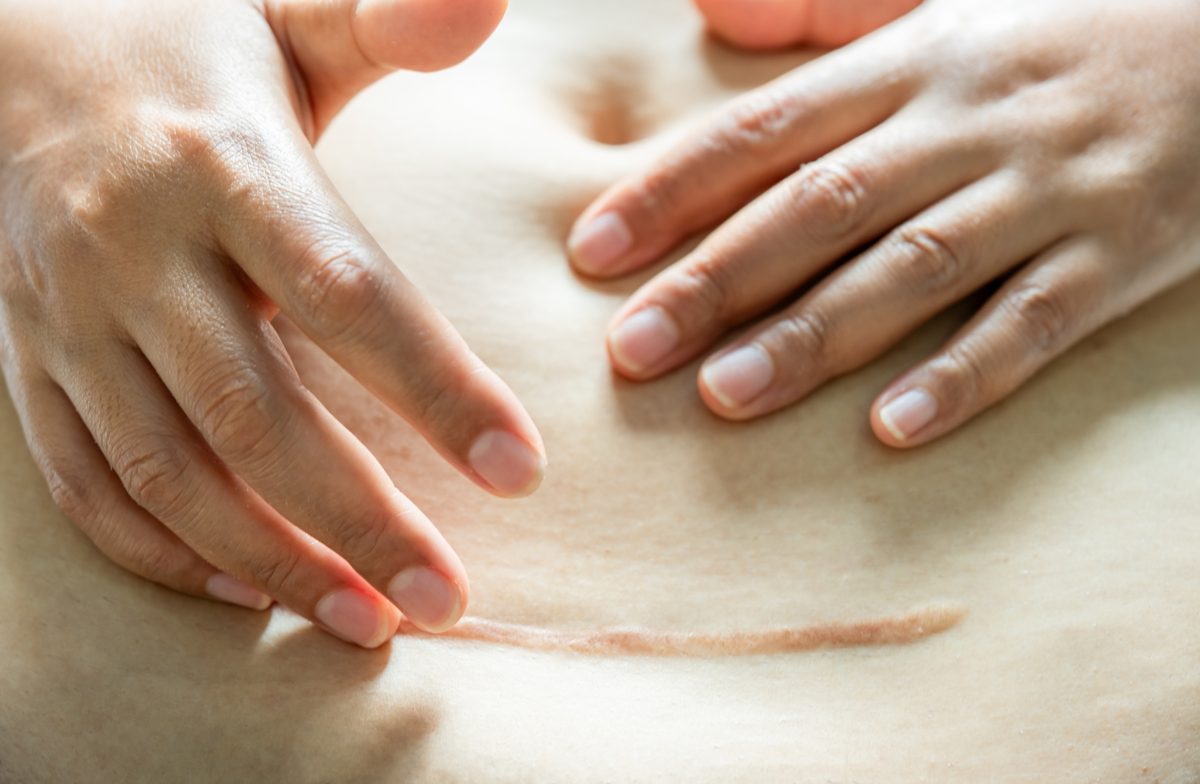
What c-section scars are
A cesarean incision cuts through skin, fat, fascia and muscle. Each layer heals at its own pace, in a part of the body that never stops moving. Most incisions are low transverse, along the bikini line. Vertical incisions face more tension. The common problems are a raised or thickened line, a shelf where skin sits tethered under a fold of fat, numbness, and internal adhesions. Creams address color and texture. Structural problems need a procedure.
- Also called
- Cesarean scar, bikini-line scar, C-section shelf or overhang
- Typical timeline
- Topicals once the incision is fully closed, usually 10 to 14 days. Full maturation takes 12 to 24 months.
- Strongest evidence
- Silicone, started once the incision is closed and kept up for months.
- See a doctor if
- The wound opens or drains, or you develop chronic pain, numbness or a pulling sensation.
When to see a doctor
- The wound opens, drains, or the surrounding skin is spreading warm and red.
- Chronic pain, electric-shock sensations or numbness along the scar, which can indicate trapped nerves.
- A deep fold that traps moisture and keeps producing rashes or infections.
- A pulling sensation with movement, or changes in bowel or bladder function, which can point to adhesions.
Treatments for c-section scars
| Treatment | Evidence | Best for | Cost | |
|---|---|---|---|---|
| Silicone gel / sheeting Reported best results at 12 to 18 hours of daily contact for deep surgical scars, over three to six months. Safe while breastfeeding because it is not meaningfully absorbed, but keep it off the nipple and areola. |
Strong | Raised, red or firm scars, from closure onward | $ | Full page → |
| Scar massage and myofascial work Starts around six weeks. Massaging cream in helps break fibrin bonds and improve scar mobility. Skin rolling and cross-friction target the deeper restriction, not the surface. It should not be expected to affect internal adhesions between organs: a 2026 systematic review does not support that. |
Limited | Tightness, tethering and restoring glide | $ | Full page → |
| Fractional laser (CO2 and others) Typically 3 to 6 sessions, 4 to 6 weeks apart. Timing matters more than the device: a 2025 meta-analysis of 14 controlled trials found courses begun at or within a month of surgery significantly outperformed courses begun after three months, where the pooled benefit was not significant. In a split-scar trial of three CO2 sessions in 12 women with mature scars, blinded photo assessment favoured the treated side at six months and 64% wanted their untreated side treated too. Around $750 to $2,500 per session for fractional CO2. Older scars still respond, less reliably. |
Moderate | Texture, thickness and color, and better the earlier it starts | $$$ | Full page → |
| Microneedling 3 to 6 sessions with 24 to 48 hours of downtime. Lower pigmentation risk than laser, which matters for darker skin. It will not correct tethering on its own, and our sources carry no controlled figures for C-section scars. |
Limited | Texture and collagen in a flat or mildly irregular scar | $$ | Full page → |
| Steroid injection No downtime, given as a series several weeks apart. Aimed at height and symptoms, not at the shelf or the tether. |
Strong | A thickened, raised or keloid cesarean scar | $$ | |
| Surgical revision The correction is layered re-approximation, including closing Scarpa's fascia properly. In-office excision runs about $500 to $2,000. A full revision with anesthesia and facility costs about $2,000 to $5,000, and combined with abdominoplasty $8,000 to $15,000 and up. Wait until you have finished having children, since a later cesarean reopens the same area. |
Moderate | Indented, tethered or overhanging scars, and step-offs | $$$$ | Full page → |
What causes them
About 30% of US deliveries are cesarean, making it one of the most commonly performed surgeries in the country. The lower abdomen is a high-tension zone. Lifting a newborn, feeding posture and core movement keep the tissue under constant mechanical stress, and hypertrophic scarring is common as a result. The shelf traces to Scarpa's fascia, a deep connective layer that is not always sutured closed. Left unrepaired, the fat can separate and the skin heals directly onto muscle fascia, leaving a tethered groove with a bulge above it. Repeat cesareans cut through existing scar tissue and tend to build thicker adhesions.
How they change over time
Closure (weeks 1 to 2)
Apply nothing to an open incision or active stitches. Gentle cleansing only. Our sources put full closure at roughly 10 to 14 days, and one puts it as late as 6 to 8 weeks. Follow your own team.
Early remodeling (weeks 3 to 12)
Once the incision is closed, silicone goes on twice daily and massage starts around six weeks. This window determines how the line looks. Observe the lifting limits throughout it.
Maturation (3 to 12 months, sometimes 24)
Redness drains, and the line softens and flattens. Assess the result at the end of this period. Revision surgery is considered at 6 to 12 months at the earliest, and later is better.
How this differs across skin tones
Keloids are more common in Fitzpatrick IV to VI. A cesarean scar that thickens in darker skin is more likely to cross from hypertrophic into keloid, which raises the value of starting silicone early. Darkening of the line itself is common and usually settles. Pigment change is the main laser risk: providers use lower energy settings and sometimes prescribe a pigment-suppressing cream beforehand. Microneedling and non-ablative devices carry less pigmentation risk than aggressive ablative resurfacing.
What you can do yourself
Worth doing
- Start silicone once the incision is fully closed and sutures are out, and keep it up for at least three months.
- Observe the lifting limits. Our sources suggest staying under about 15 pounds for the first four weeks.
- Once cleared, massage the cream in. Mobility of the scar is the objective, not coverage.
- Keep the scar out of direct sun for a year, and use SPF 30 or higher if it is exposed.
Not worth doing
- Any product on an open incision or active stitches.
- Retinoids during pregnancy, and use caution while breastfeeding.
- Silicone or any product on the nipple and areola area.
- Revision surgery if you are planning another cesarean. A new incision through the same area undoes the result.
Common questions
Usually because Scarpa's fascia, a deep connective layer, was not closed. The fat separates, the skin heals down onto the muscle fascia, and you get a tethered groove with a bulge sitting above it. Creams cannot resolve structural tethering; subcision or surgical revision can.
Topicals once the incision is fully closed, which our sources put at around 10 to 14 days, though one recommends waiting 6 to 8 weeks. Massage around six weeks. Laser and microneedling generally wait until 6 to 12 months postpartum.
Silicone is generally considered safe because it is not absorbed into the bloodstream in meaningful amounts, though it should not go on the nipple or areola. Retinoids should be used with caution. Most non-ablative lasers are considered safe, but discuss any topical anesthetic with your provider.
Usually not, since it is almost always classed as cosmetic. Coverage becomes possible with documented chronic pain, a skin fold that will not heal or keeps getting infected, or an associated ventral hernia. In-office excision runs about $500 to $2,000, a full revision about $2,000 to $5,000.
All c-section scars articles
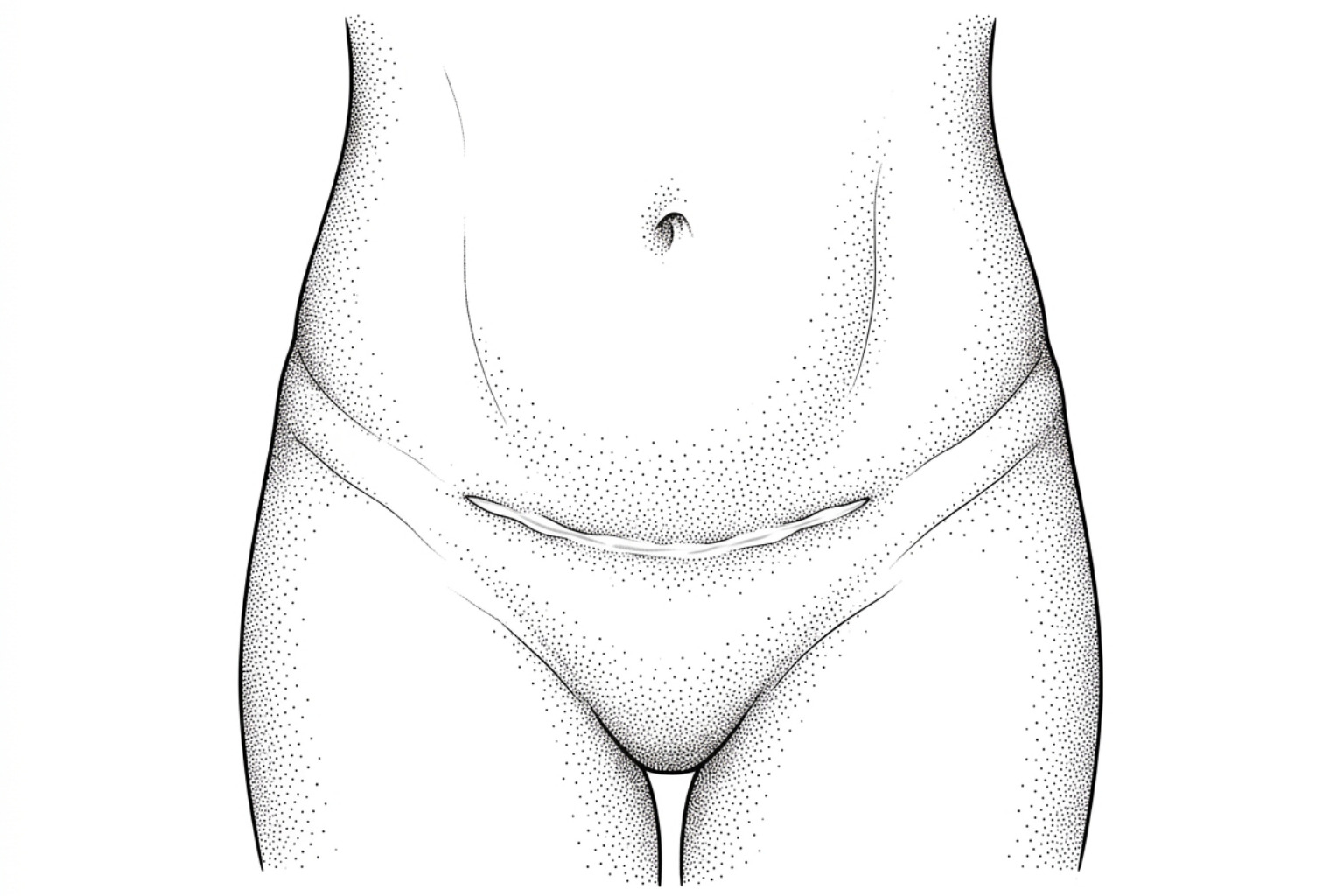
Real C-Section Scar Stages and What to Expect
A C-section scar changes from red and raised to pale and flat over months. This guide shows each healing stage in order, what is normal at each point and when a scar needs a doctor's check.
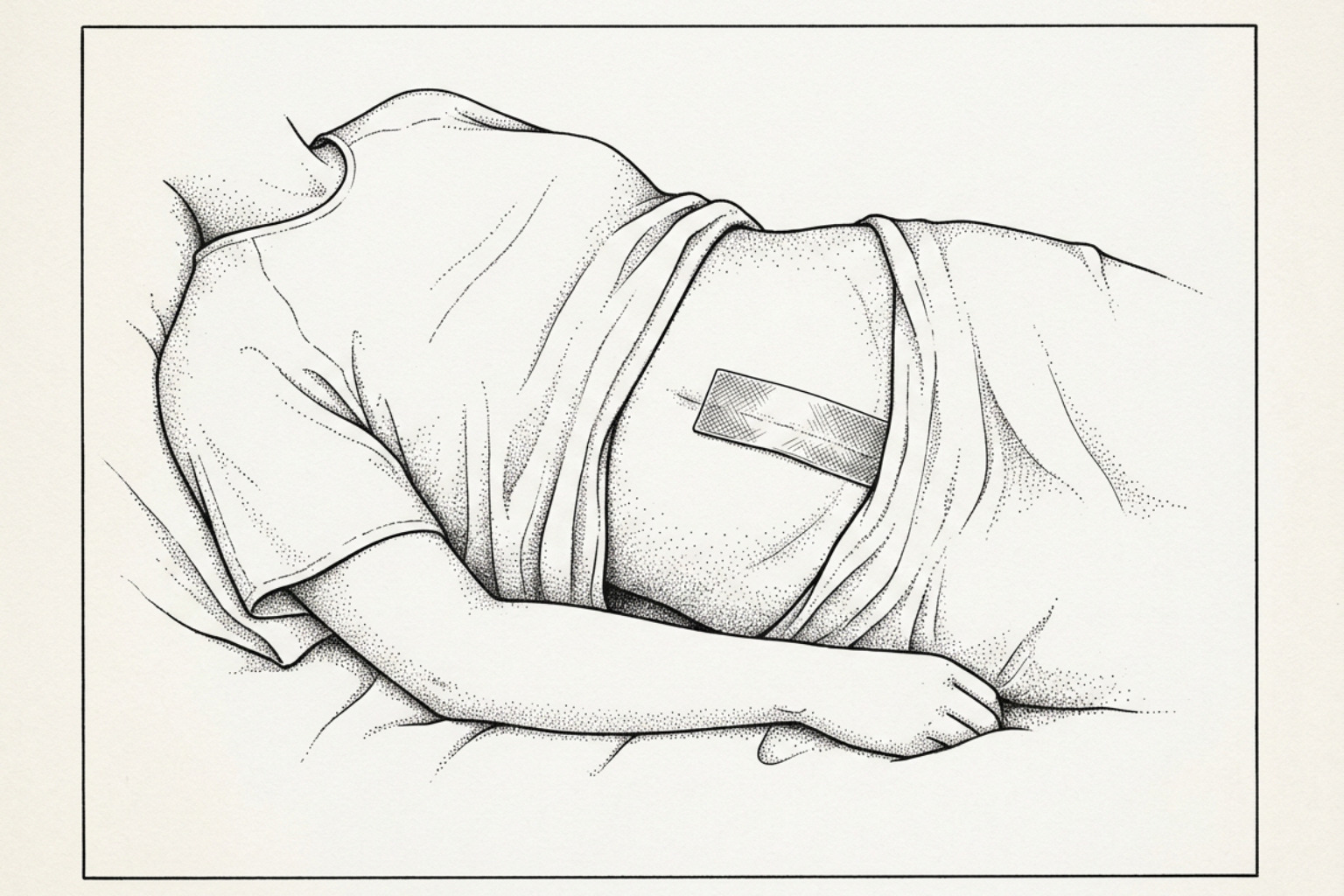
When Should You Start Silicone Scar Treatment?
Silicone sheeting can help a C-section scar heal flatter and softer, but only once the incision is fully closed. Here is when to start, how to build up wear time and when to stop.
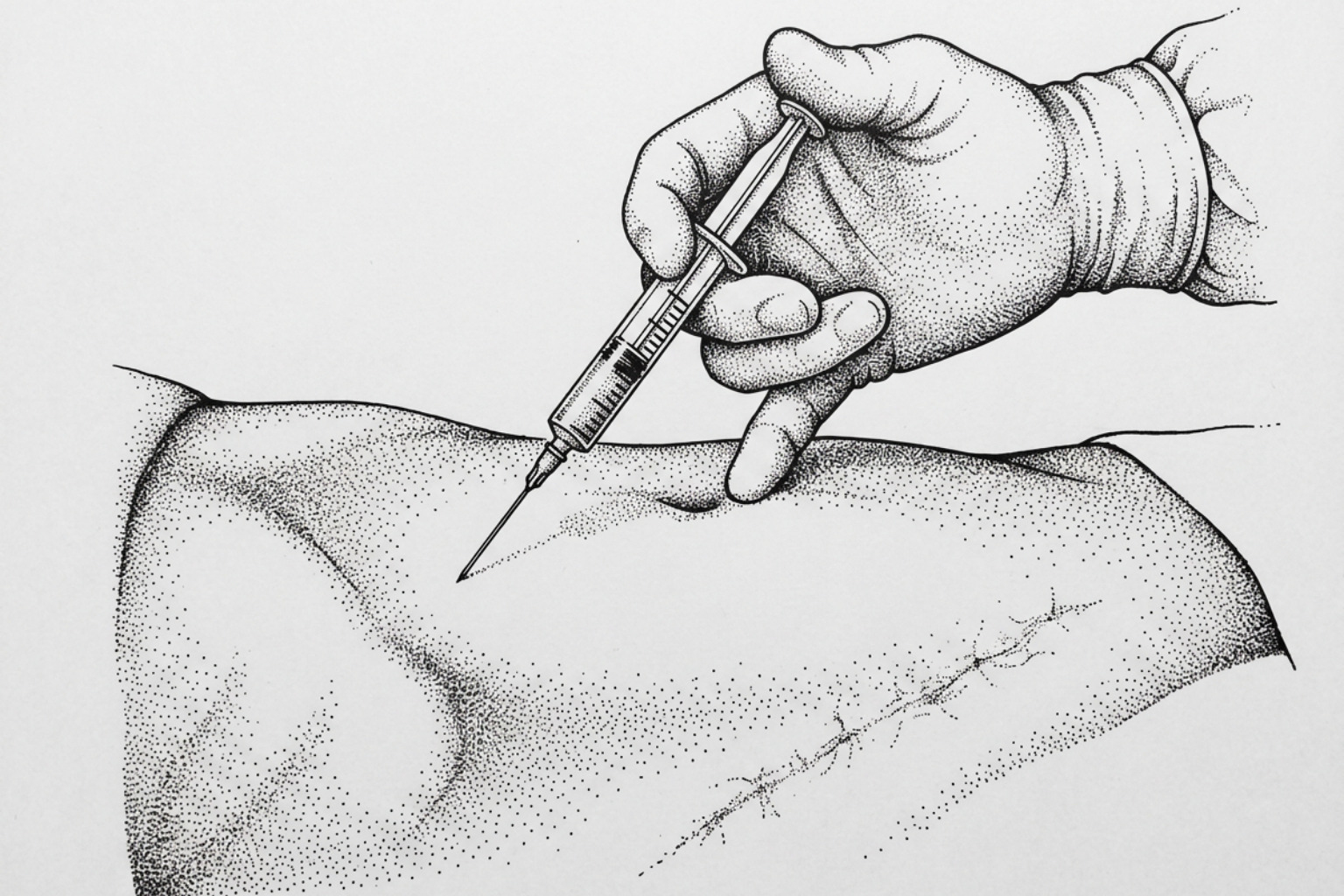
Evidence-Based Guide to Steroid Injections for Surgical and C-Section Scars
Raised surgical and caesarean scars respond well to intralesional steroid injections, but timing and dose matter more than most patients are told. Here is what the evidence supports.
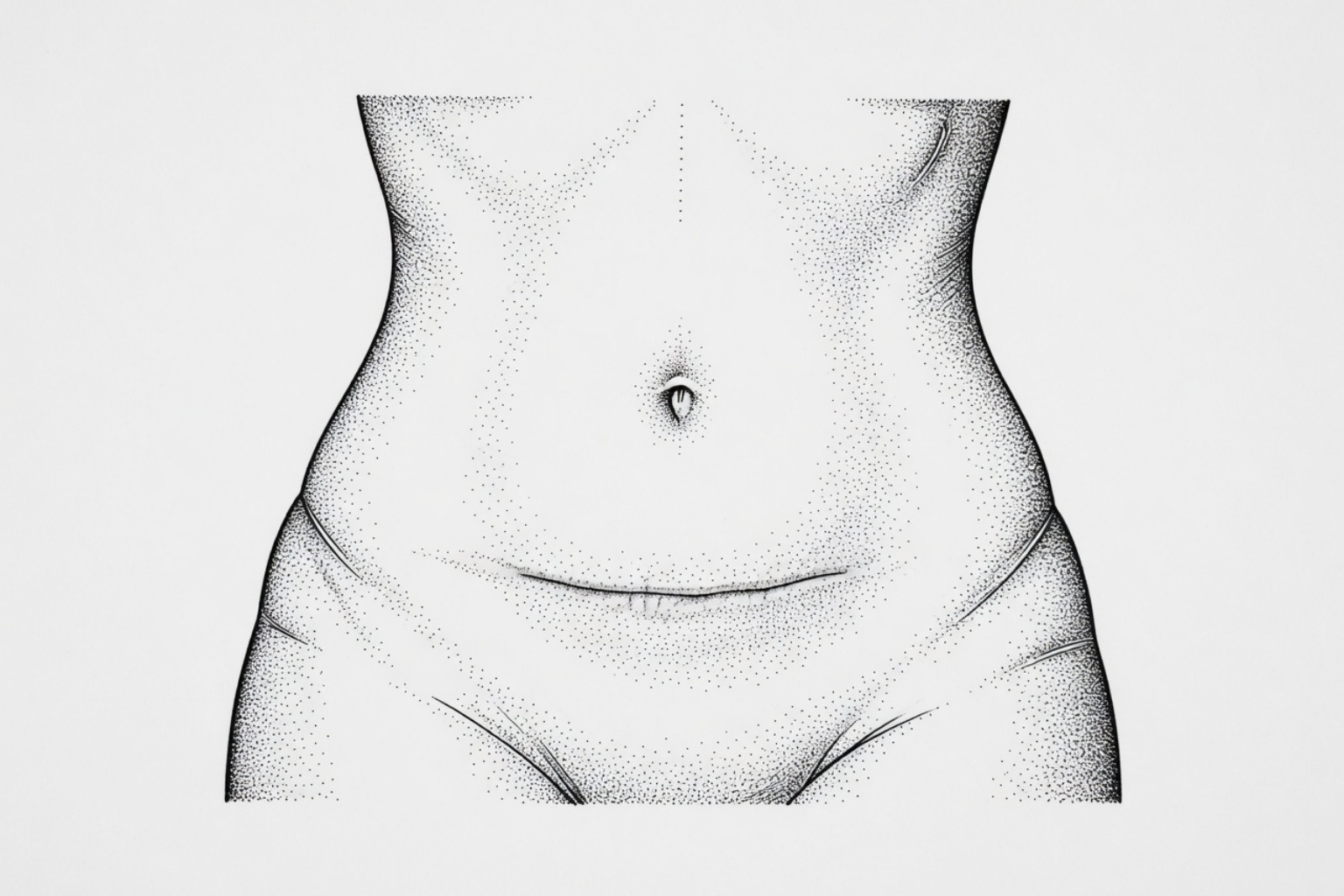
The Lowdown on C-Section Revision
A complete walkthrough of C-section scar revision methods, from surgical re-closure and Z-plasty to fractional laser resurfacing, with recovery timelines and realistic expectations.
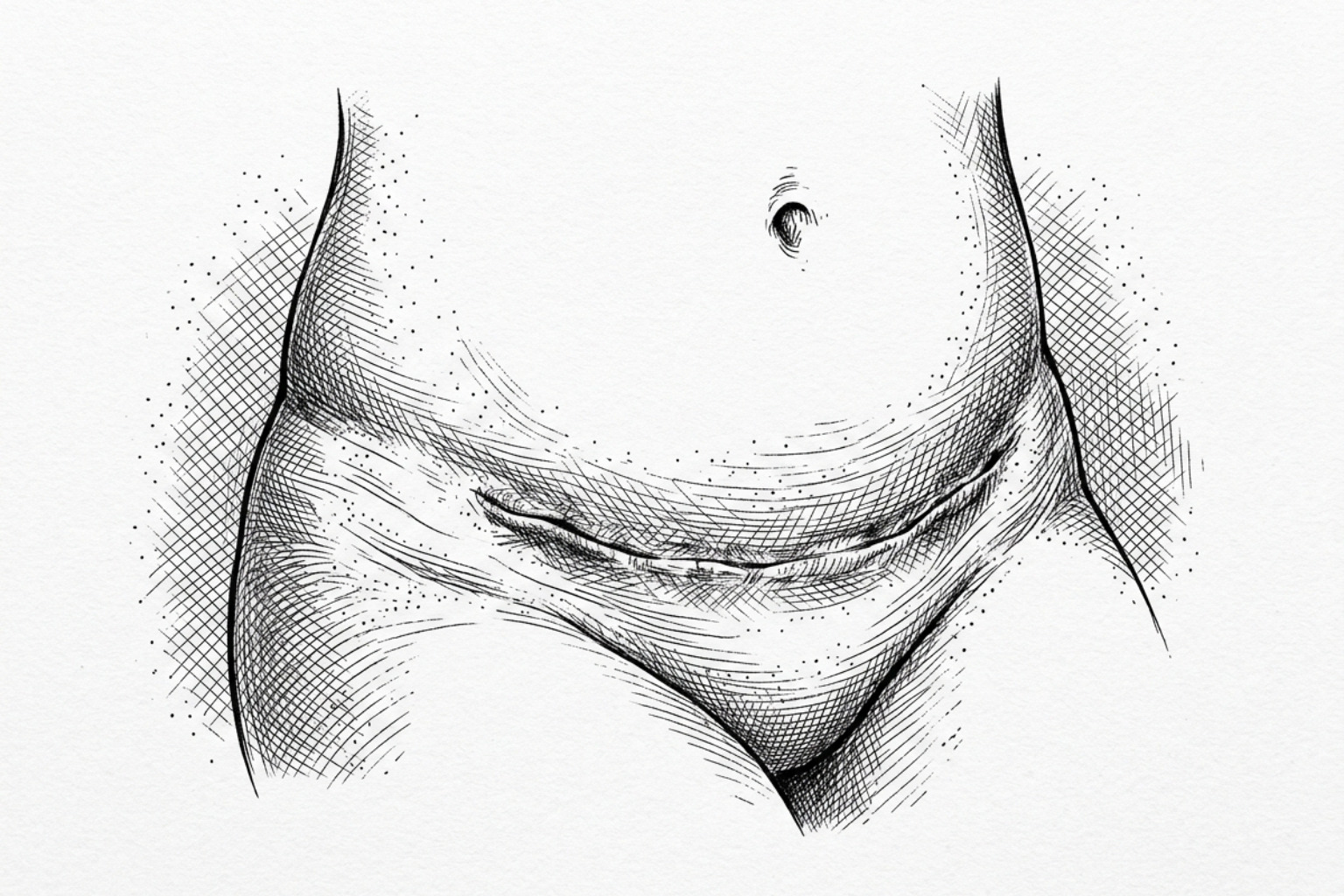
The Ultimate Post-Op Guide to Taping and Managing Your C-Section Scar
C-section scar revision ranges from taping techniques to surgical correction. Learn evidence-based post-op strategies to improve your cesarean scar appearance and comfort.

Postpartum Scar Reduction Cream and Stretch Mark Solutions
C-section and stretch mark scars respond to specific topical ingredients. Explore what clinical evidence says about postpartum scar reduction creams and which formulas deliver real results.