Real C-Section Scar Stages and What to Expect
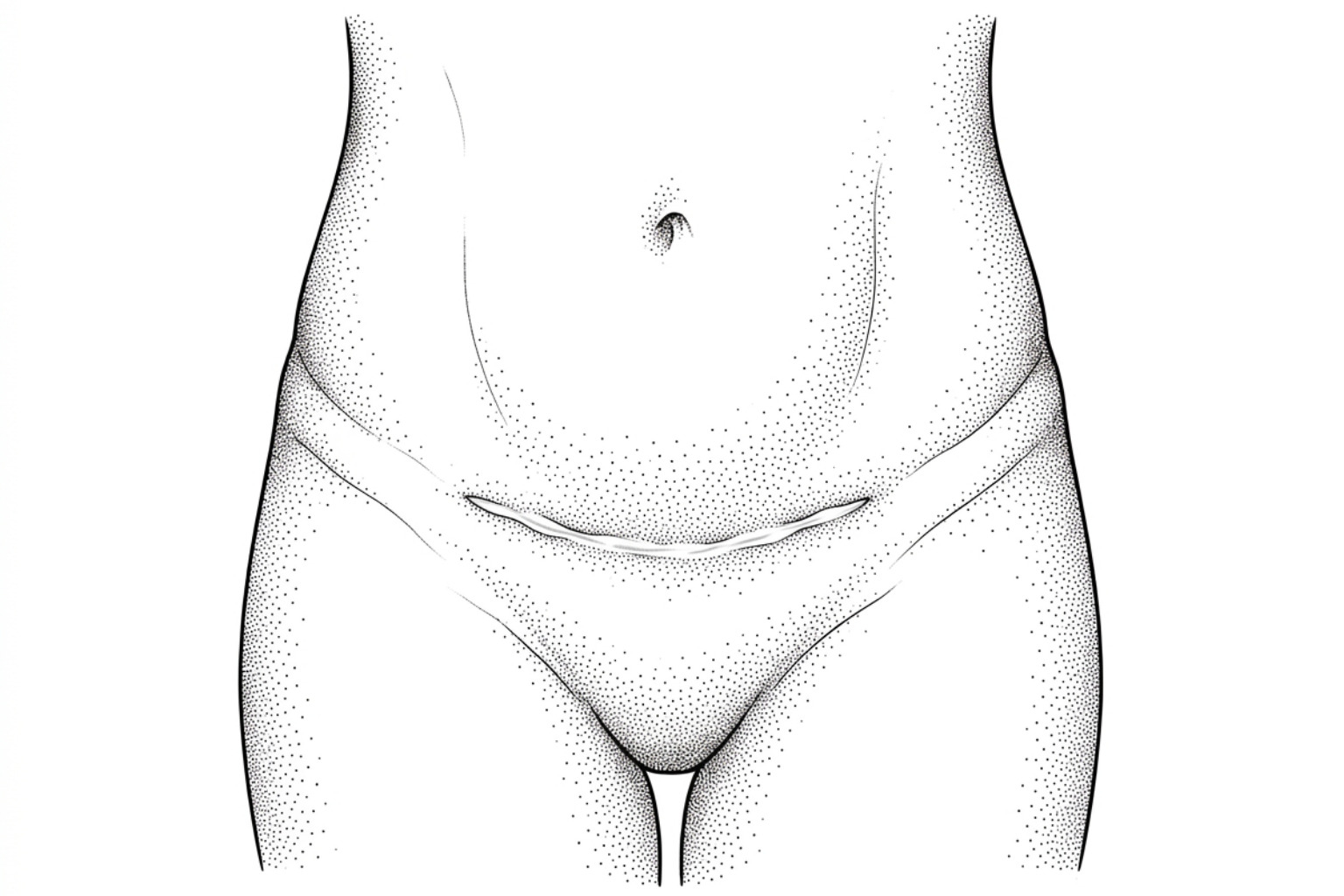
A C-section scar changes from red and raised to pale and flat over months. This guide shows each healing stage in order, what is normal at each point and when a scar needs a doctor's check.
How C-section incisions heal, stage by stage
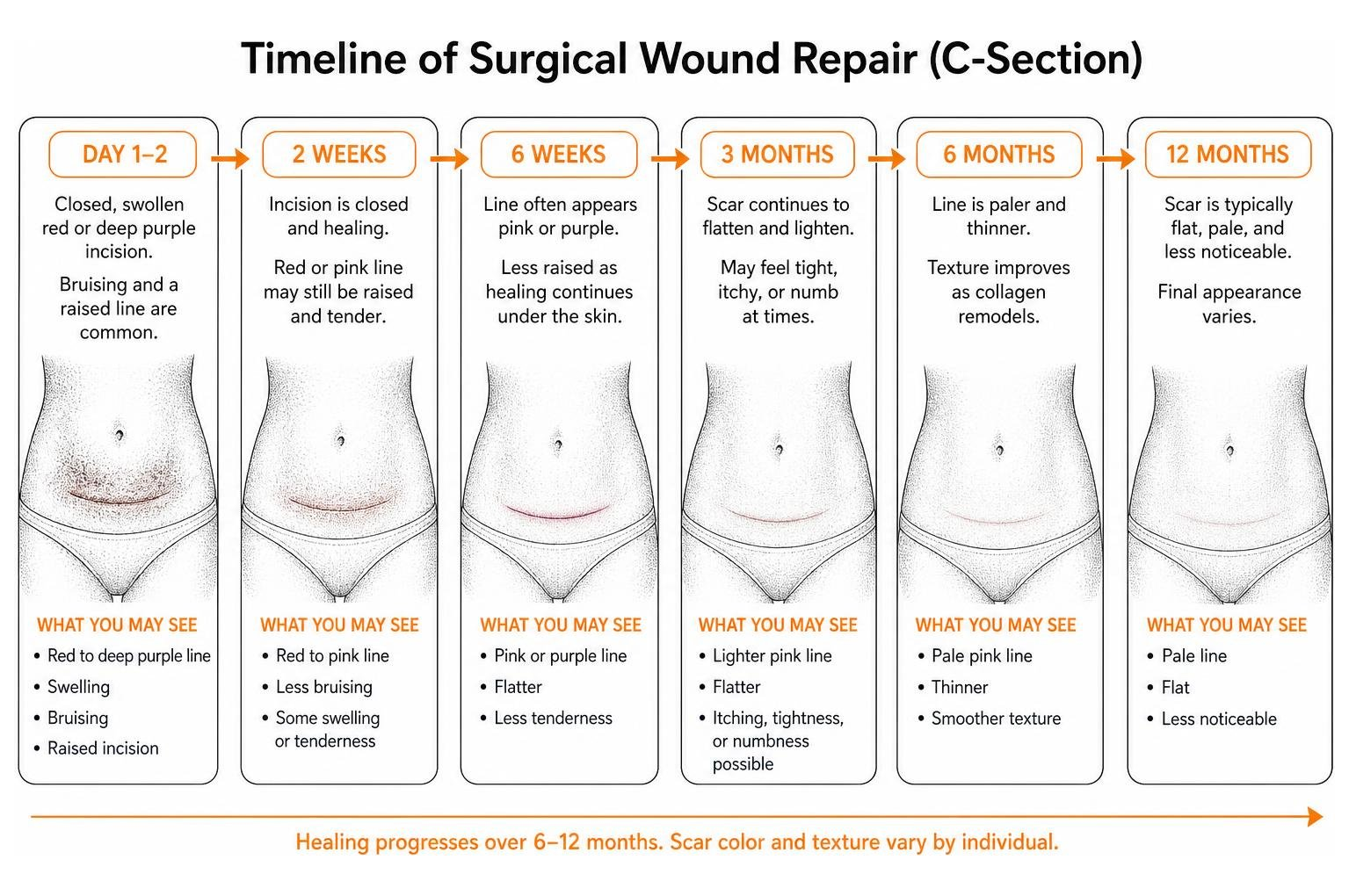
Most C-section scars begin as a closed, swollen pink-to-red line and gradually become flatter, lighter, and less noticeable over 6-12 months. C-section scars photos commonly show bruising and a raised incision in the first 2 weeks, a pink or purple line at 6 weeks, and a thinner, paler line by 6 months to 1 year.
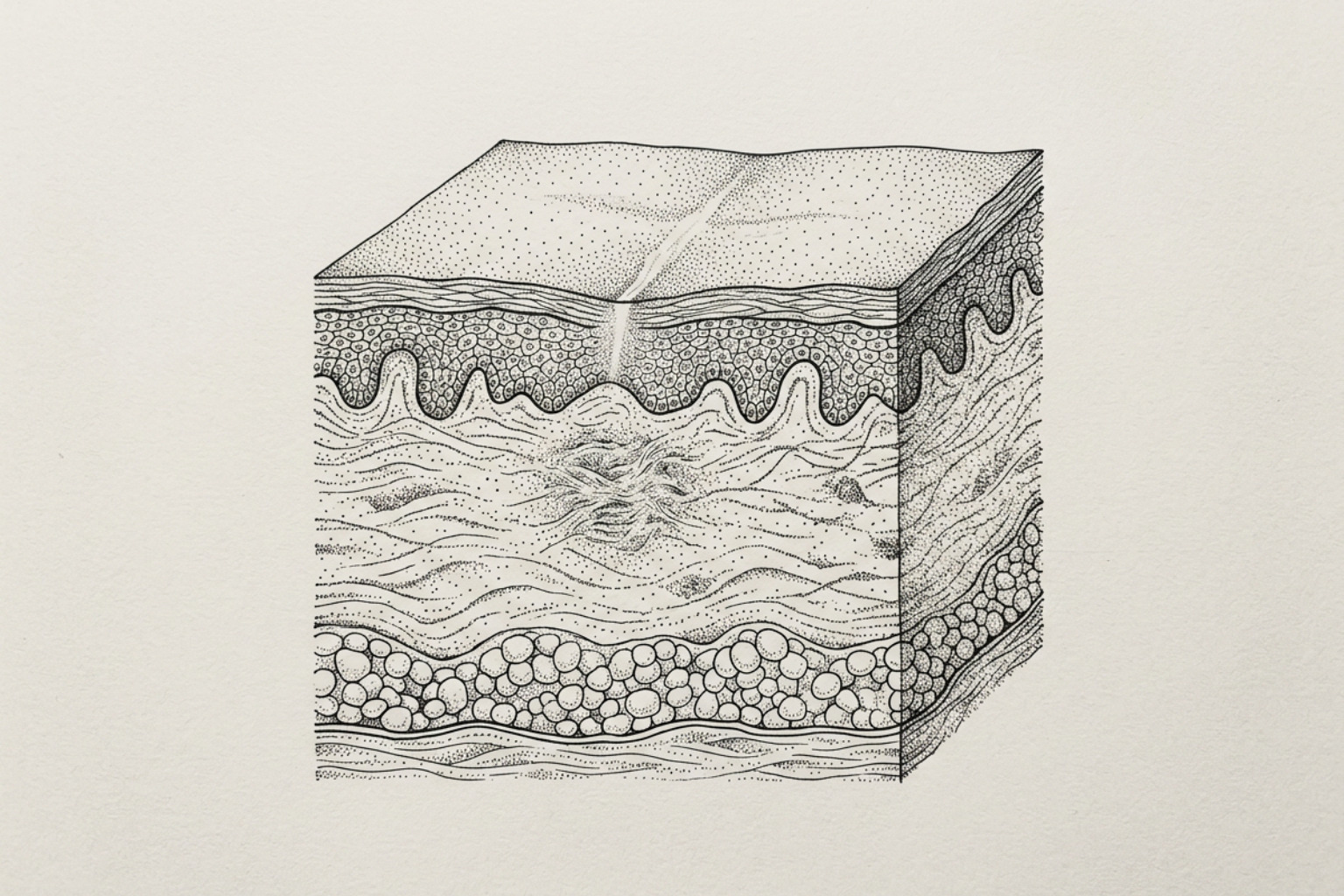
Under the skin, the body closes the incision with new collagen, the firm tissue that forms a scar. This process can leave the area tight, itchy, numb, dark, or slightly raised while it remodels. A low horizontal incision near the pubic hairline is most common, though scar color and texture vary with skin tone, genetics, repeat surgeries, and complications.
The CDC reports that about 1 in 3 births in the United States occurs by Cesarean delivery, so there is no single "normal" scar photo or recovery timeline. Gentle cleaning, keeping the incision dry, avoiding friction, and waiting until the wound is fully closed before beginning scar care can support healing. For longer-term options, see this guide to C-section scars.
Contact the surgical or maternity care team promptly for a fever of 100.4 F (38 C) or higher, worsening pain, spreading redness, increasing swelling, pus, foul-smelling drainage, or an opening in the incision. Book a medical assessment if a closed scar remains increasingly red, itchy, painful, or thickened after 2 months.
The Scar Healing Editorial Team explains the stages below so each change in color, texture, and shape is easier to place in context.
Healing timeline with photos
Cesarean birth is one of the most common surgical procedures globally. According to NHS figures for England in 2024–2025, 45% of births occurred via Cesarean section, compared to 44% delivered through spontaneous vaginal birth. Understanding the physical trajectory of incision repair helps set realistic expectations for recovery.
Wound healing follows a biological sequence: hemostasis, inflammation, proliferation, and maturation. In community photographic archives, such as What caesarean section scars look like as they heal, the incision transitions visibly across these phases as vascularity shifts and underlying tissues repair.
Days 1 to 14: the inflammation phase
The immediate postoperative phase spans the first 14 days. During the initial 24 to 48 hours, surgical dressings cover the wound. Once bandages are removed, the cut appears as a sharply defined, elevated red or deep purple mark, typically measuring 4 to 6 inches across the lower abdomen.
Surgeons secure the skin using metal staples, dissolvable subcutaneous sutures, or topical skin adhesives:
- Staples or non-dissolvable sutures: Metal clips or nylon threads create small perpendicular puncture marks along the incision line. Surgeons generally remove them within 4 to 10 days postpartum.
- Absorbable sutures and skin glue: These remain beneath or directly over the seam. Glue sloughs off naturally in 7 to 14 days, while sub-cuticular stitches dissolve internally over several weeks.
Local swelling and bruising around the incision margin are standard due to capillary trauma. Clear or lightly blood-tinged fluid may seep in tiny amounts during the first few days. Medical guidance on when to apply scar cream after stitches indicates that active topicals must wait until the wound edges are completely sealed and free of scabs.
Weeks 4 to 6: the scar builds and reshapes
Between 4 and 6 weeks, the inflammatory phase resolves into the proliferative phase. Collagen type III fills the wound gap, forming granulation tissue that reinforces the scar line.
At the standard 6-week postpartum checkup:
- Surface scabbing has detached completely.
- The incision line shows a distinct pink, purple, or reddish hue caused by localized angiogenesis (new capillary development).
- A firm, ridge-like induration may be felt beneath the skin, often called the healing ridge.
- Superficial nerves begin regenerating, which can produce temporary tingling, localized numbness, or sudden brief twinges.
Once the obstetrician or midwife confirms the incision is closed with no residual drainage, patients can learn when to start scar treatment after surgery to begin gentle non-invasive therapies.
Months 6 to 24: long-term fading
Maturation represents the longest phase of tissue recovery, lasting from several months to up to 2 years. During this period, the body breaks down disorganized collagen bundles and replaces them with structured collagen type I fibers.
Photographic documentation demonstrates that a mature surgical line softens into a fine, flat, pale or slightly silvery mark that sits flush with the abdominal contour. Micro-capillaries regress, causing the initial redness or purple tone to fade toward natural flesh tones. While the scar regains most of uninjured skin tensile strength, full structural remodeling continues for up to 24 months. For persistent erythema or raised texture after this period, clinical modalities like c-section scar laser may assist in remodeling mature fibrous tissue.
What shapes how a C-section scar looks
No two abdominal incisions remodel in identical fashion. Variations in surgical technique, physical tension, skin biology, and individual genetics dictate the long-term aesthetic outcome.
| Factor | Primary Characteristics | Aesthetic and Structural Impact |
|---|---|---|
| Incision Type | Low transverse (Pfannenstiel) vs. Vertical (Classic midline) | Transverse cuts run along natural Langer skin tension lines near the pubic bone, yielding finer lines; vertical cuts experience higher lateral tension and tend to widen. |
| Skin Tone & Melanin | Fitzpatrick skin types I–VI | Higher baseline melanin production can increase the risk of post-inflammatory hyperpigmentation or elevated scar tissue. |
| Repeat Surgeries | Subsequent Cesareans through previous surgical sites | Surgeons frequently excise the old fibrous band to close fresh tissue, though repeat surgeries can produce wider scar lines or local tethering. |
| Tissue Alignment | Layer-by-layer anatomical closure (fascia, fat, dermis) | Precise approximation prevents the formation of an overhanging abdominal shelf or deep dermal indentations. |
When fibroblasts overproduce extracellular matrix proteins during remodeling, atypical scars can form. Hypertrophic scars remain raised and rigid but stay confined to the original incision boundary. In contrast, keloid scars expand beyond the initial surgical borders due to continuous, uncontrolled collagen accumulation.
In a cross-sectional study of 96 women evaluating the long-term impact of cesarean scars, researchers found that appearance and aesthetic satisfaction scored the lowest among all evaluated quality-of-life domains (Almeida et al., 2025). The authors noted that scar thickness and irregularity were the most problematic physical characteristics reported by participants, directly influencing clothing choices and body confidence.
Normal healing vs. complications
Differentiating between healthy tissue remodeling and post-surgical complications is critical during early recovery. Following basic protocols for post-surgery scar care prevents superficial contamination and minimizes mechanical strain on healing skin.
Expected Healing Signs:
- Mild pinkness or violet discoloration strictly along the cut edges.
- Moderate swelling and slight bruising that decreases after the first 7 to 10 days.
- A firm, palpable band (healing ridge) under the seam that softens over several months.
- Localized itching, skin peeling, or mild nerve numbness around the lower abdomen.
Warning Signs Requiring Medical Care:
- Oral temperature reaching 100.4 F (38 C) or above.
- Expanding redness, warmth, or swelling extending more than an inch beyond the incision margins.
- Separation or opening of the wound edges (dehiscence).
- Thick, yellow, green, or foul-smelling discharge escaping from the cut.
- Severe, escalating abdominal pain unresponsive to prescribed pain relief.
What helps C-section scars fade
After the surgical incision has completely epithelialized and scabs have separated, targeted non-invasive interventions can support tissue flexibility and minimize fibrous buildup.
Medical-Grade Silicone Sheets and Gels
Topical silicone acts as an occlusive barrier that mimics the stratum corneum, reducing transepidermal water loss. This sustained hydration normalizes local capillary activity and signals fibroblasts to regulate collagen production. Medical evidence supports using silicone treatments for 12 to 24 hours daily over a span of 2 to 4 months to soften and flatten surgical marks.
Scar Mobilization and Physical Massage
Gentle tissue manipulation prevents deep fibrous bands from adhering to the underlying abdominal fascia. Once cleared by a physician (typically at 6 to 8 weeks postpartum), applying circular and perpendicular pressure through targeted scar massage improves localized blood circulation, reduces tissue hypersensitivity, and softens rigid collagen deposits.
Photoprotection
Immature scar tissue contains hyperactive melanocytes that react strongly to ultraviolet radiation. Unprotected sun exposure can cause chronic post-inflammatory hyperpigmentation, leaving the scar permanently darker than the surrounding skin. Applying a broad-spectrum mineral sunscreen with SPF 30 or higher to exposed scars protects healing tissue throughout the first 12 to 18 months.
Medical and surgical options
For persistent, symptomatic, or structurally irregular scars, dermatological and surgical options exist:
- Corticosteroid Injections: Intralesional steroid injections for surgical and c-section scars suppress fibroblast proliferation, helping to flatten thick, symptomatic hypertrophic tissue.
- Laser Therapy: Pulsed-dye and fractional ablative lasers target micro-vascular networks to diminish redness and stimulate healthy dermal remodeling.
- Surgical Revision: If severe tethering, wide spreading, or an overhanging dermal shelf occurs, a plastic surgeon can perform c-section scar revision to re-excise the irregular fibrous band and re-approximate the abdominal layers.
Common questions about C-section healing
What should a normal C-section scar look like at 6 weeks?
At 6 weeks postpartum, a normal scar appears as a fully closed, intact line with no open areas or scabbing. The line typically exhibits a pink, red, or light purple hue due to active blood supply. A firm healing ridge is often felt directly beneath the skin, which softens over the coming months as deep tissues remodel.
Can a C-section scar continue to fade after one year?
Yes. Structural collagen remodeling and vascular regression can persist for up to 2 years after surgery. Over time, excess capillary networks diminish, causing the line to transition from a prominent red or purple color to a flatter, paler tone closer to the natural skin complexion.
When is it safe to begin scar massage and topical therapies?
Topical silicone and gentle massage should only start after the incision has achieved complete superficial closure, all scabs have detached, and a medical provider has cleared the site during the postpartum checkup (usually between 4 and 6 weeks post-surgery). Applying pressure or topicals to an open wound increases the risk of infection and wound reopening.
Conclusion
A Cesarean incision is a major surgical event that requires substantial time, metabolic energy, and patience to heal. Photographic timelines demonstrate that while early recovery brings redness, swelling, and distinct physical changes, the body gradually softens, flattens, and lightens scar tissue over 12 to 24 months. Understanding what normal healing looks like provides clarity throughout the postpartum transition. To evaluate non-invasive care options and clinical therapies in detail, explore the C-section scar guide.
This content is for informational purposes only and does not constitute medical advice. Consult a qualified healthcare professional for diagnosis and treatment.
Works Cited
- Almeida LLF, Neves GL, Pinhati MES, Lamaita RM, Cândido EB, da Silva AL. "Beyond the cut: a cross-sectional analysis of the long-term clinical and functional impact of cesarean section scars." Revista Brasileira de Ginecologia e Obstetrícia, 2025.
- O'Brien L, Jones DJ. "Silicone gel sheeting for preventing and treating hypertrophic and keloid scars." Cochrane Database of Systematic Reviews, 2013.
- Wang F, Li X, Wang X, Jiang X. "Efficacy of topical silicone gel in scar management: a systematic review and meta-analysis of randomised controlled trials." International Wound Journal, 2020.
- National Center for Health Statistics. "Births: Final data for 2024, method of delivery (FastStats)." Centers for Disease Control and Prevention, 2024.