Chickenpox scars
Chickenpox pits are collagen the body never replaced. They do not fade with time, but they respond to treatment at any age.
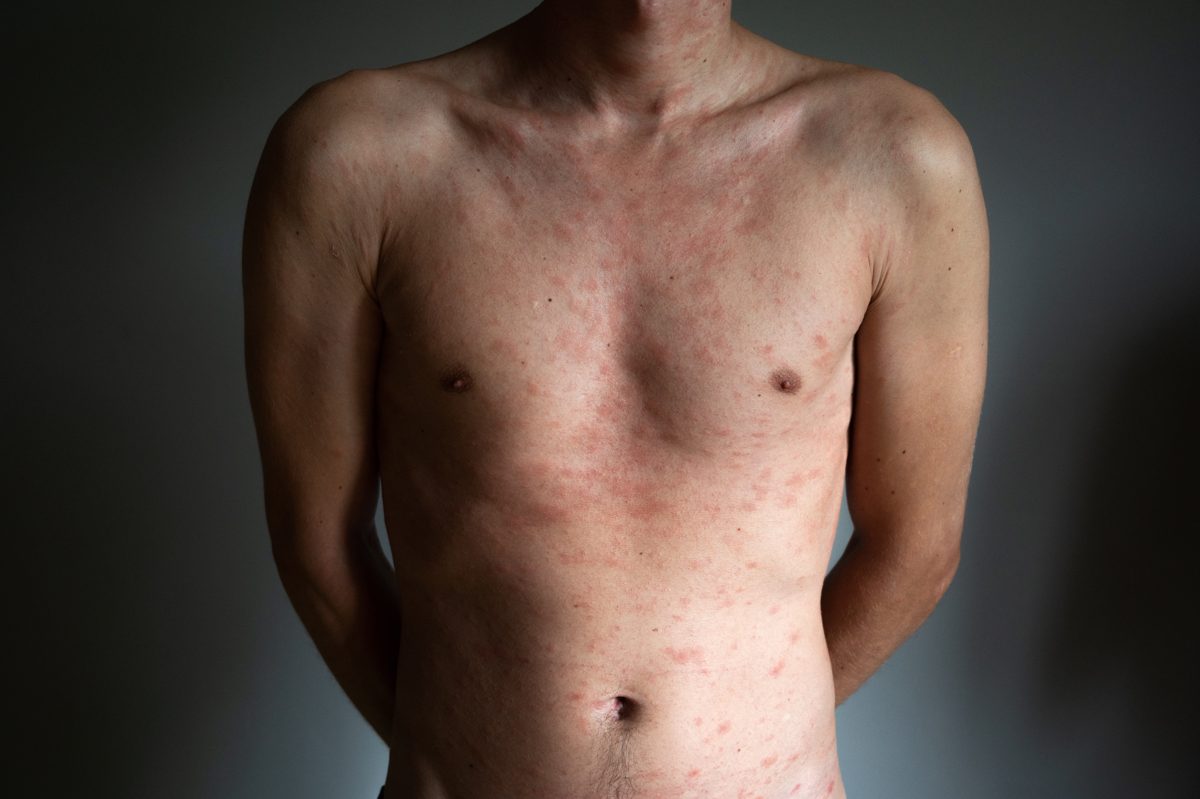
What chickenpox scars are
During chickenpox, inflammation from the varicella-zoster virus destroys collagen in the dermis, and scratching or secondary infection deepens the damage. Between 7% and 18% of people develop permanent depressed scars, around 40% of them on the face. The typical mark is round and punched-out, often 5 to 10 mm across, and more uniform than acne scarring. Discoloration usually fades within months. The pit does not, because the structural collagen is gone.
- Also called
- Varicella scars, post-varicella scarring, pox marks
- Typical timeline
- Discoloration often fades over 3 to 12 months. Pits are permanent without treatment, and decades-old scars still respond.
- Strongest evidence
- TCA CROSS is the most studied option. Microneedling and Er:YAG laser have supporting data.
- See a doctor if
- A pox mark thickens, ulcerates or changes instead of staying stable.
When to see a doctor
- Blisters during an active infection look infected: spreading redness, pus, or worsening pain.
- A pox mark becomes raised, firm and thickened instead of sunken, which suggests a hypertrophic or keloid scar.
- A scar ulcerates, changes shape or bleeds instead of staying stable.
- The scarring is affecting your confidence or daily life enough that you want a plan.
Treatments for chickenpox scars
| Treatment | Evidence | Best for | Cost | |
|---|---|---|---|---|
| TCA CROSS High-concentration acid applied into the base of each pit. In a 100-patient study over six treatments spaced three weeks apart, 41% had marked improvement of more than 75% and 42% had moderate improvement. Expect 3 to 5 days of scabbing per round. |
Moderateand the most studied option here | Deep, punched-out pits | $$ | Full page → |
| Microneedling Typically 3 to 8 sessions with 1 to 2 days of downtime. No heat is involved, so pigmentation risk is low, and it is often preferred in Fitzpatrick IV to VI for that reason. The direct evidence for chickenpox scars specifically is one report, not a trial. |
Limited | Shallow to moderate pits, and any skin tone | $$ | Full page → |
| Er:YAG laser One study reported an average 55% improvement after a single session, with 2 to 4 sessions typical. Less residual heat than CO2 means less pigment-change risk and less deep remodeling. |
Moderate | Pitted facial scars where precision matters | $$$ | Full page → |
| Fractional CO2 laser 1 to 3 sessions with 7 to 14 days of downtime and reported improvement of 50% to 80%. Hyperpigmentation is the main risk, particularly in deeper skin tones. |
Moderate | Widespread severe texture | $$$ | Full page → |
| Subcision with suction A trial of subcision followed by regular suctioning to stop re-tethering reported 71% mean improvement, though the journal it is attributed to does not appear in that article's reference list. Bruising for a few days, and hematoma is the main risk. |
Limited | Scars tethered down by fibrous bands | $$ | Full page → |
| Topical retinoids One study of retinoic acid combined with glycolic acid reported measurable improvement in over 90% of participants, with nightly use over 3 to 6 months. It does not fill a pit. Tretinoin before laser may improve the laser outcome. |
Limitedfor pits, better for pigment | Discoloration and softening the edges of shallow marks | $ | Full page → |
What causes them
The virus triggers an intense inflammatory response that destroys collagen faster than the body replaces it, and the healed blister site collapses into a pit. Scratching and secondary bacterial infection push the damage deeper, which ties scarring closely to how the rash was managed. Adults scar more than children: the adult immune response is more aggressive, lesion counts are higher, and adult skin regenerates more slowly. Roughly one in five people who have had chickenpox carry at least one permanent mark. Vaccination has cut infection rates by over 90%, making this largely a legacy problem.
How they change over time
Active infection
Prevention is only possible in this window. Antivirals within 24 hours of the rash lower lesion counts. Antihistamines, calamine and oatmeal baths reduce scratching. Keeping blisters moist and covered prevents the hard scabs that deepen pits.
Healing and color (roughly 2 to 6 months)
Discoloration comes first, darker or lighter than surrounding skin. It commonly fades within 3 to 6 months, and in adults can take 6 to 12. Scar work waits until the skin has fully healed.
Stable scar (from around 6 months onward)
The pit is now fixed and will not change on its own. Treatment works on scars that are months or decades old, because it restarts the healing response.
How this differs across skin tones
Microneedling and TCA CROSS are preferred in Fitzpatrick IV to VI, because both carry lower post-inflammatory hyperpigmentation risk than aggressive ablative resurfacing. Microneedling uses no heat. One report described three monthly sessions improving both discoloration and texture in a dark-skinned teenager. TCA carries a temporary hyperpigmentation risk in deeper skin and belongs in experienced hands. Microdermabrasion has a lower side-effect profile. CO2 laser carries the highest risk of the options here.
What you can do yourself
Worth doing
- Control the itch during active infection with antihistamines, calamine lotion and colloidal oatmeal baths.
- Keep blisters moist with petroleum jelly and covered, so scabs stay soft and do not turn brittle.
- Wait until the skin has fully healed, roughly two to three months, before starting scar treatment.
- Use a retinoid for the discoloration while you decide about procedures.
Not worth doing
- Scratching and picking scabs. This is the largest single driver of a permanent pit.
- Vitamin E. A systematic review found no significant effect on scar appearance, and it can cause contact dermatitis.
- Aloe vera as a scar treatment. It soothes active skin, but shows no measurable effect on established scar tissue.
- Expecting a cream to fill a pit. Topicals address color, not lost volume.
Common questions
The dark or light patches often do, usually within 3 to 6 months and sometimes 6 to 12 in adults. The pits do not. Those are lost structural collagen, and the skin does not replace it without a treatment that restarts the healing response.
Yes. These scars are stable, not active. Microneedling, subcision, TCA CROSS and laser resurfacing all work by restarting the body's healing response, and older scars respond, just usually more slowly.
Most people need 3 to 8, typically spaced 4 to 6 weeks apart. Minor pigmentation may improve in 2 to 3 sessions; deep pits generally take a course spread over about six months. Final results are usually assessed six months after the last session.
Microneedling and TCA CROSS are commonly preferred, because they carry lower pigmentation risk than aggressive ablative lasers. Microdermabrasion is a gentle alternative. Any laser work should involve conservative settings and a discussion about post-inflammatory hyperpigmentation first.
All chickenpox scars articles

Non-Invasive Chickenpox Scars: A Guide to Post-Varicella Skin
Non-invasive chickenpox scar treatments range from microneedling to chemical peels and topical therapies. Discover which clinical interventions reduce varicella scarring without surgery.

Why Chicken Pox Scars Stay and How to Make Them Go
Chicken pox scars in adults can be stubborn, but treatments like laser resurfacing, microneedling, and chemical peels can deliver real improvements. Here's what the evidence supports.
Chicken Pox Scar Treatment for Adults
Chicken pox scars in adults can be improved with treatments ranging from topical therapies to professional procedures. Learn which options deliver real, measurable results.