Keloid scars
Keloids grow beyond the original wound and rarely fade without treatment. Corticosteroid injection is first line, and recurrence after surgery alone is high.
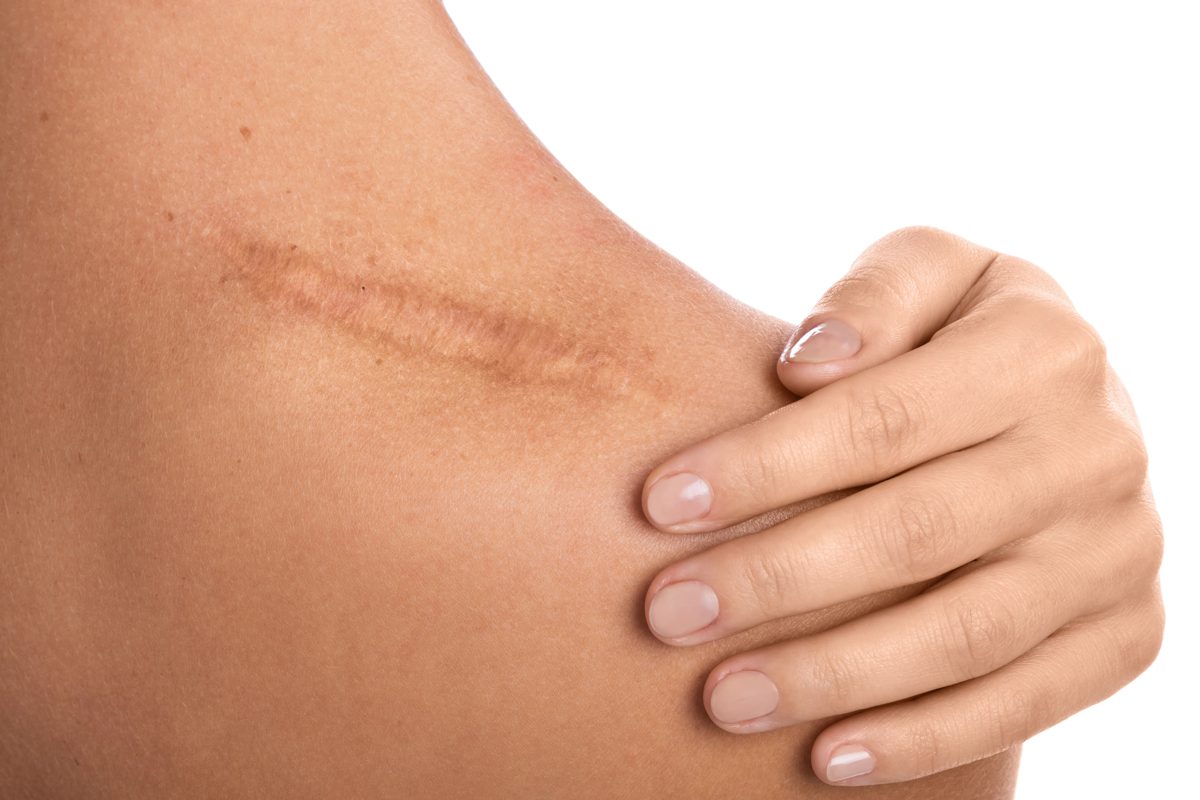
What keloid scars are
A keloid grows past the boundary of the original wound into skin that was never injured, and it rarely regresses on its own. That is what separates it from a hypertrophic scar, which stays inside the wound borders and often flattens by itself over 12 to 18 months. If your scar has stayed within the original outline, read the hypertrophic scars page instead. Keloids appear between three and 12 months after the injury, about 20% of them after a year, and keloid tissue produces far more collagen than normal skin.
- Also called
- Keloid scars, hypertrophic scars, raised or thickened scars
- Typical timeline
- Hypertrophic scars appear at 4 to 8 weeks and often flatten by 12 to 18 months. Keloids appear between 3 and 12 months, with about 20% after a year.
- Strongest evidence
- Intralesional corticosteroid injection, alone or combined with 5-FU. Excision only with radiotherapy or another adjuvant.
- See a doctor if
- A raised scar grows quickly, ulcerates, or looks unlike your other scars.
When to see a doctor
- The lesion is growing quickly, has ulcerated, or looks atypical. A biopsy rules out rarer growths that mimic keloids.
- A raised scar over a joint is limiting your range of motion.
- Itch or pain is disrupting sleep or daily activity.
- Three months of consistent silicone has produced no change in height or texture.
Treatments for keloid scars
| Treatment | Evidence | Best for | Cost | |
|---|---|---|---|---|
| Intralesional corticosteroid Triamcinolone at 10 to 40 mg/mL, injected every four to six weeks. Response rates of 50% to 100% are reported, with recurrence of 9% to 50% over five years. Up to 63% of patients get side effects such as skin thinning or visible vessels. Roughly $250 to $1,000. |
Strongfirst line | Established raised keloids and hypertrophic scars | $$ | |
| Silicone gel / sheeting 12 to 24 hours a day for at least three months. Up to 90% improvement in texture, pliability and color is reported. It softens and fades older keloids but is unlikely to flatten a dense mature one. |
Moderate | Prevention and early, immature raised scars | $ | Full page → |
| Pressure therapy Our sources give ranges of roughly 15 to 40 mmHg worn 12 to 24 hours a day for 4 to 6 months. Pressure earrings after earlobe excision are typically worn about 20 hours a day for six months. Results depend on compliance more than on the device. |
Moderate | Earlobes after excision, limbs, and large or post-burn areas | $ | |
| Excision plus radiotherapy Recurrence drops to around 20% overall and as low as 0% to 8.6% in controlled trials, with radiation started within a day or so of surgery. Excision on its own recurs in 45% to 100% of cases and often comes back bigger. Radiation is generally avoided in children. |
Strong | Large, resistant or disfiguring keloids | $$$$ | Full page → |
| 5-FU and cryotherapy 5-FU is reported effective in 45% to 96% of patients, often mixed with triamcinolone. Cryotherapy shows 30% to 75% success after two or three sessions, but risks permanent white patches because melanocytes are very cold-sensitive. |
Moderate | Keloids that have not responded to steroid alone | $$ | |
| Laser (pulsed dye, Nd:YAG) 3 to 6 sessions, 4 to 8 weeks apart. A Cochrane review of 15 randomized trials in 604 participants rated the overall evidence low or very low certainty. |
Moderatelow certainty | Redness, itch and surface texture. Limited effect on bulk | $$ | Full page → |
What causes them
Genetics are the strongest predictor. Between 30% and 50% of people with keloids have a first-degree relative with them, and up to 76% of those with a strong family history develop keloids at the same body sites as their relatives. Incidence runs 4.5% to 16% in people of African, Asian and Hispanic descent, against under 0.1% in northern European populations. Onset peaks between ages 10 and 30, and both puberty and pregnancy accelerate growth. Location is as important as skin type. The chest, shoulders, upper back and earlobes carry the highest risk, while palms, soles and genitals are almost never affected. Common triggers are surgery, burns, acne, piercings and tattoos.
How they change over time
Normal repair (days 1 to 30)
Bleeding stops, inflammation runs from roughly days 1 to 14, and new tissue is built from days 3 to 30. Nothing at this stage distinguishes a future keloid from a future flat scar.
Divergence (weeks 4 to 12)
Remodeling should quiet down in this period. In keloids the TGF-beta signal stays switched on and collagen keeps accumulating. The early warning signs are persistent redness, firmness, itch and elevation that is not settling.
Established keloid (months to years)
The scar extends beyond the original wound into healthy skin and no longer improves with time. Location now predicts outcome: earlobe keloids recur in roughly 5% to 12% of cases after treatment, chest keloids in 34% to 43%.
How this differs across skin tones
Incidence is 4.5% to 16% in African, Asian and Hispanic populations against under 0.1% in northern European ones, and keloids are essentially absent in people with albinism. Treatment risk follows the same pattern. Aggressive cryotherapy, high-dose steroid and some laser wavelengths can destroy melanocytes and leave permanent white patches or lasting dark ones. Standard practice in darker skin is conservative settings, test patches, cooling, and steroid-sparing agents such as 5-FU or verapamil.
What you can do yourself
Worth doing
- Start silicone once the wound is closed, usually at 10 to 14 days, and continue for three to six months.
- Wear pressure earrings or garments exactly as prescribed after treatment. Adherence determines the result.
- Apply SPF 30 or higher to the scar for 12 to 18 months.
- Book a consultation if redness, itch or thickening has not settled by two months.
Not worth doing
- Elective piercings, tattoos and non-essential cosmetic surgery if you are keloid-prone.
- Dermarolling and standard microneedling on keloid-prone skin, because the needle injury can itself trigger growth.
- Excision without an adjuvant. Recurrence reaches 100% in some series, often with a larger scar.
- Creams as a treatment for a mature keloid. Topicals are preventive.
Common questions
No. Hypertrophic scars often flatten over 12 to 18 months. Keloids are a permanent tissue change and rarely regress without treatment, and that difference determines the treatment plan.
Look at the borders. A hypertrophic scar stays within the original wound; a keloid spreads into healthy skin around it. Timing helps too: hypertrophic scars appear within about four to eight weeks, keloids often months later. A clinical exam is usually enough to tell.
Because the incision is a fresh wound in skin that already overreacts to wounds. Excision alone has a recurrence rate of 45% to 100% and the new keloid is often bigger. Combined with radiotherapy or steroid, recurrence falls to roughly 20% or lower.
Standard microneedling is generally contraindicated for keloid-prone skin, because the micro-injuries can trigger fresh growth. It is used for hypertrophic scars, not keloids, and a personal or family keloid history should always be declared before any needling.
All keloid scars articles
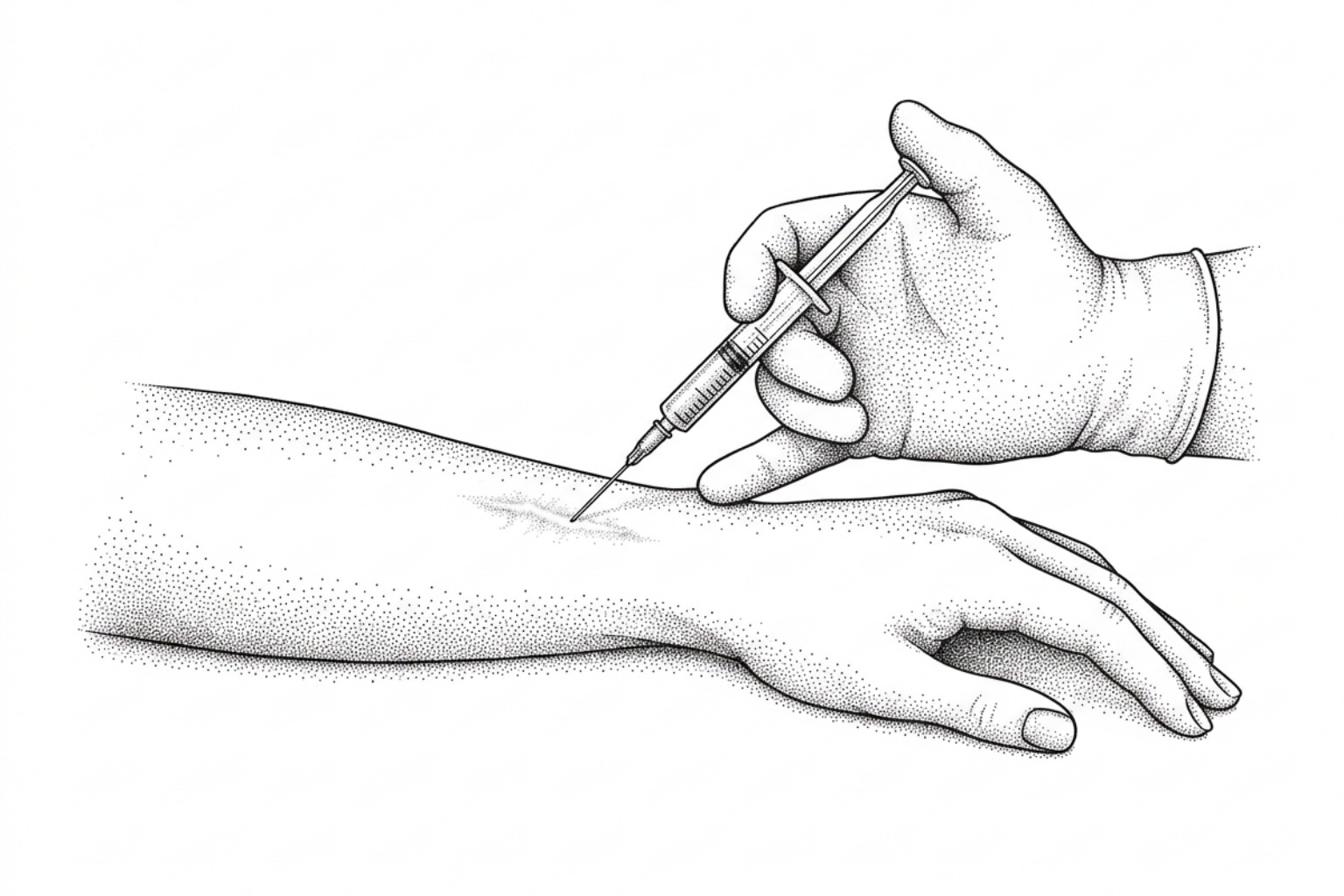
Steroid injection versus silicone and pressure: how clinicians choose.
Steroid injections, silicone sheeting and pressure therapy all flatten raised scars, but they suit different scars and different lives. Here is how clinicians choose between them, and what the trial evidence actually shows.
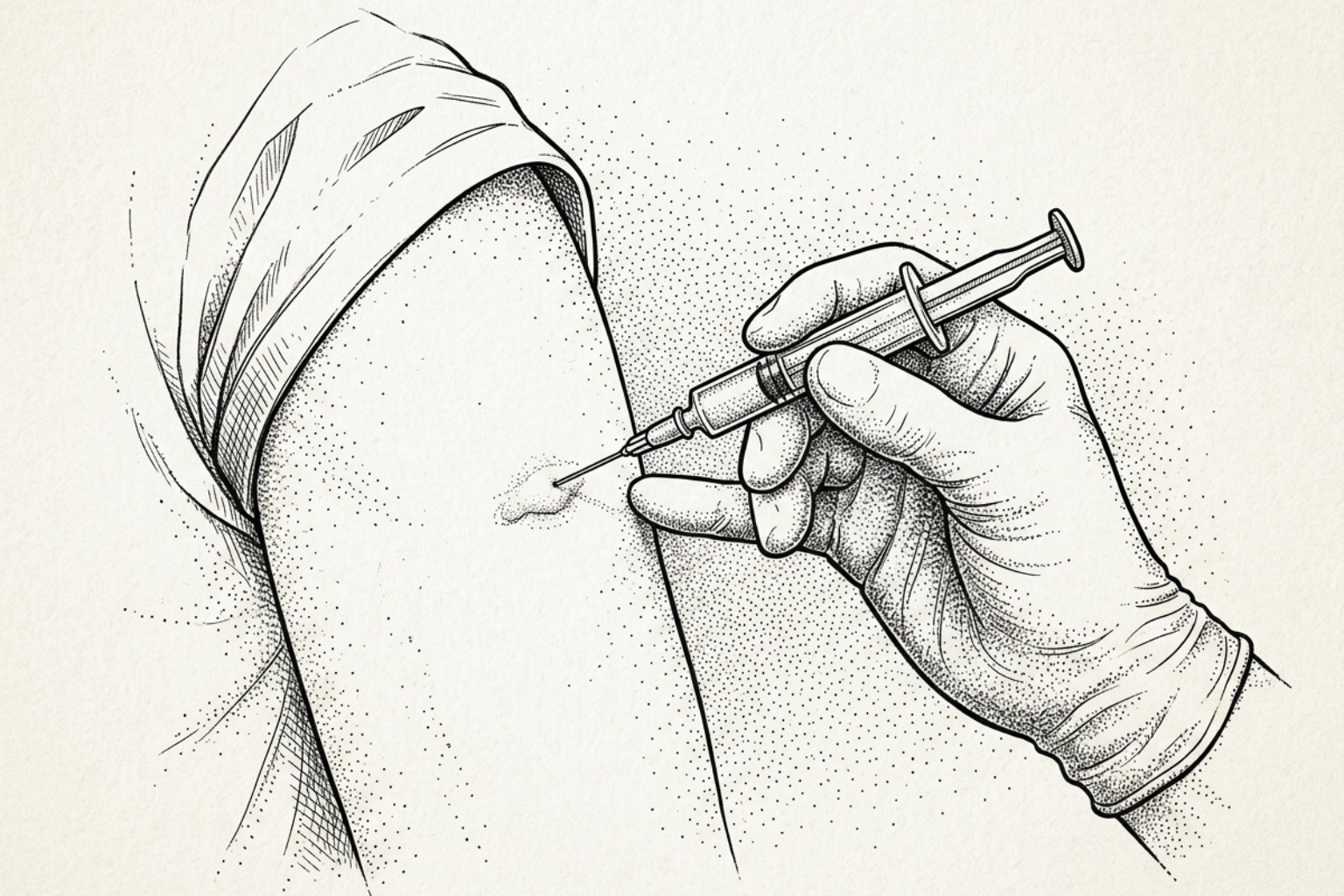
Intralesional corticosteroid for keloids: what the evidence shows.
Intralesional triamcinolone is the first-line keloid treatment worldwide, yet response rates and recurrence vary widely. Here is what the dosing evidence and international consensus actually say.
A Comprehensive Guide to Side Effects of Steroid Injections Into Scars
Steroid injections are the most common keloid treatment, and skin thinning, pigment loss and visible veins are their most common costs. Here is how often each happens and what reduces the risk.
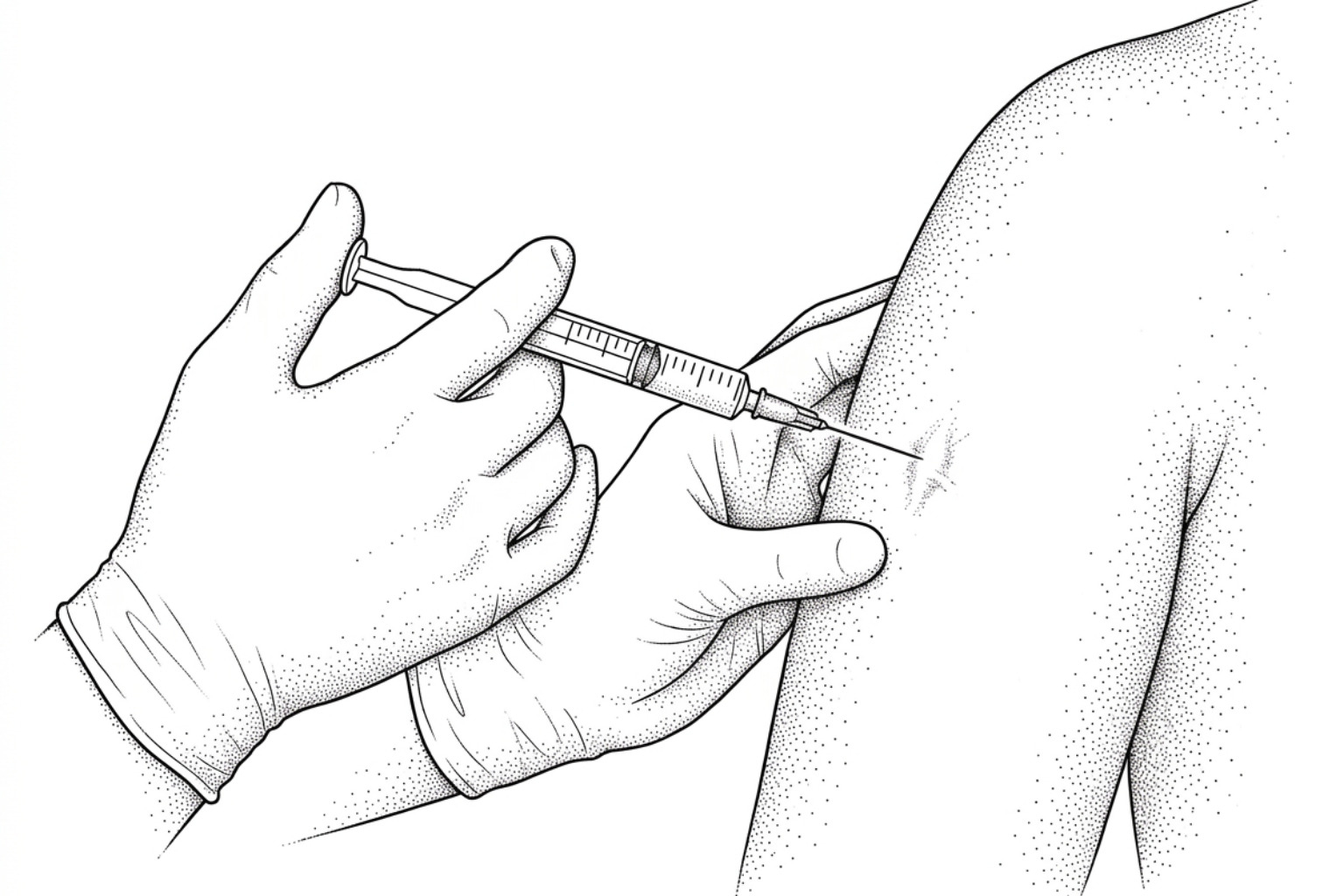
Efficacy of Corticosteroid Injection Combined with 5-FU for Keloids
Combining 5-fluorouracil with triamcinolone outperforms steroid alone for keloids in most trials, with fewer atrophy side effects. Here are the ratios, session counts and trade-offs.
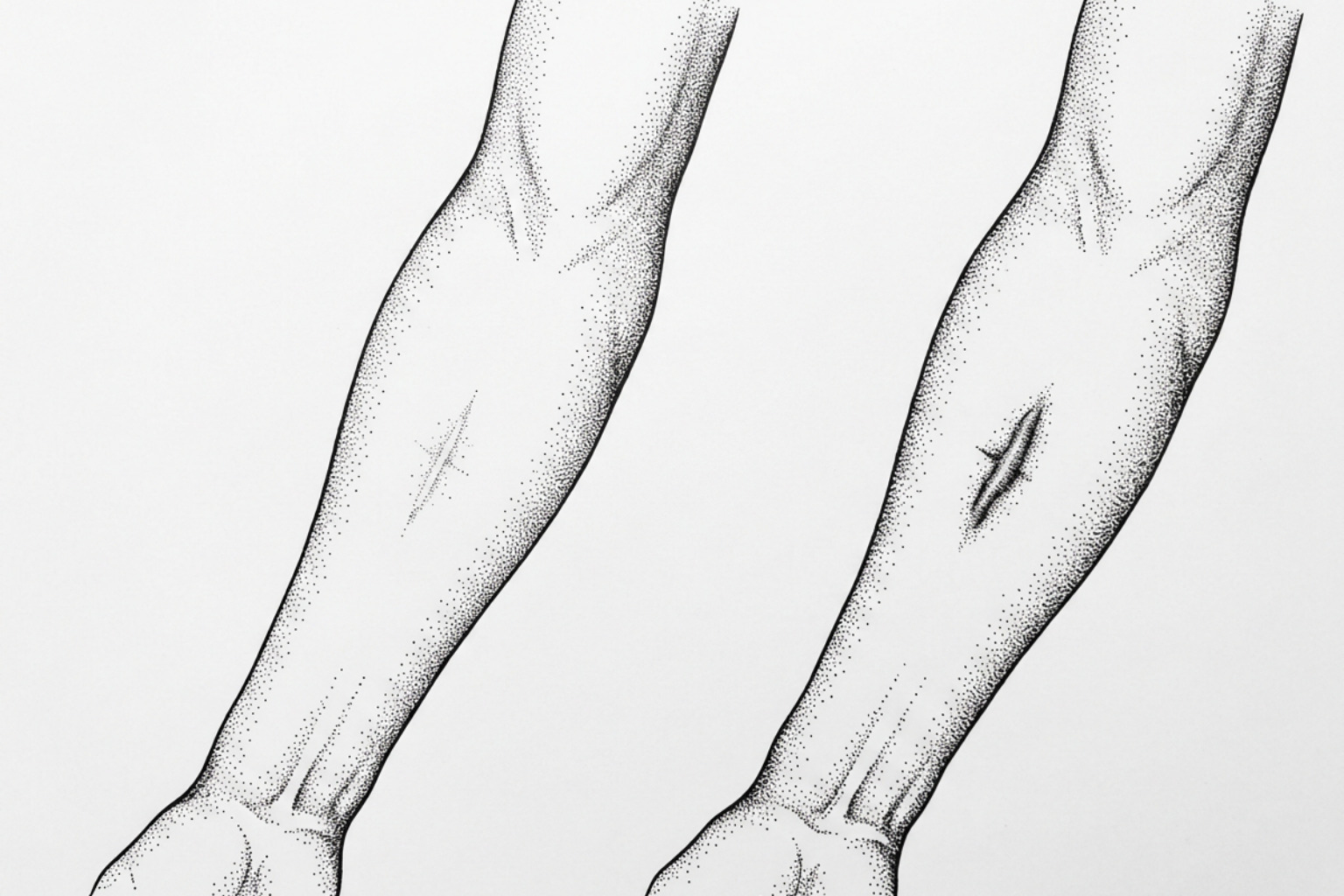
A Practical Guide to Why Two People Scar Differently: Formation Factors
Two people can get the same cut and end up with very different scars. Genetics, fibroblast behaviour, skin tone and the tension across the wound all play a part — and some of those factors you can influence.
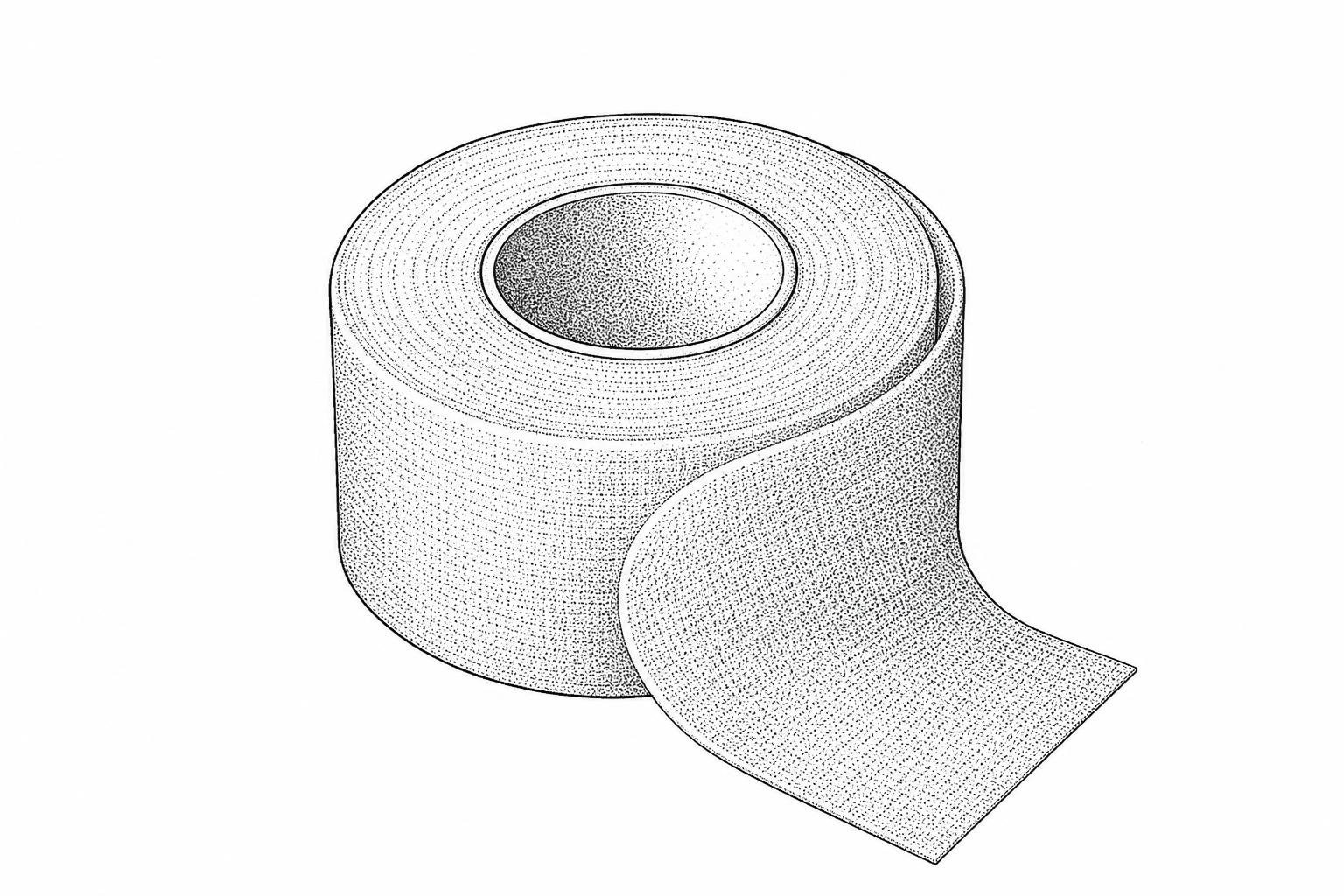
A Comprehensive Guide to Effective Keloid Scar Treatments
Keloids rarely go away on their own, and surgery without follow-up treatment often sees them return larger. Compare steroid injections, silicone sheeting, laser therapy, and surgery with radiation.