The Ultimate Guide to Scar Removal Creams
A dermatologist-reviewed breakdown of scar creams that actually work — silicone, onion extract, retinoids, and botanicals — with clinical evidence and realistic timelines.
Do Scar Removal Creams Actually Work
Scar removal creams are topical formulations designed to reduce the visibility of scars by supporting collagen remodeling, improving hydration, and restoring a more even skin texture. Here is what the clinical evidence indicates about the most effective options:
| Ingredient | Evidence Level | Best For |
|---|---|---|
| Medical-grade silicone | Strong (multiple RCTs) | Hypertrophic scars, keloids, surgical scars |
| Allantoin | Moderate | General scar softening, sensitive skin |
| Onion extract (Allium cepa) | Limited | Mild improvement in texture and color |
| Vitamin E | Weak | Limited clinical support |
Key finding: A systematic review of 34 clinical trials found silicone-based gels and sheets were the most consistently effective topical treatment — the only category supported by multiple high-quality randomized controlled trials.
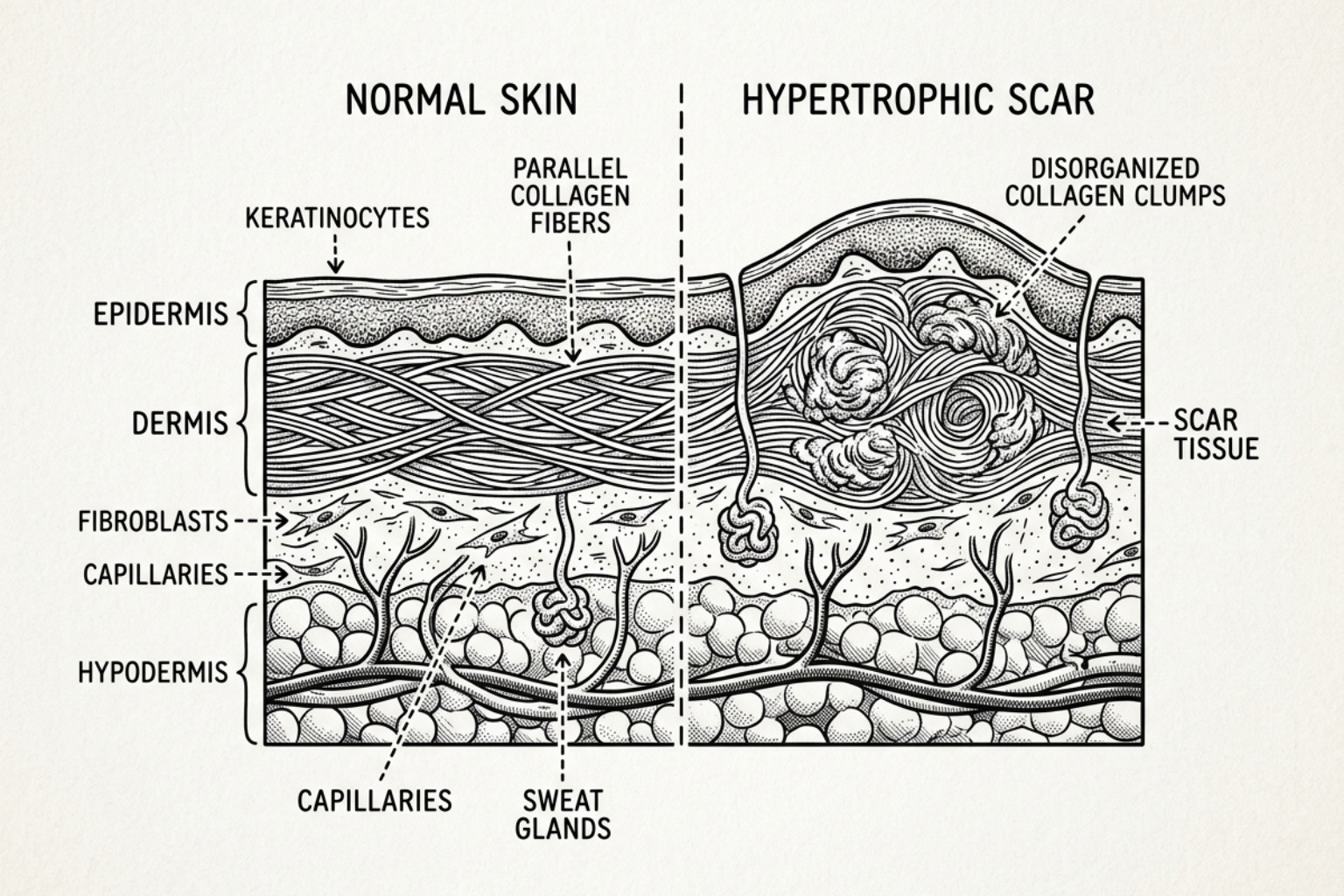
Scars are an unavoidable part of how skin heals. When the dermis — the deeper layer of skin — sustains damage from an injury, surgery, burn, or severe acne, the body rapidly produces collagen fibers to close the wound. The result is scar tissue: structurally different from normal skin, lacking sweat glands, and often visibly distinct in texture and color.
For many people, particularly those dealing with persistent acne scars or post-surgical marks, that visible difference carries a real emotional weight. It can affect confidence in everyday social situations long after the original wound has healed.
The good news is that topical treatments can meaningfully reduce the appearance of many scar types — if the right ingredient is matched to the right scar type and applied with realistic expectations. The important caveat: no cream completely removes a scar. Scar tissue is permanent at the structural level, but its visibility can often be significantly reduced.
This guide reviews what the science actually says about scar removal creams — which ingredients have genuine clinical support, which do not, and how to use them effectively.
How Scars Form and Heal
To understand how scar removal creams work, one must first understand the biological process of scarring. When a wound occurs, the body initiates a complex repair sequence: inflammation, proliferation (building new tissue), and finally, remodeling. It is during this final remodeling phase, which can last for over a year, that topical interventions are most effective.
The primary goal of most effective treatments is to modulate the activity of fibroblasts—the cells responsible for producing collagen. In abnormal scarring, such as keloids or hypertrophic scars, fibroblasts produce excessive amounts of collagen, leading to raised, thick, or discolored tissue.
How Collagen Rebuilds and Hydration Helps
Most scar removal creams utilize two main pathways: hydration and occlusion. By creating a thin, protective barrier over the scar, these creams reduce transepidermal water loss (TEWL). This increased hydration signals to the fibroblasts to "slow down" collagen production. Research suggests that keeping the stratum corneum (the outermost layer of skin) hydrated helps the collagen fibers organize themselves in a more parallel, flat manner, rather than the disorganized, clumped structure typical of raised scars.
What postbiotics and peptides do
Some newer formulations add postbiotics and biomimetic peptides, marketed to support the skin barrier and calm inflammation during the remodeling phase. It is worth being clear-eyed here: robust clinical evidence for these ingredients in scar treatment is currently limited, and they are not established scar therapies. Treat them as unproven adjuncts rather than primary treatments — the strong data still points to silicone.
A systematic review of topical scar products shows that clinical support varies widely between ingredients: silicone gels and sheets carry the strongest evidence, while botanical extracts remain far less proven.
Do Silicone-Based Scar Creams Work
In dermatology, medical-grade silicone is considered the "gold standard" for non-invasive scar management. Whether delivered as a gel or a sheet, silicone is one of the few ingredients with robust clinical backing.
A 2020 systematic review confirmed that silicone gel significantly improves scar outcomes, particularly in reducing the height and redness of hypertrophic scars. It works by mimicking the barrier function of healthy skin. When applied to a scar, the silicone creates an occlusive environment that traps moisture. This hydration is critical because scar tissue itself lacks the sweat and oil glands necessary to maintain moisture.
For those seeking the most scientifically supported option, finding the Best Scar Cream With Silicone is often the first recommendation from plastic surgeons and dermatologists. It is particularly effective for:
- Hypertrophic scars: Raised, red scars that stay within the boundary of the original wound.
- Keloids: Thick, puckered scars that grow beyond the original injury site.
- Surgical incisions: Helping the skin stay flat and supple during the high-risk period immediately following stitch removal.
Natural Ingredients in Scar Creams
While silicone dominates the clinical literature, many over-the-counter scar removal creams rely on botanical extracts. The most famous of these is Allium cepa, or onion bulb extract (often marketed as Cepalin).
Onion extract is believed to have anti-inflammatory and antibacterial properties. Some studies suggest it can help regulate collagen production to prevent the scar from becoming stiff. However, evidence for onion extract is less conclusive than for silicone. While it may improve the overall "cosmesis" (appearance) and softness of a scar, it may not be as effective at flattening significantly raised tissue.
Another common ingredient is Allantoin. Often paired with onion extract, Allantoin is a keratolytic, meaning it helps the skin retain more water and encourages the shedding of dead skin cells. This can make the scar feel softer and smoother to the touch. If you are looking for a gentle formula that focuses on texture, you might explore a Best Scar Reduction Cream that utilizes these soothing agents.
Choosing a Treatment by Scar Type
Not all scars are created equal, and a cream that works for a flat surgical mark might do very little for a pitted acne scar. Choosing the right scar removal creams requires identifying the morphology of your scar.
Hypertrophic and Keloid Scars
These are "raised" scars. They occur when the body overreacts during the healing process. Silicone is the primary recommendation here. By providing constant occlusion, silicone helps "trick" the body into thinking the skin is already thick enough, which signals the fibroblasts to stop producing excess collagen. For a deep dive into managing these specific types, refer to a Hypertrophic Scar Reduction Cream Guide.
Atrophic Scars (Acne and Chickenpox)
Atrophic scars are "indented" or pitted. They occur when there is a loss of underlying fat or muscle tissue, common after severe cystic acne.
- The Reality Check: Most topical scar removal creams cannot "fill in" a deep pit.
- What Creams Can Do: They can soften the edges of the indentation, making them less noticeable, and fade the redness or dark spots (hyperpigmentation) associated with the mark.
For these, ingredients like retinoids (which speed up cell turnover) and Vitamin C (which brightens skin) are often more effective than silicone alone. You can find more specific advice in our Pimple Scar Removal Cream resource.
Surgical Scars
Surgical scars benefit from early intervention. Once the stitches are out and the wound is fully closed, applying a silicone-based gel can reduce the tension on the incision. Reducing tension is a critical, though often overlooked, factor in preventing a scar from widening or becoming hypertrophic.
How to Apply Scar Creams and What to Expect
One of the biggest reasons people find scar removal creams ineffective is improper application or unrealistic expectations. Scar remodeling is a marathon, not a sprint.
When to Start
Never apply scar cream to an open wound, a fresh scab, or oozing skin. The wound must be "epithelialized"—meaning the skin has completely closed. If you’ve had surgery, you must wait until the stitches are removed. For guidance on the exact timing, see When To Apply Scar Cream After Stitches.
Consistency is Vital
Most clinical trials that showed success with silicone or onion extract required the product to be used consistently for 12 to 24 hours a day. For gels, this usually means two applications (morning and night). For silicone sheets, it means wearing the sheet for the majority of the day.
The 2-6 Month Window
Do not expect results in a week. While some users report softer skin within 14 days, significant changes in scar height and color typically take:
- New Scars: At least 8 weeks of daily use.
- Old Scars: 3 to 6 months of daily use.
When treating children, who heal faster but are also prone to more vigorous scarring, specialized pediatric formulas are often recommended to ensure the ingredients are safe for younger, thinner skin. See the Pediatric Scar Reduction Cream Guide for safety parameters.
Combining Sun Protection with Physical Therapies
Using scar removal creams in isolation is often less effective than using them as part of a comprehensive scar management plan.
The Importance of SPF
Scar tissue is highly susceptible to UV damage. When a healing scar is exposed to the sun, it can undergo "permanent hyperpigmentation," turning a dark brown color that is much harder to fade than the original scar. Many dermatologists recommend a scar cream that includes SPF 30+ or applying a separate broad-spectrum sunscreen over your scar treatment every single day.
Massage Therapy
For many surgical or hypertrophic scars, "scar massage" can be a powerful adjunct to creams. Once the wound is closed, gently massaging the area with a cream or oil for a few minutes a day can help break up the dense collagen bonds and improve blood flow to the area. This can also help with the physical discomfort of a "tight" or Itchy Scar Relief Cream can be used during this process to soothe the nerves in the regenerating tissue.
Silicone Sheets vs. Gels
While gels are more convenient for the face and joints, Scientific research on silicone in scar management suggests that sheets may provide a slight advantage because they provide physical "pressure" in addition to occlusion. This pressure helps further flatten the scar. Many patients choose to use a gel during the day (under makeup or clothing) and a silicone sheet at night.
What to Ask Your Doctor
How long does it take for topical treatments to show visible results?
Visible improvement generally begins between 4 and 8 weeks of consistent, daily application. However, for older or more severe scars, it may take 3 to 6 months to see a meaningful reduction in redness or height. Patience and consistency are the two most important factors in success.
Can topical creams completely remove a mature scar?
No topical cream can completely remove a scar and return the skin to its original, pre-injury state. Creams are designed to improve the appearance by flattening the tissue, softening the texture, and fading discoloration. A "successful" treatment usually results in a scar that is much less noticeable to the naked eye.
When to Switch from Creams to Procedures
If a scar is significantly indented (atrophic), very large, or does not respond to 6 months of topical treatment, it may be time to see a board-certified dermatologist. Clinical procedures such as microneedling, laser therapy (like the V-beam for redness), or corticosteroid injections for keloids can achieve results that creams alone cannot. Specifically, microneedling is often used to trigger new collagen production to "lift" indented acne scars.
Which cream to choose
Managing scars is a process that requires an understanding of skin biology and a commitment to long-term care. While the market is flooded with various scar removal creams, the evidence clearly points toward medical-grade silicone as the most effective non-invasive option for raised scars, while botanical extracts like onion extract and allantoin offer secondary benefits for texture and color.
By selecting a product based on evidence, maintaining a consistent application routine, and protecting the area from UV damage, you can significantly influence how your skin repairs itself. For those beginning their journey, starting with a high-quality Best Scar Reduction Cream and following the clinical guidelines outlined here is the best path toward restoring your skin's appearance and your own confidence.
Works Cited
- Tran B, Wu JJ, Ratner D, Han G. “Topical Scar Treatment Products for Wounds: A Systematic Review.” Dermatologic Surgery. 2020;46(12):1564–1571. pubmed.ncbi.nlm.nih.gov/32932267
- Wang F, Li X, Wang X, Jiang X. “Efficacy of topical silicone gel in scar management: A systematic review and meta-analysis of randomised controlled trials.” International Wound Journal. 2020;17(3):765–773. pubmed.ncbi.nlm.nih.gov/32119763
- Yuan X, Shen J, Chen L, Wang L, Yan Q, Zhang J. “Onion extract gel is not better than other topical treatments in scar management: A meta-analysis from randomised controlled trials.” International Wound Journal. 2021;18(3):396–409. pubmed.ncbi.nlm.nih.gov/33372412
- American Academy of Dermatology. “Microneedling can fade scars and more.” aad.org
- Cleveland Clinic. “Scars: Treatment and Cause.” my.clevelandclinic.org
This content is for informational purposes only and does not constitute medical advice. Consult a qualified healthcare professional for diagnosis and treatment.