How to Choose a Hypertrophic Scar Reduction Cream That Works
Not all hypertrophic scar creams deliver results. Learn what active ingredients to look for, what the clinical evidence says, and how to pick a cream that actually helps flatten and fade raised scars.
What Research Says About Scar Reduction Creams
Hypertrophic scar reduction cream is one of the most widely used non-invasive options for managing raised, thickened scars that form after surgery, burns, or skin injuries. For how these creams stack up against every other topical option, see our best scar removal creams compared by ingredient.
Before diving deeper, here is a quick summary of what the evidence shows:
| Question | Evidence-Based Answer |
|---|---|
| What ingredient has the strongest evidence? | Silicone polymer (gel or sheet form) |
| How long does treatment take? | Typically 8-12 weeks minimum; up to 6 months for older scars |
| What improvements can be expected? | Reductions in scar height, redness, texture, and itching |
| Are creams as effective as injections or laser? | No — creams are first-line for mild-to-moderate scars; severe cases require clinical intervention |
| When should treatment start? | As soon as the wound has fully closed |
Raised scars form when the skin's normal repair process goes into overdrive. After an injury, the body produces collagen to close the wound. In some people, this process doesn't switch off at the right time. The result is a hypertrophic scar — a firm, raised, often reddish band of tissue that stays within the original wound boundary. This occurs during the remodeling phase of skin repair, where collagen production fails to stabilize and organize correctly.
Unlike keloid scars, which grow beyond the injury site, hypertrophic scars are confined to the wound area and may improve on their own over 12 months or more. But for many people, that wait is frustrating — especially when a scar is visible, itchy, or affects movement.
Topical creams are often the first step explored. They are accessible, non-invasive, and carry a low risk of side effects. However, not all products are equally supported by clinical evidence. Understanding which ingredients work, how to use them correctly, and when to escalate to medical treatment can make a significant difference in outcomes.
This guide reviews the current clinical evidence on hypertrophic scar reduction creams — including active ingredients, mechanisms, realistic timelines, and when a dermatologist's input is needed.
How Raised Scars Form
To understand why a hypertrophic scar reduction cream might work, one must first understand the "over-enthusiastic" nature of the skin’s repair team. When the dermis (the deep layer of the skin) is injured, cells called fibroblasts rush to the scene. Their job is to produce collagen, the structural protein that acts as the "scaffolding" for new tissue.
In a standard healing scenario, collagen production eventually slows down, and the tissue undergoes a "remodeling" phase where the fibers are organized into a functional, flat scar. However, in hypertrophic scars, this process becomes dysregulated. Research into the molecular basis of hypertrophic scars (Tuan & Nichter, 1998) indicates that signaling molecules, particularly Transforming Growth Factor-beta (TGF-beta), remain active for too long.
This persistent signaling causes fibroblasts to transform into myofibroblasts—cells that not only pump out excessive collagen but also physically contract the tissue. This results in the characteristic raised, rigid appearance of the scar.
Hypertrophic Scars vs. Keloids: The Difference
It is a common clinical mistake to confuse hypertrophic scars with keloids. While both are raised, their internal structures and behaviors are distinct. In a hypertrophic scar, the collagen fibers are typically arranged in a pattern parallel to the surface of the skin. In contrast, keloids feature disorganized, thick "whorls" of collagen that extend far beyond the original wound boundary.
| Feature | Hypertrophic Scar | Keloid Scar |
|---|---|---|
| Growth Boundary | Remains within original wound edges | Extends beyond original wound edges |
| Development Time | 1 to 2 months post-injury | Months to years post-injury |
| Natural Regression | May flatten over 12–24 months | Rarely regresses spontaneously |
| Collagen Structure | Organized, parallel fibers | Disorganized, thick bundles |
| Common Sites | Shoulders, neck, knees, elbows | Earlobes, chest, back |
Hypertrophic scars are particularly common in areas of high skin tension, such as the joints or the chest. Because these scars are confined to the wound site and have a higher likelihood of responding to topical pressure and hydration, they are prime candidates for treatment with a hypertrophic scar reduction cream.
Which cream ingredients actually work
When browsing the aisles for a scar treatment, the ingredient list can look like a chemistry experiment gone wrong. However, only a few specific components have stood the test of rigorous clinical trials.
Silicone Polymer: The Gold Standard
Silicone is the most researched and recommended topical ingredient for scar management, and it is the right place to start. For treating an established hypertrophic scar this site grades the evidence Moderate rather than Strong, because the Cochrane review specific to that question rates every comparison it makes as low or very low certainty. The study often quoted for silicone, published in the Journal of Cutaneous and Aesthetic Surgery, shows both the promise and the limits. It followed 30 patients using self-drying silicone gel and found 60% of scars graded normal after six months, but it was an uncontrolled case series with no comparison group, mixing superficial, hypertrophic and keloid scars, and its own discussion names silicone gel sheeting and intralesional corticosteroid, not gel, as the two treatments with sufficient evidence behind them.
Silicone is unique because it does not need to be absorbed into the bloodstream to work. Instead, it sits on top of the scar, creating a protective, semi-occlusive barrier.
Onion Extract (Allium Cepa)
Often listed as "Cepalin" in commercial formulations, onion extract has been used for decades. It is believed to have anti-inflammatory and antibacterial properties. Some research, such as the study by Hosnuter et al. (2007), suggests it may help inhibit fibroblast activity, potentially slowing down the production of excess collagen. While it is often used in conjunction with other ingredients, its efficacy as a standalone treatment is generally considered lower than that of silicone.
Vitamin E and Botanical Additives
Vitamin E scar healing is a popular topic, but the scientific consensus is surprisingly mixed. While Vitamin E is an antioxidant that helps moisturize the skin, some clinical trials have shown it can actually cause contact dermatitis in a significant percentage of users without providing superior flattening compared to simple emollients.
Other botanicals like Gotu kola (Centella asiatica) are increasingly included in formulations. Gotu kola contains triterpenoids that may stimulate collagen production in a controlled manner, which is why it is often used in aloe vera scar reduction blends to support healthy tissue regeneration rather than the "wild" growth seen in hypertrophic tissue.
How the cream works
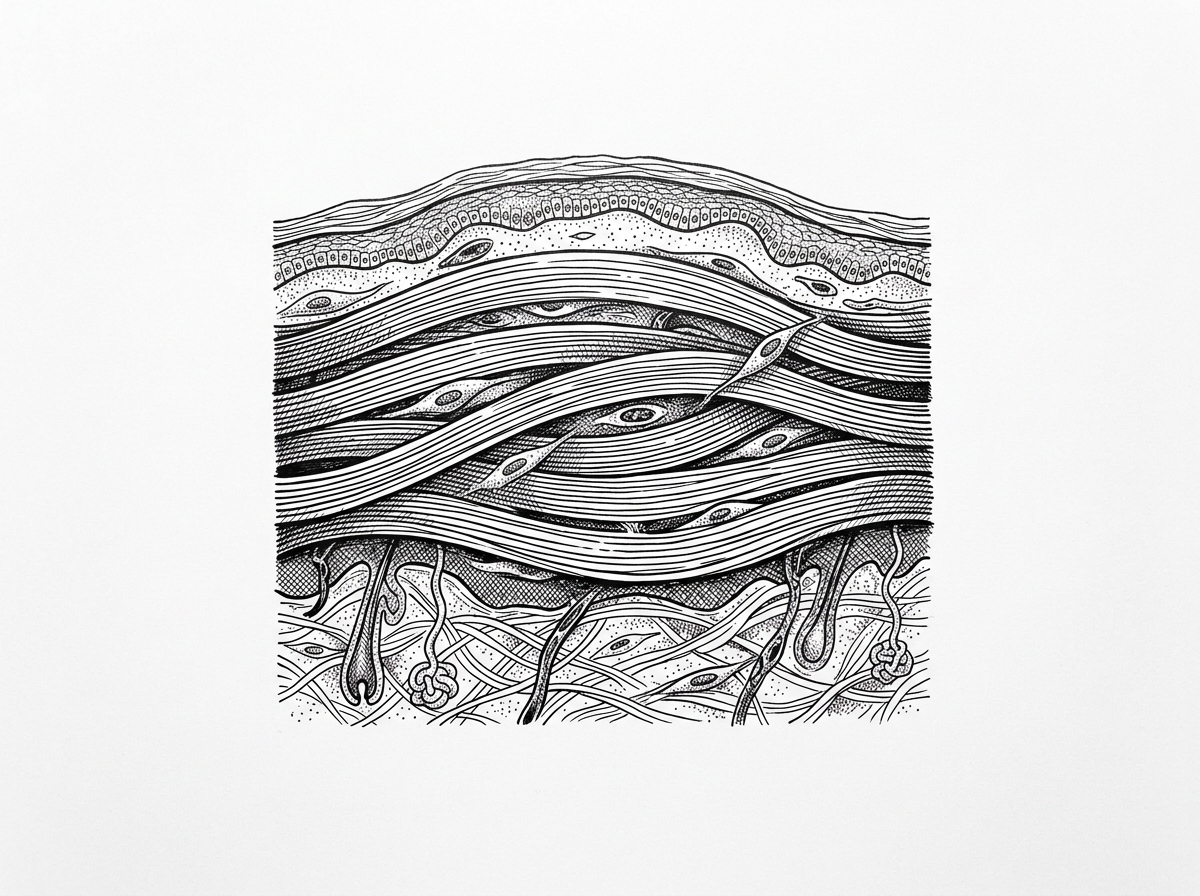
How does a simple cream change the physical height of a scar? It isn't magic; it's physics and biology working together. The primary mechanism is occlusion and hydration.
- Water Retention: When a hypertrophic scar reduction cream (especially one containing silicone) is applied, it creates a waterproof seal. This prevents "Transepidermal Water Loss" (TEWL). Research on silicone gel and skin hydration shows that keeping the stratum corneum (the outermost skin layer) hydrated sends a signal to the deeper layers to stop producing excess collagen.
- Temperature Modulation: The thin film of cream can slightly increase the temperature of the scar tissue. This may increase the activity of collagenase, an enzyme that breaks down excess collagen.
- Protection: By shielding the sensitive, newly formed tissue from bacteria and environmental friction, the cream reduces the "stress" on the wound, preventing the inflammatory response that triggers more scarring.
Plant extracts and antioxidants
While silicone handles the "physical" side of scar reduction, botanical extracts address the "chemical" environment of the skin.
- Allantoin: Found in many creams, this helps soften the keratin in the skin, making it more pliable and allowing other ingredients to penetrate more effectively.
- Quercetin: A flavonoid often found in onion extract, it may help reduce the redness (erythema) associated with fresh hypertrophic scars.
- Triterpenoids: These compounds, found in Gotu kola, are studied for their ability to balance the extracellular matrix, ensuring that the "scaffolding" being built is sturdy but not excessive.
Creams versus in-office treatment
For many, a hypertrophic scar reduction cream is the starting point, but it is not always the finish line. If a scar is particularly thick, painful, or limiting joint movement, medical interventions may be necessary.
Corticosteroid Injections
This is often considered the most effective "active" treatment for flattening established hypertrophic scars. A dermatologist injects a steroid (like triamcinolone) directly into the scar tissue. This breaks the bonds between collagen fibers and shuts down the inflammatory signaling. While highly effective, it can occasionally cause skin thinning or color changes.
Laser Therapy
The Pulsed-Dye Laser (PDL) is the gold standard for reducing the redness of a scar. It works by targeting the blood vessels that feed the scar tissue. Fractional CO2 lasers are also used to "resurface" the scar, creating microscopic channels that trigger the body to replace the lumpy tissue with smoother, more organized skin.
Cryotherapy and Surgery
Cryotherapy involves "freezing" the scar tissue with liquid nitrogen to cause it to slough off. Surgical revision is a last resort, where the old scar is cut out and the wound is re-closed with specialized techniques to minimize tension. Because surgery carries the risk of creating a new hypertrophic scar, it is almost always followed by immediate silicone therapy or injections.
Microneedling and Dermarolling
For some, microneedling or dermarolling is used to break up scar tissue. By creating "controlled micro-injuries," these tools can help topical creams penetrate deeper into the dermis. However, this should be done with caution on hypertrophic scars, as excessive irritation can sometimes trigger more growth.
How to apply the cream
The most effective cream in the world will fail if it is applied incorrectly. Patient compliance is the single biggest factor in whether a scar improves or stays the same. Consistent scar care and adherence to application protocols are essential for optimal results.
The "Clean and Thin" Rule
Before application, the area must be washed with mild, fragrance-free soap and patted completely dry. Applying cream to damp skin can trap moisture in a way that leads to irritation or "maceration" (where the skin becomes soggy and white).
A hypertrophic scar reduction cream should be applied in a very thin layer, spreading the gel in a single direction to ensure an even film. If the gel is still sticky or visible after five minutes, too much was used. The goal is to create a microscopic film, not a thick mask.
Frequency and Duration
Clinical studies on self-drying silicone gel outcomes emphasize that the barrier must be maintained as close to 24 hours a day as possible. Most experts recommend a twice-daily application—once in the morning and once before bed.
- New Scars: Treatment should begin as soon as the wound is closed (no scabs, no bleeding). This is usually 10–14 days after an injury or surgery.
- Old Scars: Even scars that are several years old can respond to treatment, though the process is much slower.
What results to expect
Success is measured in "fading," not "disappearing." Scars are permanent changes to the skin's architecture, but a good old scar lightening serum or cream can achieve:
- Texture Reduction: The scar feels softer and less "ropey."
- Height Flattening: The raised bump becomes more level with the surrounding skin.
- Erythema Fading: The bright red or purple color shifts toward a pale pink or flesh tone.
- Pruritus Relief: One of the most immediate benefits is the reduction in itching and tenderness.
Limits and safety of scar creams
While generally safe, topical treatments are not without risks. The most common side effect is contact dermatitis, characterized by redness, itching, or small blisters. This is often a reaction to fragrances, preservatives, or even active ingredients like Vitamin E or onion extract.
Skin problems from occlusion
If a cream is applied too thickly or the skin is not allowed to "breathe," moisture can build up under the film. This can lead to maceration or folliculitis (inflammation of the hair follicles). If a rash develops, treatment should be paused until the skin clears.
The Challenge of Burn Scars
Post-burn scar management is particularly complex. Burn scars often cover larger surface areas and are more prone to "contracture," where the scar pulls the skin tight and restricts movement. While a hypertrophic scar reduction cream is helpful, burn survivors often require a combination of silicone, custom-fit pressure garments, and physical therapy to maintain mobility.
Realistic Expectations
It is important to remember that scar treatment is a marathon, not a sprint. The skin's remodeling phase lasts for a full year. If a cream claims to "erase scars in 48 hours," it is likely ignoring the basic biological reality of skin regeneration.
Frequently Asked Questions about Hypertrophic Scar Creams
How long does it take for a hypertrophic scar reduction cream to show results?
For a fresh scar, initial softening and a reduction in itching can occur within 2 to 4 weeks. However, significant flattening and color change usually require at least 8 to 12 weeks of consistent, twice-daily use. Older scars may require 6 months or more of treatment to show noticeable improvement.
Can topical creams prevent hypertrophic scars from forming after surgery?
Yes. Clinical evidence suggests that starting silicone therapy as soon as the sutures are removed can significantly reduce the risk of a scar becoming hypertrophic. This is often referred to as "prophylactic" treatment. By maintaining hydration early, the "panic response" from fibroblasts that leads to collagen overproduction is minimized.
When should I consult a dermatologist instead of using over-the-counter creams?
Professional consultation is recommended if:
- The scar is growing rapidly beyond the original wound (suggesting a keloid).
- The scar is located near a joint and is restricting the range of motion.
- The scar is severely painful or persistently "hot" to the touch.
- A hypertrophic scar reduction cream has been used for 3 months with zero change in height or texture.
Why silicone is the first thing to try
Choosing a hypertrophic scar reduction cream doesn't have to be a guessing game. The weight of clinical evidence points toward silicone-based formulations as the most effective first-line defense against raised scars. By providing a hydrated, protected environment, these creams allow the skin to finish its remodeling phase without the interference of excess collagen.
While botanical extracts like onion extract and Gotu kola may offer secondary benefits like redness reduction and antioxidant support, they work best when paired with the occlusive power of silicone. Consistency is the most critical factor in treatment success; a simple routine performed twice daily for three months is far more effective than an expensive treatment used sporadically.
For individuals struggling with a scar that is painful, restrictive, or simply not responding to home care, modern dermatology offers a "layered" approach. From steroid injections to advanced laser resurfacing, there are many paths to smoother skin.
For more evidence-based guides on skin regeneration and wound care, subscribe for more evidence-based scar research.
This content is for informational purposes only and does not constitute medical advice. Consult a qualified healthcare professional for diagnosis and treatment.
Works Cited
- Ahn, S. T., Monafo, W. W., & Mustoe, T. A. (1989). Topical silicone gel: a new treatment for hypertrophic scars. Surgery, 106(4), 781–786. https://pubmed.ncbi.nlm.nih.gov/2529659/
- Gold, M. H., et al. (2014). Updated international clinical recommendations on scar management: Part 2 — algorithms for scar prevention and treatment. Dermatologic Surgery, 40(8), 825–831. https://pubmed.ncbi.nlm.nih.gov/25068544/
- Hosnuter, M., et al. (2007). The effects of onion extract on hypertrophic and keloid scars. Journal of Wound Care, 16(6), 251–254. https://pubmed.ncbi.nlm.nih.gov/17722521/
- Puri, N., & Talwar, A. (2009). The efficacy of silicone gel for the treatment of hypertrophic scars and keloids. Journal of Cutaneous and Aesthetic Surgery, 2(2), 104–106. https://pmc.ncbi.nlm.nih.gov/articles/PMC2918339/
- Tuan, T. L., & Nichter, L. S. (1998). The molecular basis of keloid and hypertrophic scar formation. Molecular Medicine Today, 4(1), 19–24. https://pubmed.ncbi.nlm.nih.gov/9494966/