Finding the Best Scar Removal Treatment for Your Unique Needs
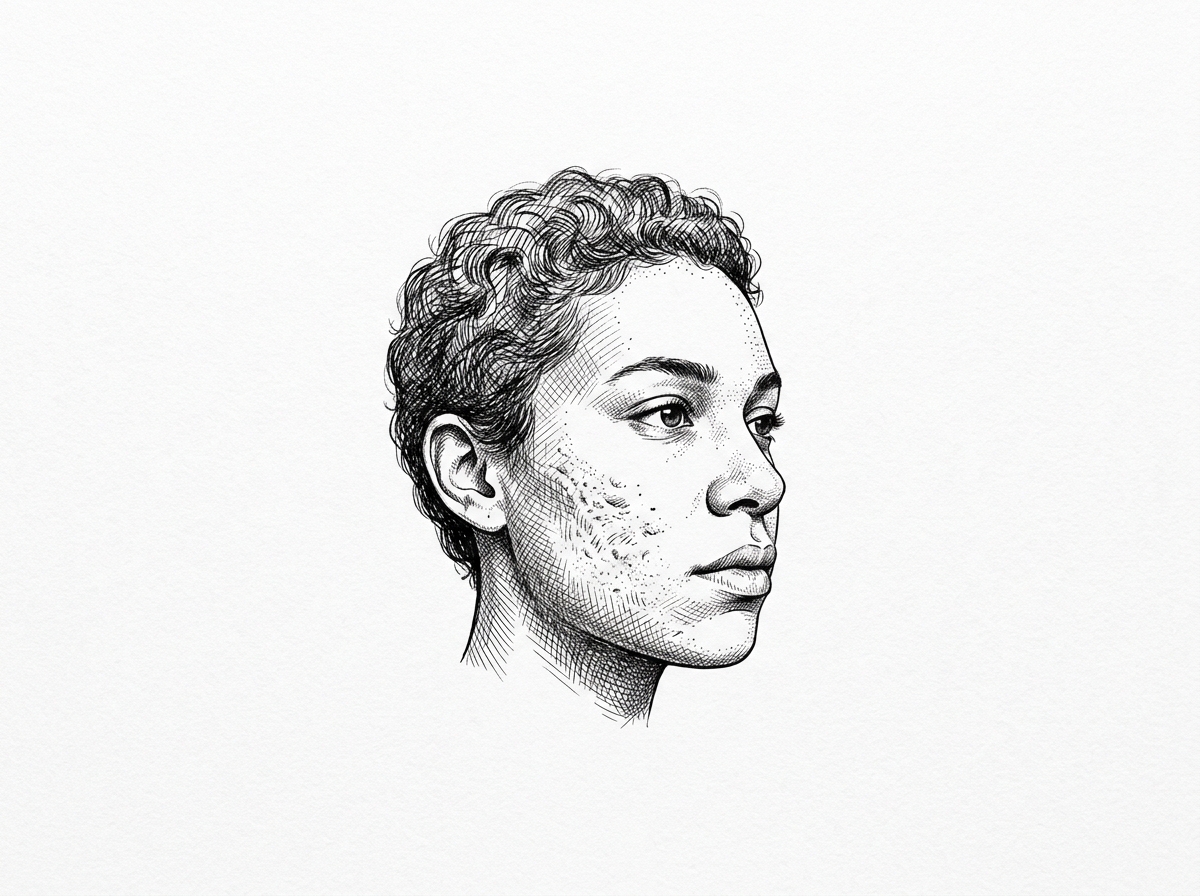
The best scar removal treatment depends on scar type, age, and skin tone. Explore clinically supported options ranked by effectiveness for different scar categories.
What Is the Best Scar Removal Treatment? A Clinical Overview
The best scar removal treatment depends on the type of scar, its age, and the patient's skin tone — no single option works for everyone. The table below summarizes the most evidence-supported options by scar type.
| Scar Type | First-Line Treatment | Supporting Evidence |
|---|---|---|
| Hypertrophic / Keloid | Topical silicone gel sheets | Moderate; still first line in practice, but Cochrane rates the trial evidence low to very low certainty |
| Atrophic / Acne | Microneedling + PRP or PRF | Strong; 70% mean improvement reported |
| Flat / Discolored | Retinoids + chemical exfoliants | Moderate; 91% improvement at 12 weeks in one study |
| Contracture (burn) | Laser resurfacing + surgery | Moderate to strong depending on severity |
| Raised (early) | Corticosteroid injections | Strong; well-established in clinical guidelines |
Scars are a natural outcome of skin repair. When the dermis — the deeper layer of skin — is damaged, the body responds by producing collagen-based tissue to close the wound. That repair process is efficient, but it rarely restores the original skin structure. The result is scar tissue: thicker, less elastic, and often visually distinct from the surrounding skin.
Nearly everyone develops at least one scar in their lifetime, whether from acne, surgery, injury, or burns. For many people, especially those with visible facial scarring, the psychological impact is significant — affecting confidence, social comfort, and quality of life.
The challenge is that scars are not uniform. A raised keloid behaves very differently from a sunken acne pit or a tight burn contracture. Treatments that flatten raised tissue can worsen depressed scars. Procedures safe for lighter skin tones carry real risks — such as post-inflammatory hyperpigmentation — for people with darker complexions.
Research also shows that scars continue to remodel for up to one year after injury, while keloids can continue growing for years beyond the original wound borders. This means timing matters as much as treatment choice.
The sections below examine what the clinical evidence actually says about each major treatment category, how to match interventions to specific scar types, and what realistic outcomes look like across skin tones and scar maturities.
Best scar removal treatment terms explained:
How scars form and change over time
To identify the best scar removal treatment, one must first understand the biological mechanism of scar formation. Scars are not merely "extra skin"; they are composed of a specialized extracellular matrix where collagen fibers are arranged in a dense, parallel fashion, unlike the basket-weave pattern found in healthy dermis.
The primary architect of this tissue is the fibroblast. During the proliferation phase of wound healing, fibroblasts migrate to the injury site to synthesize collagen. If the inflammatory signal persists or if the mechanical tension on the wound is high, fibroblasts may overproduce collagen, leading to raised scars.
The main scar types
According to Cleveland Clinic, scars are categorized based on their physical characteristics and the underlying healing dynamics:
- Atrophic Scars: These appear as depressions or pits in the skin. They occur when the body fails to produce enough collagen during the healing process, common after acne or chickenpox. For more detailed insights, see this guide on atrophic scar microneedling therapy.
- Hypertrophic Scars: These are thick, raised, red scars that remain within the boundaries of the original wound. They often develop in areas of high skin tension.
- Keloid Scars: Unlike hypertrophic scars, keloids grow beyond the original injury site. They are caused by an aggressive overgrowth of granulation tissue and are more prevalent in individuals with darker skin tones or red hair.
- Contracture Scars: Typically resulting from burns, these scars tighten the skin and can impair movement if they form over joints.
The severity and appearance of these scars are influenced by several factors: the depth of the initial wound, its anatomical location, the patient's age, and genetic predispositions. For instance, scars on the chest or back are more prone to becoming keloidal due to the thickness of the skin and constant mechanical pull.
Which scar treatments actually work
Selecting the best scar removal treatment requires balancing clinical efficacy with patient-specific factors such as downtime and risk tolerance. Modern dermatology has moved toward combination therapies, as single modalities rarely address all aspects of a scar (color, texture, and volume).
Clinical consensus, supported by resources like the laser treatment for scars complete guide, indicates that while topicals are excellent for prevention and early-stage management, older or more severe scars usually require physical intervention.
Lasers for redness and texture
Laser therapy is often considered a cornerstone of professional scar management. It works by using specific wavelengths of light to target either blood vessels (to reduce redness) or water in the skin (to vaporize tissue and stimulate new collagen).
StatPearls research on Laser Revision of Scars highlights that lasers do not "erase" scars but rather replace a noticeable scar with a less noticeable one.
Primary Laser Modalities:
- Pulsed-Dye Laser (PDL): Operating at 585–595 nm, this is the gold standard for red, hypertrophic scars. It targets hemoglobin, collapsing the blood vessels that "feed" the scar and reducing its height and redness. One early case series of 14 patients reported 57% to 83% improvement after one or two sessions, in erythematous and hypertrophic scars; it is small and uncontrolled, so treat the range as indicative rather than settled Alster 1994.
- Fractional Ablative Lasers (CO2 and Er:YAG): These create microscopic "columns" of thermal damage, leaving surrounding tissue intact to speed up healing. This is particularly effective for surgical scars. You can view clinical expectations in this resource on surgical scar laser treatment.
- Fractional Non-Ablative Lasers: These heat the dermis without vaporizing the surface layer. While they require more sessions than ablative lasers, the downtime is significantly lower, making them a popular choice for atrophic acne scars.
Where silicone and creams fit in
For many patients, the best scar removal treatment starts at home. Clinical guidelines from the NHS and other health authorities emphasize that silicone is the only topical ingredient with a robust body of evidence for both preventing and treating hypertrophic and keloid scars.
How silicone works on scars
Silicone gel and sheets work through two primary mechanisms:
- Hydration: By creating an occlusive barrier, silicone reduces transepidermal water loss (TEWL). This signals the fibroblasts to stop overproducing collagen.
- Temperature and Pressure: Sheets can provide a slight increase in temperature and gentle pressure, which helps to soften and flatten raised tissue.
Beyond silicone, medicated creams containing retinoids (Vitamin A derivatives) and glycolic acid have shown promise for atrophic scars. One significant study found that 91% of participants using a combination of retinoids and glycolic acid saw significant improvement in acne scars after 12 weeks. For a deeper dive into topical options, refer to the best scar reduction cream analysis.
In-office options for atrophic and raised scars
When topical treatments or non-ablative lasers are insufficient, dermatologists turn to mechanical and chemical procedures to remodel the skin.
Microneedling and Platelet-Rich Plasma (PRP)
Microneedling, also known as collagen induction therapy, involves using fine needles to create controlled micro-injuries. When combined with Platelet-Rich Plasma (PRP) or Platelet-Rich Fibrin (PRF), the results are significantly enhanced. A 2019 review indicated that the combination therapy yielded a 70.43% mean improvement in atrophic scars compared to just 39% for microneedling alone.
This approach is highly favored for acne scars because it avoids the heat associated with lasers, making it safer for patients with darker skin tones who are at risk for pigmentation changes. Detailed protocols can be found in the microneedling acne keloid scars complete guide.
Specialized Techniques for Complex Scars
- Subcision: For "rolling" acne scars that are tethered to deeper tissue, a needle is used to break the fibrous bands, allowing the skin to lift.
- Punch Excision: Deep "ice pick" scars may be physically removed and the skin sutured back together, replacing a deep pit with a faint, linear scar.
- Corticosteroid Injections: These are the first-line treatment for keloids. They break the bonds between collagen fibers and reduce inflammation. For those seeking alternatives to surgery, research into non-invasive keloid removal is ongoing.
- 5-Fluorouracil (5-FU): Originally a chemotherapy agent, low-dose 5-FU is now used off-label to inhibit fibroblast proliferation in stubborn keloids, often in combination with steroids.
Matching treatment to your skin and scar age
A critical factor in selecting a treatment plan is the Fitzpatrick skin type scale, which categorizes skin by its reaction to UV light and its pigment content.
Patients with Fitzpatrick types IV through VI (darker skin tones) have a higher risk of Post-Inflammatory Hyperpigmentation (PIH) or even new scarring if aggressive lasers or deep chemical peels are used. For these individuals, non-thermal treatments like microneedling or specific chemical peels are often the best scar removal treatment choice. Insights on safe chemical usage are available in the chemical peel scars complete guide.
Furthermore, Cleveland Clinic notes that most scars should be allowed to "mature" for 12 to 18 months before surgical revision is considered. During this maturation phase, the scar naturally fades from red to a pale or silvery tone, and the collagen network stabilizes. Treating a scar too early can sometimes interfere with the natural healing process, though early laser intervention is increasingly used to prevent excessive scarring in surgical wounds.
Frequently Asked Questions about Scar Management
Does insurance cover professional scar revision?
Insurance coverage for scar treatment is generally determined by "medical necessity." If a scar causes functional impairment—such as a contracture that limits joint movement—or if it is persistently painful or itchy (common with keloids), insurance may cover the cost. Purely cosmetic revision of stable, asymptomatic scars is typically an out-of-pocket expense. Documentation, including photographs and letters from a specialist, is usually required.
How long does it take to see clinical results?
Patience is essential. Because the remodeling phase of skin healing is slow, most professional treatments require multiple sessions spaced 4 to 6 weeks apart. For collagen-induction therapies like microneedling or fractional lasers, the full results may not be visible for 3 to 6 months after the final session, as the body takes time to synthesize and organize new collagen.
Can natural remedies like Vitamin E effectively reduce scars?
Despite its popularity, the evidence for Vitamin E is inconclusive. A 2016 systematic review found insufficient evidence that topical Vitamin E significantly improves scar appearance. In some cases, it has been shown to cause contact dermatitis, which can actually worsen the scar by increasing inflammation. Similarly, while aloe vera may support wound healing, there is little evidence it can "remove" an established scar.
Conclusion
Finding the best scar removal treatment is a personalized journey that requires a thorough assessment of the scar's biology, location, and the patient's skin type. While complete removal is rarely possible, modern medicine offers a wide array of tools to significantly reduce visibility and discomfort.
Whether utilizing the precision of a CO2 laser, the occlusive power of silicone, or the regenerative potential of microneedling, the goal remains the same: restoring the skin's appearance and the patient's confidence. For those unsure of where to begin, a professional scar assessment is the first step toward an evidence-based treatment plan.
This content is for informational purposes only and does not constitute medical advice. Consult a qualified healthcare professional for diagnosis and treatment.
Works Cited
- American Academy of Dermatology. 10 things to know before having laser treatment for your scar. https://www.aad.org/public/cosmetic/scars-stretch-marks/laser-treatment-scar
- Cleveland Clinic. Scar Revision: What It Is, Who Is a Candidate and Treatment Options. https://my.clevelandclinic.org/health/treatments/24670-scar-revision
- Sequeira Campos MB, Xiao A, Ettefagh L. "Laser Revision of Scars." StatPearls [Internet], StatPearls Publishing, 2025.
- NHS. Scars — Treatment. https://www.nhs.uk/conditions/scars/treatment/
- Goldberg, D. J. (2016). Efficacy and Safety of a Novel 100% Silicone Scar Gel Treatment for Early Intervention in Scar Management. Journal of Clinical and Aesthetic Dermatology, 9(12), 13-20. https://pubmed.ncbi.nlm.nih.gov/28210394/
- Cleveland Clinic. Scars: Treatment and Cause. https://my.clevelandclinic.org/health/articles/scars