Best Surgical Scar Concealer for Sensitive Skin
Surgical scar concealers for sensitive skin need specific clinical properties to avoid irritation. Find out which formulas offer coverage without compromising healing skin.
Covering Surgical Scars on Sensitive Skin
Effective options for a surgical scar concealer on sensitive skin typically share several key clinical properties:
- Non-comedogenic and hypoallergenic — formulated to avoid occluding pores or triggering allergic responses in healing tissue.
- Fragrance-free and alcohol-free — minimizes the risk of contact dermatitis and barrier disruption.
- High pigment density — allows for coverage of dyschromia and texture irregularities with minimal product layers.
- Waterproof and transfer-resistant — ensures durability for post-operative patients.
- Available in two primary formats: topical silicone fillers (for recessed scars) and high-coverage pigmented creams (for surface discoloration).
Surgical scars result from the physiological wound-healing process. Following an incision, the synthesis of new collagen fibers repairs the tissue, though the resulting architecture often differs from the surrounding dermis in color, texture, and elevation. For many individuals, visible scarring on exposed areas can impact psychological well-being during the remodeling phase.
Standard cosmetic foundations are generally formulated for healthy, intact skin and often lack the pigment concentration or adhesive properties required to mask significant texture irregularities or deep discoloration. Medical-grade camouflage products are designed to address these specific needs. For those with sensitive skin, the primary objective is achieving adequate coverage without inducing irritation or interfering with the underlying biological healing process.
Why Surgical Scars Need Special Concealing
To understand the function of a surgical scar concealer, it is necessary to examine the biological repair mechanism. When an incision occurs, the inflammatory response triggers fibroblasts to produce collagen. Unlike the organized, "basket-weave" structure of healthy dermis, scar collagen is often deposited in dense, parallel bundles.
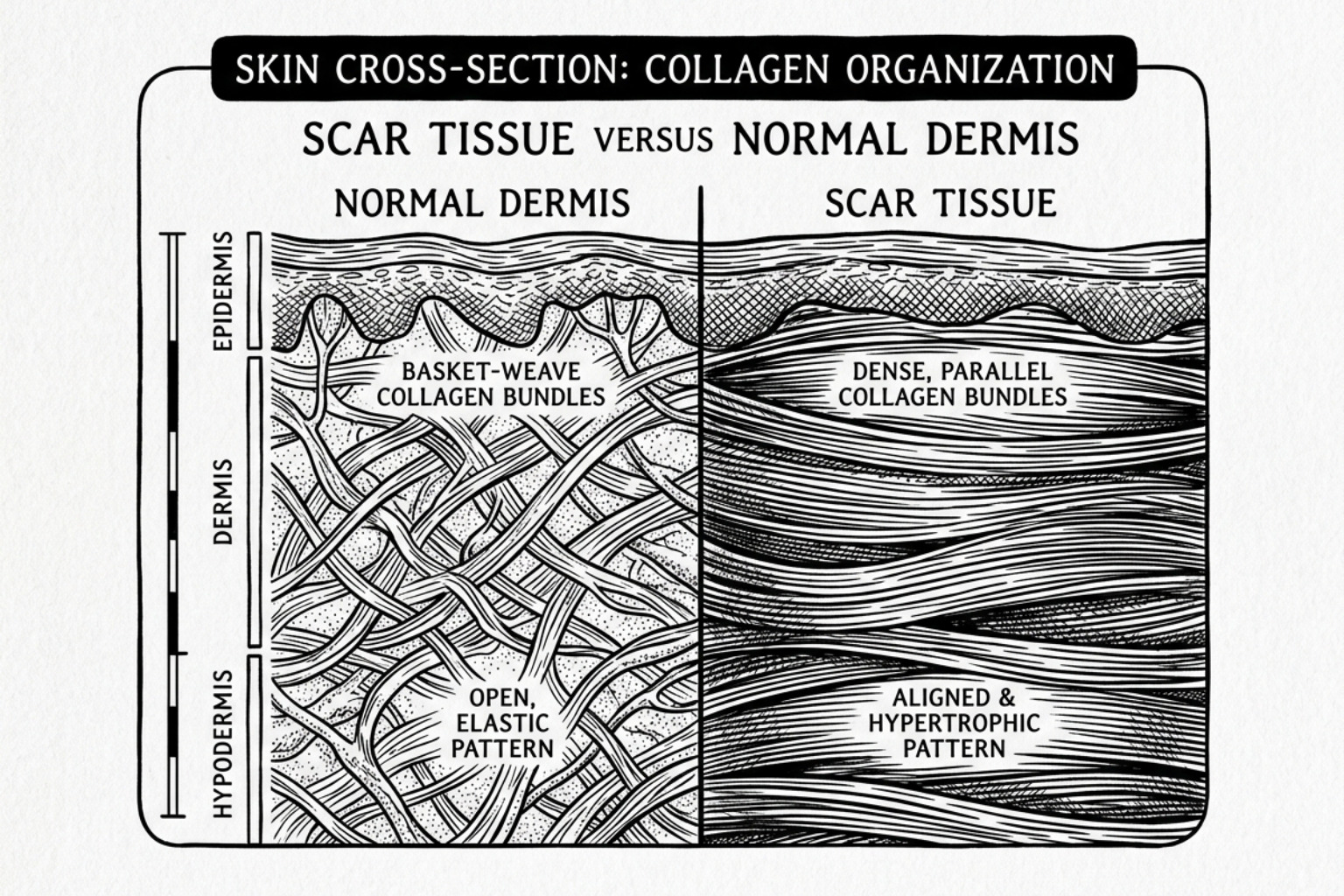
This structural variance leads to different scar morphologies:
- Hypertrophic Scars: Raised, erythematous lesions that remain within the original wound boundaries, often flattening over 12 to 24 months.
- Keloids: Excessive scar tissue extending beyond the initial incision site; research suggests genetic predispositions may influence their formation.
- Atrophic Scars: Depressed areas resulting from tissue loss, frequently observed after procedures such as Mohs surgery.
Medical camouflage acts as a corrective layer that mimics the optical properties of healthy skin. While Post-Surgery Scar Care focuses on biological remodeling, concealment utilizes light refraction and pigment correction to minimize the visual prominence of the scar.
Medical vs. Regular Makeup for Scars
Medical camouflage creams carry a substantially higher pigment load than ordinary cosmetics, which is why they cover in one application and need less rubbing in. Less mechanical friction matters on sensitive or newly healed skin. Exact pigment percentages are quoted widely and are not documented in the clinical literature, so we do not publish a figure.
Furthermore, many medical-grade products are anhydrous or silicone-based. Unlike traditional makeup that may use comedogenic waxes, silicone-based concealers create a flexible, breathable film with a refractive index similar to human skin, preventing an artificial appearance.
What Surgical Scar Concealer Needs to Do
When evaluating a surgical scar concealer, clinical efficacy is determined by its ability to protect the skin barrier while providing aesthetic correction. A primary concern in scar management is Transepidermal Water Loss (TEWL). Scars often lack a fully functional barrier, leading to dehydration that can exacerbate the scar's appearance.
Medical-grade topical silicone is a first-line non-invasive treatment for scars, worn 12 to 24 hours a day over months. The silicone in a cosmetic concealer is present at a fraction of that concentration and contact time, and there is no strong clinical evidence that it delivers a therapeutic scar treatment effect. Treat a silicone-containing concealer as coverage, and keep any silicone treatment separate.
Choosing Concealer for Sensitive Skin
Post-operative skin is frequently reactive. The clinical goal is to avoid contact dermatitis. Research indicates that several common additives should be avoided:
- Fragrance: Synthetic scents are a leading cause of cosmetic-related skin reactions.
- Parabens: While used as preservatives, some patients may experience irritation on healing tissue.
- Alcohol: Denatured alcohol can dehydrate the skin and compromise the fragile healing barrier.
Hypoallergenic testing is a standard benchmark where products are tested to ensure a low incidence of allergic reactions. For surgical patients, this is a critical safety feature.
Comparing Medical Concealer Options
Beyond safety, a surgical scar concealer must meet specific performance criteria:
- Smudge-proof and Transfer-resistant: The product should remain stable against clothing or dressings.
- Durability: Many patients require coverage that lasts through daily activities without reapplication.
- Matte Finish: Scars often appear "shiny" due to the absence of sweat glands; a matte finish helps neutralize this sheen.
- UV Protection: UV exposure can cause permanent hyperpigmentation in healing scars. Many medical concealers include mineral filters like titanium dioxide.
Fillers vs. Pigmented Creams for Scars
The selection of a surgical scar concealer depends on the topography of the tissue.
| Feature | Topical Silicone Fillers | High-Pigment Camouflage Creams |
|---|---|---|
| Primary Use | Recessed/Atrophic scars | Discoloration/Redness (flat scars) |
| Texture | Clear or tinted gel | Thick, opaque cream |
| Mechanism | Fills depressions to level skin | Masks color with pigment |
| Longevity | Waterproof; 12-24 hours | Water-resistant; requires setting |
| Best For | Acne scars, Mohs surgery sites | Incisions, bruising, flat scars |
How silicone fillers work
For recessed surgical scars, traditional creams may fail because they do not address the shadow created by the depression. Topical silicone fillers utilize cross-linked polymers to address this. These products are applied as a gel and dry into a flexible, skin-mimetic film. By physically filling the indentation, they can significantly reduce the visibility of deep scars, providing an alternative for those considering Surgical Scar Revision.
Do full-coverage concealers work?
For flat scars with significant erythema or bruising, high-coverage creams are the clinical standard. These products utilize mineral pigments, such as iron oxides, to provide total opacity. Because these creams often have a high pigment load, they typically require a setting powder to ensure they become smudge-proof. The powder creates a bond with the cream, securing it for extended wear.
How to apply it after surgery
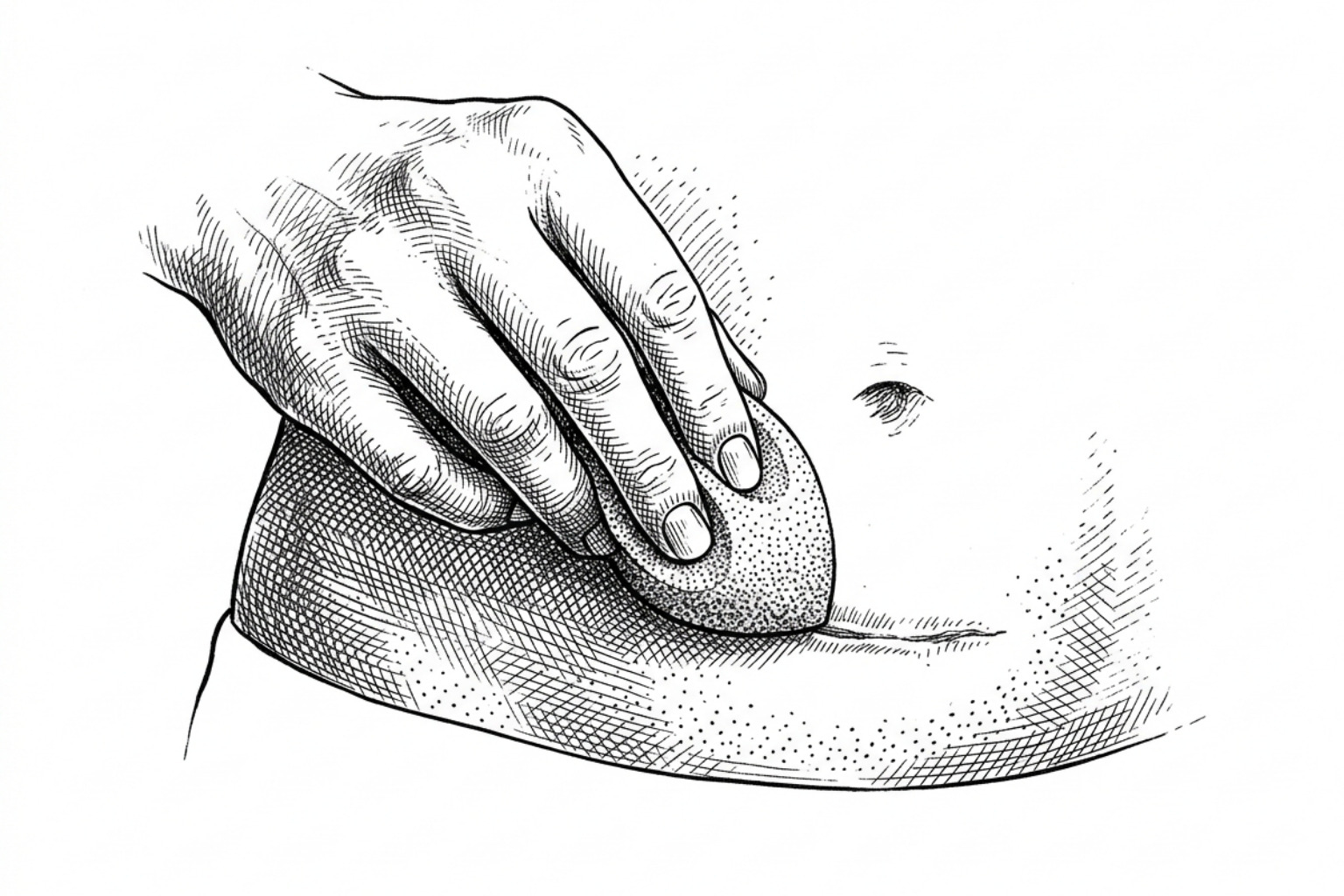
Application technique is just as important as the product itself. Applying makeup to a surgical site requires a "low-friction" approach to avoid disrupting the tissue.
- Preparation: Ensure the wound is fully closed (no scabs or open areas). Cleanse with a mild, oil-free cleanser.
- Color Correction: If the scar is very red, a thin layer of green-tinted corrector can neutralize the hue. For scars that appear blue or purple (common in bruising), a peach or orange corrector is more effective.
- Stippling: Instead of rubbing, use a "stippling" or tapping motion with a damp sponge or clean fingertip. This deposits pigment without pulling on the skin.
- Setting: Apply a translucent setting powder using a "press and roll" motion with a powder puff.
For those dealing with persistent redness or thickening, combining camouflage with Laser Treatment for Surgical Scars can address the underlying vascularity while the makeup provides immediate relief.
Making concealer last longer
To make a surgical scar concealer last, avoid heavy oil-based moisturizers immediately before application, since they break down the pigments. Use a silicone-based primer or a lightweight oil-free lotion instead. Removal needs an oil phase: these products are built to resist water and sweat, so an oily cleansing cream or balm dissolves them without scrubbing. Follow with your normal cleanser.
Common questions about covering scars
When it is safe to apply makeup
Wait until the wound is completely closed and any sutures or staples are out: no scabs, no oozing. Your surgeon sets that date, and it is usually around a couple of weeks after surgery. Applying makeup over an open or scabbed wound raises the infection risk and can trap bacteria, which can leave a worse scar than the one you were covering.
Is makeup safe on a healing scar?
When using high-quality, non-comedogenic, and breathable products (like those based on silicone), camouflage should not interfere with healing. In fact, silicone-based products may support the healing environment by maintaining hydration. However, using "drugstore" makeup that contains heavy oils, fragrances, or comedogenic ingredients can cause inflammation or breakouts around the scar site.
Do fillers help raised scars?
Topical fillers are designed to level the skin by filling in "holes" or depressions. They are highly effective for atrophic (recessed) scars. For raised keloids or hypertrophic scars, fillers are less effective at changing the silhouette. In these cases, a high-pigment cream is better suited to neutralize the redness and help the raised area blend into the surrounding skin tone.
Choosing a concealer that holds up
The process of recovery involves both physiological and psychological components. A surgical scar concealer serves as a tool for restoring confidence during the long remodeling phase of a scar. When selecting a product, priority should be given to medical-grade formulations that are hypoallergenic and fragrance-free, particularly for sensitive skin.
Whether utilizing a topical silicone filler for depth or a high-coverage cream for color, the objective is to provide a protective, breathable barrier that allows for social comfort while the tissue heals. For those uncertain of their scar type, performing a Scar Assessment can help determine if a scar is hypertrophic, keloid, or atrophic, which guides the choice of both concealment and treatment.
Disclaimer: This content is for informational purposes only and does not constitute medical advice. Consult a qualified healthcare professional for diagnosis and treatment.
Works Cited
- Monstrey, S., et al. (2014). Updated scar management practical guidelines: non-invasive and invasive measures. Journal of Plastic, Reconstructive & Aesthetic Surgery, 67(8), 1017–1025. https://pubmed.ncbi.nlm.nih.gov/24888226/
- Gold, M. H., et al. (2014). Updated international clinical recommendations on scar management: Part 1. Dermatologic Surgery, 40(8), 817–824. https://pubmed.ncbi.nlm.nih.gov/25068543/
- Levy, L. L., & Emer, J. J. (2012). Emotional benefit of cosmetic camouflage in the treatment of facial skin conditions. Clinical, Cosmetic and Investigational Dermatology, 5, 173–182. https://pubmed.ncbi.nlm.nih.gov/23152694/