Best Cream for Pimple Scars: Detailed Guide
Not every acne mark responds to a cream. This guide matches each scar type - dark marks, shallow texture, deep pits, raised scars - to the topical ingredients with real clinical evidence behind them.
Matching acne scar types to treatments
The best cream for pimple scars depends on the type of scar — and not all scars respond to topical treatment the same way.
Quick answer: Which ingredients work best for pimple scars?
| Scar Type | Best Topical Ingredients |
|---|---|
| Post-inflammatory hyperpigmentation (dark marks) | Retinoids, vitamin C, niacinamide, glycolic acid |
| Shallow atrophic scars (mild texture changes) | Retinoids, salicylic acid, peptides |
| Deep atrophic scars (ice pick, boxcar, rolling) | Topical creams have limited effect — professional procedures needed |
| Raised/hypertrophic scars | Onion extract, allantoin — but professional treatment usually required |
Nearly half of people who develop acne are left with marks or scars that do not fade on their own. Atrophic (pitted) scars — the most common type — affect an estimated 80–90% of acne patients.
The frustration is real. Scars that linger for months or years can affect confidence and social comfort, long after the original breakouts have cleared.
The challenge is that the skincare market is flooded with products making bold promises. But the biology of scar formation is complex. Scars are not just surface discoloration — many involve structural changes deep in the dermis, where topical products have limited reach.
Evidence does support several active ingredients for improving the appearance of pimple scars, particularly post-inflammatory hyperpigmentation and shallow textural changes. For deeper structural scars, topical creams play a supporting role alongside — not instead of — clinical procedures.
This guide reviews what the science says about topical scar creams: which ingredients have evidence behind them, what realistic outcomes look like, and when professional treatment becomes necessary.
How acne scars and marks form
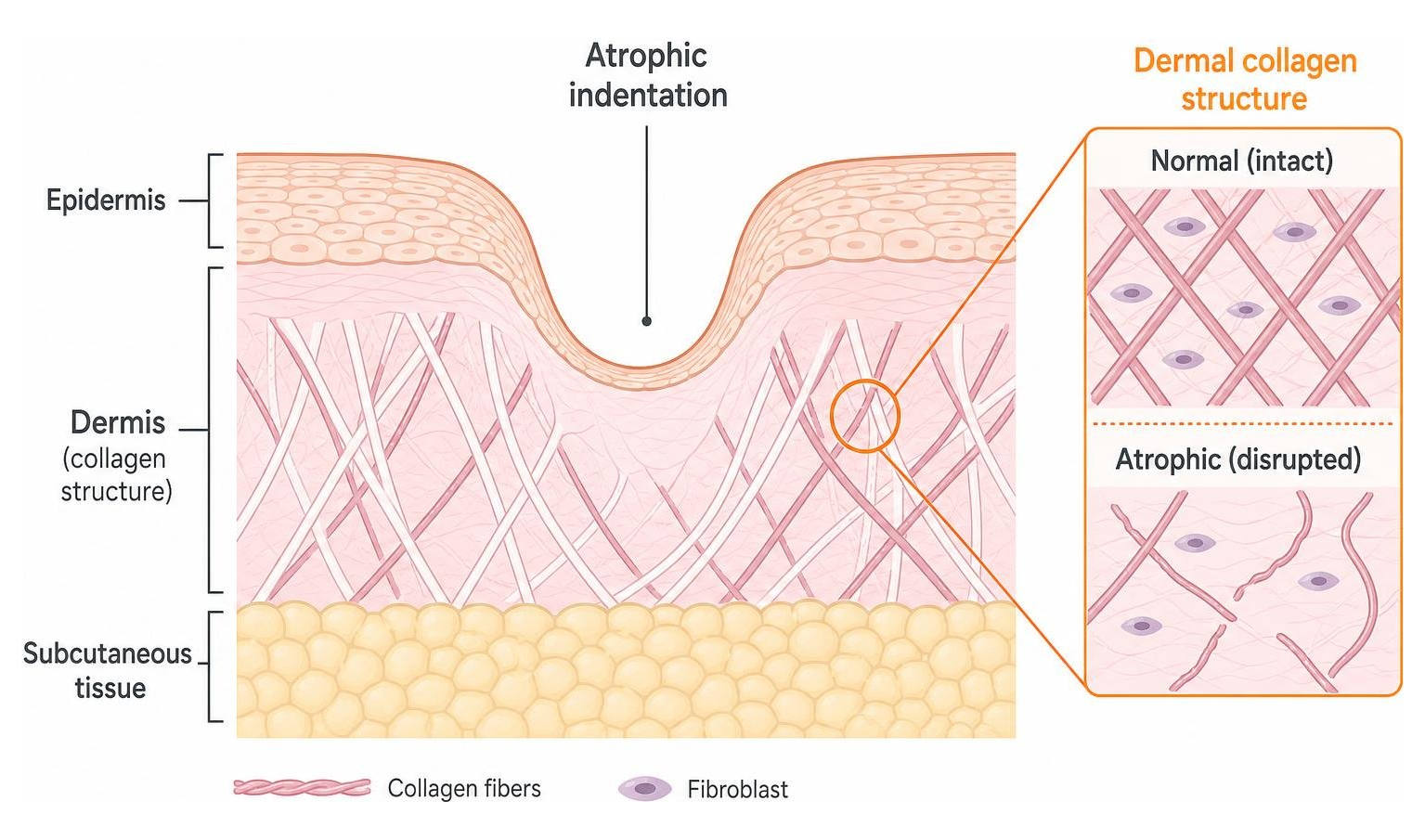
To select the best cream for pimple scars, one must first understand the structural nature of the damage. Acne vulgaris is a chronic inflammatory disease of the pilosebaceous unit. When an inflammatory acne lesion ruptures, it damages the surrounding dermal tissue. The subsequent wound healing process determines whether a permanent scar will form. This process involves three distinct phases: inflammation, granulation tissue formation, and matrix remodeling.
Atrophic Scars
Atrophic scars are the most common consequence of acne, occurring in up to 80–90% of individuals with permanent acne scarring. These scars present as depressions in the skin surface, resulting from a net loss of collagen during the inflammatory healing phase. When the body produces too little collagen to replace the damaged dermal matrix, the skin loses its underlying structural support. Atrophic scars are clinically categorized into three main subtypes:
- Ice Pick Scars: Narrow (less than 2mm), deep, epithelial tracts that extend vertically into the deep dermis or subcutaneous tissue.
- Boxcar Scars: Round to oval depressions with sharply demarcated vertical borders, ranging from 1.5 to 4.0mm in width.
- Rolling Scars: Wider depressions (often exceeding 4mm) with sloped edges, caused by abnormal fibrous anchoring bands in the subcutaneous tissue that pull the epidermis downward.
Because atrophic scars involve a structural deficit in the deep dermis, topical creams have a limited ability to fully restore this lost volume. For a comprehensive overview of how to manage these structural depressions, readers may consult the Non-invasive acne scars complete guide.
Hypertrophic Scars and Keloids
In contrast to atrophic scars, hypertrophic scars and keloids occur when there is an overproduction of collagen during the tissue repair process. Hypertrophic scars remain within the boundaries of the original acne lesion and typically develop within 1 to 2 months post-breakout. Keloids extend beyond the original site of inflammation and can continue to grow over several months or years. These raised lesions are characterized by dense, disorganized collagen bundles and persistent myofibroblast activity.
Dark marks and red marks (PIH and PIE)
It is critical to distinguish true structural scarring from pigmentary alterations, as their treatment pathways differ significantly.
- Post-Inflammatory Hyperpigmentation (PIH): These are flat, dark brown or black marks caused by an overproduction or abnormal distribution of melanin following inflammatory skin injury. PIH is highly prevalent in darker skin tones (Fitzpatrick skin types IV–VI), where melanocytes are highly reactive to inflammatory signals.
- Post-Inflammatory Erythema (PIE): These are flat, pink, red, or purple marks caused by damaged or dilated microcapillaries near the skin surface. PIE is more frequently observed in lighter skin tones (Fitzpatrick skin types I–III).
Because PIH and PIE do not involve structural damage to the dermal collagen matrix, they are not technically permanent scars. They respond exceptionally well to topical creams designed to accelerate cellular turnover and inhibit melanogenesis. Detailed protocols for resolving these pigmentary spots are outlined in the Pimple marks removal complete guide.
Which cream ingredients actually work
Topical treatments are highly effective for fading pigmentary marks and can provide moderate improvements in shallow textural irregularities. When evaluating the best cream for pimple scars, clinical studies highlight several key active ingredients that target specific pathways of skin regeneration.
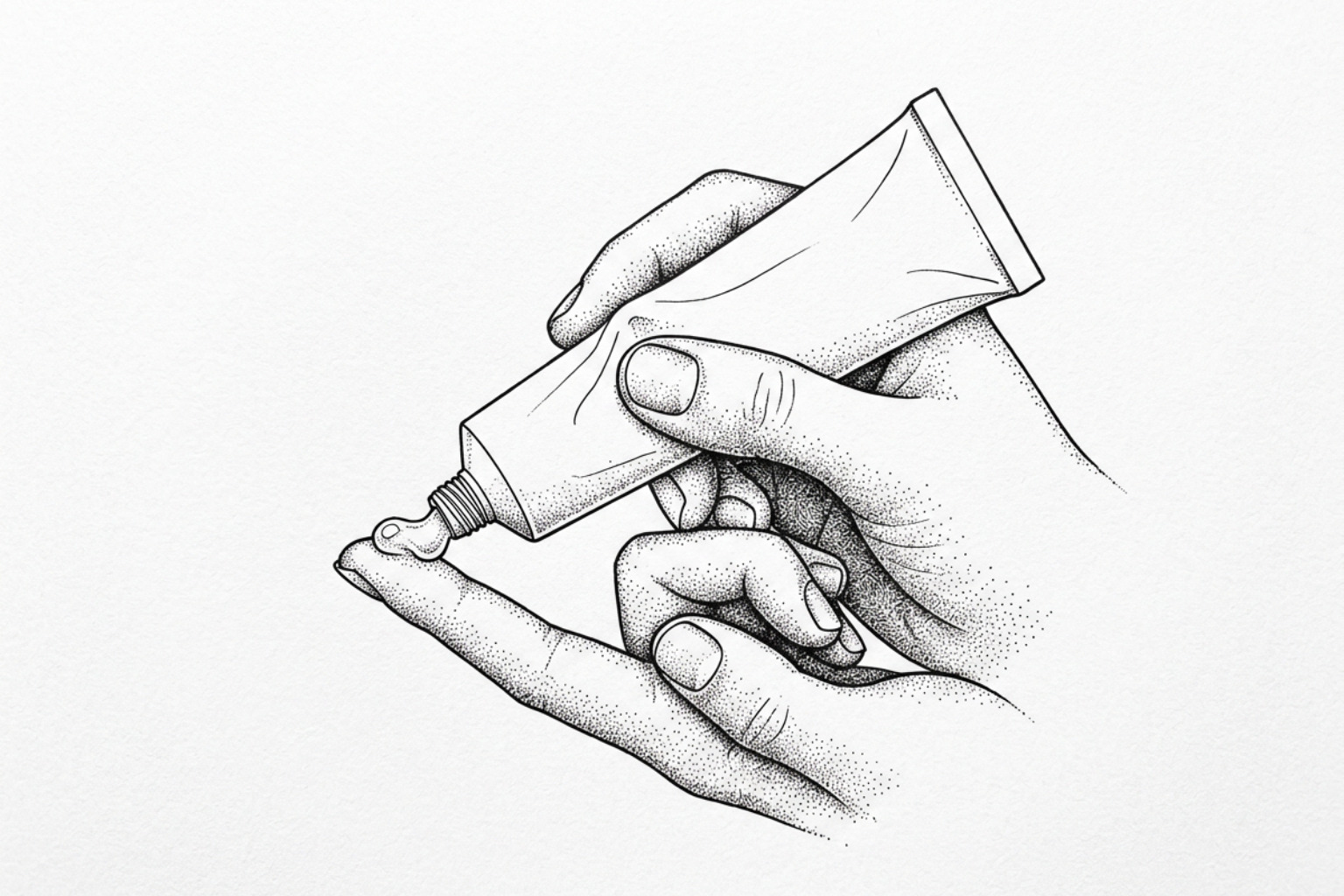
Clinical evaluations of advanced topical formulations—including those containing salicylic acid, purified Centella asiatica, and stabilized vitamin C—demonstrate significant improvements in skin texture and pigmentation over an 8-week period. For example, clinical trials of targeted resurfacing treatments show that consistent application can visibly reduce the depth and discoloration of post-acne marks, with high patient satisfaction regarding overall skin smoothness.
Furthermore, research into skin barrier repair creams, such as formulations utilizing copper-zinc synergistic complexes and soothing botanical extracts, indicates that accelerating the initial wound healing phase can dramatically reduce the risk of long-term scar formation. For a deeper analysis of available topical options, refer to our Pimple scar removal cream guide.
Retinoids and exfoliating acids
Topical retinoids (including retinol, retinaldehyde, and prescription-strength tretinoin) are considered the gold standard for treating both active acne and post-acne scarring. Retinoids bind to specific nuclear receptors in the skin, promoting epidermal desquamation (the shedding of dead skin cells) and accelerating cellular turnover. Simultaneously, retinoids stimulate fibroblasts in the dermis to synthesize new collagen, which can help smooth out shallow atrophic depressions over time.
Chemical exfoliants, specifically alpha-hydroxy acids (AHAs like glycolic acid) and beta-hydroxy acids (BHAs like salicylic acid), work synergistically with retinoids. Glycolic acid penetrates the upper layers of the epidermis to dissolve the intercellular glue holding dead skin cells together, promoting rapid resurfacing. Salicylic acid, being lipophilic (oil-soluble), penetrates deep into the pores to clear sebum and reduce ongoing inflammatory lesions that could lead to new scars. To understand how to pair these exfoliating agents safely to target dark spots, consult the Best cream for pimples dark spots guide.
Peptides and growth factors
Recent dermatological research has focused on the role of biomimetic peptides and growth factors in tissue repair. Oligopeptides and hexapeptides can mimic the natural signaling molecules involved in dermal remodeling, encouraging the skin to synthesize structural proteins like collagen and elastin.
Another ingredient gaining clinical attention is c-PDRN (Polydeoxyribonucleotide), a marine-derived DNA fraction that stimulates cellular regeneration and reduces chronic inflammation. Similarly, biomimetic polypeptide creams modeled after regenerative cellular environments have shown promise in repairing compromised skin barriers and improving the appearance of both atrophic and hypertrophic micro-scars. To explore the top-performing topical formulations utilizing these advanced ingredients, read our comprehensive Best scar removal creams guide 2026.
Creams vs. in-office procedures
While topical creams are highly effective for superficial discoloration (PIH/PIE) and minor textural changes, they cannot fully correct moderate-to-deep atrophic or hypertrophic scars. Deep structural alterations require mechanical, thermal, or chemical intervention in a clinical setting.
A systematic review and network meta-analysis of randomized controlled trials involving 4,480 patients highlighted the efficacy of combined in-office treatments. The study found that combining fractional ablative lasers with platelet-rich plasma (PRP) ranked highest for reducing clinical scar severity scores, while combining lasers with chemical peels yielded the highest patient satisfaction.
| Treatment Modality | Primary Target | Mechanism of Action | Typical Recovery/Downtime | Relative Efficacy for Atrophic Scars |
|---|---|---|---|---|
| Topical Creams | PIH, PIE, shallow texture | Accelerates cell turnover; inhibits melanin; mild collagen synthesis | Zero downtime | Mild (highly effective for pigment only) |
| Chemical Peels | Superficial texture, PIH | Controlled chemical exfoliation of epidermal and dermal layers | 3 to 7 days | Moderate (requires multiple sessions) |
| Microneedling | Rolling and boxcar scars | Mechanical micro-injury triggers natural collagen production cascade | 1 to 3 days | Moderate to High |
| Fractional Lasers | Deep atrophic scars | Thermal micro-zones stimulate deep dermal remodeling | 3 to 14 days (ablative vs. non-ablative) | High |
| Dermal Fillers | Rolling and deep boxcar | Immediate structural volume replacement beneath the depression | Minimal (temporary results, 6–12 months) | High (temporary) |
| Subcision | Rolling scars | Surgical release of fibrous bands anchoring the scar downward | 2 to 5 days (mild bruising) | High (for tethered rolling scars) |
For patients seeking rapid results, combining home care with clinical interventions is the most effective approach. Home-use topical active ingredients prepare the skin before procedures, support post-treatment healing, and maintain long-term results. To learn more about accelerating this process safely, refer to our guide on how to Reduce acne scars fast, or browse our Acne scars tag archive for expert clinical insights.
Building a daily routine
Integrating active scar-reducing creams into a daily regimen requires a structured approach to maximize efficacy while preventing epidermal barrier irritation. Over-applying active ingredients can trigger contact dermatitis, which leads to secondary inflammation and further hyperpigmentation.
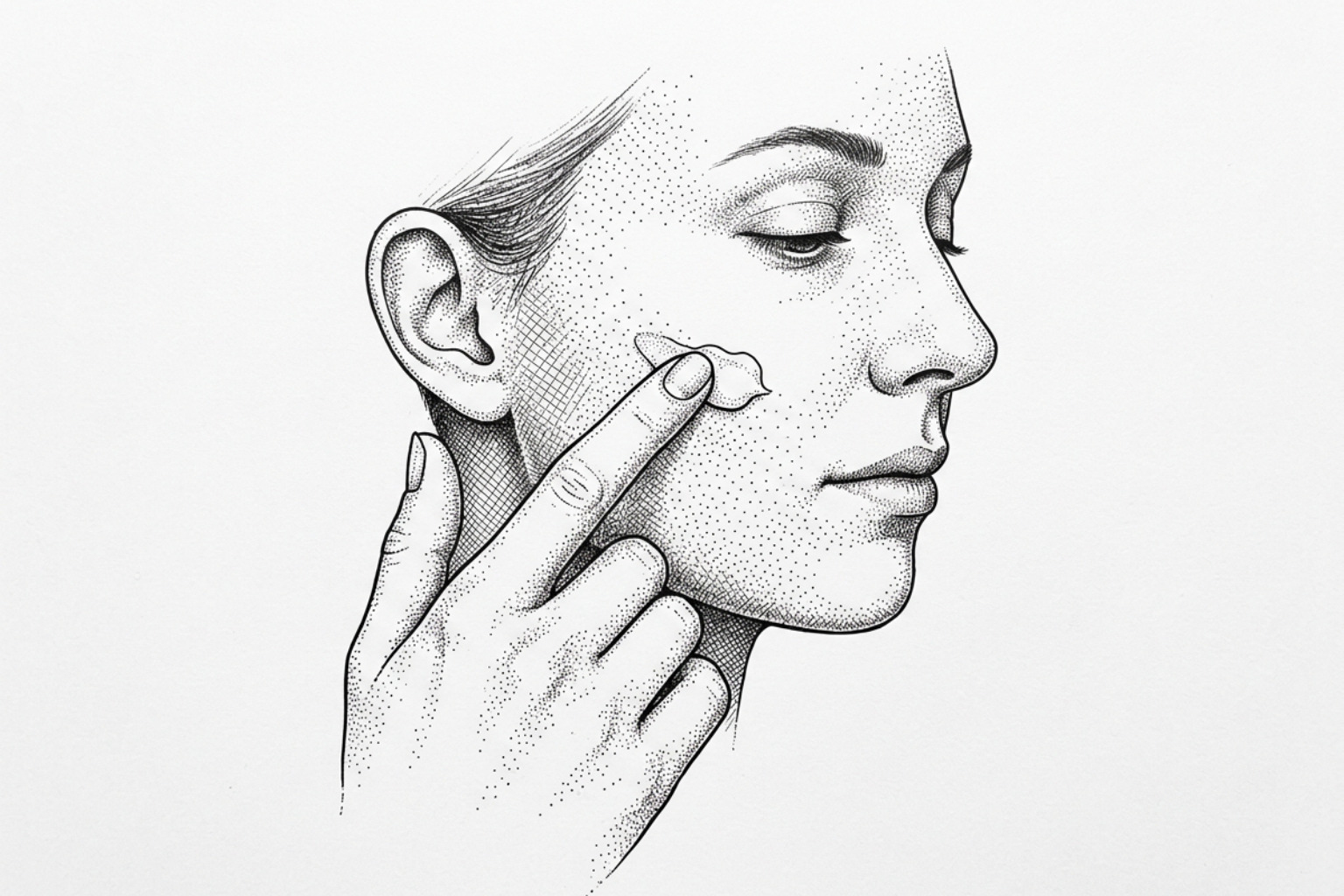
Morning routine: protect and brighten
The focus of the morning routine is environmental protection and tyrosinase inhibition (preventing pigment formation).
- Cleanse: Use a gentle, non-stripping, pH-balanced cleanser.
- Antioxidant Active: Apply a stabilized vitamin C serum (10–20% L-ascorbic acid) or a niacinamide formulation (2–5%). These ingredients neutralize free radicals and inhibit melanogenesis.
- Moisturize: Apply a lightweight, non-comedogenic moisturizer containing ceramide-3 or hyaluronic acid to support the skin barrier.
- Photo-Protection: Apply a broad-spectrum sunscreen with an SPF of 50 or higher. Sunscreen is the single most critical component of any scar treatment regimen; UV radiation stimulates melanocytes, darkening PIH and prolonging the life of post-inflammatory erythema.
Evening routine: resurface and repair
The evening routine focuses on cellular renewal and structural dermal repair.
- Cleanse: Ensure all makeup, sunscreen, and environmental pollutants are thoroughly removed.
- Targeted Active (Retinoid or Acid Exfoliant): Apply a topical retinoid (such as retinol or prescription tretinoin) to clean, dry skin. To minimize irritation, start by applying the retinoid 2 to 3 nights per week, gradually increasing frequency as tolerated. Alternatively, on non-retinoid nights, apply an alpha-hydroxy acid (like glycolic acid) to promote superficial desquamation. Do not layer retinoids and high-strength acids in the same application.
- Barrier Repair: Apply a rich, soothing cream containing ingredients like allantoin, panthenol, or centella asiatica to soothe the skin and reduce nocturnal trans-epidermal water loss.
For individuals experiencing persistent irritation or those seeking alternative approaches, exploring Acne scar treatment natural home remedies can provide gentle, supportive options. Additional routine optimization strategies can be found in our Scar treatment tag archive.
Frequently asked questions
How long does it take for topical treatments to fade acne scars?
The timeline for visible improvement depends on the physiological rate of epidermal turnover and dermal remodeling. While superficial pigmentary changes (PIH) may begin to lighten within 4 to 8 weeks of consistent topical treatment, meaningful changes in shallow textural scars require 3 to 6 months of continuous therapy. This is because the synthesis and remodeling of new dermal collagen is a slow biological process that occurs over several months.
Why does UV exposure worsen the appearance of post-acne marks?
UV radiation triggers melanogenesis—the process by which melanocytes produce melanin pigment—as a protective response. In areas of active or recent inflammation (such as a healing acne lesion), melanocytes are already highly sensitized. Exposure to UV light causes these cells to produce excess pigment, turning temporary pink or light brown marks into dark, persistent post-inflammatory hyperpigmentation. Daily broad-spectrum photo-protection is essential to prevent this darkening.
Can topical creams completely remodel deep atrophic scars?
No. Deep atrophic scars, such as ice pick or deep boxcar scars, involve a significant loss of structural collagen deep within the dermis, often accompanied by subcutaneous fibrous anchoring bands. Topical creams cannot penetrate deeply enough or generate sufficient cellular signaling to replace this lost structural volume. While topical retinoids can slightly soften the edges of these scars, complete correction requires in-office procedures such as subcision, microneedling, or fractional laser resurfacing.
Key takeaways
Selecting the best cream for pimple scars requires an understanding of your specific scar type. Superficial pigmentary changes like post-inflammatory hyperpigmentation and post-inflammatory erythema respond exceptionally well to targeted topical actives, including retinoids, vitamin C, and niacinamide. However, structural depressions and raised scars require a realistic approach, where topical creams serve as supportive care alongside professional dermatological procedures.
Taking an evidence-based approach to your skincare routine and understanding the limitations of topical ingredients will help you achieve the best possible results. To receive a personalized analysis of your skin's unique needs, you can Evaluate your skin with a professional scar assessment.
Works Cited
- Connolly, D., Vu, H. L., Mariwalla, K. & Saedi, N. "Acne Scarring—Pathogenesis, Evaluation, and Treatment Options." The Journal of Clinical and Aesthetic Dermatology, vol. 10, no. 9, 2017, pp. 12–23.
- Thiboutot, D. M., Dréno, B., Abanmi, A., et al. "Practical Management of Acne for Clinicians: An International Consensus From the Global Alliance to Improve Outcomes in Acne." Journal of the American Academy of Dermatology, vol. 78, no. 2 suppl. 1, 2018, pp. S1–S23.
- Wu, W., et al. "Optimal Treatment Options for Acne Scars in Patients with Historic Acne: A Systematic Review and Network Meta-Analysis." PeerJ, vol. 13, 2025, e19938.
- Fabbrocini, G., Annunziata, M. C., D'Arco, V., De Vita, V., Lodi, G., Mauriello, M. C., Pastore, F. & Monfrecola, G. "Acne Scars: Pathogenesis, Classification and Treatment." Dermatology Research and Practice, 2010, art. 893080.
This content is for informational purposes only and does not constitute medical advice. Consult a qualified healthcare professional for diagnosis and treatment.