Detailed Guide to Pimple Raised Scar Treatment Options
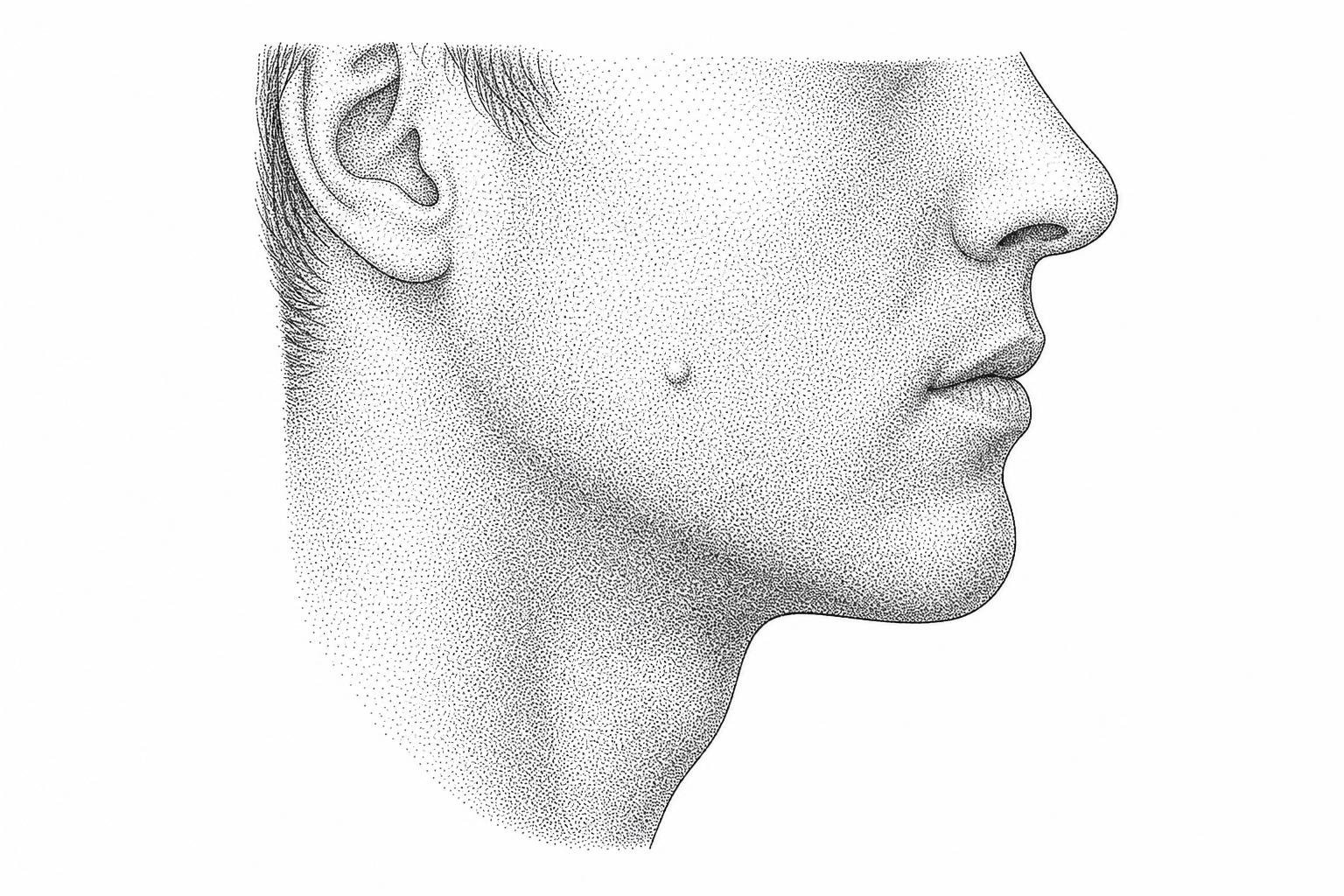
Raised acne scars come in two forms that behave very differently. Hypertrophic scars may fade slowly on their own; keloids will not. Here is what actually flattens each type, and what to avoid.
What a raised pimple scar is
A pimple raised scar is a firm, elevated mass of excess scar tissue that forms when the skin overproduces collagen during the healing process after an acne lesion. Unlike depressed (atrophic) scars, which result from tissue loss, raised scars represent the opposite problem: the body's repair response goes into overdrive.
There are two clinically distinct types:
| Type | Size Relative to Original Lesion | Spontaneous Resolution | Recurrence Risk After Treatment |
|---|---|---|---|
| Hypertrophic scar | Same size as original pimple | May partially fade over time | Lower |
| Keloid scar | Grows beyond original boundaries | Does not resolve without treatment | 45% to 100% after surgery alone |
Key facts at a glance:
- Raised scars form when fibroblasts (collagen-producing skin cells) remain overactive after a pimple heals
- They are more common on the chest, back, shoulders, and jawline — areas where skin is thicker
- People with Fitzpatrick skin types IV–VI have a higher genetic predisposition to both types
- Picking or squeezing pimples significantly increases the risk of raised scar formation
- Raised scars are less common than depressed scars, with atrophic scars occurring roughly three times more frequently
About 80% of people between ages 11 and 30 develop acne, and approximately one in five of those individuals will develop scars. The psychological impact of visible raised scarring — particularly on the face, chest, and jawline — is well documented, with research consistently linking prominent scarring to reduced self-esteem and social confidence.
The good news is that raised acne scars respond to clinical intervention. Treatment, however, requires a clear understanding of scar biology and the correct sequence of therapies — because applying the wrong treatment (such as microneedling, which stimulates collagen production) to a scar already caused by excess collagen can make the problem worse.
This guide from the Scar Healing Editorial Team covers the full clinical picture — from the cellular mechanisms that cause raised scars to form, through to evidence-based treatment protocols and realistic expectations for improvement.
This content is for informational purposes only and does not constitute medical advice. Consult a qualified healthcare professional for diagnosis and treatment.
How raised pimple scars form
To understand why a pimple raised scar develops, one must look at the cellular events that occur during wound healing. The skin heals in three sequential but overlapping phases: inflammation, proliferation, and tissue remodeling.
When a deep acne lesion—such as a cyst or nodule—ruptures, it causes extensive damage to the surrounding dermis. This triggers a robust inflammatory response. If this inflammation is severe or prolonged, the normal tissue architecture is destroyed.
During the proliferative phase, the body attempts to replace the damaged dermal matrix. Fibroblasts migrate to the site of injury and begin synthesizing extracellular matrix (ECM) components, primarily Type III collagen. Over time, during the remodeling phase, Type III collagen is gradually replaced by the stronger Type I collagen.
In normal wound healing, there is a delicate balance between collagen synthesis and collagen degradation. This balance is regulated by enzymes called matrix metalloproteinases (MMPs) and their corresponding inhibitors, known as tissue inhibitors of metalloproteinases (TIMPs). In individuals prone to raised scars, this regulatory feedback loop fails. Fibroblasts remain highly active, producing an excessive amount of extracellular matrix while collagen degradation is suppressed. This results in a net gain of collagen, which physically pushes the skin upward, creating a firm, elevated nodule.
A comprehensive scientific review published in the Journal of Investigative Dermatology highlights how persistent micro-inflammation at the pilosebaceous unit directly dictates whether a healing lesion will transition into a permanent structural scar. For those looking to understand how to prevent this cascade early on, exploring clinical insights on tips to prevent acne scars can offer actionable guidance on protecting the dermal matrix during active breakouts.
Hypertrophic scars vs. keloids
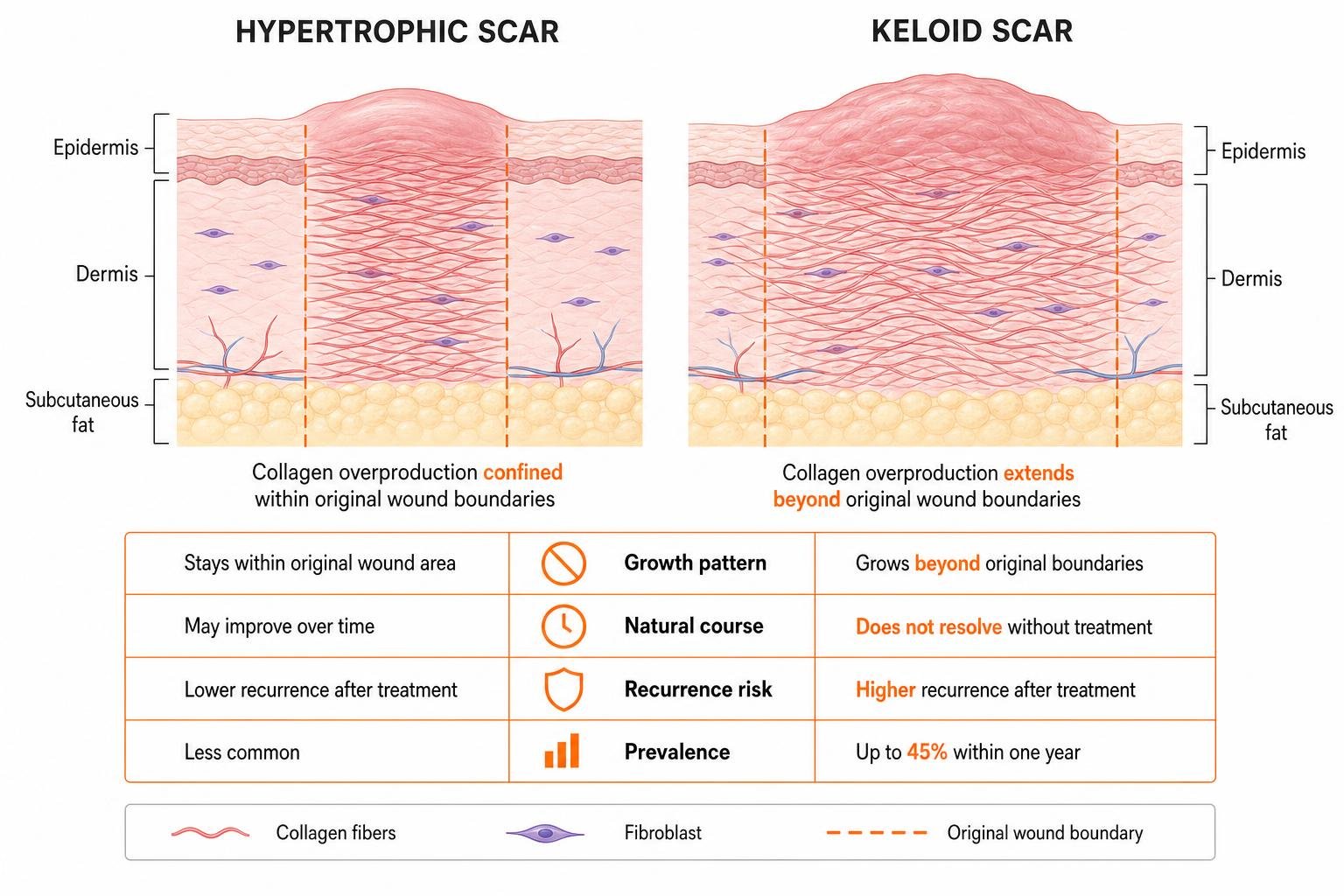
While both hypertrophic and keloid scars are characterized by an overabundance of collagen, they differ significantly in their histological structure and clinical behavior.
- Hypertrophic Scars: Under microscopic evaluation, hypertrophic scars exhibit collagen fibers arranged in a relatively organized, parallel pattern to the epidermal surface. These lesions remain strictly confined within the boundaries of the original acne blemish. They typically appear within one to two months following the resolution of an active pimple, and they may undergo a degree of spontaneous regression over several years.
- Keloid Scars: In contrast, keloid scars are characterized by thick, highly disorganized, and randomly oriented collagen bundles. Under a microscope, these fibers appear thick and glassy. Keloids do not remain within the borders of the original pimple; instead, they invade adjacent healthy tissue, spreading outward like a tumor-like growth. Keloids can develop months or even years after the initial acne lesion has healed, they never resolve spontaneously, and they carry a high rate of recurrence after surgical intervention.
For a deeper dive into these tissue dynamics, refer to the Cleveland Clinic's clinical overview of hypertrophic scars.
Who is most at risk
Not everyone who experiences acne will develop a pimple raised scar. Several key risk factors influence whether the body's wound healing response will shift toward fibrotic tissue production:
- Genetic Predisposition and Skin Tone: Genetics play a dominant role in scar formation. Individuals with darker skin tones—specifically Fitzpatrick skin types IV, V, and VI—possess a significantly higher risk of developing hypertrophic and keloid scars. This is due to genetic variations in fibroblast activity and altered inflammatory pathways in darker skin.
- Anatomical Location: Raised scars are highly localized to areas of high skin tension and thicker dermis. The chest, upper back, shoulders, and jawline are the most common sites for raised acne scars.
- Severe Inflammation and Infection: The severity of the initial acne lesion is a direct predictor of scarring. Deep, painful lesions like cysts and nodules cause the most dermal destruction. If a blemish becomes infected with bacteria, the prolonged inflammatory phase further delays healing and increases the risk of abnormal collagen deposition. For details on identifying and managing severe localized infections, see the Cleveland Clinic's medical guide on infected pimples.
- Physical Manipulation (Picking and Squeezing): Manually popping, squeezing, or picking at a pimple forces bacteria and inflammatory debris deeper into the dermis. This self-induced trauma intensifies the wound healing response and is one of the most common preventable causes of permanent scarring.
- Smoking: Tobacco use compromises systemic microcirculation and impairs oxygen delivery to healing tissues. This delay in the proliferative phase of wound healing increases the likelihood of abnormal, low-quality collagen remodeling.
To learn more about the differences between temporary post-inflammatory marks and permanent structural changes, read our pimple marks removal complete guide.
Treatments that flatten raised scars
Treating a pimple raised scar requires a different clinical approach than treating pitted or depressed scars. While depressed scars require treatments that stimulate collagen production (such as microneedling or subcision), treating raised scars requires the exact opposite: therapies that suppress fibroblast activity and break down excess collagen.
Clinical management is typically executed in two sequential phases:
- Phase 1: Flattening (Structural Reduction). The primary goal is to reduce the physical height and firmness of the scar.
- Phase 2: Refining (Resurfacing and Color Correction). Once the scar is completely flat, secondary treatments are used to address residual texture irregularities and discoloration.
Attempting to perform resurfacing treatments (like lasers) on a raised scar before it has been structurally flattened is highly discouraged. Doing so can re-injure the hyperactive tissue, triggering a new wound healing cycle that may cause the scar to grow larger. For a comprehensive look at professional options, review our analysis of the best scar removal treatment.
Steroid injections and cryotherapy
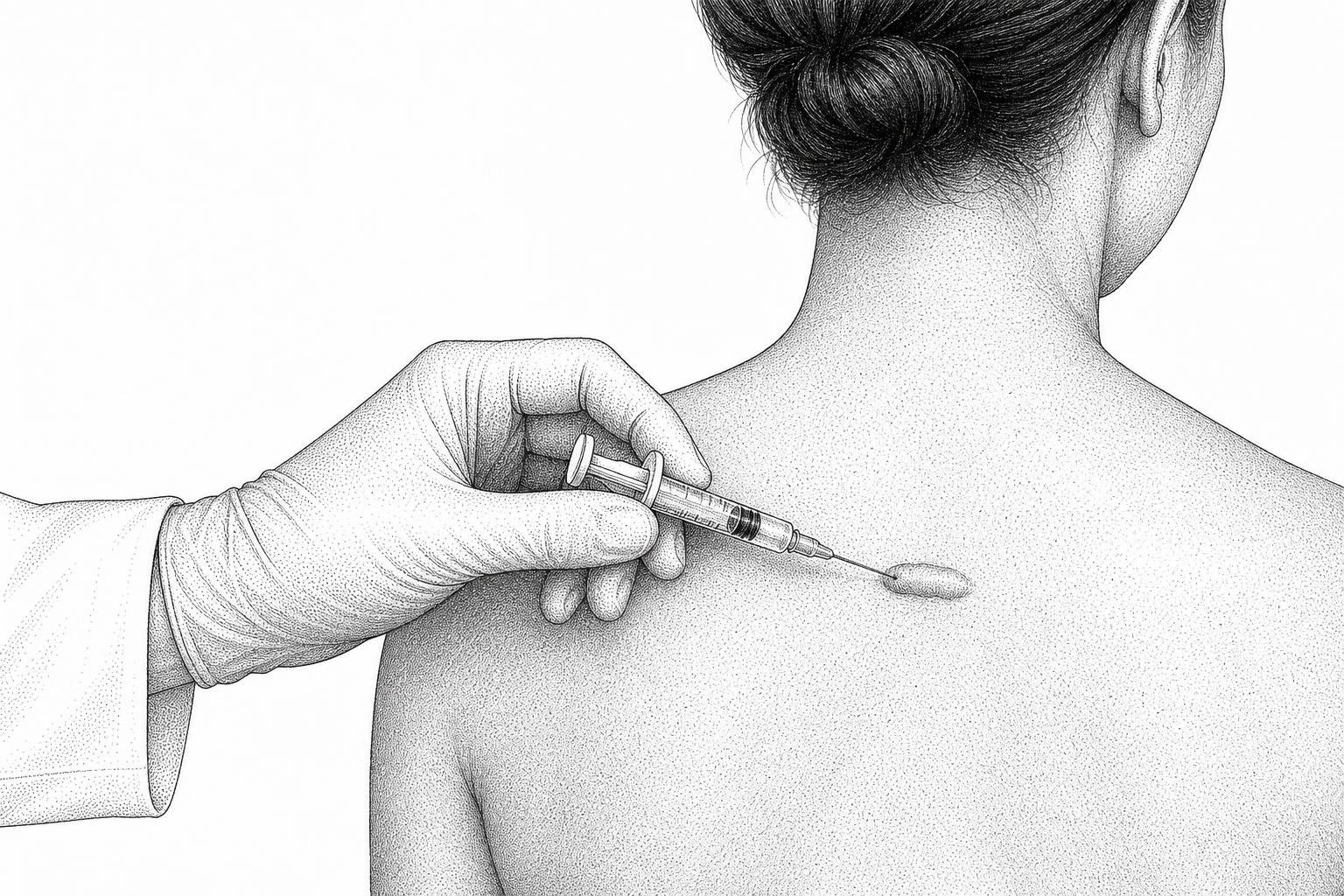
The established medical standard for structurally flattening raised acne scars involves intralesional corticosteroid injections, often combined with cryosurgery.
- Intralesional Corticosteroid Injections: The most frequently used corticosteroid is triamcinolone acetonide (typically in concentrations ranging from 10 to 40 mg/mL, depending on the scar's size and thickness). When injected directly into the scar tissue, corticosteroids inhibit inflammatory mediators, decrease fibroblast proliferation, and downregulate collagen synthesis. They also increase the activity of collagenase, an enzyme that breaks down existing collagen bundles. This softens and flattens the firm tissue. Treatments are typically performed in a series of 4 to 10 sessions, spaced 4 to 6 weeks apart.
- Cryosurgery: This treatment involves applying liquid nitrogen directly to the scar tissue to freeze it. The extreme cold causes localized vascular damage and cell death, leading to the sloughing off of the excess scar tissue. Cryosurgery is highly effective when combined with steroid injections, as the freezing process softens the dense collagen matrix, making it easier to inject the corticosteroid evenly.
- 5-Fluorouracil (5-FU) Injections: For stubborn, treatment-resistant raised scars or keloids, dermatologists may inject 5-FU, a chemotherapeutic agent that selectively inhibits rapidly dividing cells. 5-FU blocks fibroblast proliferation and decreases collagen production. It is often mixed with triamcinolone acetonide to maximize efficacy while minimizing the side effects of both drugs.
Laser therapy and chemical peels
Once the raised scar has been flattened to skin level, Phase 2 treatments can be initiated to address residual texture, pigment changes, and remaining vascularity.
- Pulsed Dye Laser (PDL): This non-ablative laser targets hemoglobin in the blood vessels. By destroying the microvasculature supplying the scar, PDL reduces redness, decreases cellular activity, and helps prevent the scar from reforming.
- Fractional CO2 or Erbium:YAG Lasers: These ablative lasers create microscopic columns of thermal injury in the skin, vaporizing damaged tissue and encouraging the surrounding healthy skin to remodel. This helps smooth out any remaining textural boundaries between the scar and the surrounding skin.
- Professional Chemical Peels: Superficial to medium-depth chemical peels containing glycolic acid, salicylic acid, or trichloroacetic acid (TCA) can help exfoliate the outer layers of the skin, accelerating cell turnover and fading post-inflammatory discoloration.
To explore topical options that support the skin during and after clinical procedures, see our guide on the best scar removal creams guide 2026.
What you can do at home
While professional clinical treatments are required to flatten established raised scars, daily at-home management is crucial for supporting wound healing, preventing recurrence, and managing early-stage scar formation.
Consistency is the single most important factor in at-home scar management. The skin's remodeling phase can take up to a full year, meaning that daily intervention is required to achieve visible changes in tissue structure. For an objective evaluation of topical options, see our review of the best scar reduction cream.
Silicone sheets and pressure therapy
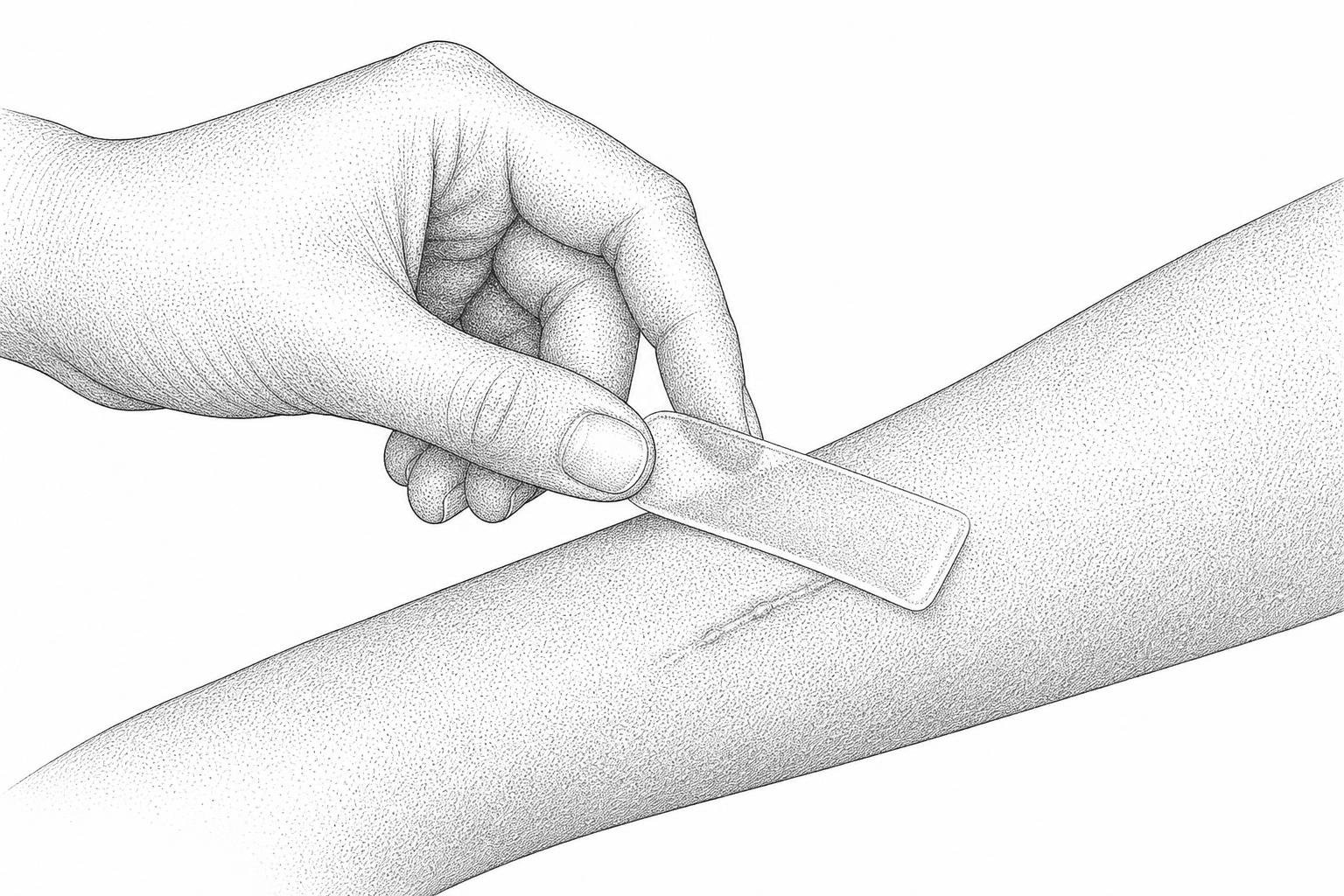
Medical-grade silicone is the gold standard for non-invasive, evidence-based at-home scar management. It is available in two primary forms: silicone gel sheets and topical silicone gels.
- Mechanism of Action: Silicone does not work by physically "rubbing" the scar away. Instead, it works by providing occlusion and hydration. When applied to the skin, silicone mimics the barrier function of the stratum corneum, reducing transepidermal water loss (TEWL). This deep hydration signals to the underlying capillaries to decrease blood flow and downregulate the activity of fibroblasts. As fibroblast activity decreases, collagen production slows down, allowing the scar to gradually soften and flatten.
- Usage Protocol: For maximum efficacy, silicone gel sheets should be worn continuously for 12 to 24 hours a day for a minimum of 2 to 6 months. If sheets are impractical (such as on highly mobile areas of the face or jawline), a thin layer of quick-drying topical silicone gel should be applied twice daily.
- Pressure Therapy: For raised scars on the body, combining silicone sheets with localized pressure (using elastic bandages or specialized pressure garments) can further restrict microvascular blood flow, limiting the oxygen and nutrients available to overactive fibroblasts.
Treating a pimple before it scars
The most effective way to treat a pimple raised scar is to prevent it from forming in the first place. This requires targeting the transitional phase between an active pimple and a permanent scar.
Recent dermatological research has identified a specific transitional lesion known as the postinflammatory papule (PIP). A PIP is a firm, raised, often pink or brown bump that remains after the active pus and infection of a pimple have cleared.
A peer-reviewed study on postinflammatory papules demonstrates that treating these transitional lesions early with non-antimicrobial anti-inflammatory topicals can halt the fibrotic cascade.
- Benzoyl Peroxide and Adapalene: Applying a combination of benzoyl peroxide (to target residual bacteria) and adapalene (a topical retinoid that regulates cell turnover and modulates collagen synthesis) directly to a postinflammatory papule can help the skin remodel normally, preventing the lesion from turning into a permanent hypertrophic scar.
- Avoiding Antibiotics for PIPs: Because postinflammatory papules are driven by structural remodeling rather than active bacterial infection, standard topical or oral antibiotics are ineffective at this stage and should not be used.
For those interested in exploring non-pharmacological supportive care, read our review of acne scar treatment natural home remedies.
Frequently asked questions
Do raised acne scars resolve without clinical intervention?
Hypertrophic scars and keloid scars behave very differently over time:
- Hypertrophic scars may undergo a slow, partial regression over several years. During this time, they may lose some of their redness and become slightly softer or flatter. However, they rarely flatten completely to match the surrounding skin without treatment.
- Keloid scars do not resolve on their own. Because their fibroblasts remain permanently hyperactive, keloids will persist indefinitely and may continue to grow larger over time if left untreated.
Why is surgical excision contraindicated for hypertrophic and keloid scars?
Surgical excision—cutting the scar out—is generally contraindicated as a standalone treatment for raised scars, particularly keloids.
Surgical cutting triggers a new, aggressive wound healing response. Because the individual already has a genetic predisposition to overproducing collagen, cutting the scar away often results in a recurrent scar that is larger and more painful than the original blemish. Keloids have a recurrence rate reported between 45% and 100% when treated with surgery alone. If excision is absolutely necessary for very large lesions, it must always be combined with immediate post-operative therapies, such as corticosteroid injections or localized radiation therapy, to suppress fibroblast activity.
How does skin tone affect the safety of cryosurgery and laser treatments?
Skin tone is a critical safety consideration when planning treatments for a pimple raised scar:
- Cryosurgery Risks: Cryosurgery uses extreme cold to destroy tissue. However, melanocytes (the cells that produce skin pigment) are highly sensitive to freezing. In darker skin tones (Fitzpatrick types IV–VI), cryosurgery carries a high risk of permanently destroying melanocytes, leading to permanent white spots (hypopigmentation) at the treatment site.
- Laser Risks: High-energy lasers that target pigment can cause thermal damage to the surrounding skin in darker skin types. This can trigger post-inflammatory hyperpigmentation (PIH), causing the treated area to turn dark brown or black.
- Safe Alternatives: For darker skin tones, conservative, low-dose corticosteroid injections are the preferred first-line treatment, as they safely flatten the scar with a lower risk of altering skin pigment.
Key takeaways
Managing a pimple raised scar requires a careful, clinically guided approach. Because these scars are caused by an overproduction of collagen, attempting aggressive at-home resurfacing or collagen-stimulating treatments can worsen the condition.
The most successful clinical outcomes rely on a structured, two-phase protocol: first flattening the dense collagen matrix using targeted professional therapies like corticosteroid injections, and then refining the surface texture and color once the tissue is flat. At home, consistent daily use of medical-grade silicone gel or sheeting remains the most evidence-based way to support this structural remodeling.
Because every skin type and scar structure is unique, a personalized evaluation is essential. To take the first step toward a customized care plan, utilize our clinical scar assessment tool to evaluate your skin's specific needs.
Works Cited
- Fabbrocini, G., Annunziata, M. C., D'Arco, V., De Vita, V., Lodi, G., Mauriello, M. C., Pastore, F. & Monfrecola, G. "Acne Scars: Pathogenesis, Classification and Treatment." Dermatology Research and Practice, 2010, art. 893080.
- Nogita, T., Nomura, Y. & Kurokawa, I. "Postinflammatory Papule: A Tentative New Designation for Acne Vulgaris." Dermatology and Therapy, vol. 11, no. 6, 2021, pp. 1867–1869.
- Carswell, L. & Borger, J. "Hypertrophic Scarring and Keloids." StatPearls, NCBI Bookshelf NBK537058, 2023.
- "Hypertrophic Scar: What Is It, Causes, Treatment." Cleveland Clinic Health Library.
- "Infected Pimple: What It Looks Like, Causes & Treatment." Cleveland Clinic Health Library.
This content is for informational purposes only and does not constitute medical advice. Consult a qualified healthcare professional for diagnosis and treatment.