Best Incision Scar Cream: A-Z Guide to Effective Scar Cream
Silicone-based creams have the strongest evidence for fading incision scars — but timing matters as much as the product. When to start, how to apply, and which ingredients are worth paying for.
How scar creams help incision scars
Finding an effective topical treatment after surgery is one of the most common concerns during recovery—and for good reason. How a scar heals can affect both appearance and physical comfort for years.
| Treatment Type | Key Ingredient(s) | Evidence Level | Best For |
|---|---|---|---|
| Silicone gel | Polysiloxanes, dimethicone | Strongest clinical evidence | Most post-surgical scars |
| Silicone sheets | Medical-grade silicone | Strong; may outperform gels | Flat, accessible scar sites |
| Onion extract gel | Allium cepa, allantoin | Moderate | Mild to moderate scars |
| Botanical/hydrating creams | Hyaluronic acid, aloe | Limited | Moisturization support |
Clinical research strongly supports silicone-based products for reducing scar height, redness, and discomfort after surgical incisions. A 2020 review of six studies found that topically applied silicone significantly reduced both scar pigmentation and height after surgery. Other ingredients—such as onion extract, allantoin, and hyaluronic acid—may offer supporting benefits, but the evidence for them is less robust.
Surgical scars are not simply cosmetic concerns. After any incision—whether from a C-section, Mohs surgery, or a general procedure—the skin goes through a complex repair process that can take 12 to 18 months to fully mature. During that window, the right topical treatment, applied consistently and at the right time, can meaningfully influence how the scar looks and feels in the long term.
The market is crowded with products making bold claims, while the actual clinical evidence is concentrated around a much narrower set of ingredients. This guide cuts through that noise with a science-first look at what the research actually supports, when to start treatment, how to apply it, and when a scar requires professional evaluation rather than an over-the-counter cream.
Key concepts in post-surgical scar care:
How incision scars form
To understand why certain ingredients are more effective than others, it is necessary to examine how human skin repairs itself following a deep surgical incision. Wound healing is a highly coordinated biological cascade divided into four overlapping phases: hemostasis, inflammation, proliferation, and tissue remodeling.
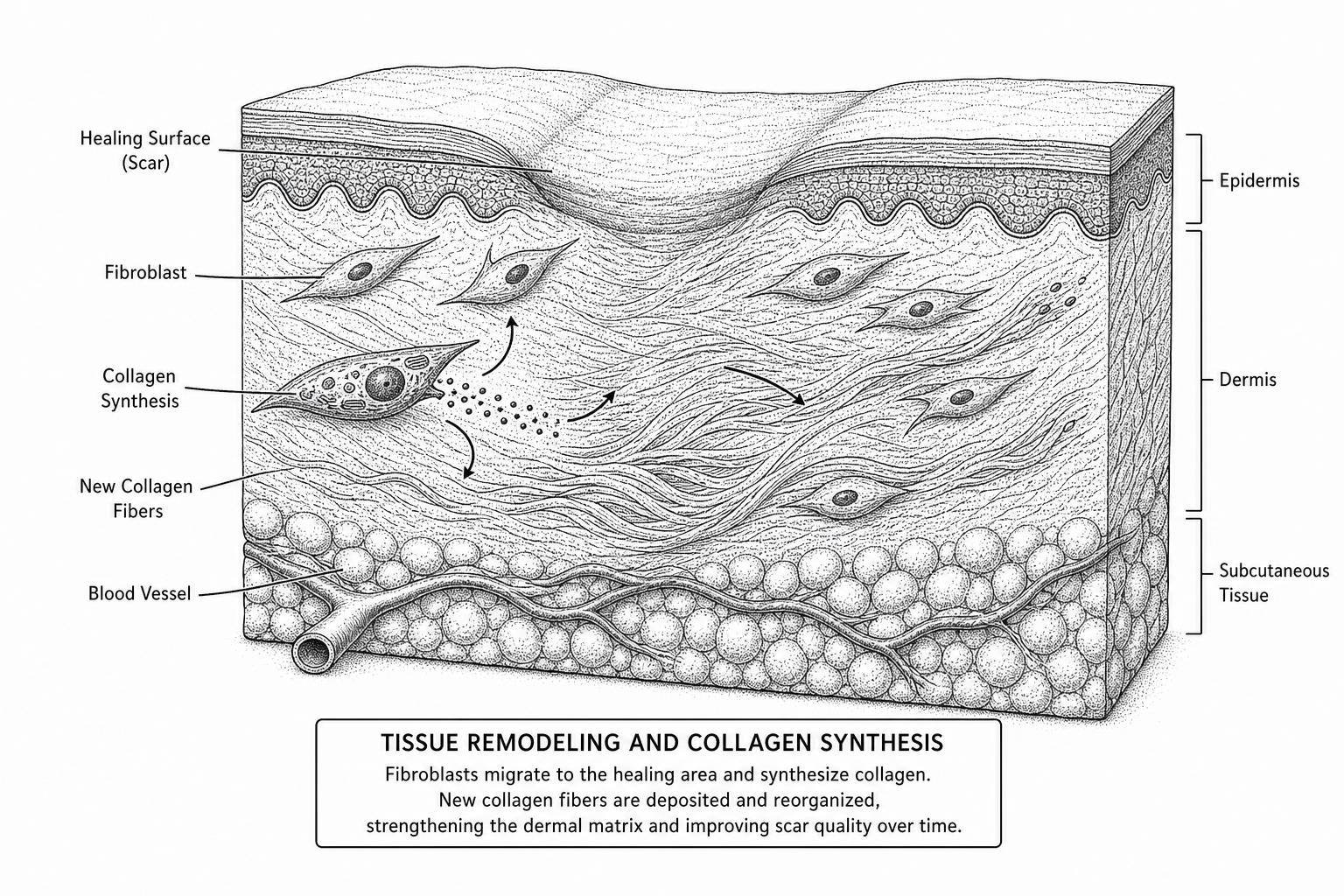
During the proliferative phase, specialized cells called fibroblasts migrate to the wound site. These cells synthesize collagen and other components of the extracellular matrix (ECM) to rebuild the structural integrity of the damaged tissue. Initially, fibroblasts lay down Type III collagen, which is disorganized and structurally weak. Over the subsequent months—a phase known as tissue remodeling—this is gradually replaced by stronger, more organized Type I collagen.
When a surgical incision disrupts the deep dermis, the epidermal barrier function is compromised. This disruption leads to an elevation in transepidermal water loss (TEWL). When the skin loses water rapidly, the underlying keratinocytes (epidermal cells) detect the dehydration. To compensate, they release inflammatory mediators, including interleukin-1 (IL-1), interleukin-8 (IL-8), and cyclooxygenase-2 (COX-2).
These inflammatory signals act directly on fibroblasts, stimulating them to produce excess collagen. This biological pathway is heavily mediated by epithelial sodium channels, specifically the Nax and ENaC channels, which detect changes in sodium concentration caused by localized dehydration. If this inflammatory cascade remains unchecked, the overproduction of collagen leads to raised, red, and rigid tissue—clinically classified as hypertrophic scars or keloids.
Implementing appropriate Post Surgery Scar Care aims to normalize this environment. By restoring the epidermal barrier and reducing TEWL, topical interventions downregulate the inflammatory signaling that drives pathological collagen deposition.
What the evidence says about scar creams
When evaluating topical formulations for incision scars, clinical research highlights a clear hierarchy of active ingredients. While consumer marketing often emphasizes botanical extracts and exotic oils, dermatological consensus prioritizes compounds that actively modulate the physical microenvironment of the healing scar.
The primary objective of topical scar therapy is to provide semi-occlusion. Complete occlusion can trap bacteria and cause tissue maceration, whereas semi-occlusion allows oxygen exchange while retaining critical moisture. By maintaining a humid microenvironment, the skin's natural signaling pathways are stabilized, preventing the hyper-activation of fibroblasts.
How silicone works on scars
Medical-grade silicone—typically formulated as polysiloxanes or dimethicone—is widely recognized as the gold-standard topical ingredient for scar management. Decades of clinical trials and international guidelines support its use as a first-line non-invasive therapy.
Unlike active pharmaceutical ingredients that undergo dermal penetration to metabolize in the body, silicone operates through physical and biophysical mechanisms:
- Epidermal Barrier Mimicry: Silicone gels dry to form an ultra-thin, breathable, and semi-occlusive membrane over the incision site. This barrier mimics the stratum corneum, reducing transepidermal water loss and restoring optimal hydration to the tissue.
- Fibroblast Downregulation: By stopping rapid water loss, silicone normalizes keratinocyte signaling. This halts the release of profibrotic cytokines, instructing fibroblasts to scale back collagen synthesis. The result is a more organized matrix that prevents the scar from becoming raised or thickened.
- Temperature and Tension Regulation: While minor, the silicone barrier slightly increases the local temperature of the skin, which can enhance the activity of endogenous collagenase—the enzyme responsible for breaking down excess collagen.
Clinical studies demonstrate that consistent application of high-silicone formulations can reduce the height and pigmentation of immature hypertrophic scars by up to 70% over a 2-to-3-month period.
Botanical and hydrating ingredients
While silicone remains the undisputed benchmark, secondary ingredients are frequently incorporated into scar creams to address associated symptoms such as erythema (redness), pruritus (itching), and localized dryness.
- Allium cepa (Onion Extract): This botanical extract possesses known anti-inflammatory and antibacterial properties. It works by inhibiting the production of inflammatory mediators and downregulating collagen synthesis. Topical formulations utilize onion extract to help soften scar texture and reduce hyperpigmentation.
- Allantoin: Often paired with onion extract, allantoin is a keratolytic agent that promotes cell proliferation and skin hydration. It helps soothe irritated skin, reduces itching, and assists in shedding dead skin cells, which can smooth the rough edges of a healing incision.
- Hyaluronic Acid and Glycerin: These humectants draw moisture into the stratum corneum, supporting the skin's hydration levels. However, because they lack the occlusive properties of silicone, they are best used as supportive hydrators rather than standalone scar preventatives.
- EGCG (Epigallocatechin Gallate): Derived from green tea, EGCG has shown promise in preliminary studies for reducing the cellular signaling pathways that lead to excessive collagen buildup in hypertrophic scars.
While these botanical and hydrating agents provide symptomatic relief and support general skin health, clinical trials generally show they are less effective at preventing raised scars when compared head-to-head with pure silicone therapy.
When and how to apply scar cream
The efficacy of even the most advanced topical scar treatments is highly dependent on timing and proper application technique. Applying a scar cream too early can disrupt wound healing, while starting too late may miss the critical window of active tissue remodeling.
The Incision Healing Timeline
A strict protocol must be followed to ensure safety and maximize therapeutic outcomes:
- The Hemostasis and Inflammatory Phases (Days 1–14): No scar creams should be applied during this period. The wound must remain clean, protected, and allowed to close naturally.
- Epithelialization and Wound Closure (Weeks 2–4): Topical scar treatments must only begin once the wound is fully closed. This means all sutures or staples have been removed, no scabbing remains, and there is no active oozing, bleeding, or open raw skin. Introducing creams to an open wound can cause infection, allergic contact dermatitis, or wound dehiscence. For most surgical incisions, this milestone is reached around week 4.
- The Active Remodeling Window (Months 1–6): This is the optimal period for scar therapy. The tissue is highly responsive to hydration and physical manipulation. Treatments should be applied consistently during this phase.
- Maturation Phase (Months 6–18): Though the scar is less active, continued therapy can still help flatten and fade stubborn tissue.
Application and Massage Techniques
To apply a silicone-based scar gel or cream effectively:
- Cleanse and Dry: Gently wash the scar area with mild soap and water, then pat it completely dry. Silicone formulations will not adhere properly to damp or oily skin.
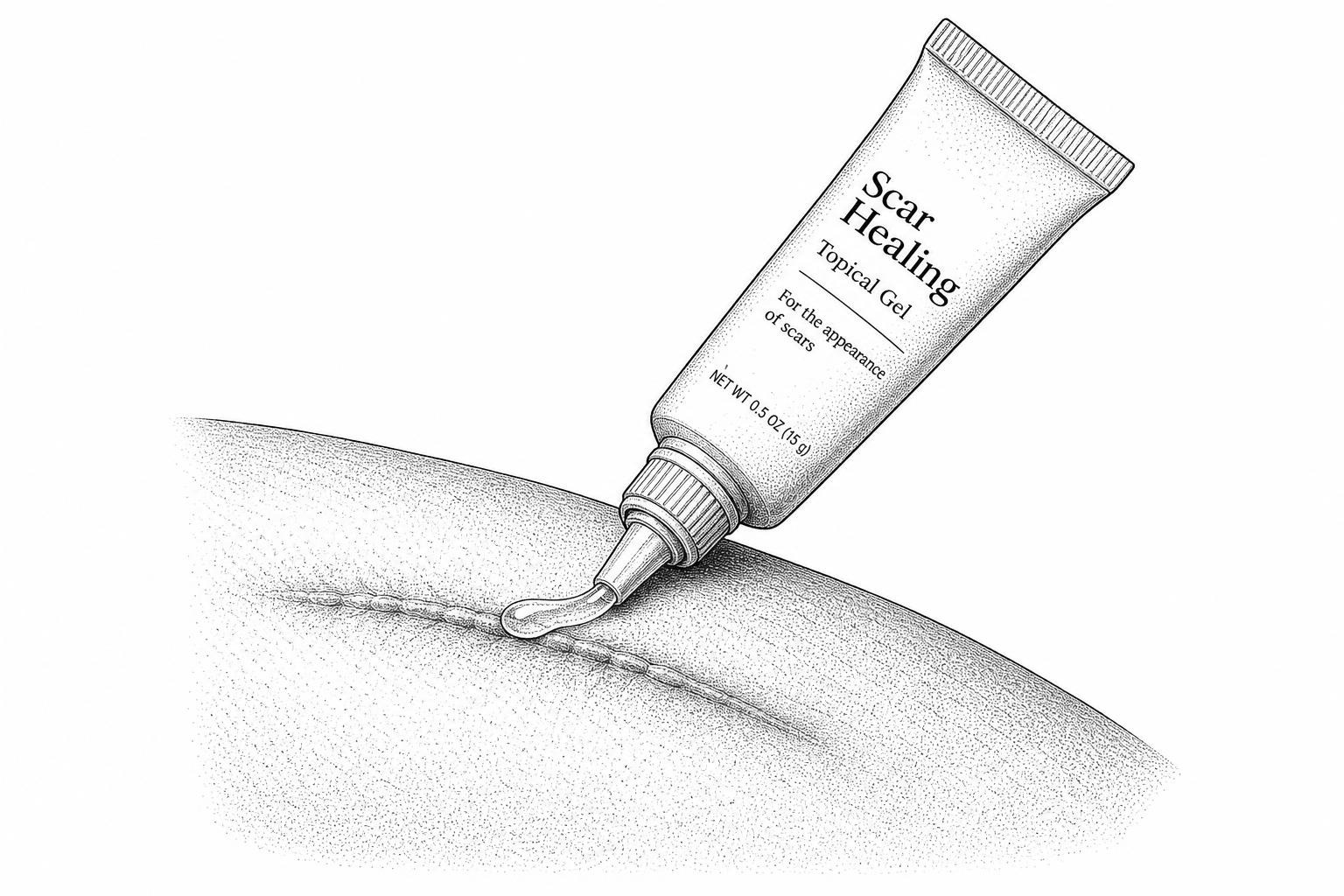
- Apply a Minimal Layer: Dispense a very small amount of gel. Massage it gently over the scar. The gel should dry to form a self-drying, invisible sheet within 3 to 5 minutes. If it takes longer to dry, too much product was applied.
- Frequency: Apply the product twice daily (morning and evening) to maintain continuous 24-hour contact with the skin.
- Incorporate Physical Massage: Once the incision is fully healed and stable (typically 4 weeks post-surgery), combining topical application with Scar Tissue Massage Therapy can significantly enhance results. Massaging the scar for 5 to 10 minutes daily helps physically break up dense, cross-linked collagen fibers, improving tissue pliability and reducing stiffness.
To learn more about the precise physiological timing of these interventions, consult the clinical guide on When to Start Scar Treatment After Surgery.
Creams vs. sheets vs. in-office treatments
Post-surgical scar care ranges from simple over-the-counter topicals to advanced clinical procedures. Understanding how these options compare is essential for developing a successful treatment plan.
| Treatment Modality | Primary Mechanism | Clinical Efficacy | Practical Considerations |
|---|---|---|---|
| Silicone Gel | Semi-occlusion, TEWL reduction, fibroblast regulation | High (supported by extensive clinical data) | Highly convenient; ideal for visible areas (face, hands) and irregular surfaces; easily worn under makeup. |
| Silicone Sheets | Semi-occlusion, slight physical compression, hydration | High (often considered the clinical benchmark) | Reusable; excellent for flat areas (chest, abdomen, C-section lines); can be difficult to secure on joints or highly mobile areas. |
| Non-Silicone Creams | Moisturization, anti-inflammatory action, cellular turnover | Moderate to Low (highly dependent on active ingredients) | Good for hydrating dry, itchy scars; less effective at preventing or flattening raised hypertrophic tissue. |
| Laser Therapy | Photothermolysis, neocollagenesis, vascular targeting | Very High (for persistent or severe scarring) | Must be performed by a dermatologist; excellent for reducing redness and remodeling old tissue; high cost. |
| Surgical Revision | Physical excision of old scar tissue, primary re-closure | High (for severe keloids or contractures) | Invasive; reserves as a last resort; requires immediate post-op scar care to prevent the new incision from scarring. |
For scars that do not respond to topical measures, non-ablative fractional lasers or pulsed dye lasers can target the microvasculature to reduce redness and stimulate deeper structural remodeling. To explore these clinical options, review the comprehensive guide on Surgical Scar Laser Treatment.
If a scar is severely raised, wide, or restricting movement, surgical intervention may be required. This process is detailed in the Surgical Scar Revision Complete Guide.
Common questions about incision scars
How does sun exposure affect healing incision scars?
Ultraviolet (UV) radiation is highly detrimental to healing incision scars. When a scar is immature (typically during the first 12 to 18 months), the surrounding skin is in a state of active inflammation and remodeling. Exposure to UV light triggers melanogenesis—the production of melanin—within the healing tissue.
Because the skin barrier is compromised, this pigment production is often erratic, leading to permanent hyperpigmentation (dark brown or purple discoloration) that makes the scar far more prominent. Furthermore, UV radiation damages the delicate new collagen matrix, slowing down the structural healing process.
To prevent this, healing scars must be strictly protected from the sun. Once the incision is fully closed, apply a broad-spectrum sunscreen with an SPF of 30 or higher daily. Physical sunscreens containing zinc oxide or titanium dioxide are preferred, as they sit on top of the skin to reflect UV rays without causing chemical irritation to the sensitive scar tissue.
Can topical creams completely remove surgical scars?
No topical cream, gel, or sheet can completely remove a surgical scar. When an incision penetrates the deep dermal layer of the skin, the original architecture of the tissue is permanently altered. The body repairs this gap with fibrous scar tissue, which lacks the organized "basket-weave" collagen structure, sweat glands, and hair follicles of normal, uninjured skin.
Topical scar creams are designed for scar mitigation and remodeling, not total removal. The goal of using topical scar treatments is to help the scar mature as flat, soft, pliable, and close to the natural skin tone as possible. While consistent use of medical-grade silicone can make a scar nearly imperceptible, a trace of the original incision line will always remain. Setting realistic expectations is a critical component of post-surgical recovery.
What are the clinical signs that a scar requires medical evaluation?
While most surgical incisions heal without major complications, certain symptoms indicate that a scar has transitioned from normal healing to pathological scar formation. You should consult a board-certified dermatologist or your surgeon if you observe any of the following clinical signs:
- Progressive Growth Beyond the Incision Boundary: If the scar tissue continues to expand and grow beyond the margins of the original surgical cut, this indicates keloid formation, which requires clinical intervention such as corticosteroid injections.
- Severe, Persistent Erythema or Warmth: While mild redness is normal during the early stages of healing, intense redness that worsens over time, feels hot to the touch, or is accompanied by swelling may indicate a localized infection.
- Contracture and Restricted Mobility: If a scar begins to tighten, pull, or restrict your ability to move a joint or limb, it is classified as a contracture scar and requires physical therapy or surgical revision.
- Intractable Pain or Pruritus: Severe, constant itching or sharp pain that does not improve with hydration or topical silicone suggests nerve irritation or hyper-inflammatory activity within the deep dermis.
Key takeaways
Maximizing the cosmetic and structural outcome of a post-surgical incision requires patience, consistency, and an evidence-based approach. While the market offers a wide array of botanical extracts and overnight creams, clinical science consistently points to medical-grade silicone as the most reliable non-invasive intervention for regulating collagen synthesis and restoring the skin's epidermal barrier.
By understanding the biological phases of wound healing, starting treatment only after complete wound closure, and maintaining a disciplined daily application and massage routine, you can significantly reduce the height, redness, and discomfort of post-surgical scars. For individuals seeking to optimize their recovery, selecting a clinically validated Best Scar Reduction Cream represents an essential step toward long-term tissue remodeling and skin health.
Works Cited
- Gold, M. H., et al. "Updated International Clinical Recommendations on Scar Management: Part 2 — Algorithms for Scar Prevention and Treatment." Dermatologic Surgery, 2014.
- Bleasdale, B., et al. "The Use of Silicone Adhesives for Scar Reduction." Advances in Wound Care, 2015.
- Mustoe, T. A. "Evolution of Silicone Therapy and Mechanism of Action in Scar Management." Aesthetic Plastic Surgery, 2008.
- Sidgwick, G. P., et al. "A Comprehensive Evidence-Based Review on the Role of Topicals and Dressings in the Management of Skin Scarring." Archives of Dermatological Research, 2015.
- O'Shaughnessy, K. D., et al. "Homeostasis of the Epidermal Barrier Layer: A Theory of How Occlusion Reduces Hypertrophic Scarring." Wound Repair and Regeneration, 2009.
- MedlinePlus. "Scars." U.S. National Library of Medicine.
This content is for informational purposes only and does not constitute medical advice. Consult a qualified healthcare professional for diagnosis and treatment.