Inner Thigh Stretch Marks: Why They Form and Daily Care
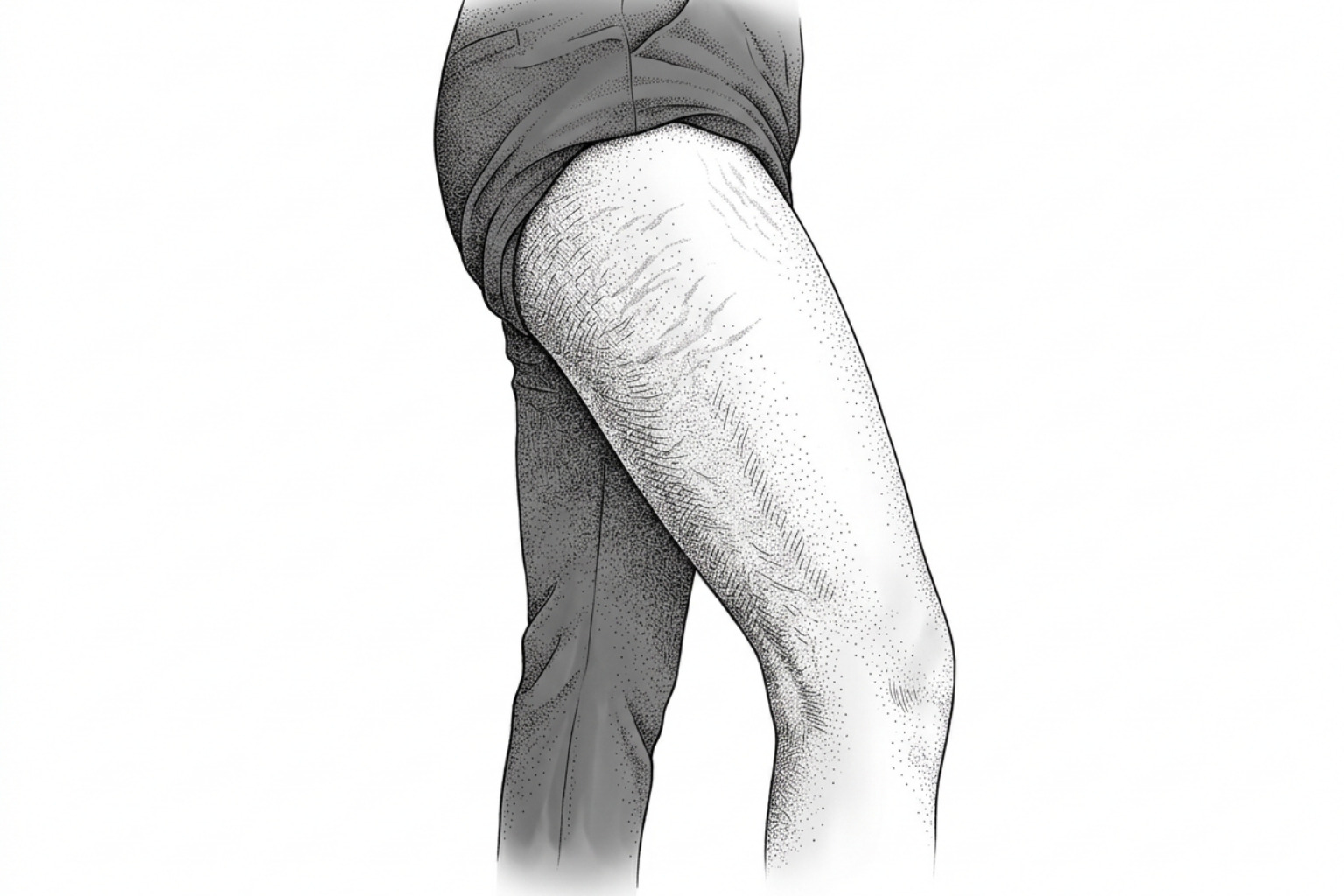
Inner thigh stretch marks come from fast growth, weight change, pregnancy or hormones. Here's why they start red and fade to white, how they differ from cellulite, and what daily care can realistically change.
Why stretch marks form on the inner thighs
Inner thigh stretch marks form when skin stretches or shrinks quickly. Growth spurts, weight changes, pregnancy, and rapid muscle gain can trigger them, while genetics and hormones affect individual susceptibility.
The structural disruption occurs below the skin's surface, where dermal fibers responsible for elasticity become damaged. New marks frequently appear pink, red, purple, or dark brown and can feel itchy. Over 6 to 12 months, the initial vascular erythema tends to fade, though atrophic changes persist.
A gentle moisturizer eases surface dryness, while targeted emollients such as a stretch marks oil or a stretch marks treatment cream support epidermal barrier integrity. The stretch mark treatment guide details broader clinical modalities for reducing scar prominence. Consultation with a physician is recommended if wide purple striations develop spontaneously, particularly alongside systemic symptoms such as easy bruising or unexplained weight gain.
What happens inside the skin
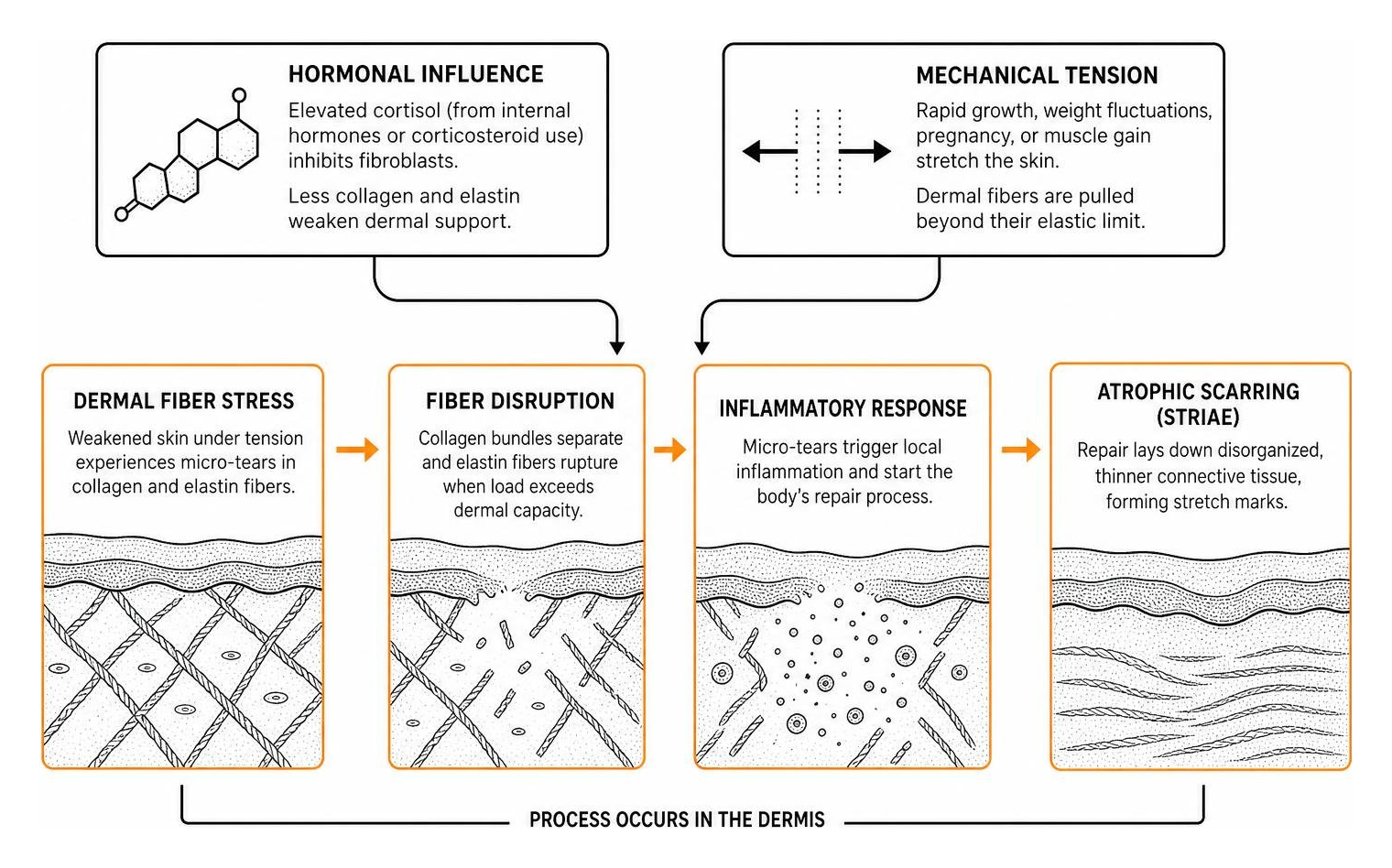
Stretch marks develop in the dermis, which is the resilient middle layer of skin responsible for maintaining structural integrity and flexibility. This layer relies on a dense network of collagen and elastin fibers that weave together like a supportive fabric. When the skin experiences rapid physical expansion, mechanical tension pulls these fibers beyond their elastic threshold.
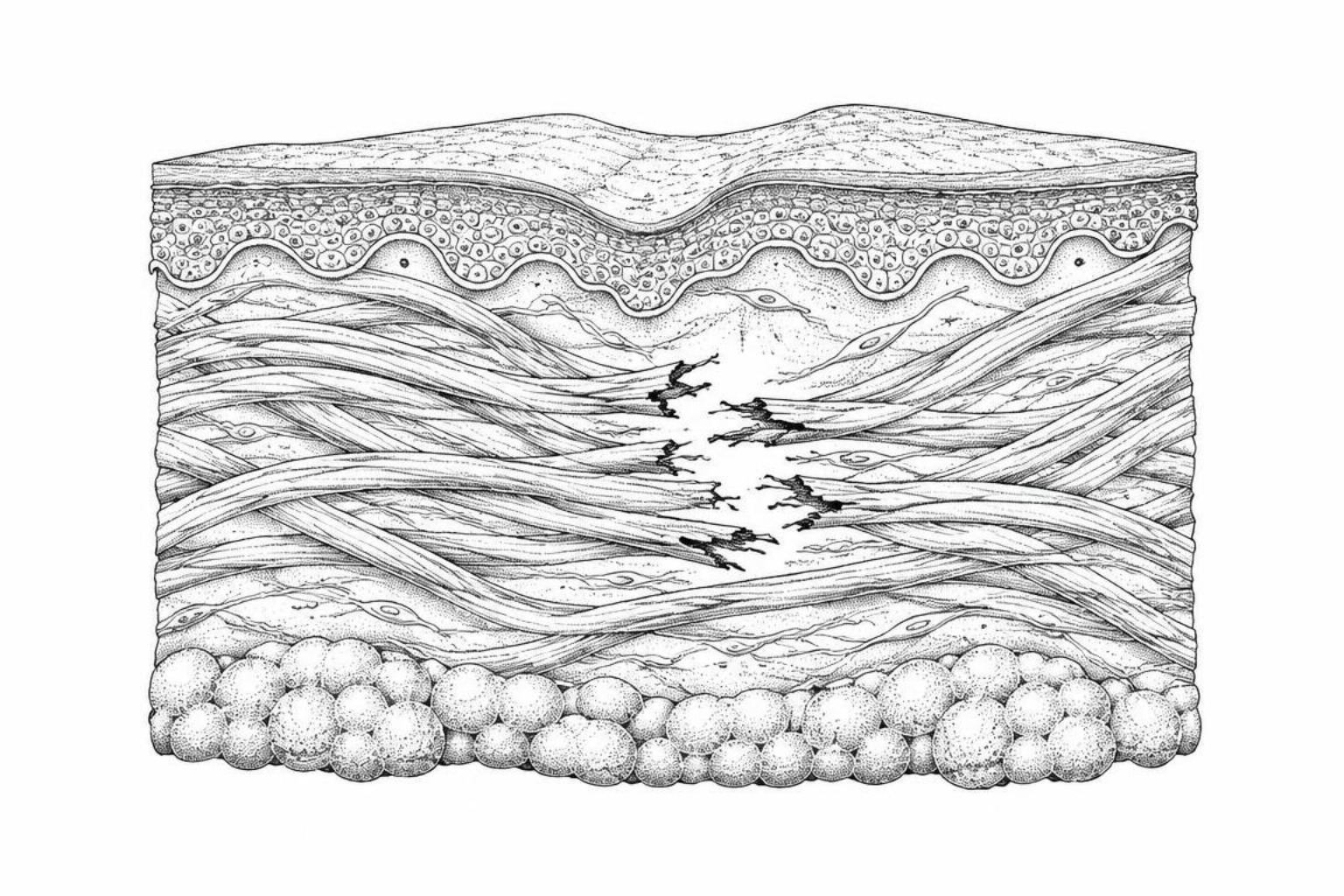
When mechanical load exceeds what the dermal framework can bear, the collagen bundles separate and elastin fibers rupture. This structural disruption triggers a local inflammatory response, creating a form of atrophic dermal scarring. The process shares biological pathways with collagen remodeling, as the body attempts to repair the micro-tears by laying down disorganized, thinner connective tissue in place of the original dense matrix.
The inner thigh is particularly susceptible to this process due to localized adipose distribution, regular skin movement, and skin-on-skin contact. The skin in this region is relatively thin compared to the outer thigh or back, so rapid expansion quickly exhausts its natural elasticity.
Rapid Growth, Puberty, and Weight Fluctuations
Rapid changes in body volume place immediate mechanical stress on the skin. During adolescent growth spurts, long bones lengthen faster than the surrounding soft tissue can comfortably stretch. The Cleveland Clinic notes that stretch marks are common among adolescent girls and boys during growth spurts, with the inner thighs, hips, and lower back being frequent sites.
Weight fluctuations and rapid muscle hypertrophy also generate high dermal tension. Bodybuilders and athletes who quickly build lower-body muscle through targeted leg exercises often notice linear marks forming along the inner thigh along the lines of mechanical pull. When tissue volume expands at a high velocity, the skin cannot synthesize new structural proteins fast enough to keep pace, leading to dermal separation.
How hormones play a part
Hormones play a direct role in how easily skin fibers break under tension. Elevated levels of glucocorticoids, whether produced internally by the adrenal glands or applied topically through corticosteroid medications, inhibit fibroblast activity. Fibroblasts are the primary cells responsible for manufacturing collagen and elastin. When cortisol levels rise, these cells produce fewer supportive proteins, weakening dermal resistance to mechanical stretch.
Hormonal surges during pregnancy, combined with rapid weight distribution, make the inner thighs and abdomen especially vulnerable to pregnancy-related stretch marks. Medical News Today notes that elevated estrogen, relaxin, and adrenal hormones soften pelvic ligaments while also altering dermal elasticity across the lower body.
In rare cases, widespread, deep purple stretch marks appear alongside systemic symptoms such as sudden central weight gain, facial rounding, and easy bruising. These signs may indicate an endocrine condition like Cushing syndrome, which involves chronic excess cortisol production and warrants evaluation by a physician.
Stretch marks or cellulite?
Stretch marks and cellulite frequently coexist on the inner thighs, but they arise from entirely different anatomical layers and structural mechanisms.
| Feature | Inner Thigh Stretch Marks | Inner Thigh Cellulite |
|---|---|---|
| Anatomical Origin | Dermis (middle skin layer) | Hypodermis (subcutaneous fat layer) |
| Primary Cause | Ruptured collagen and elastin fibers from rapid expansion | Fat lobules protruding between fibrous connective bands |
| Surface Appearance | Linear, parallel streaks (red, purple, pink, or silvery-white) | Dimpled, uneven, "cottage cheese" or mattress-like texture |
| Skin Texture | Atrophic, slightly depressed, smooth, or finely wrinkled | Firm to soft surface indentations without linear tears |
| Sensory Symptoms | Can itch or tingle during active, early inflammatory phase | Generally asymptomatic; no itching or surface irritation |
| Prevalence | Widespread across both females and males following rapid growth | Highly common among post-pubertal females |
Stretch marks represent linear dermal scars caused by connective fiber rupture, whereas cellulite occurs when subcutaneous fat chambers push upward against vertical fibrous septae, creating a dimpled surface pattern.
How stretch marks change from red to white
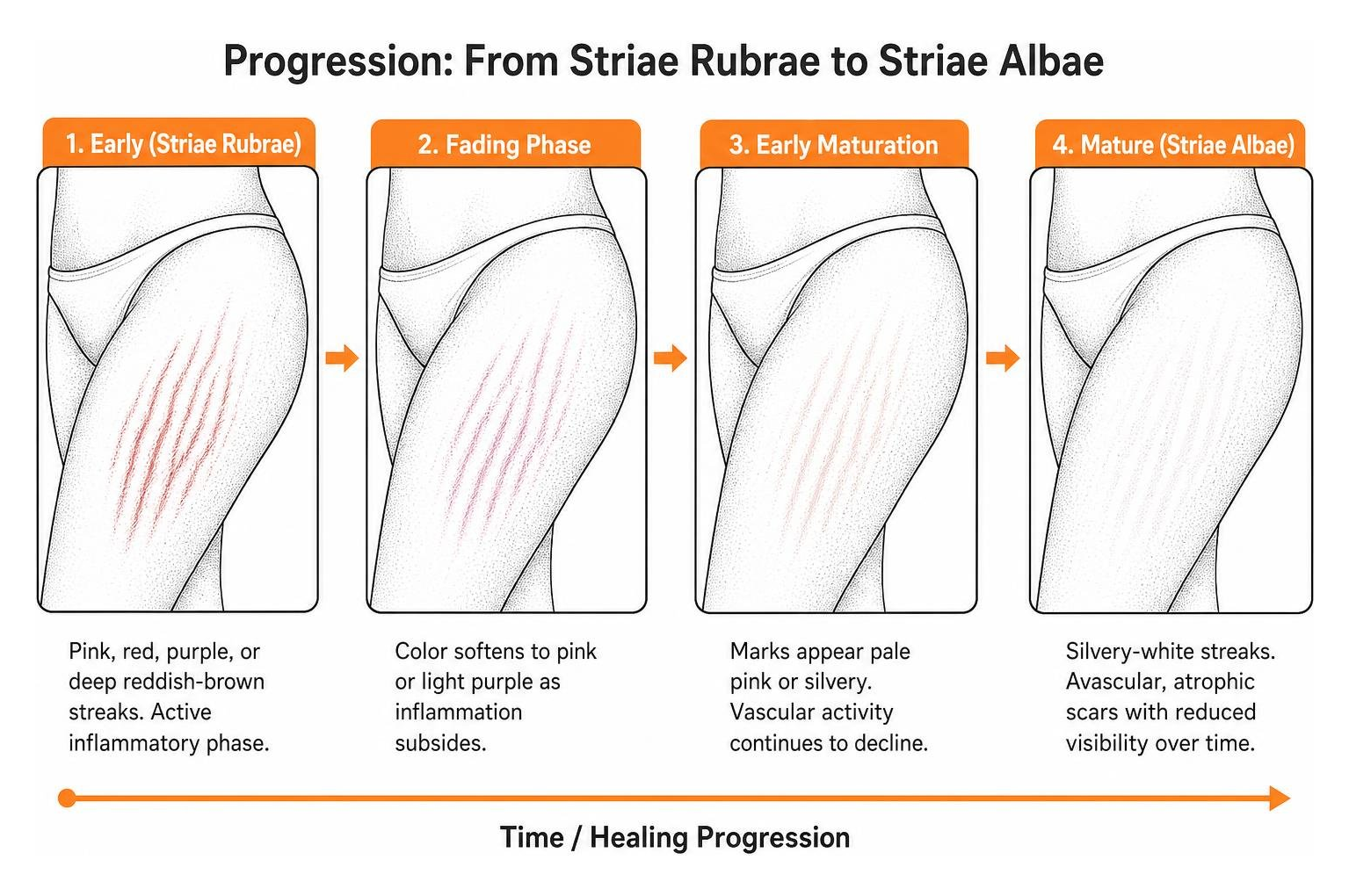
Stretch marks follow a distinct developmental timeline, transitioning through two main clinical phases defined by vascular activity, structural remodeling, and pigmentation changes.
Early red marks (striae rubrae)
When dermal fibers first separate, the condition is classified as striae rubrae. In this early stage, the marks appear pink, bright red, purple, or deep reddish-brown, depending on natural skin tone. This vivid coloration occurs because the overlying dermis has thinned, exposing dilated capillaries and engorged blood vessels in the deeper tissue.
Striae rubrae represent an active inflammatory phase. The skin over the fresh marks may feel slightly raised, warm, or noticeably itchy as sensory nerve endings respond to local tissue tension. During this phase, gentle daily hydration and barrier support may help keep the skin more comfortable.
Older white marks (striae albae)
Over a period of 6 to 12 months, the local inflammatory response subsides and blood vessels constrict. The stretch marks enter the mature phase, known medically as striae albae. During this stage, the redness completely fades, leaving behind linear, slightly depressed tracks that appear pearlescent white, silvery, or lighter than the surrounding skin tone.
Histological analysis shows that mature marks contain flattened epidermal ridges, reduced melanin production, and densely packed, atrophic collagen bundles that lack organized elasticity. A dermatological study on hyaluronic acid and amino acids conducted with 29 participants found that striae albae exhibit structural collagen atrophy, with targeted intradermal hydration therapies helping to soften the visual depth of mature thigh striations over a 6-month observation period.
A daily skin care routine
A thoughtful daily skincare routine helps support skin elasticity, maintain the epidermal moisture barrier, and reduce the mechanical friction that commonly irritates inner thigh skin.
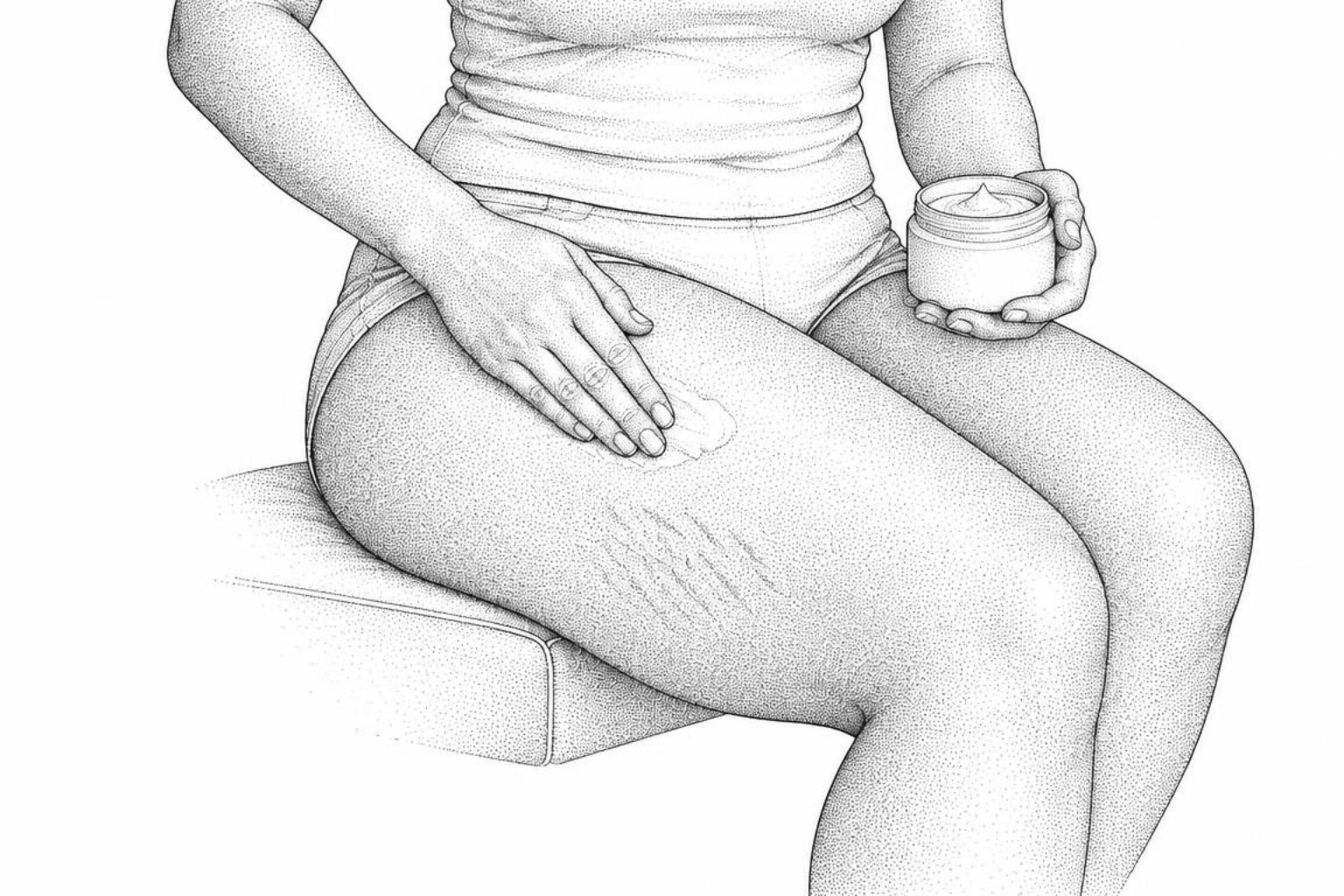
Keeping skin moisturized
Keeping the outer skin barrier well hydrated supports epidermal flexibility and prevents the dry, crepey appearance that can make linear marks look more pronounced.
- Cleanse with Mild, Soap-Free Washes: Use a gentle, pH-balanced cleanser in the shower to avoid stripping the inner thighs of their natural lipid film.
- Apply Emollients to Damp Skin: Within three minutes of stepping out of the shower, apply a nourishing cream or oil containing ingredients like squalane, ceramides, glycerin, or shea butter to lock in moisture and limit transepidermal water loss.
- Include Barrier-Strengthening Topicals: Look for formulations containing centella asiatica or low-molecular-weight hyaluronic acid, which help retain tissue hydration without causing surface irritation.
- Protect from Sun Exposure: If the inner thighs are exposed to sunlight during swimming or outdoor sports, apply broad-spectrum sunscreen with an SPF of 30 or higher to prevent hyperpigmentation along fading marks.
Reducing rubbing and chafing
Friction from walking, running, or tight clothing can aggravate sensitive inner thigh skin and exacerbate local barrier damage.
- Apply Gentle Circular Massage: Spend two to three minutes gently massaging a rich body oil into the inner thighs once or twice daily. Using circular pressure helps condition the surface tissue, following principles outlined in scar tissue massage.
- Reduce Friction With Clothing Choices: When wearing skirts, dresses, or athletic shorts, choose breathable, moisture-wicking layers that limit skin-on-skin rubbing.
- Choose Soft, Breathable Fabrics: Wear seamless cotton or technical moisture-wicking underwear and pants to prevent coarse seams from rubbing directly against active or maturing stretch marks.
What Daily Care Can and Cannot Change
Daily moisturizing and friction reduction can help keep inner thigh skin comfortable and support the moisture barrier. They cannot reverse the underlying changes to collagen and elastin that create stretch marks.
Realistic Expectations for Daily Care
Daily care can support comfort and help the skin look and feel healthier while marks mature:
- Permanent Structural Change: Stretch marks are lasting changes to the dermal structure, so daily care will not erase them.
- Comfort and Appearance: Consistent hydration and reduced friction may help with dryness, irritation, and the look of the surrounding skin.
- Time Requirements: Marks often fade gradually as the skin matures, and changes in appearance can take several months.
Common questions
Can stretch marks on the inner thighs be completely removed?
Stretch marks cannot be completely removed because they involve permanent tearing of collagen and elastin fibers within the dermis. However, their visual prominence fades naturally over time from bright red or purple to faint, silvery lines. Daily moisturizing can support comfort and overall skin texture as the marks fade naturally over time.
Why do inner thigh stretch marks feel itchy?
Itching commonly occurs during the early striae rubrae stage when rapid mechanical stretching triggers localized inflammation. As the dermal fibers pull apart, sensory nerve endings within the skin become irritated, and the thinned epidermis experiences higher rates of moisture loss. Applying a cool compress and a rich, fragrance-free emollient helps soothe this sensation.
How does friction from walking affect stretch mark formation?
Friction does not directly cause stretch marks, which form deeper in the dermis from rapid tissue expansion. However, repetitive skin-on-skin friction from walking can irritate the delicate, thinned epidermis overlying active marks. This friction causes chafing, redness, and barrier disruption, making existing stretch marks more sensitive and uncomfortable. Wearing moisture-wicking shorts or applying anti-friction balms protects the skin barrier.
The bottom line
Stretch marks on the inner thighs are a normal, harmless response to bodily growth, hormonal shifts, and rapid physical development. By supporting the skin with daily hydration, protecting against mechanical chafing, and giving maturing marks time to fade, the skin can remain healthy, smooth, and resilient. For personalized guidance on evaluating specific scar types, individuals can complete a personalized scar assessment.
Works Cited
- Fasola E, Nobile V. “Low Molecular Weight Hyaluronic Acid Added to Six Specific Amino Acids in the Treatment of Striae Alba (SA): An Observational Study.” Aesthetic Plastic Surgery, 2024.
- Smith L; medically reviewed by Nwadike VR. “Skin conditions during pregnancy: Causes, symptoms and treatment.” Medical News Today, 2023.
- Cleveland Clinic. “Stretch Marks: What are they, Causes & Treatments.” Cleveland Clinic Health Library, 2022.
- NHS. “Stretch marks in pregnancy.” NHS website, 2022.
This content is for informational purposes only and does not constitute medical advice. Consult a qualified healthcare professional for diagnosis and treatment.