What Expectant Mothers Can Do for Stretch Marks
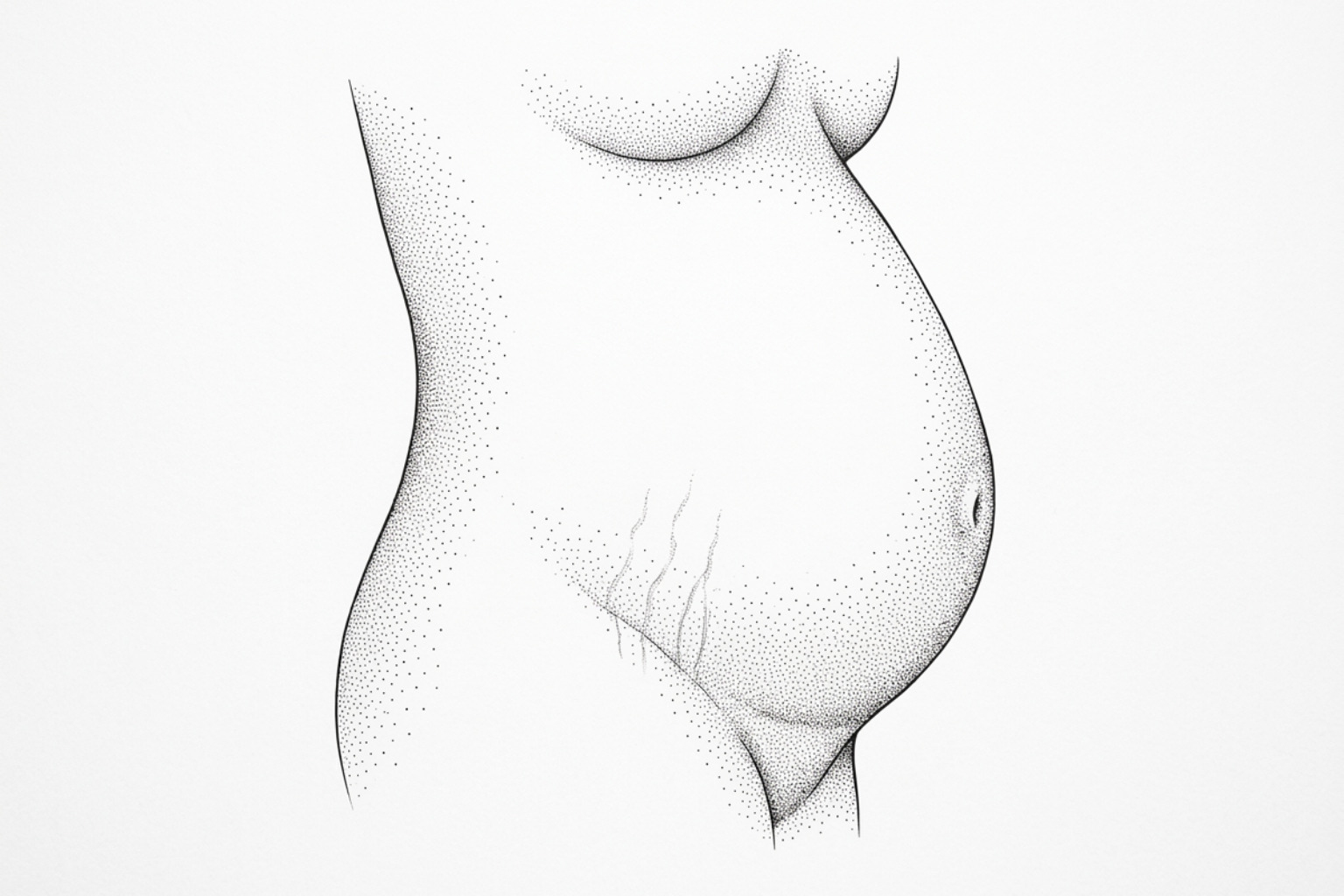
Stretch marks in pregnancy are common and partly down to genetics. Here is what moisturizers and massage can and cannot do, which products to avoid, and what helps after delivery.
How stretch marks form in pregnancy
Pregnancy stretch marks develop in the reticular dermis when rapid abdominal expansion exceeds the tensile tolerance of structural collagen and elastin networks. While topical creams cannot completely stop dermal fibers from separating during rapid abdominal growth, daily application of moisturizers combined with two to three minutes of circular massage improves skin pliability, alleviates tightness, and relieves stretching-induced itching. Expectant mothers can also support tissue resilience through balanced nutrition rich in vitamin C and zinc alongside adequate hydration.
The skin consists of three primary layers: the epidermis, the dermis, and the subcutaneous tissue. The dermis serves as the structural foundation of the skin, rich in a dense meshwork of type I and type III collagen fibers interwoven with elastin fibrils that provide tensile strength, resilience, and elasticity.
During gestation, the skin experiences significant mechanical tension alongside massive endocrine shifts. According to a clinical review published in StatPearls by Mikes et al., striae distensae develop primarily as a response to dermal mechanical stretching combined with hormonal changes that compromise structural matrix integrity. During scar formation, linear dermal tears trigger an inflammatory healing response, replacing healthy organized collagen with parallel, atrophic bands of scar tissue.
A prospective cohort study of 1,017 women published in BMC Pregnancy and Childbirth observed that 59% of the cohort developed stretch marks during pregnancy. The study found that family history increased the likelihood of developing stretch marks by more than fourfold, with pre-pregnancy body mass index (BMI), gestational weight gain, and maternal age playing significant independent roles.
Why skin tears and hormones play a role
The formation of stretch marks involves more than simple mechanical pulling. Hormones alter the structural behavior of dermal proteins during pregnancy:
- Glucocorticoid and Estrogen Receptors: Unaffected pregnant skin maintains normal baseline hormone signaling, but developing striae tissue contains twice as many estrogen receptors, alongside elevated levels of androgen and glucocorticoid receptors, according to a systematic review by Farahnik et al. in the International Journal of Women's Dermatology. Elevated cortisol and glucocorticoid activity inhibit dermal fibroblast proliferation, reducing normal collagen synthesis and matrix maintenance.
- Relaxin and Elastolysis: Serum relaxin increases during pregnancy to prepare pelvic ligaments for delivery, but systemic interactions can also alter dermal collagen turnover. The elastolysis of fibrillin and elastin networks leaves the dermis vulnerable to micro-ruptures when rapid physical distension occurs.
- Dermal Matrix Micro-Tears: Rapid physical expansion outpaces fibroblast remodeling capacity. As mechanical stress exceeds the elastic threshold of the reticular dermis, collagen bundles separate and elastic fibers break. The vascular response produces localized erythema before transitioning into atrophic scar bands.
From red to white stretch marks
Stretch marks progress through two distinct developmental stages, identifiable during standard clinical scar assessment and dermatological evaluations described by the Mayo Clinic:
- Striae Rubrae (Active Stage): These early lesions present as flat or slightly raised linear bands varying in color from pink and bright red to purple or deep violaceous brown, depending on individual skin pigmentation. This phase features prominent microvascular proliferation, mast cell degranulation, localized inflammation, and active elastolysis. The skin over these marks often feels thin, tense, and itchy.
- Striae Albae (Mature Stage): Over months following childbirth, vascularity regresses. The lesions flatten, slightly depress, and take on a hypopigmented, silvery-white, or porcelain tone. The dermal collagen bundles become densely packed and horizontally oriented, with epidermal atrophy and a reduction in dermal thickness.
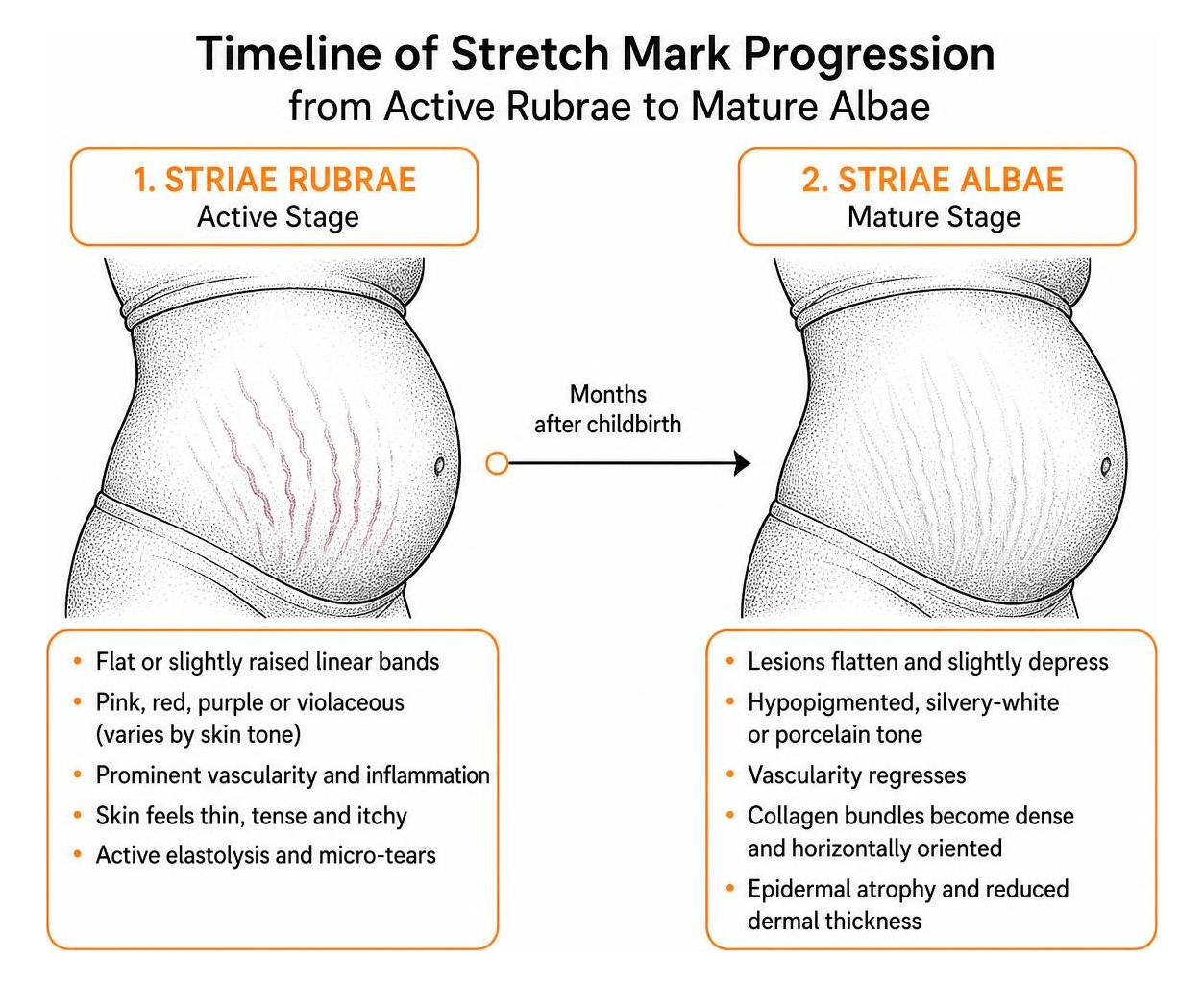
According to a review by Farahnik et al. in the International Journal of Women's Dermatology, between 50% and 90% of women develop stretch marks during pregnancy. While visible lesions can occasionally emerge before 24 weeks of gestation, striae gravidarum most commonly appear during the rapid abdominal distension of the third trimester.
Do creams and massage prevent stretch marks?
The commercial skincare market offers numerous products claiming to prevent pregnancy-related stretch marks. Evaluating the underlying clinical data clarifies what topical interventions can and cannot accomplish.
Which ingredients have evidence
A Cochrane systematic review by Brennan et al. evaluating six randomized and quasi-randomized controlled trials involving 800 women examined whether topical preparations containing active ingredients prevent stretch marks in pregnancy. The review found that topical preparations showed no statistically significant reduction in the development of stretch marks compared with placebo or no treatment (risk ratio 0.74, 95% confidence interval 0.53 to 1.03), with no significant difference observed in lesion severity.
The scientific evidence regarding commonly used topical ingredients includes:
- Centella Asiatica Extract: Formulations combining Centella asiatica with alpha-tocopherol and collagen-elastin hydrolysates were evaluated in randomized trials. In an 80-woman trial discussed in an academic review by Farahnik et al. in the International Journal of Women's Dermatology, the formulation was associated with a stretch mark incidence of 34% compared to 56% in the placebo group. In women with a history of pubertal striae, the extract formulation reduced occurrence rates significantly compared to placebo controls.
- Hyaluronic Acid: Topical formulations containing hyaluronic acid support epidermal hydration and stimulate dermal fibroblast activity. Small clinical trials report modest reductions in early lesion development, but larger confirmatory studies are lacking.
- Cocoa Butter and Botanical Oils: Plain cocoa butter, olive oil, and sweet almond oil remain popular home applications. Controlled clinical trials demonstrate that these botanicals do not significantly reduce the incidence of pregnancy stretch marks compared to placebo controls when used without regular massage. Exploring a broader range of natural scar reduction strategies provides realistic context for plant-based topical approaches.
Hydration and massage
While pharmacological ingredients have limited preventative efficacy, regular application of emollients provides measurable clinical benefits for the skin barrier. Emollients support stratum corneum hydration, reduce transepidermal water loss, and soften dry skin tissues.
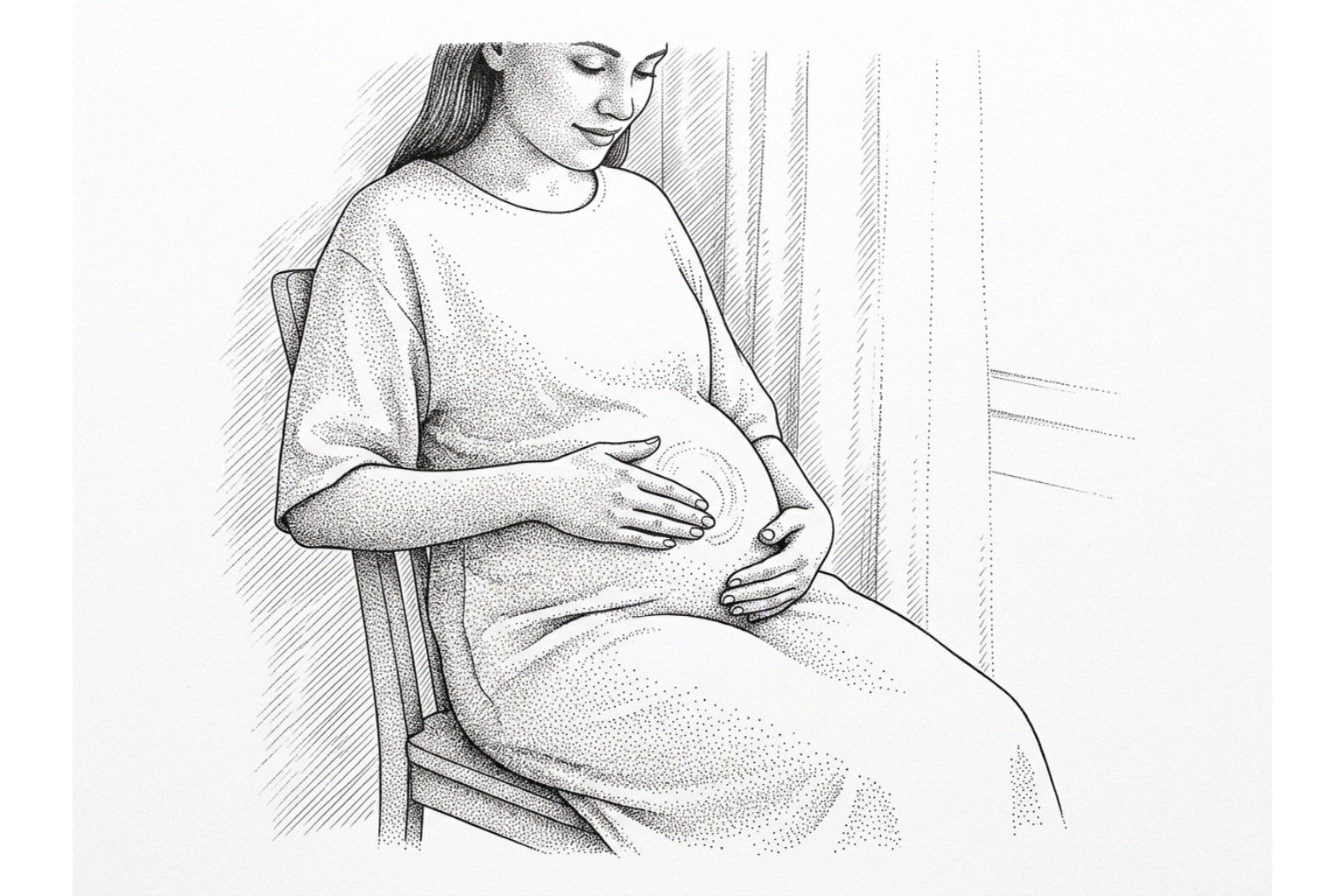
Clinical research highlights the mechanical role of massage during product application. In a clinical trial evaluated in a systematic review by Farahnik et al., women who applied almond oil with daily 15-minute circular massage experienced a stretch mark incidence of 20%, compared to 38.8% for women applying almond oil without massage, and 41.2% for untreated controls. Gentle mechanical stimulation enhances localized blood perfusion, supports skin pliability, and aids lymphatic drainage. Expectant mothers can incorporate scar tissue massage therapy concepts by using gentle, circular fingertip strokes on the abdomen, hips, and breasts for two to three minutes daily.
Pregnancy skin care: what's safe and what isn't
A comprehensive approach to skin health during pregnancy combines balanced nutrition, consistent hydration, and strict avoidance of contraindicated skincare ingredients.
Nutrition, hydration and pregnancy
Dermal fibroblasts require specific micronutrients to synthesize collagen and maintain extracellular matrix health. Incorporating essential vitamins for scar repair supports healthy skin tissue:
- Vitamin C and Zinc: Vitamin C serves as an essential cofactor for prolyl and lysyl hydroxylase, the enzymes responsible for stabilizing the collagen triple-helix conformation. Zinc is a vital cofactor for cellular division and tissue repair enzymes.
- Hydration: Maintaining adequate daily fluid intake (approximately 72 to 80 ounces of water daily) supports skin hydration and cellular elasticity.
- Gradual Gestational Weight Gain: Sudden weight fluctuations increase mechanical strain on the reticular dermis. Following provider-recommended caloric guidelines supports skin adjustment.
- Pregnancy-Safe Physical Activity: Low-impact exercises approved by an obstetrician (such as walking, prenatal yoga, and swimming) encourage peripheral circulation and tissue oxygenation.
Itching and ingredients to avoid in pregnancy
Pruritus (itching) is a frequent symptom accompanying abdominal skin expansion. Dryness and histamine release triggered by stretching nerve endings create persistent discomfort.
Certain active skincare ingredients pose fetal risks and must be avoided during pregnancy and lactation:
- Topical Retinoids (Tretinoin, Retinol, Retinaldehyde, Adapalene): Prescription retinoids are effective for remodeling non-pregnant stretch marks, but they are contraindicated in pregnancy due to risks of systemic absorption and teratogenic effects.
- High-Dose Salicylic Acid: Skincare products with high concentrations of beta-hydroxy acids should be avoided.
- Hydroquinone and Potent Essential Oils: High skin absorption profiles make hydroquinone inappropriate during pregnancy. Undiluted or endocrine-disrupting essential oils should also be avoided.
Expectant mothers must distinguish common skin stretching itch from broader dermatological or obstetric conditions:
- PUPPP (Pruritic Urticarial Papules and Plaques of Pregnancy): An itchy, inflammatory rash that originates within abdominal stretch marks before spreading to the thighs and buttocks, generally sparing the periumbilical region. It is managed with pregnancy-safe topical corticosteroids and antihistamines under medical supervision.
- Intrahepatic Cholestasis of Pregnancy (ICP): A liver condition characterized by intense, generalized itching without a primary rash, typically concentrated on the palms of the hands and soles of the feet. ICP requires immediate serum bile acid testing and maternal-fetal medical monitoring.
Stretch marks after pregnancy: treatment options
After delivery, maternal hormone levels normalize and mechanical tension on the abdominal wall subsides, allowing the skin to enter an extended remodeling phase.
How stretch marks fade after birth
Expectant mothers should anticipate that stretch marks naturally transform over 6 to 12 months postpartum. The prominent red, purple, or dark pink pigmentation of striae rubrae gradually subsides as microvascular networks regress.
While striae albae do not completely disappear on their own, they soften into subtle, pale, silvery lines that sit flush with or slightly below surrounding skin. Incorporating targeted postpartum scar reduction strategies supports long-term skin hydration and texture during this transitional phase.
Dermatologist treatments after delivery
For individuals seeking visible reduction in the width, depth, or coloration of persistent stretch marks following delivery and breastfeeding, board-certified dermatologists utilize several clinical modalities, as reviewed by the School of Dermatology:
- Topical Tretinoin: The School of Dermatology review describes prescription tretinoin 0.05% to 0.1% as a post-lactation option for early striae rubrae, with reported global improvement in lesion size and depth of up to 47%. Tretinoin should be avoided during pregnancy and used only when a clinician confirms it is appropriate after breastfeeding.
- Pulsed Dye Laser (585/595 nm): This laser targets hemoglobin in dilated microvasculature, making it most useful for early red or purple striae rubrae with persistent vascular coloration.
- Non-Ablative Fractional Laser (1540/1565 nm): This approach creates microscopic thermal treatment zones that trigger collagen remodeling in striae rubrae and striae albae. The School of Dermatology review reports 50% to 75% texture improvement in typical clinical responses with minimal recovery time.
- Ablative Fractional Laser (CO2 / Er:YAG): These devices vaporize micro-columns of tissue to stimulate deeper dermal remodeling in mature striae albae, especially when the main concern is atrophic depth or depressed texture.
- Microneedling and RF Microneedling: Mechanical micro-punctures, sometimes combined with radiofrequency heat, stimulate fibroblast activity across a range of skin types. The School of Dermatology review reports 40% to 60% improvement in collagen density and elasticity in typical clinical responses. If radiofrequency is added, there is a safety point that matters more in pregnancy and postpartum care, where people are already cautious about what they undergo. In October 2025 the US Food and Drug Administration issued a safety communication on radiofrequency microneedling following reports of burns, scarring, fat loss, disfigurement and nerve damage, and stated that it is a medical procedure rather than a cosmetic one and should not be used at home. A 2026 analysis of the FDA's device-reporting database counted 86 reports covering 145 adverse events between 2020 and 2025 (MAUDE database analysis, Dermatologic Surgery 2026); those are voluntary reports, not an incidence rate. It can be appropriate, but it is not a low-risk convenience upgrade and belongs with a qualified practitioner.
In-office laser scar reduction technologies offer precise energy delivery. Non-ablative fractional lasers stimulate neocollagenesis in deeper reticular layers while protecting the epidermis, reducing post-inflammatory hyperpigmentation risks in darker Fitzpatrick skin types. A comprehensive evaluation by a board-certified dermatologist helps determine the ideal timing, modality, and safety profile based on lactation status and individual skin characteristics.
What to know about pregnancy stretch marks
How well creams prevent stretch marks
No topical cream, oil, or lotion has been shown to completely prevent stretch marks in clinical trials. A comprehensive Cochrane systematic review by Brennan et al. of six randomized trials found that active topical preparations did not significantly reduce the overall incidence or severity of striae gravidarum compared to placebo. Because stretch marks originate in deep reticular dermis micro-tears driven by genetics and hormonal changes, topical moisturizers primarily improve superficial hydration and comfort instead of preventing structural fiber separation.
Itchy skin in pregnancy
Stretch marks itch because the physical distension of expanding tissue stretches the epidermis, disrupts the protective lipid moisture barrier, and stimulates superficial cutaneous nerve endings. Applying fragrance-free ceramide creams, chilling moisturizers in the refrigerator before application, using cool compresses, and avoiding hot showers safely alleviate localized pruritus without exposing the fetus to irritating chemical compounds.
When to call your OB about skin symptoms
Expectant mothers should contact their healthcare provider promptly if they experience severe or widespread itching, especially on the palms of the hands and soles of the feet, which can indicate Intrahepatic Cholestasis of Pregnancy. Immediate medical evaluation is also warranted for rapidly spreading blistering rashes, severe hives spreading outward from stretch marks, yellowing of the skin or eyes, or any signs of bacterial skin infection such as crusting, swelling, warmth, or localized pain.
Conclusion
Stretch marks represent a normal physiological response to the significant physical and hormonal transformations of pregnancy. While topical products cannot alter genetic predisposition or internal connective tissue stress, practicing consistent, gentle skincare supports comfort, relieves dryness, and reduces itching throughout every trimester.
Consulting healthcare providers ensures that skincare routines remain completely safe for both mother and child. For a comprehensive overview of scar biology and clinical remodeling modalities, explore the detailed guide on stretch marks.
This content is for informational purposes only and does not constitute medical advice. Consult a qualified healthcare professional for diagnosis and treatment.
Works Cited
- Brennan M, Young G, Devane D. “Topical preparations for preventing stretch marks in pregnancy.” The Cochrane database of systematic reviews, 2012.
- Mikes BA, Oakley AM, Patel BC. “Striae Distensae.” StatPearls Publishing, 2025.
- Farahnik B, Park K, Kroumpouzos G, Murase J. “Striae gravidarum: Risk factors, prevention, and management.” International journal of women's dermatology, 2017.