Using Natural Oils for Gentle Stretch Mark Care
How stretch marks form and how oils work
Mechanical stretching disrupts the organized collagen and elastin matrix within the reticular dermis, resulting in epidermal thinning and localized barrier impairment. A stretch marks oil supports stretching skin by reinforcing the lipid barrier, sealing in essential hydration, and softening the tight, itchy sensation caused by dermal tension. While topical oils cannot physically reconnect severed collagen or elastin bundles in the deep dermis, they deposit nourishing fatty acids onto the surface to reduce transepidermal water loss and improve skin suppleness. For a broader overview of structural skin changes, exploring scar types provides helpful context regarding how tissue heals after mechanical strain.
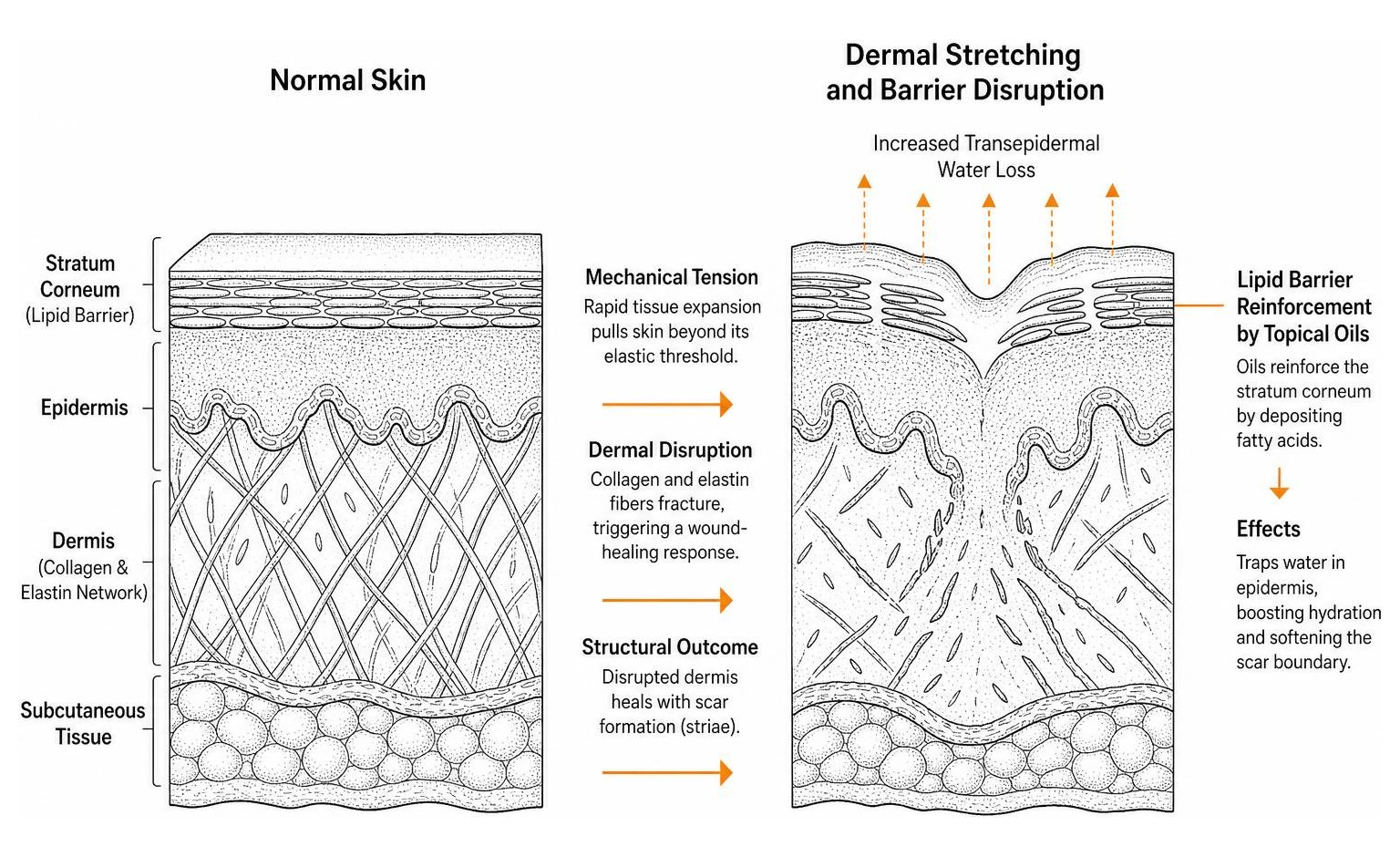
When the structural integrity of the dermis is compromised during periods of rapid growth or pregnancy, the overlying epidermis experiences increased moisture loss. Applying plant oils reinforces the stratum corneum, the outermost barrier of the skin. By forming an emollient lipid layer, these oils trap water within epidermal cells. This boost in hydration temporarily plumps the surrounding tissue, softens the texture along scar boundaries, and eases the discomfort that accompanies rapid tissue expansion.
Red vs. white stretch marks
Stretch marks undergo a distinct biological evolution over time. Understanding this timeline is essential for establishing realistic expectations when using topical oils.

- Striae Rubrae (Early Stage): When a stretch mark first emerges, it presents as a raised or flattened line with visible vascular erythema. Depending on skin tone, it appears pink, red, purplish, or deep brown. This discoloration reflects active inflammation, dilated microcapillaries, and early cellular remodeling in the dermis. Because metabolic activity remains elevated in this phase, early marks respond more readily to consistent hydration and gentle massage.
- Striae Albae (Mature Stage): Over a period of 6 to 12 months, the local inflammation subsides and the microvasculature regresses. The stretch mark transitions into a mature, slightly depressed, hypopigmented line that appears pale, silvery, or white. At this stage, the scarred area consists largely of dense, organized collagen fibrils with minimal cellular activity, making mature marks far less responsive to surface hydration.
| Feature | Early Red Stretch Marks (Striae Rubrae) | Mature White Stretch Marks (Striae Albae) |
|---|---|---|
| Visual Appearance | Pink, red, purple, or dark brown linear bands | Silver, pale white, or hypopigmented lines |
| Underlying Biology | Active inflammation, dilated capillaries, early collagen breakdown | Regressed blood vessels, dense acellular collagen scar |
| Skin Texture | Slightly raised, flat, or minimally sunken; often itchy | Sunken, thin, or slightly wrinkled |
| Response to Oils | Noticeable improvements in erythema and suppleness | Subtle improvements in skin softness; color changes minimally |
| Primary Care Goal | Reduce inflammation, support the barrier, ease tension | Maintain hydration, soften texture |
Learning how different types of striae develop helps clarify why timing plays a central role in any topical skincare approach.
How plant oils support the skin barrier
Botanical oils mimic the physiological lipids naturally produced by the sebaceous glands. The stratum corneum relies on a balanced matrix of ceramides, cholesterol, and free fatty acids to prevent moisture from escaping. Applying lipid-dense plant extracts supplies essential building blocks, such as linoleic acid and oleic acid, directly to the surface.
Linoleic acid plays an important role in repairing a compromised moisture barrier and soothing inflammatory pathways. Oleic acid acts as a permeation enhancer, allowing hydrating components to integrate into the upper epidermal layers. When these lipids are replenished, the skin maintains its cellular suppleness, becoming more pliable and resistant to superficial dryness. For those seeking non-invasive options, discovering natural scar reduction methods provides practical insight into supporting the skin barrier without aggressive interventions.
What's in plant oils and what they do
Selecting an oil formulation involves looking for ingredients that supply essential fatty acids and protective polyphenols without causing pore congestion or contact dermatitis.
Carrier oils rich in fatty acids
High-quality carrier oils form the base of any nourishing body blend:
- Sweet Almond Oil: Packed with oleic and linoleic acids, sweet almond oil is lightweight, easily absorbed, and widely used to improve skin softness and soothe surface irritation.
- Jojoba Seed Oil: Structurally similar to human sebum, jojoba oil functions as a liquid wax ester that integrates seamlessly into the lipid matrix, locking in hydration without leaving a greasy residue.
- Olive Oil: A randomized controlled study of 156 primiparous pregnant women published in a 2021 clinical trial evaluated the application of olive oil applied twice daily from the third trimester to birth (Solt & Kanza, 2022). The study found that using olive oil reduced the incidence of stretch marks to 50%, compared to 69.2% in the control group, while the severity score was significantly lower in the olive oil group (score of 2) compared to the control group (score of 4).
- Cacay Oil: Sourced from the Amazonian cacay tree, this oil is naturally rich in essential fatty acids and contains substantial concentrations of natural tocopherols, making it a popular choice for improving the feel of scar texture.
- Argan Oil: High in vitamin E and squalene, argan oil provides deep moisturization to dry, stretching skin while supporting overall elasticity.
Antioxidants and fat-soluble vitamins
Antioxidants safeguard the skin's lipid layer against oxidative stress and environmental degradation:
- Rosehip Seed Oil: Naturally containing trans-retinoic acid precursors and high concentrations of linoleic and alpha-linolenic acids, rosehip seed oil supports surface cellular turnover and helps blend uneven tone.
- Sea Buckthorn Oil: Known for its rich profile of omega-7 (palmitoleic acid) and carotenoids, sea buckthorn nourishes deeply depleted skin and reinforces dermal resilience.
- Vitamin E (Tocopherol): A classic lipid-soluble antioxidant that shields cell membranes from lipid peroxidation. Readers interested in targeted nutritional support can explore how vitamin E aids scar healing across different skin concerns.
- Calendula and Arnica Extracts: These botanical extracts provide gentle, soothing properties that calm surface irritation and alleviate the stretching sensations common during rapid body changes.
Which oils are safe during pregnancy
Skin undergoes significant hormonal shifts during pregnancy, often becoming more reactive, vascular, and prone to contact allergies. Maintaining safety requires selecting clean, minimalist formulas while steering clear of potential irritants.
Plant oils considered low-risk in pregnancy
Expectant mothers should prioritize single-ingredient or minimalist blends that emphasize barrier hydration:
- Cold-Pressed, Unrefined Carrier Oils: Pure formulations of jojoba, sweet almond, sunflower seed, and apricot kernel oil deliver fatty acids without chemical solvents or hidden additives.
- Sunflower Seed Oil and Shea Butter: Both ingredients excel at reducing transepidermal water loss and preserving elasticity without irritating sensitive hormonal skin.
- Fragrance-Free Formulations: Because the olfactory system and immune reactivity are heightened during pregnancy, choosing completely fragrance-free body oils minimizes the risk of allergic contact dermatitis.
For an extensive overview of safe topical choices, reviewing topical scar care options ensures that daily routines align with maternal wellness.
Ingredients to avoid in pregnancy
Certain skincare ingredients should be avoided during pregnancy and lactation due to safety considerations:
- Topical Retinoids: Prescription tretinoin and over-the-counter retinol or retinaldehyde are vitamin A derivatives. Retinoids must be avoided entirely during pregnancy and breastfeeding due to risks associated with fetal development.
- Concentrated Essential Oils: Highly concentrated aromatic essential oils, such as rosemary, clary sage, juniper, and pennyroyal, should be avoided during pregnancy because some compounds can trigger uterine contractions or skin sensitization.
- Synthetic Fragrances and Harsh Preservatives: Artificial perfumes and endocrine-disrupting phthalates can aggravate stretching abdominal skin and provoke inflammatory flare-ups.
How to apply oils and how long they take
Proper application technique maximizes the moisturizing benefits of botanical oils and supports localized microcirculation.
How to apply oil step by step
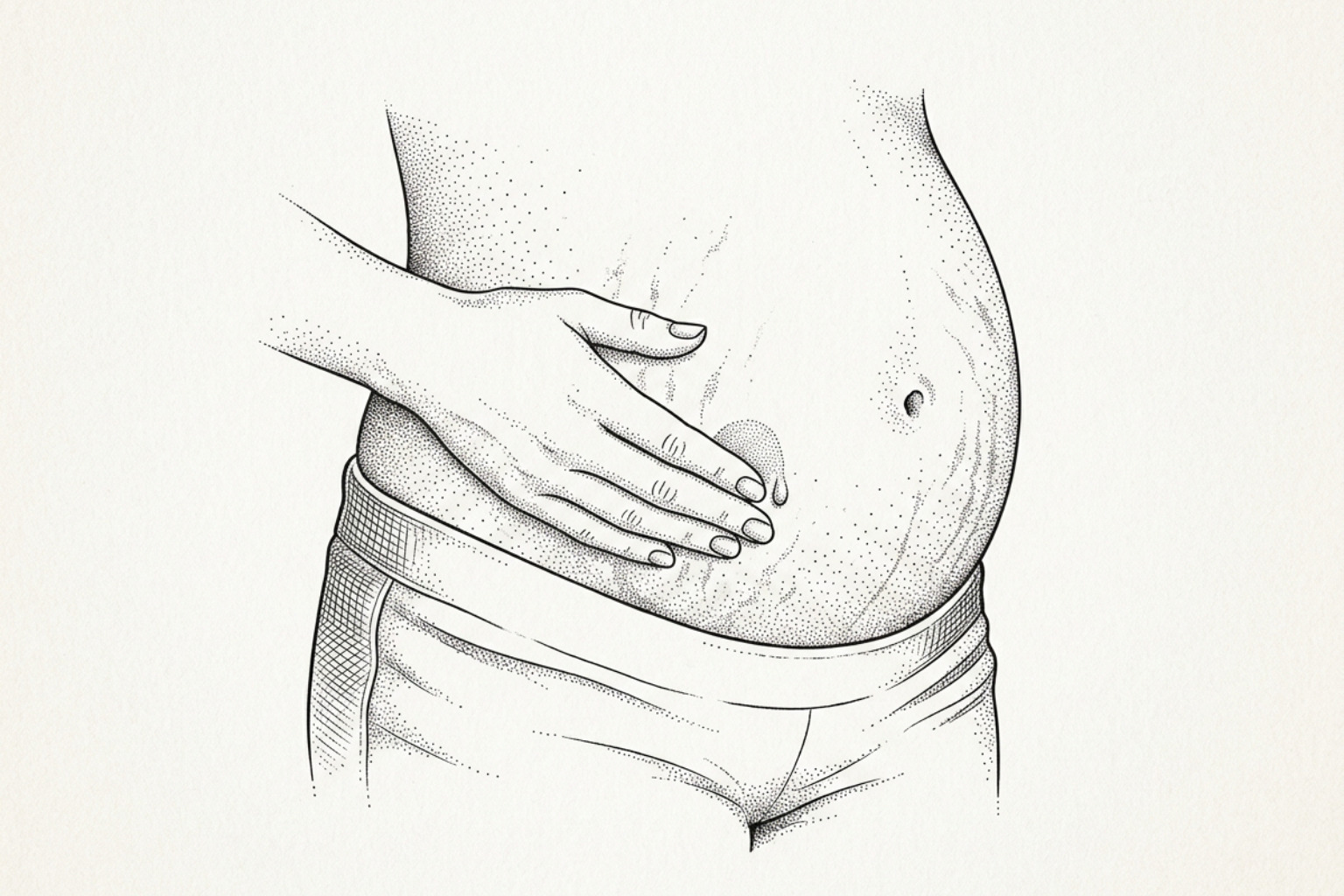
Applying oil immediately after bathing optimizes moisture retention by trapping water within the upper layers of the skin.
- Cleanse with Warm Water: Take a warm shower or bath to cleanse the skin and soften the stratum corneum. Avoid hot water, which strips natural lipids.
- Leave Skin Lightly Damp: Pat the skin gently with a towel, leaving a thin film of moisture on the surface.
- Warm the Oil: Dispense 4 to 6 drops of oil into the palms and rub the hands together to warm the liquid.
- Apply with Circular Massage: Gently massage the oil over the abdomen, hips, breasts, lower back, and thighs using broad, upward circular motions. Massage for 2 to 3 minutes to encourage absorption and stimulate local blood flow.
- Allow Full Absorption: Wait 3 to 5 minutes before dressing to allow the lipid layer to settle into the skin without transferring onto fabric.
- Maintain Consistency: Apply the oil twice daily, in the morning and evening, for continuous barrier protection.
How long oils take to show results
Topical oils require patience and regular application to yield noticeable changes in skin feel and appearance.
An observational longitudinal study of 50 adolescents and adults evaluated a topical oil formulation containing plant extracts and vitamins over a 4-month period (Cantelli et al., 2021). In this trial, 71% of patients showed improvement in the clinical appearance of stretch marks after 4 months of use, while skin hydration increased by 71% and erythema decreased by 30% over the same duration (Cantelli et al., 2021).
At the 8-week mark, consistent hydration softens the skin surface and eases tightness. By 3 to 4 months, newer striae rubrae may show visible fading in redness, blending more smoothly into the surrounding skin tone. However, structural collagen breaks beneath the skin remain, so oils will not completely remove dermal scars.
Do stretch mark oils actually work?
How much can oils improve stretch marks?
No topical oil can completely eliminate stretch marks. Because striae involve tears in the dermal collagen and elastin network, the structural change in the deep skin layer is permanent. Natural oils improve surface hydration, enhance elasticity, and help early red marks fade more gracefully into softer, less noticeable lines, but they cannot erase the underlying scar tissue.
When to start oils in pregnancy
Expectant mothers can begin incorporating gentle, pregnancy-safe carrier oils into their daily routine starting in the first trimester. Beginning early helps maintain optimal skin suppleness and relieves the itching and dryness that frequently accompany abdominal expansion later in pregnancy.
Plant oils vs. creams and emulsions
Natural oils and moisturizing creams serve complementary purposes. Creams often combine humectants like glycerin or hyaluronic acid with water to attract hydration into the skin, while oils provide rich emollient and occlusive fatty acids that seal that moisture inside. Layering a plant oil over a hydrating lotion provides comprehensive barrier support for dry, stretching areas.
Key takeaways
Caring for stretching skin is a gradual process focused on nourishing the dermal barrier and maintaining daily comfort. While no topical product can erase deep structural scars, using a gentle, fragrance-free stretch marks oil delivers essential fatty acids, reduces moisture loss, and supports natural skin suppleness over time.
For personalized insights into individual tissue healing and to explore targeted management options, take a free scar assessment.
This content is for informational purposes only and does not constitute medical advice. Consult a qualified healthcare professional for diagnosis and treatment.
Works Cited
Solt Kırca A, Kanza Gül D. "Effects of Olive Oil on Striae Gravidarum in Primiparous Women: A Randomized Controlled Clinical Study.." Alternative therapies in health and medicine, 2022. PMID 34559686. Mariateresa Cantelli, Elisa Camela, Claudio Marasca, Giuseppina Fontanella, Chiara Blasio, Gabriella Fabbrocini. "Topical oil formulation of plant extracts and vitamins as effective treatment for stretch marks and xerosis—An observational longitudinal study." Journal of Cosmetic Dermatology, 2021. DOI 10.1111/jocd.14094.