What You Should Know About Stretch Mark Creams
Stretch mark creams work best on early red or purple marks and mostly improve texture on older white ones. Here is what the ingredients do, how to use them and how long to wait.
How stretch mark creams work
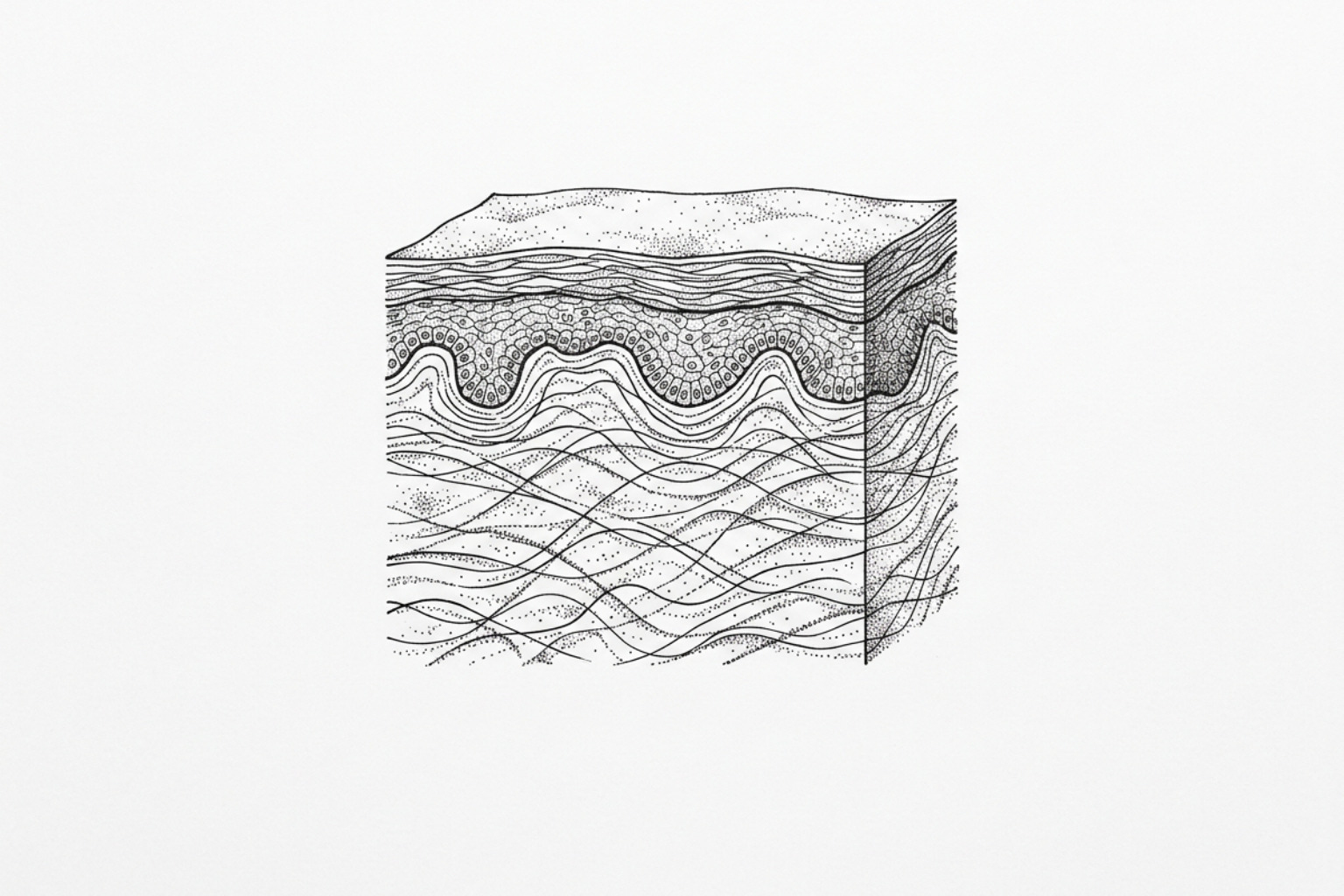
Rapid mechanical stretching strains the dermal extracellular matrix beyond its tensile threshold, causing microstructural tears in collagen and elastin fibers. A stretch marks treatment cream supports stretching skin by reinforcing the epidermal moisture barrier, improving tissue elasticity, and delivering active compounds that stimulate dermal collagen remodeling. Topical formulations work primarily by deeply hydrating the stratum corneum, reducing mechanical tension across expanding tissue, and calming localized inflammation. When rapid expansion strains the skin, microscopic tears occur within the extracellular matrix, disrupting collagen and elastin architecture. Understanding how scars form helps clarify why topical management requires time and persistence, as the skin works to rebuild deep structural disruptions instead of superficial surface blemishes.
The physiological progression of stretch marks occurs across two distinct phases. Initially, early lesions present as striae rubrae, which appear pink, red, purple, or dark brown depending on individual skin tone. This coloration reflects localized inflammation, microvascular dilation, and early structural breakdown within the dermis. Over months or years, these evolve into striae albae, mature lesions that appear pale, silvery, or slightly depressed due to dermal atrophy and reduced melanin synthesis. Readers can explore the overview of different scar types to see how striae compare to other forms of textural skin changes.
Topical formulations support this compromised tissue through targeted cellular pathways:
- Epidermal Barrier Repair: Occlusive and emollient agents reinforce the stratum corneum, reducing transepidermal water loss and soothing the pruritus common during early tissue stretching.
- Fibroblast Stimulation: Select active molecules signal dermal fibroblasts to synthesize new collagen bundles and reorganize disorganized elastin networks.
- Cellular Turnover Enhancement: Mild exfoliating and renewing actives encourage epidermal regeneration, smoothing the irregular surface texture associated with dermal depressions.
What the active ingredients do
Selecting an effective formulation requires understanding how specific compounds interact with stretching skin.
- Hyaluronic Acid: A powerful humectant capable of binding up to 1,000 times its weight in water. By drawing moisture into the deeper layers of the epidermis, hyaluronic acid increases tissue turgor and plumps fine surface depressions, improving skin suppleness under physical strain.
- Centella Asiatica: A botanical extract containing active triterpenes such as asiaticoside, madecassic acid, and asiatic acid. In a randomized controlled trial published in the International Journal of Cosmetic Science involving 80 pregnant women, a formulation containing Centella asiatica extract and alpha-tocopherol significantly reduced the development of stretch marks compared to a placebo, with only 34% of treated participants developing marks compared to 56% in the control group (Ud-Din et al., 2016).
- Topical Silicones and Dimethicone: Dimethicone serves as a premier skin protectant, forming a semi-permeable, breathable film over the surface. The benefits of topical silicone formulas include moisture retention and protection against friction, creating a stable microenvironment that normalizes collagen production.
- Peptide Complexes: Signal peptides communicate with skin cells to encourage extracellular matrix renewal, supporting dermal firmness and structural resilience.
- Botanical and Natural Extracts: Incorporating natural remedies for skin recovery, such as rosehip seed oil and shea butter, delivers essential fatty acids that support lipid bilayer integrity.
- Vitamin E (Alpha-Tocopherol): A fat-soluble antioxidant that protects cellular membranes from oxidative stress. While studying the role of vitamin E in scar healing reveals that it works best in combination formulas, it remains a cornerstone ingredient for maintaining overall skin barrier suppleness.
Choosing a product by stretch mark stage
Matching active ingredients to the stage of tissue maturation optimizes skin support.
| Parameter | Early Striae (Striae Rubrae) | Mature Striae (Striae Albae) |
|---|---|---|
| Visual Characteristics | Red, pink, purple, or violaceous bands; elevated or flat; often itchy or tender | White, silver, or hypopigmented linear bands; depressed or atrophic texture |
| Primary Biological Goal | Reduce inflammation, stabilize the dermal matrix, and preserve skin barrier hydration | Encourage cellular turnover, stimulate fibroblast activity, and improve surface texture |
| Recommended Actives | Hyaluronic acid, Centella asiatica, dimethicone, botanical emollients (rosehip oil, shea butter) | Retinoids (non-pregnant users), peptide complexes, exfoliating polyhydroxy acids |
| Formula Priorities | High emolliency, soothing anti-inflammatory agents, rich lipid replenishment | Barrier-supporting humectants, collagen-stimulating actives, sustained-release delivery |
For a broader understanding of topical options across various scar categories, consult the comprehensive topical scar treatments guide.
Vehicle Formulations: Creams, Lotions, and Anhydrous Oils
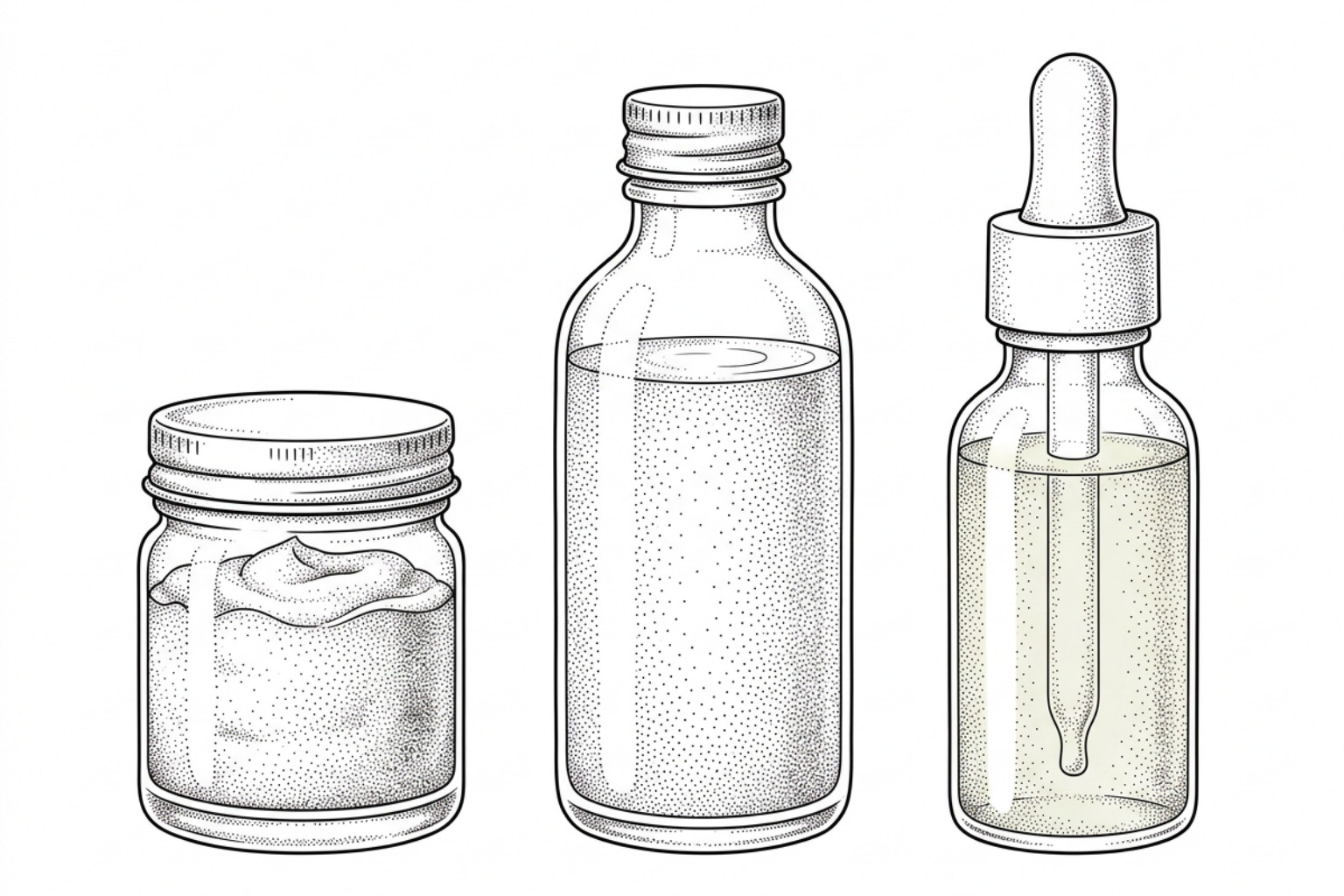
Topical products differ in water-to-lipid ratios, which alters how they feel and absorb into the skin:
- Creams (Water-in-Oil or Rich Oil-in-Water Emulsions): Creams strike a balance between deep hydration and lipid barrier reinforcement. Their viscosity allows for targeted application and extended massage, making them well suited for concentrated areas like the expanding abdomen, hips, and lower back.
- Lotions (Lightweight Oil-in-Water Emulsions): Lotions contain a higher percentage of water and spread easily across larger surface areas such as full legs, buttocks, and arms. They absorb rapidly without leaving a noticeable residue, making them convenient for daytime application before dressing.
- Body Oils (Pure Lipid Bases): Oils act primarily as occlusive barriers, locking in pre-existing skin moisture. While they soften dry surface tissue, they lack humectants to pull external water into the skin, so they deliver the best results when layered over damp skin or on top of a hydrating water-based lotion.
Safety in pregnancy and breastfeeding
Managing stretch marks during pregnancy requires careful screening of active ingredients. Rapid abdominal expansion often coincides with systemic hormonal shifts that increase skin sensitivity.
Reviewing topical retinoid considerations for scars is critical: prescription tretinoin and over-the-counter retinol derivatives, including retinyl palmitate, must be avoided during pregnancy and while nursing due to potential fetal risks. Expectant and nursing individuals should instead select formulas built around pregnancy-safe alternatives such as hyaluronic acid, peptides, plant oils, and Centella asiatica.
Sensitive, stretching skin also benefits from hypoallergenic, fragrance-free formulations that minimize the chance of contact dermatitis. Research examining the evidence on aloe vera scar reduction shows that pure aloe vera gel and soothing botanicals like chamomile or calendula provide relief for tight, itchy abdominal skin without introducing unnecessary synthetic fragrances.
How to apply for best absorption
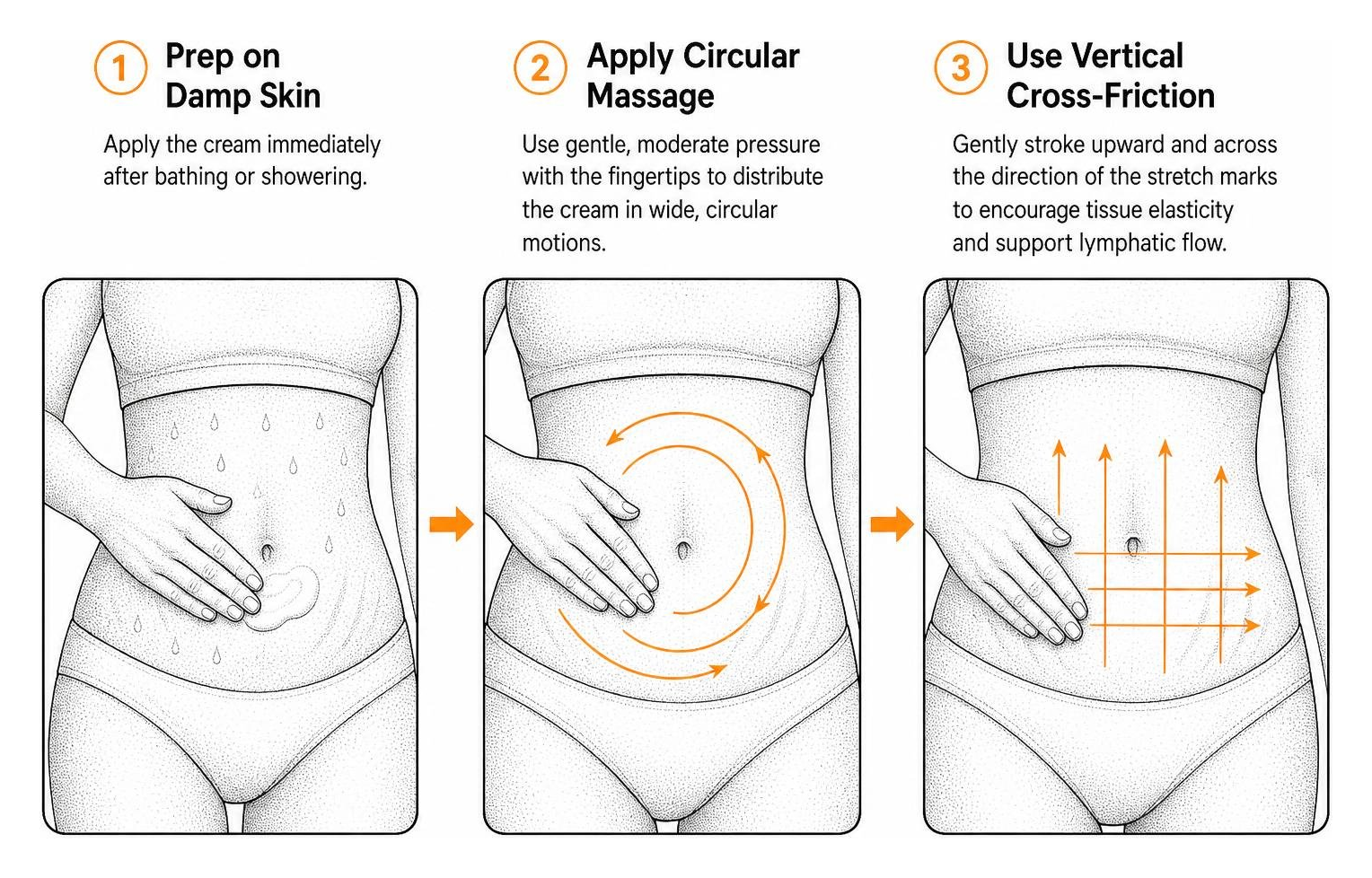
Proper technique improves both product coverage and local cutaneous circulation:
- Prep on Damp Skin: Apply the cream immediately after bathing or showering while the stratum corneum remains hydrated and porous.
- Apply Circular Massage: Use gentle, moderate pressure with the fingertips to distribute the cream in wide, circular motions across the abdomen, hips, and thighs.
- Use Vertical Cross-Friction: Gently stroke upward and across the direction of the stretch marks to encourage tissue elasticity and support lymphatic flow.
- Maintain Daily Consistency: Apply the product twice daily, morning and evening, for at least 8 to 12 weeks to align with natural epidermal turnover cycles. Further details on skin regeneration routines are covered in these scar fading strategies.
What trials show and how long results take
Scientific evaluations confirm that topical creams cannot completely remove stretch marks. Because striae involve tears deep within the dermal matrix, topical products primarily influence the overlying epidermis and early inflammatory phases.
A randomized, double-blind, placebo-controlled trial published in the International Journal of Cosmetic Science evaluated a specialized cream containing hydroxyprolisilane-C, rosehip oil, Centella asiatica triterpenes, and vitamin E in pregnant women. Among women without pre-existing stretch marks, only 5.6% in the treatment group developed striae gravidarum compared to 35% in the placebo group, demonstrating a significant preventative benefit (García Hernández et al., 2013).
In a systemic review published in the Journal of the European Academy of Dermatology and Venereology, researchers evaluated topical agents for striae distensae and noted that while formulations containing Centella asiatica or tretinoin yielded measurable benefits for early striae rubrae, single-ingredient remedies like pure cocoa butter or olive oil showed no statistically significant difference compared to placebos (Ud-Din et al., 2016). A separate systematic review in the Journal of the American Academy of Dermatology noted that more than 50% of pregnant women develop stretch marks, confirming their high natural prevalence regardless of skin type.
Readers seeking broader context on evidence-supported skin interventions can consult the guide on what works for scars. When mature striae albae do not respond adequately to home topicals, combining daily moisturizing with professional, in-office modalities, such as microneedling, fractional laser therapy, or radiofrequency, can provide additional textural refinement.
Common questions about stretch mark creams
Can topical creams eliminate mature striae albae?
No topical cream can completely eliminate mature, white stretch marks (striae albae). Mature marks consist of healed, atrophic scar tissue beneath the surface where collagen and elastin networks have permanently altered. However, high-quality creams containing peptides, hyaluronic acid, and barrier emollients can soften the surrounding skin texture, improve tissue elasticity, and help blend the visual contrast between the mark and unaffected skin.
What is the expected physiological timeline for visible improvement?
Skin barrier hydration, reduced dryness, and relief from itching typically occur within the first week of daily use. Visible improvements in skin tone, smoothness, and the coloration of early red or purple stretch marks generally require 8 to 12 weeks of consistent, twice-daily application. This timeframe reflects the natural physiological cycle of epidermal renewal and dermal matrix remodeling.
Can striae gravidarum be completely prevented during pregnancy?
Stretch marks cannot be entirely prevented in every individual because genetics, familial skin elasticity, hormonal surges, and the rate of weight change play substantial roles in their formation. Consistent application of evidence-supported creams helps keep the skin pliable and supple, supporting mechanical tolerance and significantly reducing both the incidence and severity of new marks as tissue expands.
Conclusion
Managing stretch marks successfully centers on realistic goals, early intervention, and daily consistency. While no over-the-counter formulation can erase mature dermal scars, selecting products fortified with active humectants, Centella asiatica, skin protectants like dimethicone, and nourishing lipid emollients helps support the skin through major body transitions. For a complete understanding of clinical approaches and post-pregnancy skin recovery, consult the in-depth stretch marks guide.
This content is for informational purposes only and does not constitute medical advice. Consult a qualified healthcare professional for diagnosis and treatment.
Works Cited
- Ud-Din S, McGeorge D, Bayat A. “Topical management of striae distensae (stretch marks): prevention and therapy of striae rubrae and albae.” Journal of the European Academy of Dermatology and Venereology, 2016.
- García Hernández JÁ, Madera González D, Padilla Castillo M, Figueras Falcón T. “Use of a specific anti-stretch mark cream for preventing or reducing the severity of striae gravidarum. Randomized, double-blind, controlled trial.” International journal of cosmetic science, 2013.