Ways to Reduce the Appearance of Stretch Marks
Stretch marks respond differently by age and skin tone. This guide covers creams, retinoids, microneedling, radiofrequency and lasers, with what each can realistically change and how long it takes.
How stretch marks form and develop
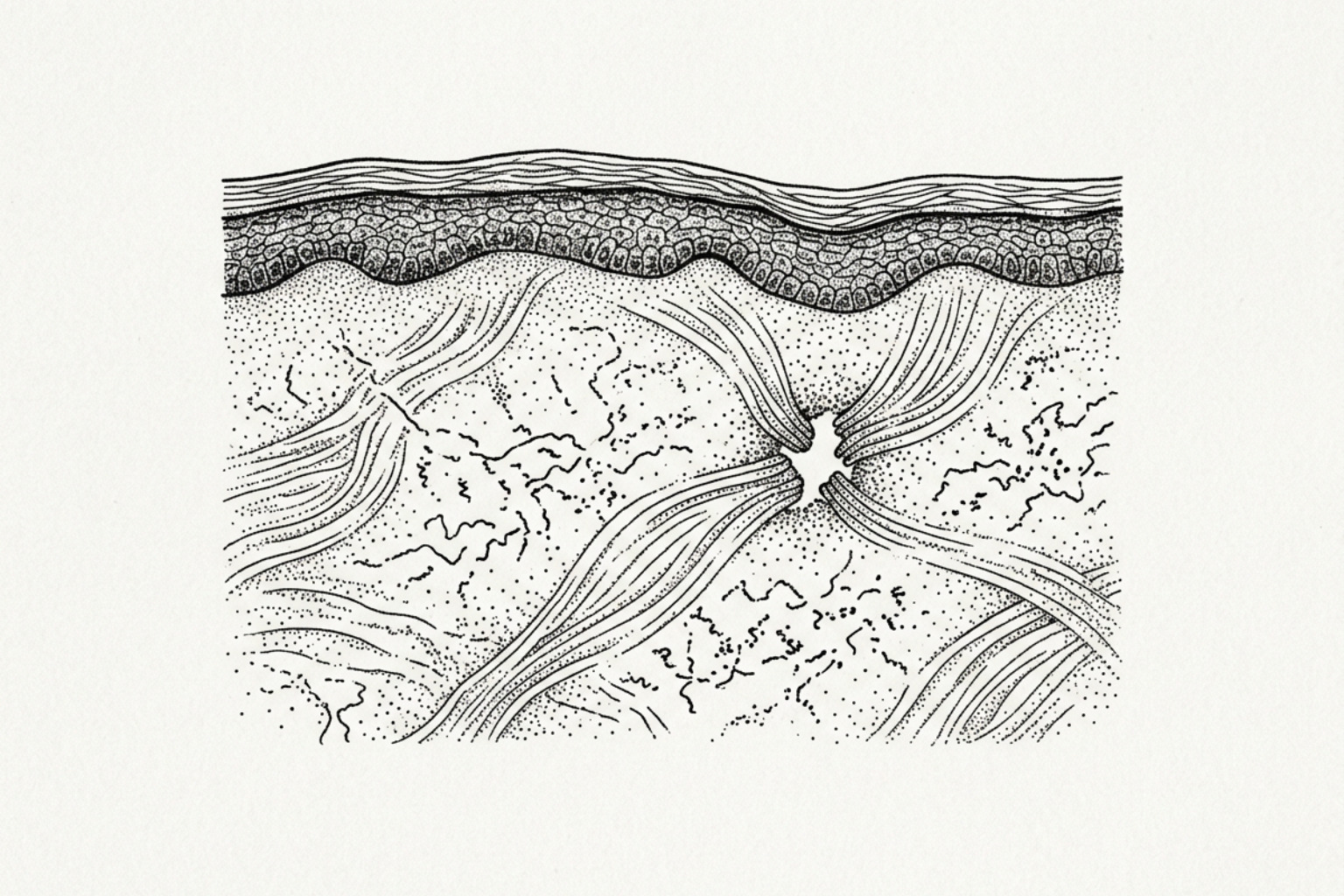
Stretch marks respond most effectively when interventions are matched to their developmental stage, with early red marks requiring different approaches than mature white marks. For early, red or purple striae rubra, topical prescription retinoids, glycolic acid, and vascular energy devices like pulsed dye lasers reduce redness and stimulate dermal remodeling. For mature, silvery-white striae alba, collagen-stimulating modalities such as microneedling, fractional non-ablative lasers, and fractional radiofrequency rebuild dermal thickness and improve skin texture. During the biological process of how dermal scars form, mechanical tension stretches the skin faster than structural proteins can adapt, causing micro-tears in collagen and elastin networks while leaving the overlying epidermis relatively thin and atrophic.
A comprehensive clinical review published in StatPearls indicates that stretch marks occur across a wide variety of physiological and endocrine states (Mikes et al., 2025). Elevated levels of circulating hormones, such as glucocorticoids and relaxin, inhibit normal fibroblast function and decrease the synthesis of structural proteins. When mechanical force pulls against these hormonally softened tissues, the elastic fibers fragment, creating linear, scarred bands along lines of tension.
Striae Rubra vs. Striae Alba
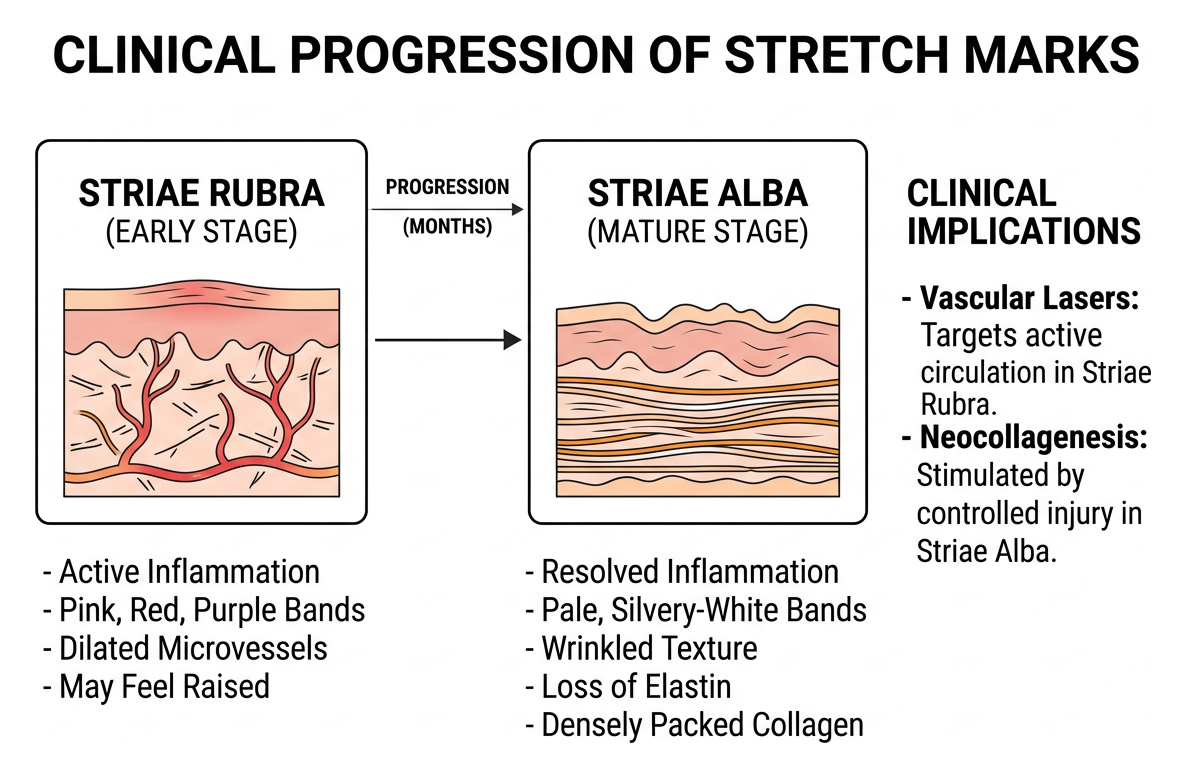
Stretch marks progress through two distinct clinical stages, which dictate how responsive the tissue will be to intervention.
The early stage, known as striae rubra, presents as erythematous, pink, purple, or violaceous bands that may feel slightly raised or intermittently itchy. Histologically, this stage features active inflammation, dilated microvessels (erythema), mast cell degranulation, and early structural fragmentation. The presence of active circulation provides a direct target for vascular lasers and increases cell sensitivity to topical retinoids.
The late, mature stage, termed striae alba, develops over several months as inflammation resolves. The marks lose their vascular hue and become pale, silvery-white, or hypopigmented linear depressions with a characteristic wrinkled, cigarette-paper texture. In striae alba, the dermis contains densely packed, horizontal collagen bands alongside an absence of rete ridges and reduced melanocyte activity. Because active vascular remodeling has ceased, therapeutic strategies must shift toward inducing controlled micro-injury to trigger neocollagenesis and repigmentation.
| Characteristic | Striae Rubra (Early Stage) | Striae Alba (Mature Stage) |
|---|---|---|
| Visual Appearance | Pink, red, purple, or dark violaceous linear streaks | Pale white, silvery, or hypopigmented atrophic bands |
| Skin Texture | Flat or slightly raised, occasionally mildly inflamed | Sunken, thin, crinkled, or atrophic |
| Histological Hallmarks | Dilated capillaries, dermal edema, active inflammatory cells | Sclerotic collagen, loss of elastin, thinned epidermis |
| Optimal Clinical Focus | Reducing vascular redness and preserving dermal matrix | Inducing neocollagenesis and restoring dermal thickness |
| General Responsiveness | Higher response rate across topical and procedural therapies | Requires deeper, collagen-stimulating procedures |
Causes and risk factors
Stretch marks arise from a combination of mechanical, endocrine, and genetic mechanisms. According to data compiled in a StatPearls review, stretch marks occur in 43% to 88% of pregnancies, 6% to 86% of puberty cases, and 43% of individuals with obesity (Mikes et al., 2025). During puberty, rapid growth spurts place mechanical strain on the thighs, buttocks, hips, and lower back in females, as well as the outer thighs, calves, and shoulders in males.
In pregnancy (striae gravidarum), maternal hormones such as estrogen, relaxin, and adrenocortical steroids decrease tissue stiffness in preparation for delivery, while rapid abdominal and breast expansion creates high mechanical strain. A narrative review in the International Journal of Women's Dermatology noted that striae are more prevalent in females than males and can vary by demographic background; one study noted that Black women presented with a higher count of striae compared to White women of similar age, parity, weight gain, and family history (Chaudhury et al., 2026).
Additional risk factors include prolonged systemic or high-potency topical corticosteroid use, which directly causes dermal atrophy. A study highlighted in dermatologic literature also reported a higher prevalence of striae among smokers compared to nonsmokers (Mikes et al., 2025). When widespread, prominent, deep purple striae appear without significant physical expansion, underlying endocrine conditions such as Cushing syndrome must be evaluated.
Creams and prescription treatments
Topical therapies work primarily by accelerating epidermal turnover, supporting cell signaling, and encouraging fibroblasts in the upper papillary dermis to synthesize new extracellular matrix components.
Topical Formulations and Active Agents
When evaluating non-invasive therapeutic options for striae distensae, timing represents the primary factor in clinical success. Active ingredients show their strongest impact when applied to striae rubra while dermal remodeling pathways remain active.
- Topical Tretinoin (Prescription Retinoids): All-trans retinoic acid binds to nuclear retinoic acid receptors to stimulate fibroblast proliferation and boost procollagen synthesis, establishing the utility of prescription retinoid creams for scar remodeling. In an evaluation cited in Actas Dermo-Sifiliográficas, applying tretinoin 0.1% cream daily for 12 weeks reduced the length of pregnancy-related stretch marks by 20% (Chaudhury et al., 2026). A narrative review also noted that 0.05% tretinoin improved striae appearance up to 47% in clinical assessments (Mendes et al., 2022). Important safety note: Topical retinoids are strictly contraindicated during pregnancy and lactation due to potential risks to the developing fetus.
- Glycolic Acid: As an alpha-hydroxy acid (AHA), glycolic acid breaks down intercellular desmosomes to induce light exfoliation while stimulating dermal glycosaminoglycans. A systematic review in Actas Dermo-Sifiliográficas highlighted that 70% glycolic acid peels improved skin texture across 40 evaluated patients.
- Hyaluronic Acid: High- and low-molecular-weight hyaluronic acid provides deep dermal hydration, enhances skin elasticity, and supports the extracellular environment needed for collagen remodeling.
- Centella Asiatica: Containing triterpenoids like madecassoside and asiatic acid, this botanical extract supports fibroblast activity and collagen synthesis. A trial with 80 participants reviewed by dermatologists demonstrated that a Centella asiatica formulation reduced striae development to 34% compared to 56% in the placebo group (Mendes et al., 2022).
Emollients and Preventive Measures
Many commercial formulations market natural oils and rich butters for stretch mark prevention, yet clinical trials show limited effectiveness for scar reduction. A systematic review published in Actas Dermo-Sifiliográficas found that widely used emollients such as cocoa butter, almond oil, olive oil, and topical vitamin E did not yield significant clinical differences in striae severity or prevention compared to placebos.
The physical action of massage, as opposed to the lipid base itself, likely accounts for modest benefits in skin pliability by improving local circulation and temporary tissue hydration. Supportive practices to maintain skin barrier health include:
- Drinking adequate daily water to maintain skin cell hydration and baseline tissue turgor.
- Maintaining a balanced dietary intake rich in vitamins C, D, and zinc to support native collagen production.
- Managing weight changes gradually during athletic training or body contouring to minimize rapid dermal strain.
- Using broad-spectrum sunscreen over fresh striae rubra to prevent ultraviolet-induced hyperpigmentation.
In-office procedures and devices
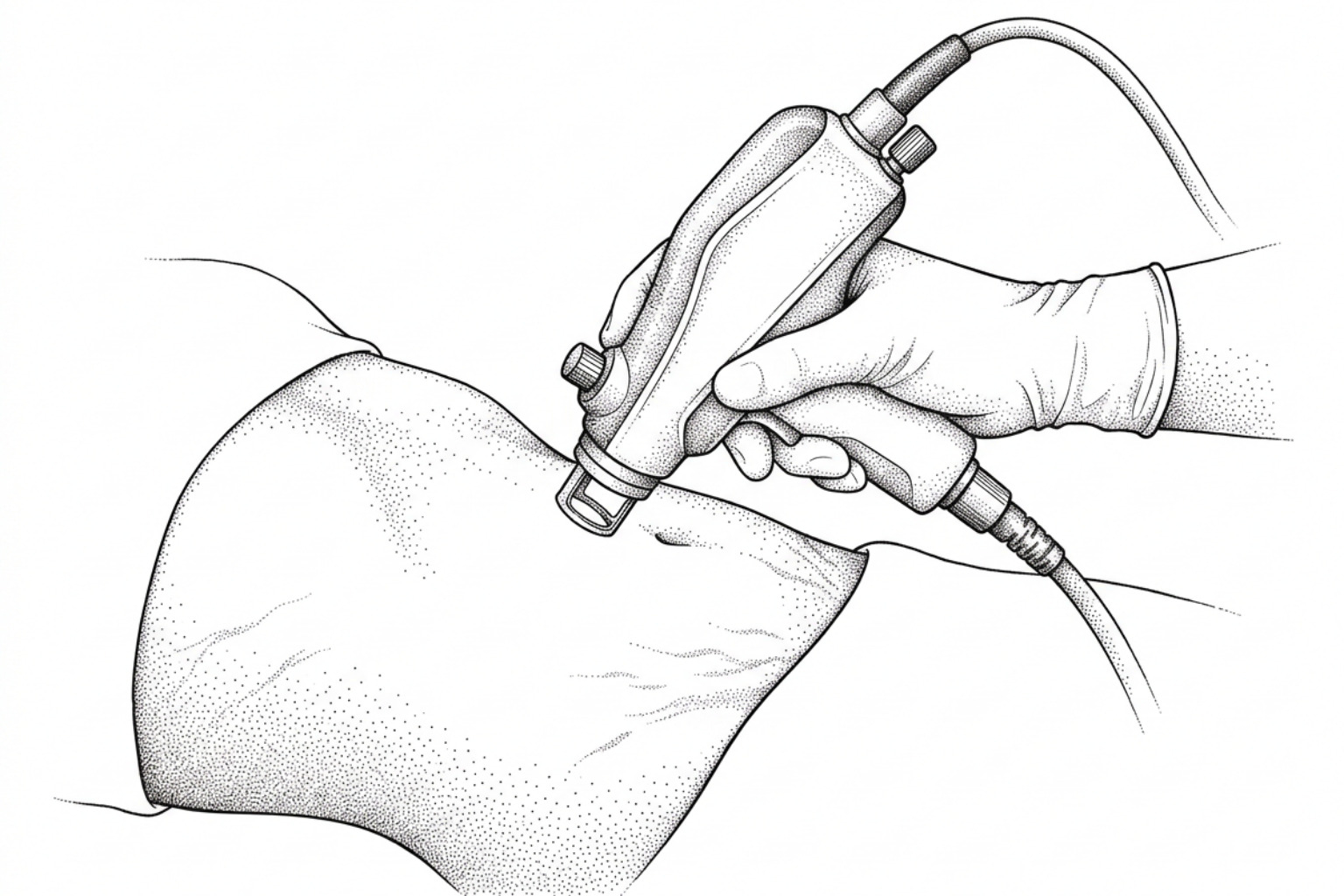
When topical agents fail to provide noticeable improvement, particularly for mature striae alba, dermatologists rely on procedural clinical scar treatments to trigger controlled dermal micro-trauma.
Laser and Light Therapies
Energy-based systems use specific wavelengths of light to target either hemoglobin in vascular marks or water in deeper dermal tissue, forming the foundation of laser treatment for scars.
- Pulsed Dye Laser (585–595 nm) & Intense Pulsed Light (IPL): These modalities target oxygenated hemoglobin within the dilated capillary networks of early striae rubra. By inducing photocoagulation of abnormal vessels, they reduce redness and flatten early raised borders.
- Fractional Non-Ablative Lasers (1540 nm / 1550 nm): These lasers create micro-thermal treatment zones in the dermis while preserving the intact stratum corneum. This thermal stimulation induces neocollagenesis and re-elastogenesis with minimal downtime. According to a narrative review in PMC, non-ablative fractional lasers regularly achieve 50% to 75% visual improvement in stretch mark appearance (Mendes et al., 2022).
- Fractional Carbon Dioxide (CO2) Ablative Lasers (10,600 nm): Fractional CO2 lasers vaporize micro-columns of tissue deep into the reticular dermis, triggering strong wound contraction and new matrix production. In a review of 69 clinical articles in Actas Dermo-Sifiliográficas, fractional CO2 laser treatments produced 26% to 50% clinical improvement across 63% of treated subjects.
Microneedling and Radiofrequency
Microneedling creates mechanical micro-punctures through the epidermis into the papillary and reticular dermis, delivering key microneedling benefits for scar texture by releasing growth factors like TGF-beta to stimulate new collagen without thermal heat. In an assessment evaluating microneedling for stretch marks, all participants achieved at least a 50% improvement, with 28% achieving over 75% improvement after an average of 1.8 treatment sessions (Chaudhury et al., 2026).
Fractional microneedling radiofrequency (fMRF) combines insulated or non-insulated microneedles with direct radiofrequency energy delivered into the deep dermis. Because the thermal energy bypasses epidermal melanocytes, fMRF provides collagen contraction with a low risk of surface pigmentation changes.
Treating stretch marks on darker skin (Fitzpatrick IV–VI)
Treating stretch marks in richly pigmented skin requires extra caution to prevent post-inflammatory hyperpigmentation (PIH) or hypopigmentation. High-energy ablative lasers carry a higher risk of melanocyte overstimulation, making non-thermal or non-ablative approaches safer.
A study featured in the International Journal of Women's Dermatology evaluated a 1550-nm erbium-doped fractional non-ablative laser compared to a 15% trichloroacetic acid (TCA) peel in darker skin phototypes; the laser group demonstrated a 70.6% reduction in striae severity after two treatments compared to 47% in the chemical peel group (Chaudhury et al., 2026). Non-ablative 1550-nm lasers, 1064-nm picosecond lasers with fractionated microlens arrays, and mechanical microneedling remain practical choices for scar revision in dark skin.
Combination treatments and injections
Combining multiple modalities often yields better outcomes for older striae alba than single therapies by targeting multiple layers of the skin and establishing how to improve collagen remodeling in scars.
Platelet-rich plasma (PRP), concentrated from the patient's own blood, delivers high levels of platelet-derived growth factor (PDGF) and vascular endothelial growth factor (VEGF) directly into the scarred dermis. In a clinical trial evaluating intralesional injections of PRP versus topical tretinoin 0.05% cream, the PRP group achieved clinical improvement and satisfaction rates of 86.6% and 89.9%, compared to 60% improvement and satisfaction in the tretinoin group (Chaudhury et al., 2026). Combining microneedling with PRP or pairing fractional lasers with localized regenerative serums accelerates tissue healing and yields deeper textural improvements in mature, resistant lesions.
Outlook and when to see a dermatologist
Stretch marks represent permanent structural remodeling of the dermis. While in-office treatments and prescription topicals can soften indentations, blend coloration, and narrow the width of lesions, they do not restore the exact original architecture of untouched skin. Most clinical series require three to six sessions spaced four to six weeks apart, with final structural changes appearing over three to six months as new collagen fibers mature.
Medical evaluation remains essential when striae present with atypical patterns. Consult a board-certified dermatologist or primary healthcare provider if:
- Stretch marks appear suddenly, extensively, or without clear physical causes such as growth spurts, pregnancy, or weight changes.
- Marks are unusually wide, dark purple, and accompanied by bruising, high blood pressure, muscle weakness, or central weight gain (features that warrant screening for Cushing syndrome).
- Striae develop rapidly after beginning systemic or high-potency topical corticosteroids.
- Severe persistent itching, skin tearing, or ulceration occurs across the lesions.
Frequently Asked Questions Regarding Striae Distensae
Can stretch marks be completely removed?
Stretch marks cannot be completely removed because they involve deep dermal collagen and elastin rupture. However, a combination of procedural treatments and targeted topicals can flatten scar borders, restore pigment balance, and make the marks significantly less noticeable.
How long does it take to see results from professional treatments?
Collagen synthesis and tissue remodeling take time. Most in-office modalities, including microneedling and fractional lasers, require three to five sessions spaced a month apart. Initial improvements in texture and redness often appear within four to eight weeks, while optimal collagen reorganization continues for up to six months after the final session.
Are stretch mark treatments safe during pregnancy or breastfeeding?
Prescription topical retinoids (such as tretinoin and tazarotene) and high-energy ablative laser procedures should be avoided during pregnancy and breastfeeding. Expectant and nursing mothers should rely on gentle barrier moisturizers containing hyaluronic acid or plain emollients, postponing professional energy-based procedures until after nursing is complete.
Conclusion
Managing striae distensae requires matching the chosen therapy to the maturity of the scar and the patient's skin phototype. While early striae rubra respond favorably to vascular lasers and prescription topical retinoids, mature striae alba benefit most from collagen-inducing procedures such as microneedling, fractional radiofrequency, and non-ablative laser resurfacing. Integrating these modalities provides a structured approach to stretch mark scar management.
This content is for informational purposes only and does not constitute medical advice. Consult a qualified healthcare professional for diagnosis and treatment.
Works Cited
- Mikes BA, Oakley AM, Patel BC. "Striae Distensae." StatPearls Publishing, 2025.
- Chaudhury H, Remmert N, Chen H, Tarbox M. "Advancements in treating stretch marks across all skin types: a comprehensive review of therapeutic modalities." International Journal of Women's Dermatology, 2026.
- Mendes N, Alves PJ, Barros M, Rodrigues JM, Machado J. "A Narrative Review of Current Striae Treatments." Healthcare (Basel), 2022.
- Mayo Clinic Staff. "Stretch marks - Diagnosis & treatment." Mayo Clinic, 2023.
- Algarra Sahuquillo J, Martín-Gorgojo A. "Stretch Marks: Systematic Review of its Therapeutic Approach." Actas Dermo-Sifiliográficas, 2026.