The Complete Guide to Scar Camouflage Makeup
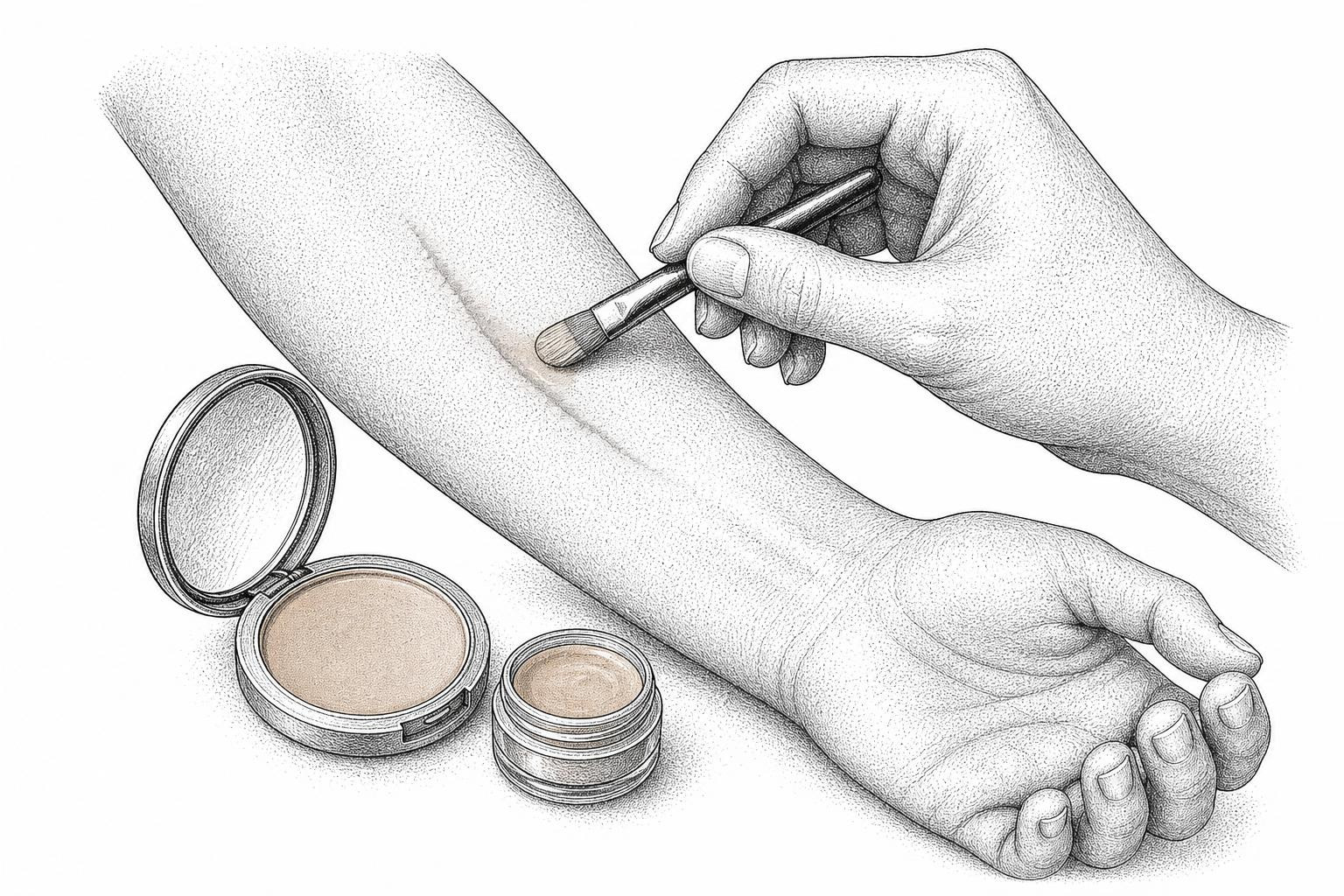
The right camouflage makeup can make a scar disappear in seconds — but it takes color theory, not just concealer. Here's how to neutralize redness and pigment, match your skin tone, and set coverage that lasts.
Who Benefits from Scar Camouflage Makeup
Scar camouflage makeup refers to a category of highly pigmented cosmetic and medical-grade products specifically formulated to conceal the visual appearance of scars, discoloration, and skin texture differences on the face and body.
Unlike standard foundation or concealer, these products are designed for:
- Higher pigment concentration — a small amount covers significantly more than regular makeup
- Water and sweat resistance — many formulations remain stable through daily activities including swimming and exercise
- Skin safety — hypoallergenic, non-comedogenic formulas suitable for sensitive or post-procedural skin
- Broad coverage — effective on surgical scars, acne scarring, burn marks, birthmarks, and hyperpigmentation
The impact of visible scars extends well beyond aesthetics. Clinical literature consistently links visible skin differences to reduced self-esteem, social withdrawal, and diminished quality of life — particularly in adults whose scars result from acne, injury, or surgery. Cosmetic camouflage has been used as a rehabilitative tool since plastic surgeons first developed specialized cover formulations during World War II to help burn patients regain confidence and social function.
The goal is not to "fix" a scar permanently. It is to give individuals choice and control over their appearance on any given day.
This guide covers the clinical principles behind how these products work, how to match and apply them correctly for different scar types, and how they compare to medical treatment options.
Simple guide to scar camouflage makeup:
How Camouflage Makeup Works on Scarred Skin
To understand why standard cosmetics often fail to conceal scars, one must examine the physiological differences between healthy skin and scar tissue. Healthy skin is highly structured, containing hair follicles, sweat glands, and a balanced extracellular matrix of collagen and elastin. Scar tissue, conversely, is characterized by disorganized collagen bundles, an absence of skin appendages, and altered vascularization or melanogenesis. These structural deviations result in altered light reflection, uneven texture, and distinct pigmentary abnormalities.
Standard cosmetic foundation is built to even out skin tone, and it does not have the opacity to mask the dense red, purple or hyperpigmented tones of scar tissue. Medical-grade camouflage products carry a much higher pigment load, and many are anhydrous sticks or heavy creams that form a dense, light-impenetrable barrier. Specific pigment percentages circulate widely for both categories and are not documented in the clinical literature, so we do not publish them.
According to the clinical literature on Chapter 49 Makeup Therapy for Scars , medical makeup prioritizes skin safety, biocompatibility, and durability over transient cosmetic trends. When applied correctly, these specialized pigments adhere to the compromised stratum corneum, supporting the skin barrier function without disrupting the ongoing tissue remodeling underneath. This is particularly relevant for those utilizing a Surgical Scar Concealer to manage the social transition during post-operative recovery.
Several key ingredients dictate the efficacy, safety, and longevity of scar camouflage formulations:
- Titanium Dioxide and Zinc Oxide: These physical minerals serve dual roles. They act as highly reflective white pigments that provide maximum opacity and serve as physical broad-spectrum sunscreens. UV protection is critical, as ultraviolet radiation can trigger post-inflammatory hyperpigmentation, permanently darkening a maturing scar.
- Iron Oxides: These naturally occurring minerals provide the primary yellow, red, and black pigments needed to match human skin tones. Iron oxides are highly stable and resist oxidation, meaning the makeup will not shift shades or turn orange when exposed to sebum and air throughout the day.
- Silicone-Based Compounds (e.g., Dimethicone, Cyclopentasiloxane): Silicone is highly valued in scar management. In camouflage primers, silicone polymers fill in micro-irregularities, smoothing out atrophic (indented) or slightly hypertrophic (raised) textures. This creates a uniform surface that prevents pigment from pooling in skin depressions and enhances the adherence of subsequent makeup layers.
- Hypoallergenic and Non-Comedogenic Carriers: Because scarred skin can remain highly reactive, formulations must be free of synthetic fragrances, sensitizing preservatives, and heavy comedogenic oils (such as lanolin or isopropyl myristate) that could trigger contact dermatitis or acne flare-ups.
Matching shades and applying it right
Effective scar concealment relies heavily on physics and color theory. Simply applying a thick layer of skin-toned concealer over a dark red or brown scar often results in a muddy, grey, or unnatural appearance. To achieve a seamless finish, one must first neutralize the abnormal undertones of the scar using complementary colors.
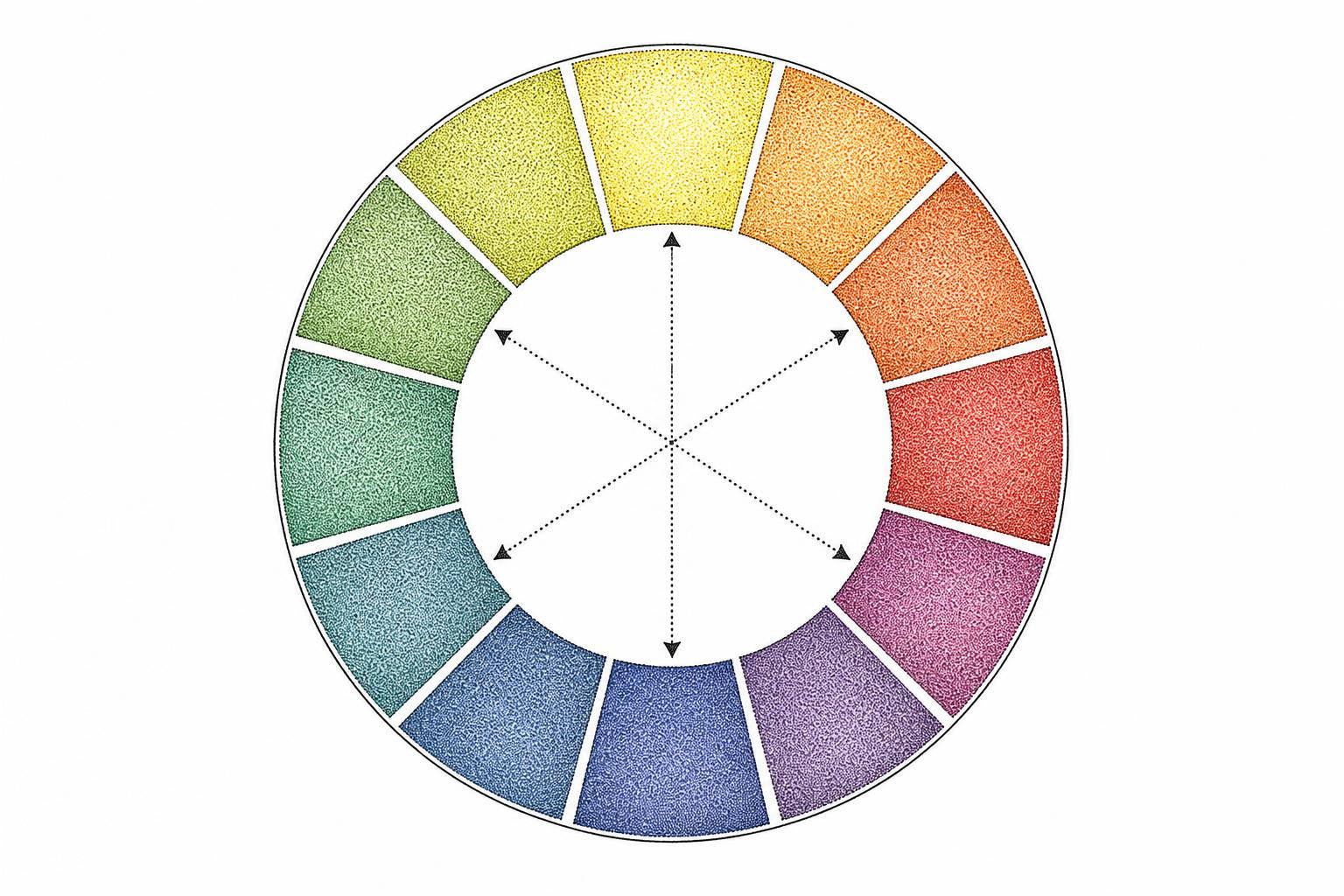
The color wheel dictates that colors opposite one another neutralize each other when overlaid. In clinical cosmetic camouflage, this principle is applied to counteract three primary types of scar discoloration:
- Erythema (Redness): Inflammatory scars, active acne scars, and early-stage surgical incisions present with distinct redness due to superficial microvascularization. Applying a complementary green corrector neutralizes the red tones, shifting the area to a neutral base.
- Purplish-Blue Tones: Bruising, deep surgical trauma, or prominent veins exhibit purple or blue undertones. Yellow neutralizes purple, and peach or orange neutralizes blue. These are opposite each other on the color wheel, so a scar that reads more violet and one that reads more blue need different correctors.
- Hyperpigmentation (Brown/Dark Grey): Mature scars, melasma, or post-inflammatory hyperpigmentation in Fitzpatrick Skin Types IV–VI present with excess melanin. Coral, peach, or orange correctors effectively neutralize these dark, muddy tones.
Once the underlying color deviation is neutralized, a skin-toned camouflage cream can be applied over the top, matching both the natural skin depth and the specific undertone (cool, warm, or neutral) of the individual's Fitzpatrick skin type.
How color correction hides discoloration
Color correction must be executed with precision. A common clinical approach involves applying a thin, targeted layer of color corrector only to the discolored scar tissue, avoiding the surrounding healthy skin.
In practice, green correctors are dabbed onto red hypertrophic scars, yellow onto purple-toned bruising, and peach or orange onto blue-toned discoloration. For brown hyperpigmented scars, coral or peach correctors are preferred. Correctors can be blended on the back of the hand to match seasonal changes in your own skin tone.
Picking and blending the right shade
Finding the correct final skin shade requires testing products in natural lighting. The jawline is the preferred testing site for facial scars to prevent a visible line of demarcation between the face and neck, while nearby unaffected skin serves as the control site for body scars.
For medium skin tones exhibiting moderate pigmentation variations, highly pigmented medium-tone concealers provide a balanced base. Conversely, individuals with deeper complexions require specialized formulations, such as highly pigmented dark-tone concealers, which contain higher concentrations of red and black iron oxides to prevent a chalky or ashen appearance.
Because scar tissue lacks natural tonal variation, a single shade can sometimes look flat. To address this, professional ranges offer specialized adjusters, such as white pigment mixers for shade customization, allowing users to lighten a base shade to match exact skin highlights. Utilizing a dedicated Scar Cover Up Concealer ensures the pigment density remains high enough to maintain coverage even when shades are blended.
How to Apply and Remove It
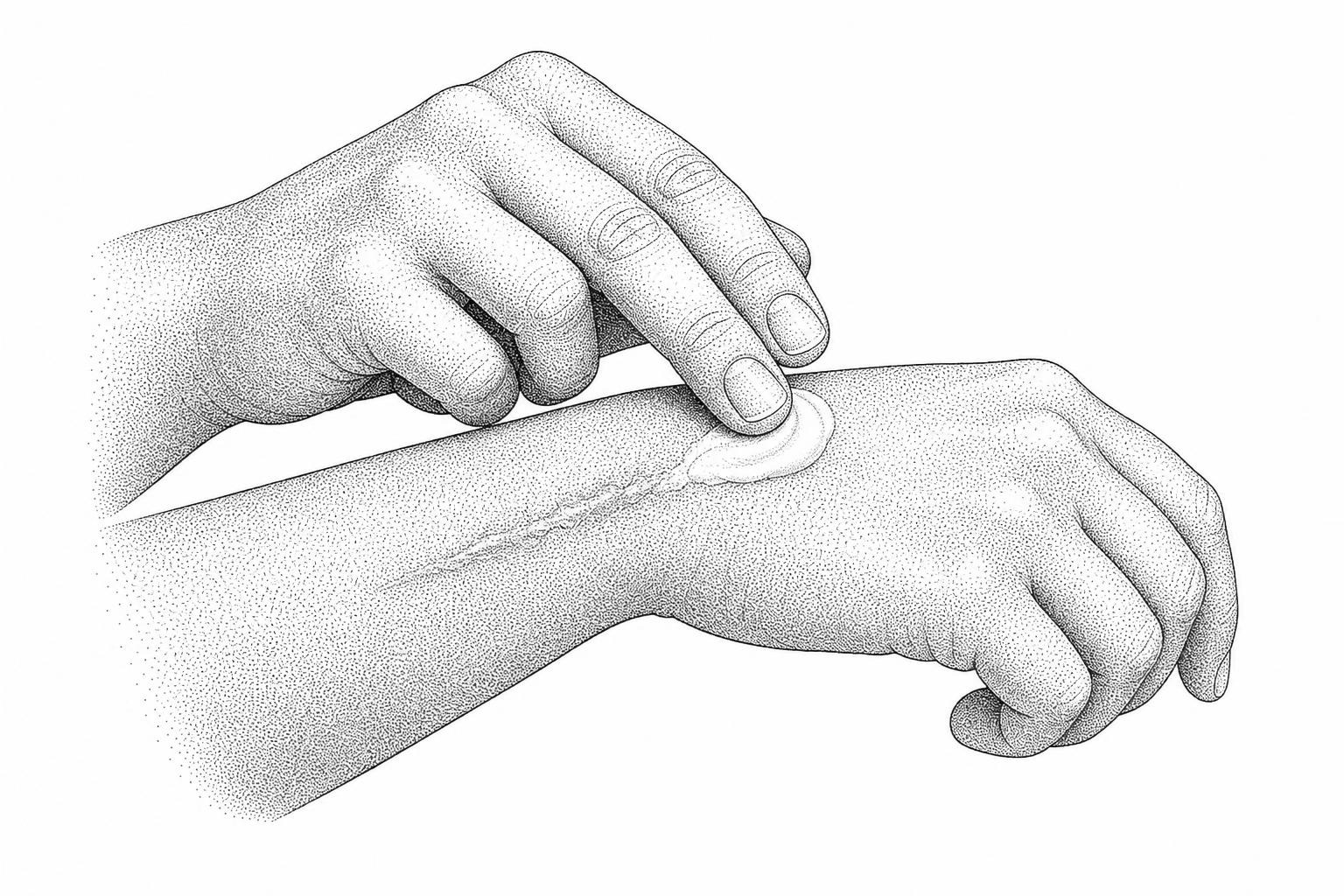
To achieve a long-lasting, natural-looking camouflage that resists smudging, a systematic clinical application protocol should be followed.
- Skin Preparation: Begin by cleansing the area with a gentle, fragrance-free cleanser. Ensure the skin is completely free of flaking or debris.
- Emollient Application: Apply a light, non-greasy emollient or a silicone-based primer. Moisturizing is critical; dry, unhydrated scar tissue will cause pigments to cling unevenly to raised edges, highlighting the scar's texture. Allow the moisturizer to fully absorb for 5 minutes.
- Color Correction: Using a small, firm brush, apply a minimal amount of the appropriate color corrector (green, yellow, or coral) directly onto the discolored areas. Gently tap the edges to blend.
- Pigment Application (Stippling Technique): Deposit a small, pin-drop amount of highly pigmented camouflage cream onto the back of the hand to warm the product. Using a damp makeup sponge, a synthetic brush, or a clean fingertip, apply the product using a stippling (dabbing) motion. Avoid rubbing or dragging, which displaces the color corrector underneath.
- Edge Blending: Gradually feather the edges of the applied camouflage cream outward into the healthy, surrounding skin to ensure there are no harsh borders.
- Setting Powder: Apply a generous layer of finely milled, translucent mineral setting powder over the area. Press the powder into the cream using a powder puff. Allow it to "bake" for 2 to 3 minutes, then gently whisk away the excess with a soft brush. This step is essential to render the anhydrous cream waterproof and smudge-resistant.
- Thermal Water Mist: Spray a light mist of thermal water or setting spray from a distance of 20 centimeters. This removes any powdery residue, fuses the layers, and extends wear time.
For comprehensive skin health, proper removal is just as important as application. Anhydrous camouflage creams cannot be dissolved by standard soap and water alone. Attempting to scrub them off can cause mechanical irritation and shear stress to fragile scar tissue.
The recommended removal method involves gently massaging an oily cleansing cream or lipid-rich makeup remover over the area using the fingertips. This breaks down the heavy waxes and pigments. Once dissolved, the product should be gently wiped away with a soft, damp cloth, followed by a standard gentle skin cleanse. For more tips on maintaining skin integrity during daily wear, consult the resources available under the Tag: Scar Care.
Makeup vs. medical scar treatments
While scar camouflage makeup is an exceptional tool for immediate, temporary cosmetic control, it does not alter the underlying tissue structure. Individuals seeking long-term improvements often combine cosmetic camouflage with active medical scar treatments.
The table below outlines the primary differences between these modalities:
| Modality | Mode of Action | Primary Indication | Longevity | Level of Clinical Evidence |
|---|---|---|---|---|
| Cosmetic Camouflage | Temporary pigment deposition and light reflection. | Erythema, hyperpigmentation, hypopigmentation, minor texture irregularities. | Temporary (8–12 hours; up to 3–4 days on body skin). | Not graded. Camouflage changes appearance, not tissue. |
| Silicone Gel/Sheets | Hydration of stratum corneum; downregulates growth factors to normalize collagen synthesis. | Immature hypertrophic scars, keloids, post-surgical incisions. | Cumulative permanent improvement over 3–6 months. | Gold Standard (extensive peer-reviewed clinical trials). |
| Laser Therapy (Fractional/Vascular) | Photothermal destruction of microvessels (vascular) or induction of micro-wound zones to stimulate healthy collagen remodeling (fractional). | Persistent erythema, hypertrophic scars, atrophic acne scars. | Permanent structural remodeling (typically requires multiple sessions). | High (strong clinical consensus for texture and color normalization). |
Medical professionals emphasize that scar maturation is a dynamic process that typically takes 12 to 24 months. During this period, conservative, non-invasive treatments are highly recommended. For a detailed analysis of active topical therapies, refer to the Best Scar Removal Creams Guide 2026. If a scar remains highly visible, fibrotic, or restrictive after maturation, surgical options or advanced dermatological interventions may be explored, as detailed in the Scar Revision Treatment Complete Guide.
Common Questions About Scar Camouflage Makeup
Is it safe on fresh or healing wounds?
No. Camouflage makeup must never be applied to open wounds, unhealed surgical incisions, or skin that is not fully epithelialized. Applying cosmetics to a compromised skin barrier introduces bacteria, increasing the risk of infection, contact dermatitis, and foreign-body granulomas, which can worsen the final scar appearance.
A scar is ready for cosmetic camouflage once the skin is fully closed: no scabs, no oozing, and sutures out. That is typically a couple of weeks after surgery, and your own surgical team sets the date rather than a general figure. Patch test on a small area of unaffected skin before the first full application to rule out contact sensitivity.
How long does it last?
When properly set with a compatible mineral finishing powder, high-quality medical-grade camouflage makeup remains stable for 8 to 12 hours on the face and can last up to 3 to 4 days on the body. Anhydrous formulations are highly resistant to water, perspiration, and moderate friction, allowing individuals to shower, swim, and engage in sports without the product washing off. To dry the area after water exposure, the skin should be gently dabbed dry with a towel rather than rubbed.
Covering face vs. body scars
Facial skin is thinner, more vascular, and contains a higher density of sebaceous glands, making it more prone to oiliness. Consequently, facial camouflage requires lightweight, non-comedogenic fluid or cream formulations that blend seamlessly without looking cakey.
Body skin is thicker, drier, and subject to constant friction from clothing. Body scar coverage requires highly durable, transfer-proof, anhydrous compacts or specialized leg and body makeup. These formulas must have exceptional adhesive properties and be completely transfer-resistant to prevent staining garments.
Key Takeaways
Managing the appearance of scars is a deeply personal journey. While advanced medical treatments work over several months to remodel tissue, scar camouflage makeup offers an immediate, highly effective means of psychological rehabilitation and visual control. By understanding the clinical principles of color correction, skin preparation, and precise stippling techniques, individuals can confidently conceal scars of any origin. Cosmetic camouflage provides immediate peace of mind and personal autonomy while the skin undergoes its natural, long-term healing process.
To determine the most appropriate scar management path for your specific tissue type, Access the Scar Healing assessment tool.
References
- Nonni J. Makeup Therapy for Scars. In: Téot L, Mustoe TA, Middelkoop E, Gauglitz GG, eds. Textbook on Scar Management. Springer; 2020. PMID 36351156.
- Pijpe A, Gardien KLM, van Meijeren-Hoogendoorn RE, Middelkoop E, van Zuijlen PPM. Scar Symptoms: Pigmentation Disorders. In: Téot L, Mustoe TA, Middelkoop E, Gauglitz GG, eds. Textbook on Scar Management. Springer; 2020. Chapter 12.
- Ngan V. Cosmetic camouflage. DermNet.
Disclaimer: This content is for informational purposes only and does not constitute medical advice. Consult a qualified healthcare professional for diagnosis and treatment.