Soothe Tight Burn Scars: Practical At-Home Steps
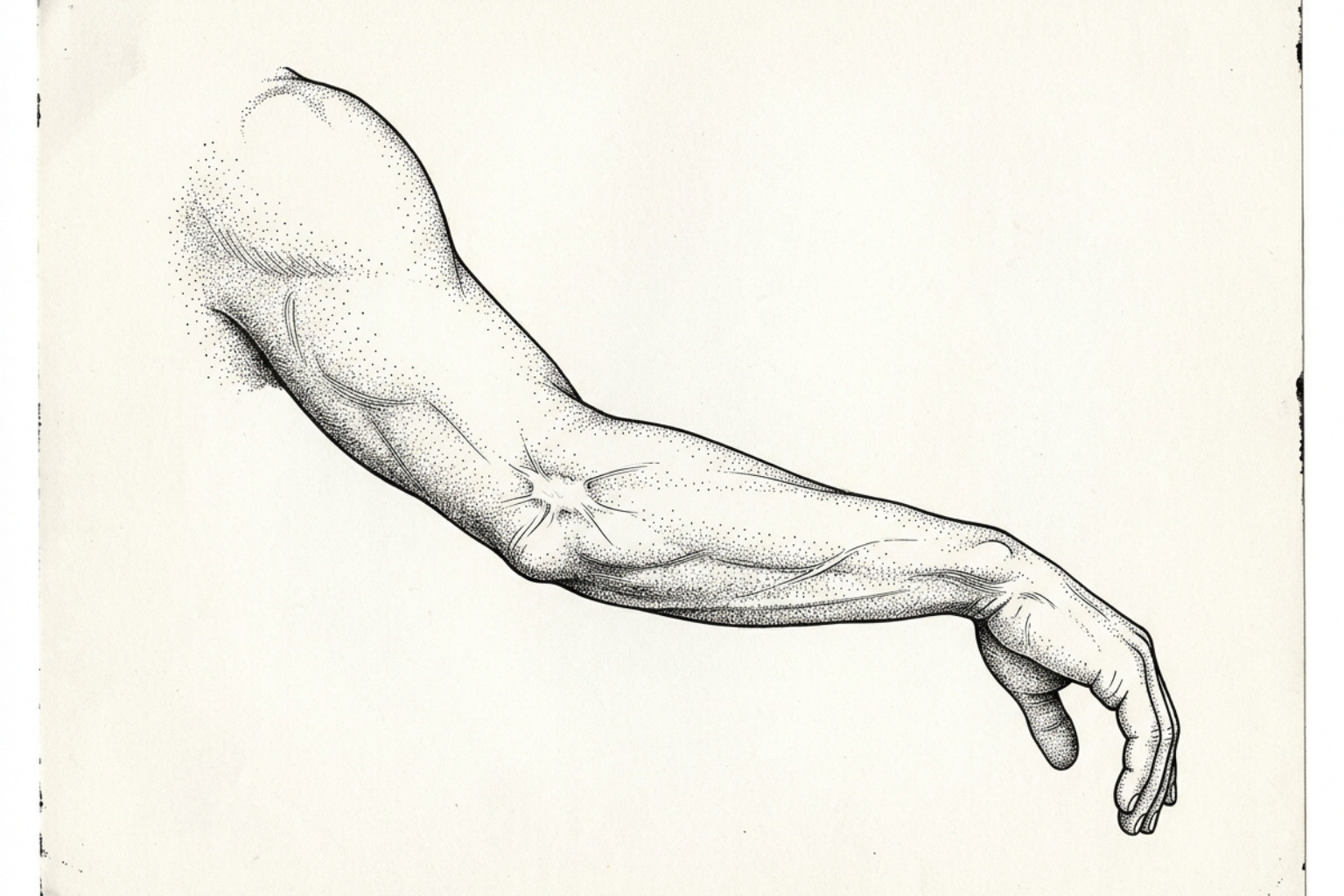
Early at-home care for contracture scars
A tight burn scar that pulls across a joint needs early, gentle care to protect movement while it matures. The safest contracture scars home remedy plan begins only after the wound has fully closed: moisturize, use silicone gel or sheets as directed, protect the area from sun, and do gentle stretching or massage taught by a clinician or therapist.
A contracture forms when healing skin and the scar beneath it shorten and pull together. Aloe vera, honey, and vitamin E may soothe dry or irritated skin for some people, but they have not been shown to reliably loosen a scar that restricts movement. Silicone, pressure therapy, and guided rehabilitation are more commonly used in structured scar programs to improve scar softness and flexibility.
Small changes in dryness, comfort, or tightness may appear over 4-8 weeks. Scar remodeling is slow, and a burn scar may continue changing for 12-18 months. Consistent contracture scar care can help support pliability, but home care cannot reliably release a severe contracture.
A consultation is appropriate promptly if the scar limits bending or straightening, becomes increasingly thick, painful, red, or itchy, or shows no improvement in tightness after 8 weeks of careful home care. The Scar Healing Editorial Team explains the practical steps that can support comfort and mobility at home.
Why contracture scars feel tight
Contracture scars represent one of the most physically restrictive outcomes of deep dermal trauma. When deep burns, extensive abrasions, or major surgical procedures compromise large surface areas of the dermis, the wound-healing cascade initiates a prolonged contractile phase. Specialized repair cells known as myofibroblasts populate the granulation tissue, anchoring themselves to surrounding matrix structures and pulling the edges of the wound inward.
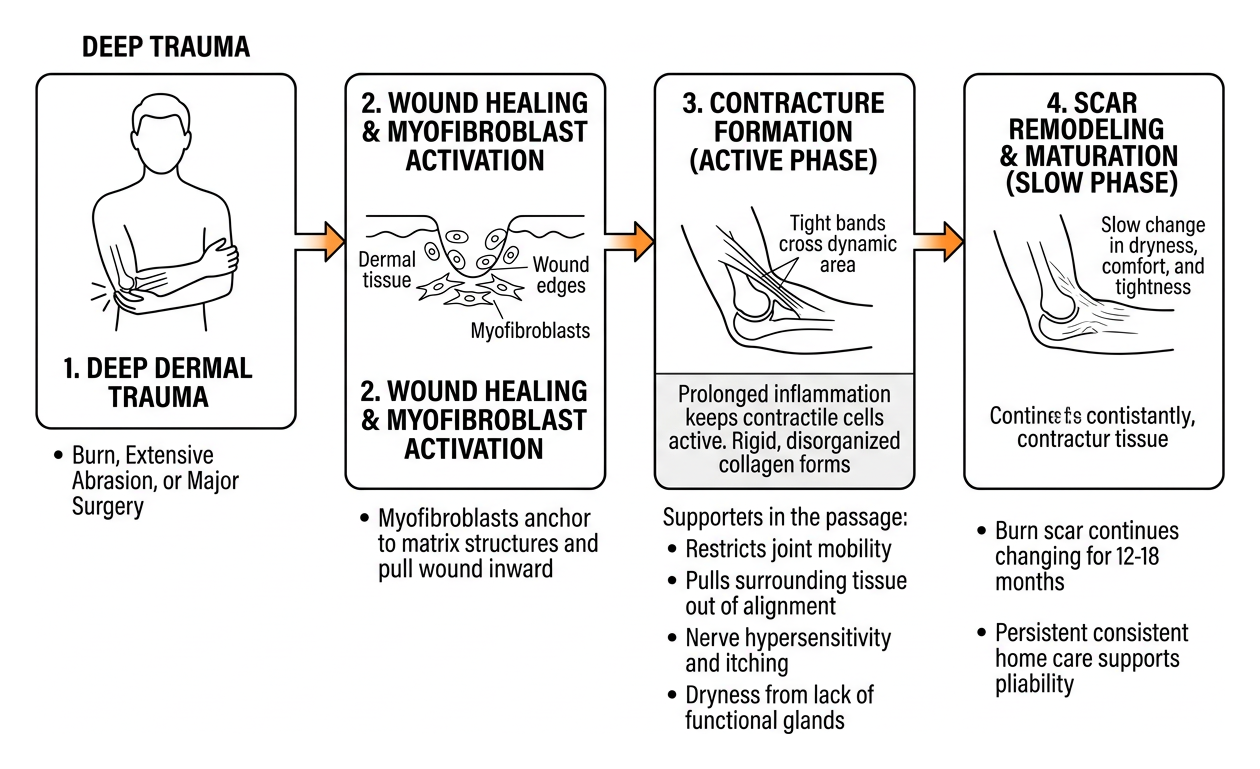
In normal wound healing, these myofibroblasts undergo programmed cell death once closure occurs. In deep injuries, prolonged inflammation keeps these contractile cells active, creating dense, disorganized collagen bundles that pull tight and shorten the skin. Exploring how scars form shows that an overproduction of type I and type III collagen leads to rigid connective sheets instead of elastic skin.
When these tight bands cross dynamic anatomical areas (such as the neck, elbows, hands, or knees), they restrict joint mobility and pull surrounding tissue out of alignment. Depending on depth and geometry, different contracture scar types range from linear bands across finger joints to wide planar sheets across the chest or limbs.
Beyond physical tightness, contracture tissue frequently causes intense sensory symptoms. Nerve hypersensitivity and structural damage to local nerve endings explain why scars itch during active remodeling. The lack of functional sebaceous glands in scarred tissue leads to severe dryness, which magnifies itching, discomfort, and skin fragility.
Non-surgical ways to make scars more pliable
An effective home management routine focuses on maintaining epidermal hydration, protecting fragile new tissue, and restoring pliability during the active remodeling phase. The optimal window for non-surgical conservative care spans the first 6–12 months post-injury, when the immature collagen matrix remains responsive to mechanical input and hydration therapy.
| Topical / Home Method | Primary Action Mechanism | Practical Home Application | Target Benefit |
|---|---|---|---|
| Medical-Grade Silicone | Occlusion and hydration; normalizes stratum corneum water loss | Gel applied twice daily or sheets worn 12–23 hours daily | Softens raised tissue and reduces erythema |
| Aloe Vera Gel | Polysaccharide-driven hydration and cooling | Fresh or pure gel applied 1–2 times daily | Calms active inflammation and relieves surface dryness |
| Medical Honey | Osmotic moisture retention and tissue protection | Thin layer under a non-adherent dressing | Keeps remodeling tissue supple |
| Plant Carrier Oils | Lipid replenishment and surface barrier protection | Gentle application to intact skin before manual work | Improves skin glide during movement exercises |
| Manual Massage | Mechanotransduction and early adhesion disruption | 5–10 minutes, 2–3 times daily on intact tissue | Loosens tissue and promotes fiber realignment |
Maintaining adequate hydration helps support the skin barrier, creating a supple environment that tolerates daily movement. Combining topical hydration with gentle physical manipulation forms the foundation of non-invasive scar management.
Topical Botanicals and Supportive Formulations
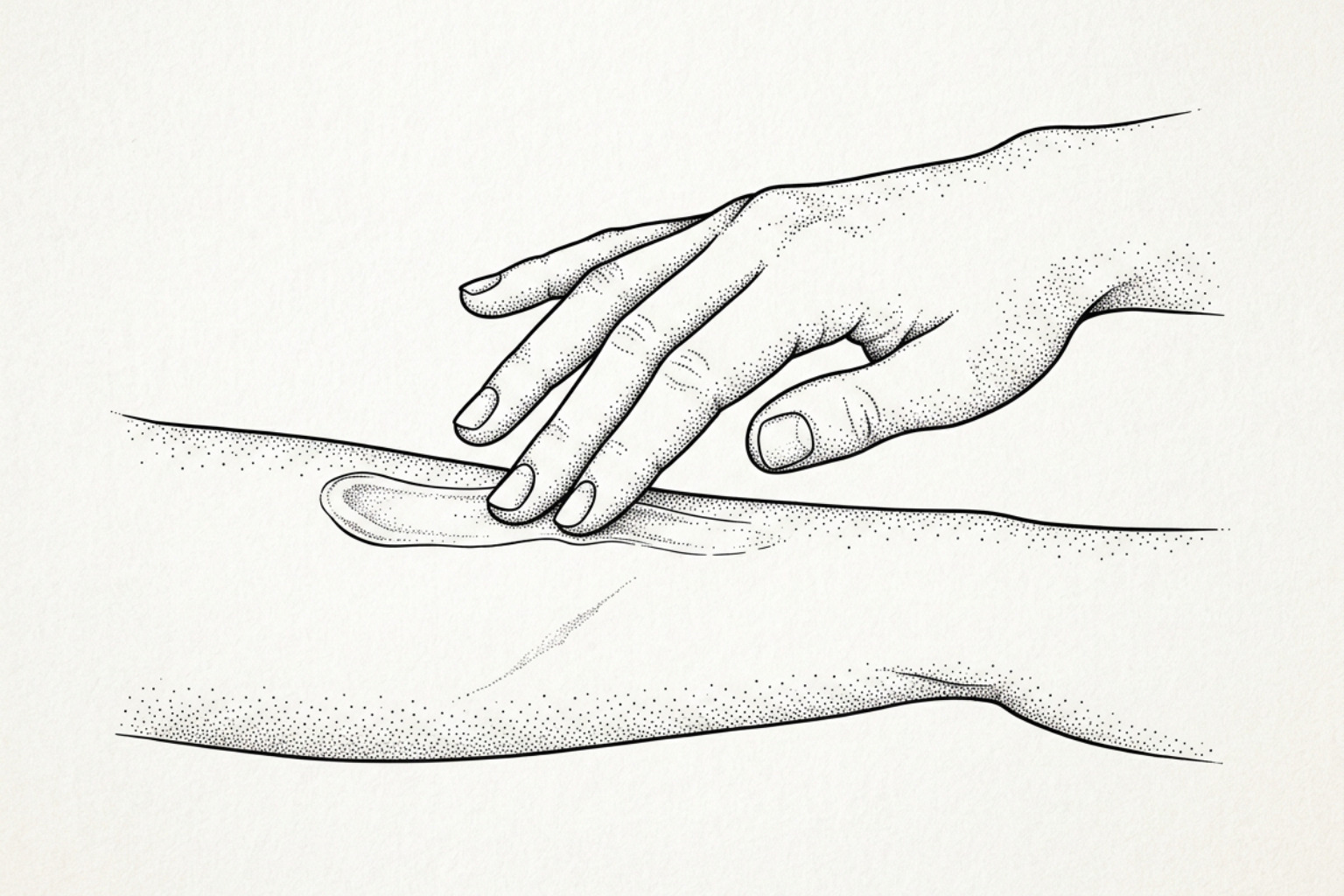
Many individuals turn to natural botanicals to relieve surface tightness, burning sensations, and dryness. While these ingredients cannot physically break up deep structural contractures, they provide symptomatic relief and support barrier function.
Pure aloe vera for scar reduction provides polysaccharides like acemannan, which hydrate dry tissue and reduce surface irritation. A scoping review on medicinal plants published in PubMed Central described plant extracts such as Centella asiatica as having effects on fibroblast activity and local inflammatory markers in healing tissue.
Medical-grade raw honey offers humectant properties that draw water into dry tissue. Topical vitamin E for scar healing is frequently used for moisture, though it should be tested on small areas first because of potential skin sensitivity. Highly diluted tea tree oil can offer antimicrobial support for healed tissue prone to minor surface irritations, provided it is suspended in a soothing carrier oil like jojoba or rosehip. The science-backed guide to scar fading remedies notes that plant-based botanicals serve best as soothing complements, not standalone treatments for functional joint tightness.
Is home scar care safe?
Newly healed contracture tissue is fragile, thin, and easily injured. Applying harsh substances can cause blistering, inflammation, and delayed tissue remodeling.
- Perform a 24-Hour Patch Test: A dime-sized amount of any topical oil, cream, or botanical extract should be applied to an unaffected skin site, such as the inner forearm, before the product touches the scar.
- Avoid Broken or Blistered Skin: Unverified botanical solutions, essential oils, or heavy creams should not be applied over open wounds, active blisters, or peeling areas.
- Never Use Undiluted Acids: Raw lemon juice, undiluted apple cider vinegar, and harsh kitchen acids should be avoided. These ingredients can cause chemical irritation that worsens hyperpigmentation and triggers further scarring.
- Guard Against Sun Damage: Immature scar tissue lacks melanin protection and burns easily. Broad-spectrum mineral sunscreen helps protect the area and supports key principles for protecting healing skin.
Massage and stretching routines
Mechanical stimulation plays a direct role in scar remodeling. Through a biological process known as mechanotransduction, applying controlled physical tension to connective tissue signals fibroblasts to reorganize dense, tangled collagen fibers into parallel configurations.
Practicing hard scar softening massage helps release superficial adhesions between the skin and underlying fascia. A clinical chapter in the NCBI Bookshelf emphasizes that manual massage must match the inflammatory status and maturity of the tissue. Techniques such as orthodermic stretching, gentle static folds, and progressive skin rolling are recommended once the tissue is closed and passes firmness assessments.
Executing structured scar tissue massage therapy for 5–10 minutes, two to three times daily, softens thick bands and improves skin glide. For scars crossing joints, integrating passive and active range-of-motion stretching keeps tissues elongated.
Clinical insights on non-surgical contracted scar stretching show that stretching and custom splinting are most effective within the first 6–12 months of healing, while the collagen matrix remains pliable. Combining massage with consistent stretching guides the healing skin toward greater functional flexibility, as detailed in evidence-based methods to break up stubborn scar tissue.
Medical procedures vs. home care
Conservative home routines can maintain comfort and improve tissue pliability, but severe contractures require specialized clinical care. A comprehensive review of burn contractures in Plastic and Reconstructive Surgery Global Open notes that burn scar contracture affects approximately one-third of burn patients, requiring individualized multidisciplinary care.
Medical-grade silicone gel sheets remain a gold standard for non-invasive care, using occlusion to flatten raised tissue over 2–4 months. Custom-fitted pressure garments apply continuous mechanical pressure that realigns collagen bundles and reduces blood flow to hyperactive areas.
In clinical settings, intralesional corticosteroid injections help flatten rigid, resistant bands. Fractional ablative lasers create microscopic thermal zones that break up dense collagen and encourage healthy tissue turnover.
When a contracture causes severe functional impairment, surgical intervention becomes necessary. Surgeons use Z-plasty transpositions, full-thickness skin grafts, or local perforator flaps to release tension bands. Research on hand scar contracture management highlights that structural releases are essential when tightening compromises finger, wrist, or joint function.
Frequently Asked Questions About Contracture Scarring
How long does it take to see results from home remedies on contracture scars?
Noticeable softening, improved hydration, and reduced surface tension typically emerge within 4–8 weeks of consistent daily home care. Structural collagen remodeling is a slow physiological process, and burn scar tissue continues to adapt for 12–18 months after the initial injury. Long-term results depend on daily application of silicone sheets, gentle stretching, and regular massage throughout this maturation window.
Can a contracture scar be completely loosened without surgery?
Mild, superficial contractures caught early during the first 6–12 months can often achieve functional flexibility through physical therapy, custom splinting, and massage. Deep, mature contractures involving thick fascia or tendons rarely resolve through non-surgical methods alone. Once collagen matures and hardens, surgical release or tissue transfer is often needed to restore complete joint range of motion.
When should someone seek professional medical treatment instead of home care?
A medical consultation is necessary if a scar prevents full extension or flexion of a joint, causes chronic pain, or shows no functional improvement after 8 weeks of diligent home care. Rapidly thickening tissue, open fissures, recurrent skin breakdown, or signs of infection also require immediate professional evaluation from a dermatologist, burn specialist, or plastic surgeon.
Conclusion
Managing a tight contracture scar requires a measured, patient approach that combines daily hydration, silicone therapy, sun protection, and gentle stretching. While natural botanicals soothe dryness and manual massage encourages collagen realignment, realistic expectations are essential when treating structural tightness. The complete guide to contracture scars provides a broader overview of clinical and supportive pathways.
This content is for informational purposes only and does not constitute medical advice. Consult a qualified healthcare professional for diagnosis and treatment.
Works Cited
Ye Q, Wang SJ, Chen JY, Rahman K, Xin HL, Zhang H. "Medicinal plants for the treatment of hypertrophic scars.." Evidence-based complementary and alternative medicine : eCAM, 2015. PMCID PMC4377450. Layne N. Raborn, Jeffrey E. Janis. "Prevention and Treatment of Burn Scar Contracture: A Practical Review." Plastic and Reconstructive Surgery - Global Open, 2024. DOI 10.1097/gox.0000000000005333. Docteur N. Frasson, Marie Valange, Isabelle Almeras, Mathieu Izquierdo, Gwenola Ster. "Treatment of Immature Scars: Manual Massages." Springer, 2020. NBK586125.