How to Master Scar Tissue Massage Techniques
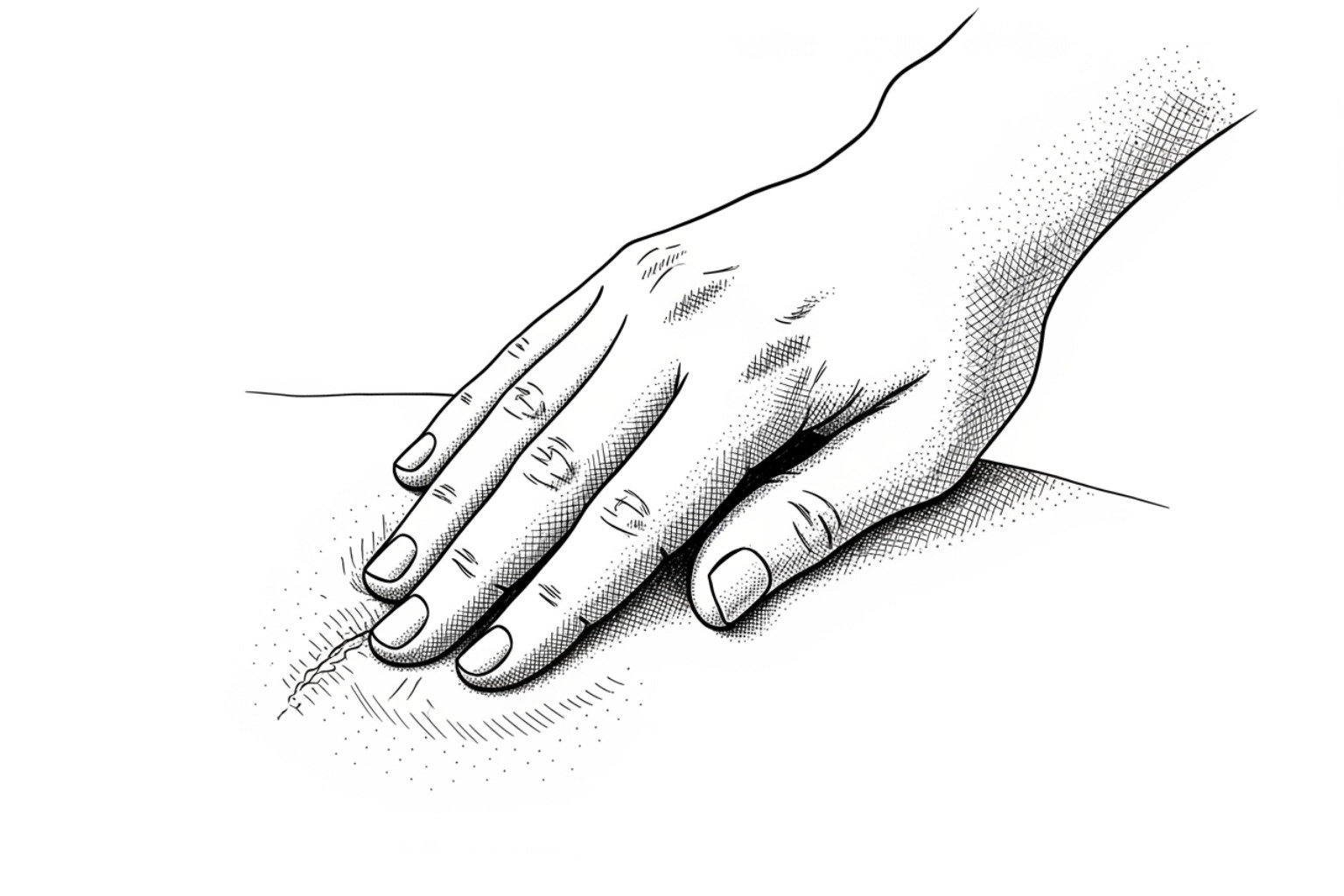
Learn exactly when and how to massage scar tissue after surgery. This guide covers evidence-based pressure techniques, optimal timing windows, and warning signs that mean you should stop.
What scar tissue massage does
Scar tissue massage is a manual therapy technique that applies controlled pressure and movement directly to a healed scar and the surrounding skin to improve its texture, flexibility, and function.
Quick answer — what scar tissue massage does:
- Stimulates collagen remodeling by applying mechanical load to fibroblasts (the cells that produce collagen)
- Reduces adhesions — internal bonds that can tether scar tissue to underlying muscle, fascia, or bone
- Improves local blood flow and lymphatic drainage
- Decreases scar-related pain, itching (pruritus), and hypersensitivity
- Helps restore range of motion in joints and soft tissue near the scar
A scar is not simply "healed skin." After any wound — surgical incision, burn, or soft tissue injury — the body repairs the damage by depositing collagen in a disorganized, random pattern. This is structurally different from normal skin, where collagen fibers form a flexible basket-weave arrangement. The result is tissue that is less elastic, less well-supplied with blood, and often mechanically restricted.
This remodeling process is not instant. The final maturation phase can take anywhere from six months to two years to complete — and this window is when mechanical stimulation matters most.
Research indicates that scar massage, when started at the right time and performed consistently, can meaningfully influence how that collagen reorganizes. A literature review of ten publications covering 144 patients found that 45.7% experienced measurable clinical improvement in scar appearance, pain, itching, or range of motion. For post-surgical scars specifically, improvement rates were notably higher — 90% of surgical scars in one reviewed study showed improved appearance or Patient Observer Scar Assessment Scale (POSAS) scores after massage.
The evidence is not without limitations — sample sizes are modest and study protocols vary widely — but clinical guidelines across rehabilitation and reconstructive surgery consistently recommend scar massage as a first-line, non-invasive intervention.
This guide explains the biology behind how scar massage works, the clinical evidence supporting it, and the specific techniques used to perform it safely and effectively.
This content is for informational purposes only and does not constitute medical advice. Consult a qualified healthcare professional for diagnosis and treatment.
How massage remodels scar tissue
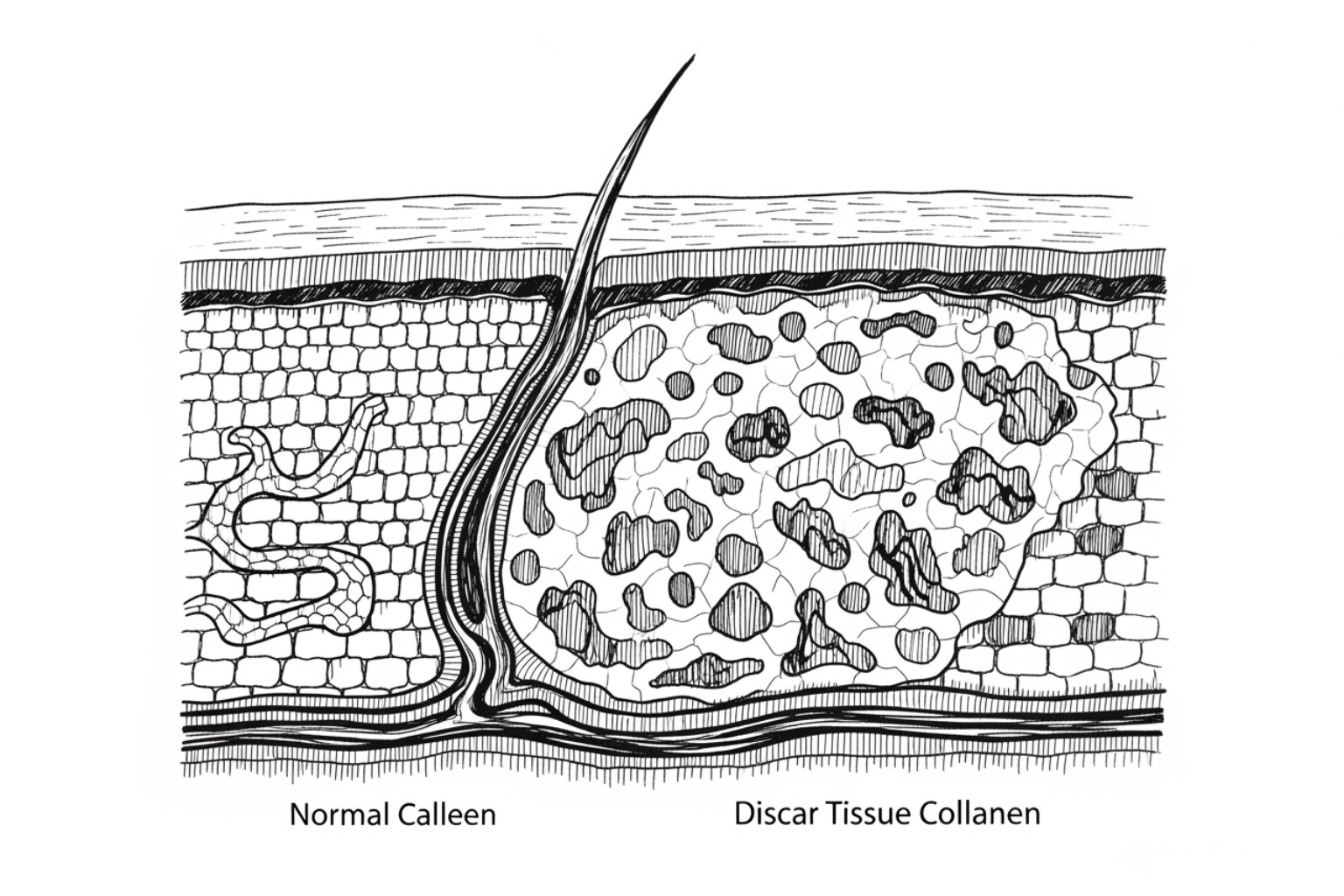
Scar massage is really a form of controlled mechanical stimulation. That sounds fancy, but the idea is simple: healed scar tissue responds to touch, pressure, shear, and stretch.
Normal skin contains collagen arranged in a more organized, flexible pattern. Scar tissue is different. It tends to contain more densely packed and less orderly collagen, fewer blood vessels, more inflammatory activity early on, and less elasticity. Scar tissue also usually reaches only about 70% to 80% of the strength of uninjured skin, which is one reason it can feel stiff, tender, or tight.
When a scar is gently mobilized, several useful things may happen:
- Fibroblasts may respond to mechanical load by altering collagen remodeling
- Tissue layers may glide more freely instead of sticking together
- Local circulation may improve
- Nerve endings may become less hypersensitive over time
- The scar may become more pliable as the remodeling phase progresses
This is why massage is often included in broader Scar Tissue Massage Therapy plans and why organizations such as the British Skin Foundation discuss massage as one part of scar management.
That said, massage does not "erase" a scar or magically dissolve collagen like a tiny demolition crew. It supports remodeling. Helpful, yes. Miraculous, no.
How massage stops scar adhesions
One of the most important goals of scar massage is reducing adhesions. Adhesions are internal attachments that form when healing tissue binds too firmly to the layers underneath it. A scar may look small on the surface but still feel tethered deeper down.
This matters most in areas that need glide:
- Over joints
- Near tendons
- On the hand
- Across the chest or abdomen
- Around the neck or jaw
- Near areas with nerve sensitivity
If adhesions form, movement can become restricted. In the hand, tendon glide may be limited. Around the abdomen or chest, stretching upright can feel uncomfortable. Near nerves, even clothing brushing the skin can feel weirdly dramatic.
Scar massage may help by:
- Mobilizing the scar against deeper layers
- Improving skin and fascial movement
- Decreasing sensitivity through repeated sensory input
- Supporting drainage of lingering edema in some cases
This is one reason Post-Surgery Scar Care often includes both scar mobilization and range-of-motion work rather than massage alone.
How often and how long to massage
Consistency matters more than intensity. Most clinical guidance recommends short, regular sessions rather than occasional heroic efforts.
Common protocols include:
- 5 to 10 minutes per session
- 1 to 3 sessions per day
- Daily practice for at least 6 months
- In some cases, continuing for 6 to 12 months during maturation
Some sources recommend at least 10 minutes twice daily for 6 months. Others suggest 2 to 3 times per day for 5 minutes each time. These are not contradictions so much as variations on the same theme: frequent, moderate, sustained input during the remodeling window.
In practical terms, a scar usually responds better to daily attention than to one overenthusiastic weekend session followed by neglect. That is true for many parts of life, unfortunately.
For scars that feel hard, raised, or tight, techniques discussed in Hard Scar Softening Massage can be useful as part of a structured routine.
When to start massaging a scar
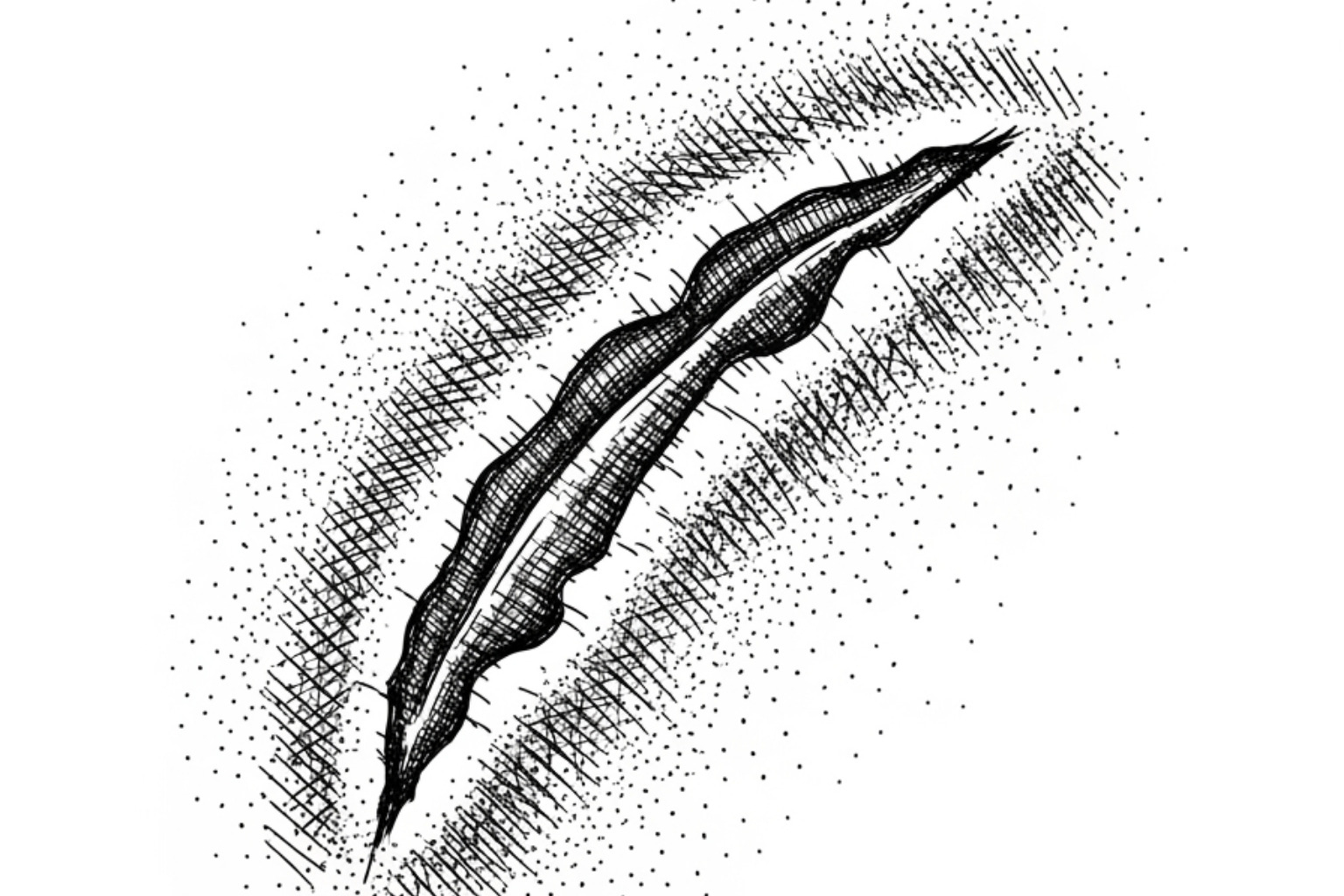
The safest time to start massage is when the wound is fully closed and stable. That usually means:
- No open areas
- No scabs
- No drainage
- No active bleeding
- No signs of infection
- Sutures or staples removed, if applicable
- Clearance from the treating clinician when needed
For many surgical scars, this is often around 2 to 3 weeks after surgery, but timing varies. Some scars are ready earlier, some later. Burns, grafts, radiation-treated skin, and wounds that healed slowly need more caution.
A useful rule is this: massage a scar only after the skin is healed enough to tolerate pressure without risk of reopening.
For a deeper review, see When to Start Scar Treatment After Surgery and the overview at Scar Tissue Massage and Management.
Before starting, check for red flags:
- Increasing redness
- Heat
- Swelling
- Pus or unusual drainage
- Fever
- Rapidly worsening pain
- Fragile skin after radiation treatment
During active radiation, massage is often paused because the skin may become too delicate. If the scar is immature and highly inflamed, direct vigorous massage may worsen irritation rather than help.
Massage techniques that work
Once the scar is healed, several manual techniques can be used. The goal is to move the scar itself, not just slide fingers over the top like polishing a countertop.
Basic setup:
- Wash hands.
- Make sure the skin is clean and dry.
- Place one or two fingertips directly on the scar.
- Apply enough pressure to move the skin and scar tissue.
- Work within a tolerable range, not through sharp pain.
Here are the main motions used in clinical practice.
| Technique | How it is done | Best use | Caution |
|---|---|---|---|
| Circular mobilization | Small circles over the scar and nearby skin | General pliability, sensitivity, early self-care | Start gently on newer scars |
| Longitudinal massage | Move along the line of the scar | Linear scars, mobility along incision | Avoid rubbing too superficially |
| Transverse or cross-friction massage | Move across the scar, perpendicular to the scar line | Tethering, deeper restriction, adhesions | Can irritate immature scars if too aggressive |
| Skin rolling or skin lift | Gently lift and roll the skin if possible | Mature scars with thicker adhesions | Not suitable for fragile or very inflamed scars |
| Adjacent tissue glide | Move the skin around the scar in all directions | When direct pressure is too much at first | Useful early in sensitive scars |
A simple self-massage sequence:
- Start around the scar with light circular movements.
- Progress to direct circles on the scar.
- Move up and down along the scar.
- Move side to side across the scar.
- Gently shift the skin in all directions to test mobility.
- Spend extra time on areas that feel stuck, but keep pressure controlled.
For immature or highly reactive scars, clinicians may begin around the scar before progressing onto it. The NCBI chapter on Treatment of Immature Scars: Manual Massages emphasizes matching technique intensity to scar maturity and tissue tolerance.
Which oils and creams to use
A topical medium can make massage more comfortable, but more slip is not always better.
A plain, fragrance-free moisturizer may help if:
- The scar feels dry
- Friction causes surface irritation
- The skin barrier needs support
However, some clinicians prefer less slip for deeper mobilization because too much lubricant can make it hard to actually move the scar. In other words, if fingers glide too easily, the scar may not.
What does the evidence say about ingredients?
- Silicone has stronger evidence than most topicals for improving scar hydration and appearance over time, though it is not a massage oil
- Onion extract has limited but somewhat better support than vitamin E for symptoms such as itch or pigmentation in some studies
- Vitamin E has not shown consistent benefit in clinical research and may cause irritation in some people
- Cocoa butter is popular, but good evidence for scar-specific benefit is limited
For a broader evidence review, see What Works for Scars.
A sensible approach is:
- Use a bland moisturizer if needed for comfort
- Avoid heavily fragranced products
- Stop if rash or irritation develops
- Do not apply anything to an open wound
How much pressure to use
Scar massage should be firm enough to move the tissue, but not so forceful that it causes tearing, blistering, or lingering inflammation.
Useful pressure cues include:
- Mild discomfort is acceptable
- Sharp pain is not
- Staying below roughly 6 out of 10 pain is a common practical limit
- Brief blanching of the skin may occur with pressure, but persistent redness afterward suggests overdoing it
Pressure should usually be:
- Lighter for new, immature, red, or irritated scars
- Firmer for mature, stable, less reactive scars
- Reduced immediately if the area becomes more swollen, hot, or painful later
This principle is covered well in Surgery Scar Treatment Complete Guide: use enough load to create mechanical stimulation, not enough to create fresh injury.
What the evidence shows
So, does massage actually work?
The short answer: probably for some outcomes, especially in selected scars, but the evidence is mixed and not as strong as many people assume.
The most cited review in this area found:
- 10 publications
- 144 total patients
- 65 patients, or 45.7%, had clinical improvement in appearance, pain, itch, or range of motion
- In postsurgical scars, 27 out of 30 scars, or 90%, improved in appearance or POSAS score
Research on burn scars suggests massage may:
- Moderately reduce pruritus
- Improve pliability in some studies
- Reduce pain in some clinical settings
But there are limitations:
- Protocols vary a lot
- Sample sizes are small
- Outcomes are measured differently across studies
- Some studies combine massage with other treatments, making it hard to isolate the effect
That means the evidence supports cautious optimism, not overstatement.
In clinical practice, scar massage is often judged by functional and symptom outcomes such as:
- Better mobility
- Less tightness
- Reduced itch
- Lower pain or hypersensitivity
- Improved softness or pliability
- Better patient-rated appearance
Scales such as the Vancouver Scar Scale and the Patient and Observer Scar Assessment Scale are commonly used in research and rehabilitation.
The strongest conclusion is this: scar massage is a reasonable, low-cost, low-tech intervention for many healed scars, especially after surgery, but it works best as part of a broader scar management plan. That plan may also include silicone therapy, sun protection, stretching, taping, pressure therapy, laser treatment, or surgical revision depending on the scar type.
When not to massage a scar
Scar massage is not appropriate for every scar, every body area, or every stage of healing.
Do not massage if there is:
- An open wound
- A scabbed or draining incision
- Active infection
- Unexplained skin breakdown
- Severe inflammation
- A recently irradiated area that is fragile
- A suspicious lesion that has not been medically assessed
Extra caution is needed with:
- True keloids, which may worsen with friction or repeated irritation
- Hypertrophic scars that are still very inflamed
- Skin grafts
- Burn scars
- Areas over major nerves
- People with reduced sensation who may not feel injury
- Recent cancer surgery unless the treating team has cleared massage
The textbook chapter on immature scars notes that massage done too early, too long, or too aggressively during the inflammatory phase can contribute to pathological scarring. In specialist burn care, clinicians may assess tissue reactivity before deciding whether to massage around the scar or directly on it.
Massage should also stop and be reassessed if it causes:
- New blistering
- Bleeding
- Increased warmth
- Lasting swelling
- Worsening pain
- A visible increase in irritation after sessions
When professional help is useful:
- The scar crosses a joint
- Movement is restricted
- The scar is painful or very sensitive
- The scar is raised, thick, or rapidly changing
- The body area is complex, such as the hand, face, or neck
- You are unsure whether it is a keloid, hypertrophic scar, adhesion, or something else
Common questions about scar massage
Does massage help older scars?
Not necessarily. The best results are usually seen when massage begins soon after full healing and continues through the active remodeling phase, which may last 6 months to 2 years.
Some sources suggest massage is unlikely to make a major difference after about 2 years, especially for appearance. However, other clinical observations suggest that older scars can still improve somewhat in pliability, sensitivity, or movement, particularly when adhesions are present.
A careful way to say it is this: it is rarely too late to try improving function, but expectations should be more modest for long-mature scars than for newer ones.
When massage can make things worse
Yes, if it is done too early or too aggressively.
Hypertrophic scars are already active, thickened scars. If the area is red, inflamed, hot, or easily irritated, forceful friction may increase irritation. Gentler techniques may be appropriate later, but these scars often benefit from professional guidance and may need treatment beyond massage alone, such as silicone, pressure therapy, or laser-based approaches.
True keloids are even more complicated and generally should not be deeply self-massaged without specialist advice.
What it means if massage hurts
No. Effective scar massage should feel firm, sometimes slightly uncomfortable, but not sharply painful.
Pain is not proof that remodeling is happening. It may simply mean the tissue is being irritated. A tolerable pulling or stretching sensation is fine. Ongoing pain during or after the session is a sign to reduce pressure, shorten the session, or stop and seek advice.
Conclusion
Scar tissue massage is best understood as a practical way to guide scar remodeling during healing, not as a cure-all. When used on a fully healed scar, with the right pressure, the right timing, and the right consistency, it may improve pliability, reduce adhesions, ease itching and sensitivity, and support better movement.
The key points are straightforward:
- Start only after full wound closure
- Use controlled, tolerable pressure
- Work in multiple directions
- Be consistent for months, not days
- Stop if the scar becomes more inflamed or breaks down
- Get professional guidance for complex, painful, raised, or restrictive scars
Scar maturation is slow. The remodeling phase may continue for up to 2 years, so visible and functional changes take time. For many people, the value of massage is not only physical but practical: it creates a structured way to participate in healing rather than just staring at the scar and hoping it gets the memo.
If more support is needed, a structured scar assessment can help determine whether massage alone is appropriate or whether the scar may benefit from additional treatment strategies.
Works Cited
- British Skin Foundation. (2026). The benefits of scar massage.
- Roques, C. (2026). Treatment of Immature Scars: Manual Massages. In: Textbook on Scar Management. Springer, Cham.
- Shin, T. M., & Bordeaux, J. S. (2012). The role of massage in scar management: a literature review. Dermatologic Surgery, 38(3), 414-423. https://pubmed.ncbi.nlm.nih.gov/22093081/
- Verywell Health. (2026). Scar Tissue Massage and Management.
This content is for informational purposes only and does not constitute medical advice. Consult a qualified healthcare professional for diagnosis and treatment.