The Science of Skin Repair: Protein Synthesis Explained
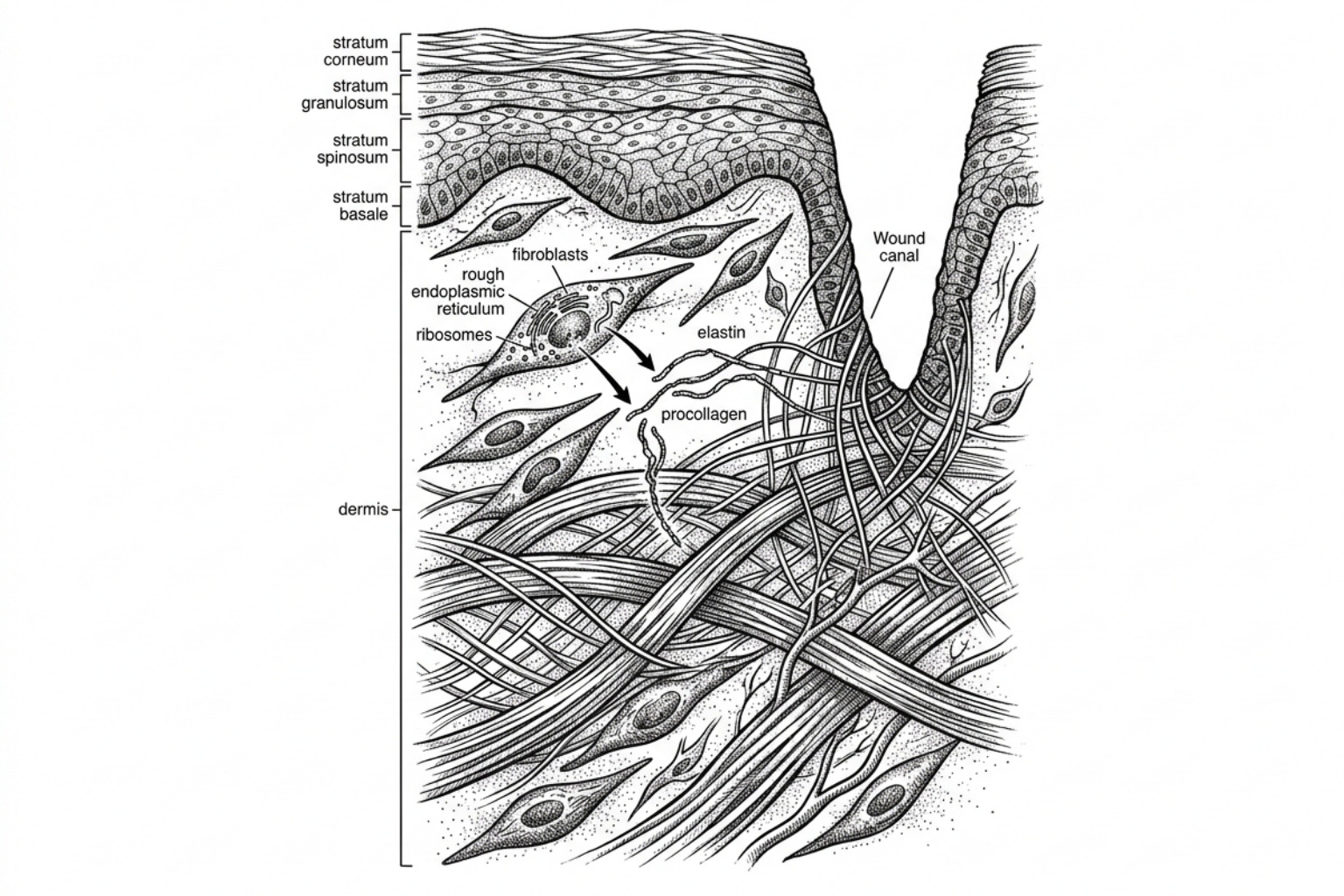
How protein synthesis powers wound healing — from collagen production and amino acid requirements to nutrition strategies that support faster skin repair and scar recovery.
How Protein Builds New Skin Tissue
Protein synthesis wound healing is a tightly coordinated biological process in which the body rebuilds damaged tissue by manufacturing new proteins — most critically, collagen — at the site of injury.
Here is a quick summary of how it works:
- Protein synthesis = the cellular process of building new proteins from amino acids
- Why it matters for wounds = every phase of repair (hemostasis, inflammation, proliferation, remodeling) depends on proteins for structural rebuilding, immune defense, and new blood vessel formation
- Key drivers = adequate dietary protein, specific amino acids (arginine, glutamine, leucine), and signaling molecules like insulin and growth factors
- Clinical relevance = insufficient protein intake slows wound closure, weakens scar tissue, raises infection risk, and accelerates muscle loss
When skin is injured — whether from surgery, trauma, or a chronic condition like a pressure ulcer — the body shifts into a high-demand repair state. Cells at the wound site divide roughly every 11 hours, far faster than the several days typical under normal conditions. That accelerated pace requires a steady, substantial supply of amino acids to fuel collagen production, immune cell activity, and tissue regeneration.
For many people, especially older adults or those managing chronic wounds, meeting that demand is harder than it sounds. Research indicates that protein needs during wound healing can be double or even triple the standard recommended intake for healthy adults — rising from 0.8 g/kg body weight per day to between 1.2 and 2.0 g/kg depending on wound severity.
This guide explains the biology behind those requirements, what the current evidence says about optimizing protein intake, and how clinical markers can help track whether the body is synthesizing enough protein to close a wound effectively.
Why Protein Matters for Wound Healing
The repair of skin tissue is not merely a matter of "filling a gap." It is an energy-intensive manufacturing process. Proteins are the primary building blocks for every stage of tissue growth and cell renewal. During the proliferative phase of healing, fibroblasts (the cells responsible for creating connective tissue) migrate to the wound site to begin the massive production of the extracellular matrix (ECM).
The ECM is a structural scaffold composed of various proteins, most notably collagen. Collagen constitutes approximately 30% of the body’s total protein, and its synthesis is the defining feature of successful wound repair. Without efficient protein synthesis wound healing, the body cannot produce the granulation tissue—the pink, "beefy red" tissue that fills a deep wound. Healthy granulation tissue acts as a temporary plug and a contractile organ, pulling the edges of the wound together while providing a base for new blood vessels (angiogenesis) to form.
Recent research into Protein-modified nanomaterials: emerging trends in skin wound healing highlights that proteins also serve as signaling agents. They regulate the transition from the inflammatory phase to the remodeling phase. If protein synthesis is impaired, wounds often stall in the inflammatory phase, leading to chronic, non-healing ulcers.
Protein Synthesis Wound Healing and the 11-Hour Cellular Cycle
In healthy, uninjured skin, cell division is a relatively leisurely process, often taking several days. However, during active tissue repair, the biological "metabolic clock" accelerates dramatically. Cells involved in repair can complete their division cycle in approximately 11 hours.
This rapid turnover is necessary to replace lost tissue and provide enough cells to cover the wound surface (epithelialization). However, this high metabolic rate places an immense strain on the body’s amino acid reserves. If the necessary "raw materials" are not available, this 11-hour cycle can falter, leading to thin, fragile skin or delayed closure. Understanding this timeline is a core part of a surgery scar treatment complete guide, as the first few days post-injury are the most metabolically demanding.
Signaling Pathways: mTOR and PI3K/Akt
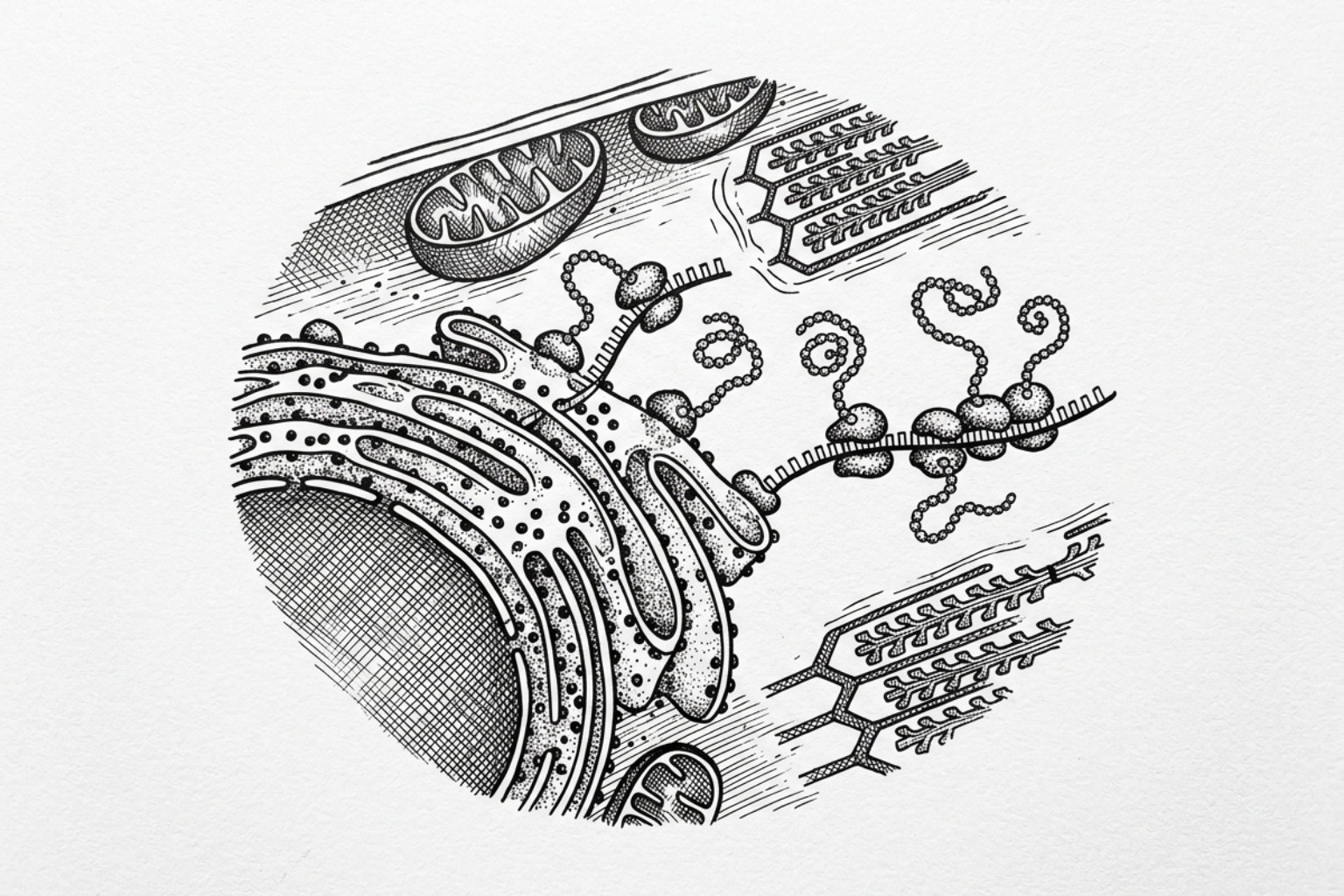
The "on" switch for protein synthesis is largely governed by specific intracellular signaling pathways, most notably the Mammalian Target of Rapamycin (mTOR) and the PI3K/Akt pathway. These pathways act as nutrient sensors. When amino acids (especially leucine) and hormones like insulin are present, mTOR is activated, signaling the cell to begin translating genetic code into new proteins.
Advanced research into protein-functionalized nanoparticles has shown that delivering growth factors like Insulin-like Growth Factor-1 (IGF-1) directly to a wound can stimulate these pathways, forcing the body to prioritize protein synthesis at the injury site. This is particularly relevant for diabetic patients, whose natural insulin signaling is impaired, often leading to stalled healing.
How nutrition affects healing
The body’s ability to heal is inextricably linked to its nitrogen balance—the measure of nitrogen intake (from protein) versus nitrogen loss. A negative nitrogen balance, common in trauma or severe illness, indicates that the body is breaking down its own muscle tissue to find the amino acids required for survival and repair.
Clinical guidelines suggest that protein requirements scale with the severity of the wound. While a healthy adult requires about 0.8 grams of protein per kilogram of body weight, a patient with a surgical wound or pressure ulcer requires significantly more.
| Wound Severity | Recommended Protein Intake (g/kg/day) |
|---|---|
| Minor (Simple Incision) | 1.0 – 1.2 g/kg |
| Moderate (Stage II Pressure Injury) | 1.2 – 1.5 g/kg |
| Severe (Stage III/IV, Multiple Traumas) | 1.5 – 2.0 g/kg |
| Chronic with High Exudate | Up to 250% of RDA |
Knowing when to start scar treatment after surgery is important, but supporting the body's internal chemistry through these protein levels is the necessary first step.
How poor nutrition slows healing
Malnutrition is one of the most significant risk factors for postoperative complications. It impairs immune function, reduces subcutaneous fat, and—most critically—decreases collagen production.
Interestingly, animal studies have revealed a phenomenon known as "metabolic sparing." In one study, rats subjected to a dietary restriction of 58% of their normal food intake experienced significant body weight loss and a deficit in muscle protein mass. However, the rate of protein synthesis at the wound site remained unaffected at 2 and 7 days post-surgery. This suggests that the body is biologically programmed to prioritize the wound site over distant muscle tissues during periods of moderate undernutrition.
While this "protection" exists, it has limits. In humans, severe or prolonged malnutrition eventually overrides these sparing mechanisms, leading to wound dehiscence (opening of the wound) and infection.
Key Amino Acids: Arginine, Glutamine, and Leucine
While total protein intake is vital, specific amino acids play "specialist" roles in the protein synthesis wound healing process:
- Arginine: This amino acid is a precursor to nitric oxide, which improves blood flow to the wound. It also stimulates the release of growth hormones and is essential for collagen deposition. Clinical evidence suggests that 7 grams of daily arginine can improve pressure injury healing, though higher doses (14g) may not provide additional benefit.
- Glutamine: During the stress of healing, the body's demand for glutamine exceeds its ability to produce it. Glutamine serves as a primary fuel source for rapidly dividing cells like fibroblasts and macrophages and acts as a precursor for antioxidants.
- Leucine: A branched-chain amino acid (BCAA) that acts as the primary trigger for the mTOR pathway, directly stimulating muscle protein synthesis and helping to preserve lean body mass.
- Proline and Hydroxyproline: These make up nearly 23% of the collagen molecule. During early healing, proline levels in wound fluid are often 50% higher than in the blood, reflecting the intense demand for collagen "bricks."
Getting Enough Protein for Wound Healing
Research into muscle protein synthesis suggests that the timing of protein intake may be just as important as the total amount. The human body does not have a "storage tank" for amino acids in the way it stores fat or carbohydrates. Therefore, to maximize synthesis, protein must be delivered consistently throughout the day.
A critical threshold of approximately 30 grams of high-quality protein (roughly a 4oz serving of meat) has been shown to increase protein synthesis by 50% in both young and older adults. For a 75kg patient requiring 90g of protein daily, distributing this as 30g at breakfast, 30g at lunch, and 30g at dinner is more effective for preserving lean body mass than consuming the majority of protein in a single evening meal.
This is especially vital for hospitalized adults. Older patients can lose up to 15% of their lean body mass (LBM) in just four days of bed rest. Since LBM contains the immune cells and protein stores necessary for survival, preserving it is a cornerstone of post-surgery scar care. As noted in High-quality dietary protein: the key to healthy granulation tissue, high-quality proteins are those that provide all essential amino acids in a highly digestible form.
Compound Proteins vs. Standard Whey Formulations
When oral intake is insufficient, clinicians often turn to protein supplements. Standard whey protein is highly regarded for its high BCAA content and rapid digestion. However, emerging evidence suggests that "compound proteins"—which combine whey with specialized oligopeptides—may be superior.
Oligopeptides are small chains of 2 to 6 amino acids. Research indicates that the human intestine has specific transporters for these peptides that are more efficient than those for free-form amino acids. In animal models, high-dose compound protein (8.375 g/kg/day) significantly increased wound healing rates compared to control groups by day 3 post-injury. These formulations appear to accelerate the transition from the inflammatory phase to the proliferative phase more effectively than standard protein alone.
Tracking Your Recovery Progress
To ensure that nutritional interventions are working, clinicians monitor several biochemical markers:
- Albumin and Prealbumin: While these levels can be affected by inflammation, they remain standard markers for assessing a patient's overall nutritional trajectory. A rising trend often indicates that the body is moving out of a catabolic (breakdown) state and into an anabolic (building) state.
- Hydroxyproline: Since this amino acid is almost exclusively found in collagen, its presence in wound tissue or urine can serve as a marker for the rate of collagen synthesis and degradation.
- Sarcopenia Assessment: Monitoring for muscle wasting is essential. Since older adults already lose 3-8% of their muscle mass per decade, the accelerated loss during wound healing can lead to a permanent loss of mobility. Regular scar assessment should be paired with physical assessments of muscle strength and mass.
Common Questions About Protein and Healing
How much protein is required daily for wound closure?
For most surgical or chronic wounds, a daily intake of 1.2 to 1.5 grams of protein per kilogram of body weight is recommended. In severe cases, such as large pressure ulcers or non-weight-bearing patients, this may increase to 2.0 g/kg.
Can Amino Acids Speed Up Scar Formation
Amino acids like arginine and proline accelerate the production of collagen. While this is necessary for wound closure, excessive or disorganized collagen synthesis can lead to hypertrophic or keloid scars. Balanced nutrition supports "normal" remodeling rather than over-production.
Does dietary restriction always delay healing?
Not necessarily in the short term. Evidence from animal models suggests the body can prioritize the wound site even when total calories are restricted. However, in humans, chronic undernutrition eventually depletes the body's reserves, leading to stalled healing and increased infection risk.
Conclusion
The connection between protein synthesis wound healing and successful recovery is absolute. From the 11-hour cellular division cycle to the complex activation of the mTOR pathway, the body’s "repair shop" runs on amino acids. By focusing on high-quality protein, optimizing the timing of intake, and monitoring clinical markers like albumin and LBM, patients and clinicians can provide the necessary environment for skin to regenerate effectively.
Long-term recovery and the minimization of scarring depend on this nutritional foundation. For more information on tracking your healing progress, consider utilizing a professional scar assessment to monitor how your tissue is remodeling over time.
Works Cited
- Demling, R. H. (2009). Nutrition, Anabolism, and the Wound Healing Process: An Overview.
- Wang, X., et al. (2022). "The Effect of a Compound Protein on Wound Healing and Nutritional Status." Evidence-Based Complementary and Alternative Medicine.
- Jahangir, M., et al. (2024). Whey Protein as an Adjuvant Therapy for Wound Healing and Infection Control: A Systematic Review and Meta-Analysis.
- Chu, A. S., Delmore, B., & Chiu, E. S. (2024). High-Quality Dietary Protein: The Key to Healthy Granulation Tissue and Optimal Wound Healing. Advances in Skin & Wound Care, 37(10), 520-527. https://pubmed.ncbi.nlm.nih.gov/39481059/
- Sharda, D., Kaur, P., & Choudhury, D. (2023). Protein-modified nanomaterials: emerging trends in skin wound healing. Discover Nano, 18(1), 127. https://pmc.ncbi.nlm.nih.gov/articles/PMC10579214/
This content is for informational purposes only and does not constitute medical advice. Consult a qualified healthcare professional for diagnosis and treatment.