Why Blunt Cannula Subcision is Making Waves in Acne Treatment
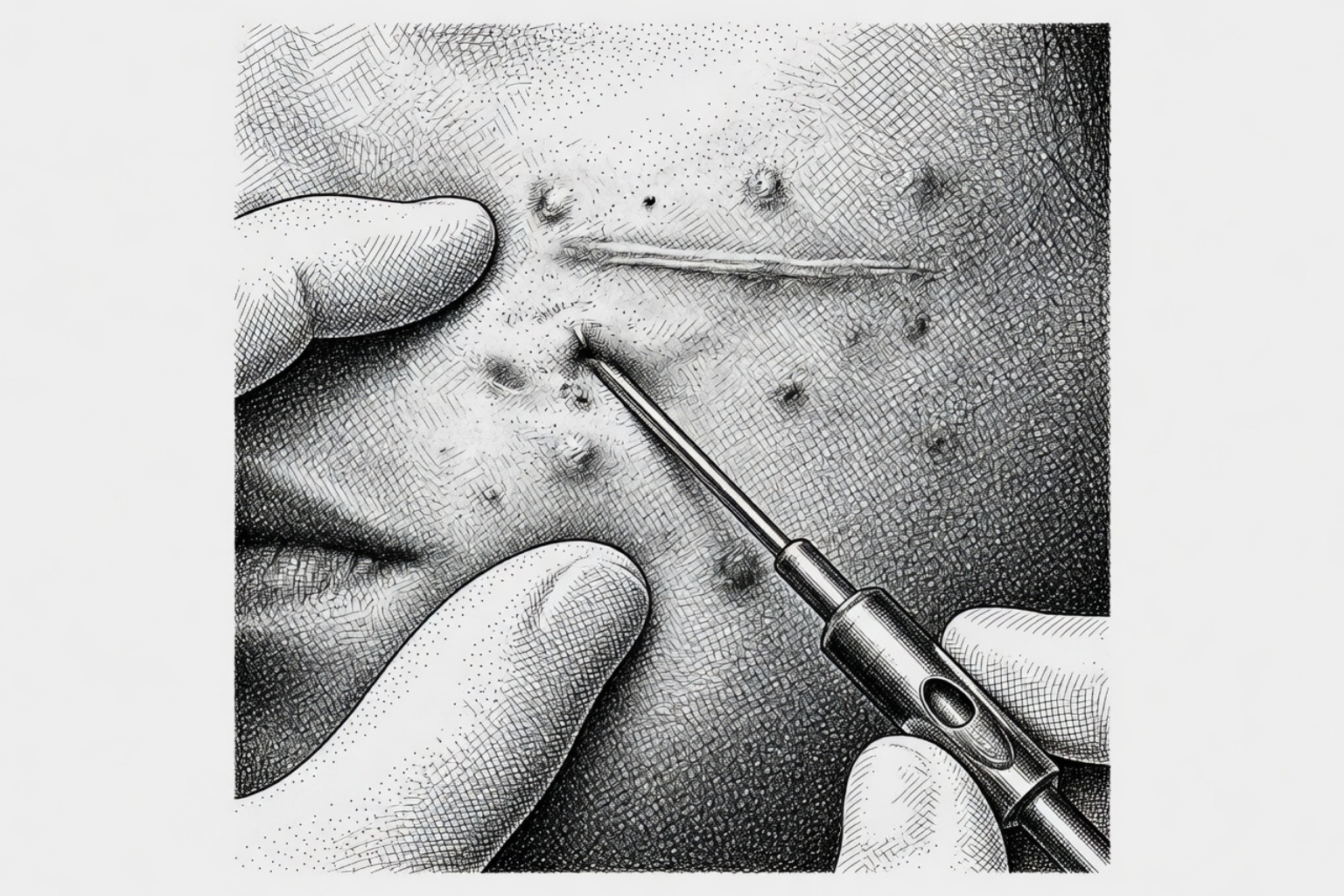
Blunt cannula subcision releases the fibrous bands tethering atrophic acne scars, lifting them with less bruising and downtime than traditional Nokor needle methods.
How blunt cannula subcision treats acne scars
Blunt cannula subcision is a minimally invasive surgical technique used to release fibrous bands that tether depressed acne scars to the underlying tissue. By severing these fibrotic connections, the procedure allows the skin surface to lift, while simultaneously triggering the body's natural collagen remodeling response.
Quick answer — key facts about blunt cannula subcision:
| Feature | Detail |
|---|---|
| Procedure type | Minimally invasive, office-based |
| Mechanism | Releases fibrous tethers beneath depressed scars |
| Best scar types | Rolling scars, boxcar scars, atrophic depressions |
| Advantage over sharp needle | Less bleeding, fewer complications, higher patient satisfaction |
| Typical downtime | A few days to two weeks |
| Sessions needed | Commonly 1–3, depending on severity |
Acne scarring affects a substantial proportion of people who experience inflammatory acne. Research estimates that up to 30% of those affected consider their scarring a significant burden — one that influences self-esteem and social confidence long after active breakouts have resolved.
Traditional subcision, first described by Orentreich and Orentreich in 1995, relied on sharp hypodermic or Nokor needles to mechanically cut fibrotic bands beneath the skin. While effective to a degree, these sharp instruments carry meaningful risks: hematoma formation, ecchymosis, and nodule development are well-documented complications.
The shift toward blunt cannula subcision reflects a broader evolution in scar revision practice. Evidence suggests the blunt-tipped instrument navigates the subdermal plane more safely, requires fewer entry points, and produces significantly less post-procedural bleeding. A comparative study published in the Journal of Cosmetic Dermatology found that both patients and physicians were significantly more satisfied with blunt cannula subcision than with Nokor needle subcision (P = .000) — a finding that has helped establish the cannula approach as a preferred technique in contemporary dermatological practice.
The sections below examine the biomechanics, clinical evidence, safety protocols, and combination strategies that define modern blunt cannula subcision — providing a clear, evidence-based picture of what the procedure can realistically achieve.
How the technique works under your skin
In clinical practice, the primary goal of any subcision technique is the disruption of the vertical or oblique fibrous tethers that pull the epidermis toward the deep fascia or SMAS (superficial muscular aponeurotic system). Blunt cannula subcision achieves this through mechanical release, but its biomechanical action differs significantly from sharp dissection.
While a Nokor needle acts as a miniature scalpel, cutting through tissue indiscriminately, a blunt cannula relies on the force of its rounded tip to "undermine" the scar. This process, often referred to as subcutaneous incisionless surgery, creates a controlled pocket of space beneath the depression. As the cannula is navigated through the reticular dermis or the junction between the dermis and hypodermis, the technique performs a blunt dissection that preserves vital structures while breaking the rigid bands responsible for the "rolling" appearance of scars.
Research on subcision's mechanism of action indicates that this mechanical trauma also initiates a wound-healing cascade. The space created by the cannula eventually fills with a combination of blood, serum, and later, newly synthesized extracellular matrix. This "filler effect" of the initial hematoma provides immediate volume, while longer-term improvement comes from new collagen deposition.
Why a blunt cannula handles stiff scars
The use of a blunt instrument offers several technical advantages in complex scar revision. Because the tip is not sharp, it tends to deflect away from blood vessels and nerves rather than piercing them. This allows for a more aggressive fanning motion in areas with dense fibrotic tissue without the constant risk of causing a significant hematoma.
Key technical features include:
- Single Entry Point: Unlike needle subcision, which often requires multiple punctures for different scar clusters, a long cannula (often 50mm to 70mm) can reach a wide surface area from a single entry point.
- Horizontal Orientation: Maintaining a consistent horizontal plane is easier with a flexible cannula, which reduces the risk of accidentally dipping too deep into the subcutaneous fat or too shallow into the papillary dermis.
- Tractive Force: The blunt tip provides tactile feedback; the operator can feel the "snap" or resistance of the fibrous bands as they are released, supporting more thorough treatment.
These technical refinements are essential for those looking to Reduce Acne Scars Fast while minimizing the "traumatized" appearance of the skin immediately following the procedure.
How your skin rebuilds afterward
Beyond the mechanical release, the histological changes induced by blunt cannula subcision are substantial. The procedure stimulates the micro-environment of the dermis to favor regeneration over simple scarring. Clinical studies have shown an increase in epidermal thickness and the production of Types I, III, and VII collagen following subcision-related trauma.
Furthermore, the "tunneling" effect of the cannula promotes neovascularization — the formation of new blood vessels — which improves the nutrient supply to the previously ischemic, scarred tissue. This is often enhanced when combined with other modalities like Microneedling for Scar Reduction, which further boosts elastin and tropoelastin production, leading to improved skin elasticity and texture.
Blunt cannula vs. Nokor needle
To understand the preference for the cannula approach, direct comparisons in the clinical literature are essential. The landmark 2019 comparative study in the Journal of Cosmetic Dermatology provided high-level evidence regarding the efficacy and safety of these two modalities.
| Feature | Nokor Needle Subcision (NNS) | Blunt Cannula Subcision (BCS) |
|---|---|---|
| Complication Profile | High risk of ecchymosis and nodules | Primarily transient edema |
| Bleeding | Significant intra-operative bleeding | Minimal bleeding |
| Patient Satisfaction | Moderate; higher pain scores | Significantly higher (P = .000) |
| Physician Satisfaction | Satisfied (P = .006) | Significantly more satisfied (P = .044) |
| Recovery Time | 7–14 days | 3–7 days |
Evidence from Blunt Blade Subcision: An Evolution in the Treatment of Atrophic Acne Scars suggests that while both methods are effective at releasing scars, the blunt blade or cannula approach provides a more uniform undermining, which reduces the likelihood of "lumpiness" or the formation of hypertrophic nodules during the healing phase.
What patients say about results
Patient satisfaction is an important outcome metric in practice. In the 2019 study, patients were monitored for three months. Those who underwent blunt cannula subcision reported significantly higher satisfaction levels throughout the duration (P = .021). Interestingly, patients who received Nokor subcision did not show the same level of sustained satisfaction (P = .353), likely due to the higher incidence of side effects and the slower resolution of bruising.
For a comprehensive look at how these results compare to other modalities, review the Non-Invasive Acne Scars Complete Guide. The consensus remains that the reduced downtime associated with the cannula makes it a more practical option for many patients.
What doctors find in studies
From a practitioner's perspective, the reliability of the outcome is paramount. Sharp needles, while effective at "cutting," often lead to unpredictable hematomas. These large collections of blood can distract the anatomy during the procedure, making it difficult to assess whether the scar has been fully released.
In contrast, the blunt cannula's ability to operate with minimal bleeding allows for real-time assessment of the scar's elevation. The risk of post-operative nodules — small, hard lumps of scar tissue — also appears to be lower with the cannula. This is a common concern when using sharp tools that may inadvertently damage the dermis in a way that triggers localized fibrotic overgrowth. For those interested in home-based maintenance between clinical sessions, tools like a Dermaroller for Scars can help maintain the texture, but they cannot replace the deep structural release provided by subcision.
Staying safe during the procedure
Mastering blunt cannula subcision requires an intimate knowledge of facial anatomy, specifically the location of retaining ligaments and major neurovascular bundles. One of the most significant risks of aggressive subcision — particularly with sharp blades — is the accidental rupture of facial retaining ligaments. These ligaments attach the deep fascia to the dermis, providing structural support. If these are severed, it can lead to premature facial sagging and an aging appearance.
Treating sensitive areas of the face
Certain areas of the face require extreme caution. The temporal region, for example, contains the superficial temporal artery and the temporal branch of the facial nerve. While a blunt cannula is inherently safer than a Nokor needle in these zones, clinical protocols typically include:
- Depth Control: Maintaining the cannula in the superficial subcutaneous plane is essential to avoid deeper neurovascular structures.
- Entry Point Selection: Choosing entry points in front of the masseteric cutaneous ligament is preferable for treating the medial cheek. This minimizes potential injury to the zygomatic and masseteric ligaments.
- Avoidance Zones: The preauricular and mandibular areas should be approached with care to avoid the facial nerve trunks.
While some might seek Acne Scar Treatment Natural Home Remedies for minor surface issues, deep structural scarring in these high-risk zones must only be addressed by a professional who understands these anatomical boundaries.
How the area gets numbed
A key technical refinement for successful blunt cannula subcision is the use of tumescent anesthesia. This involves injecting a large volume of a diluted local anesthetic (typically lidocaine and epinephrine) mixed with sodium bicarbonate (usually in a 2:1 ratio) into the treatment area.
According to research on tumescent-anesthesia subcision, tumescence serves two purposes:
- Anesthesia: It provides superior pain control, making the procedure virtually painless for the patient.
- Hydrodissection: The fluid itself helps to expand the tissue planes, making it easier for the blunt cannula to glide through the fibrotic tissue. This "pre-separation" of layers reduces the force required and further lowers the risk of bruising.
Combining subcision with microneedling and fillers
In clinical practice, monotherapy is rarely sufficient for severe acne scarring. The most substantial results are often achieved with triple combination therapy: Chemical Reconstruction of Skin Scars (CROSS), followed by blunt cannula subcision, and finishing with microneedling.
Adding fillers for better results
One of the most effective combinations involves the immediate injection of Atrophic Scar Filling Treatments like hyaluronic acid (HA) fillers after subcision. When a scar is released, a temporary void is created. By placing a small amount of HA filler into that space, immediate elevation can be achieved and, more importantly, a physical barrier can be created that helps prevent the fibrous bands from re-tethering during the healing process.
Research indicates that HA fillers do more than just "fill"; they also stimulate fibroblasts to produce new collagen. This is particularly useful for Dermal Fillers for Ice Pick Scars and deep boxcar scars that may not fully lift through subcision alone.
Pairing with gentler add-on treatments
For patients with Fitzpatrick skin types IV-VI, thermal treatments like CO2 lasers carry a risk of post-inflammatory hyperpigmentation (PIH). For these individuals, non-thermal combinations are often preferred. Clinical case series have demonstrated that combining carbolic CROSS (which is less likely to cause scar widening than TCA) with blunt bi-level cannula subcision and microneedling resulted in high patient satisfaction with minimal PIH risk.
The specific order is critical:
- CROSS: Performed first to allow clear visualization of the scars before the skin is distorted by anesthesia.
- Subcision: Performed second under tumescent anesthesia.
- Microneedling: Performed last, often using the existing numbness from the subcision anesthesia to ensure patient comfort while treating the entire skin surface. This helps integrate the subcised areas with the surrounding skin for a seamless result. More information is available in the article on Atrophic Scar Microneedling Therapy.
Recovery and long-term results
Effective management of recovery is integral to successful blunt cannula subcision. Immediately following the procedure, patients should expect edema (swelling) and some mild ecchymosis (bruising). However, compared to traditional methods, the downtime is relatively short.
What to expect right after
To support the best outcome, the following post-operative steps are commonly recommended:
- Compression and Ice: Applying pressure immediately after the cannula is withdrawn helps minimize any minor bleeding. Ice should be used for the first 24–48 hours to control swelling.
- Hematoma Evacuation: If a small hematoma does form, it can often be gently "squeezed" out through the entry point before the patient leaves the office.
- Topical Care: Using a Best Scar Reduction Cream can support the skin barrier during the first week of healing.
- Activity: Patients are generally advised to avoid strenuous exercise for 48 hours to prevent a spike in blood pressure that could trigger delayed bleeding.
For more detailed tips on supporting the healing process, see the guide on how to Reduce Acne Scars Fast.
Follow-up and timing between sessions
Repeat sessions are typically scheduled at 3-week to 6-week intervals. This allows the initial inflammatory response to settle and the first phase of collagen synthesis to begin. While some improvement is visible Subcision After One Session, most patients require 2–3 sessions for optimal correction.
At the 6-month follow-up, the results are generally considered permanent, as the newly formed collagen has matured. Unlike fillers, which eventually dissolve, the structural release provided by subcision remains.
Who it's for and what affects results
Which scar types respond best
Rolling scars are the "gold standard" indication for blunt cannula subcision. These scars are tethered by broad bands and appear as gentle, wave-like undulations on the skin. Boxcar scars also respond well, provided they are not "punched out" with perfectly vertical walls (which might require CROSS or punch excision first). Icepick scars generally do not respond to subcision because they are too narrow; they require CROSS or excision.
How healing unfolds over time
Most patients experience significant swelling for 2–3 days. Bruising, if it occurs, typically resolves within 7 days. By day 10, most patients feel comfortable returning to all social activities. Full tissue remodeling continues beneath the surface for 3–6 months.
How many sessions you'll need
While it varies, the average patient sees a 40–60% improvement after 2–3 sessions. Combining subcision with fillers or microneedling can often reduce the number of sessions needed to reach the patient's goal.
The bottom line
Blunt cannula subcision represents a significant advancement in the safety and efficacy of acne scar revision. By prioritizing anatomical preservation and minimizing procedural trauma, it offers a reliable path to tissue remodeling for those with atrophic scarring. The Scar Assessment Tool is available to assist in determining the most appropriate treatment path for specific scar profiles.
Works Cited
- Orentreich DS, Orentreich N. "Subcutaneous incisionless (subcision) surgery for the correction of depressed scars and wrinkles." Dermatologic Surgery, 1995;21(6):543-549.
- Gheisari M, Iranmanesh B, Saghi B. "Blunt cannula subcision is more effective than Nokor needle subcision for acne scars treatment." Journal of Cosmetic Dermatology, 2019;18(1):192-196.
- Nilforoushzadeh MA, et al. "Comparing cannula-based subcision with the common needle method: A clinical trial." Skin Research and Technology, 2020;26(1):39-44.
- Ebrahim HM, et al. "Clinical and Histopathological evaluation of different tools for the Subcision of Atrophic Acne Scars." Journal of Cosmetic Dermatology, 2022;21(3):1127-1134.
- Taylor MB, Zaleski-Larsen L, McGraw TA. "Single Session Treatment of Rolling Acne Scars Using Tumescent Anesthesia, 20% Trichloracetic Acid Extensive Subcision, and Fractional CO2 Laser." Dermatologic Surgery, 2017;43(Suppl 1):S70-S74.
- Barikbin B, Akbari Z, Yousefi M. "Blunt Blade Subcision: An Evolution in the Treatment of Atrophic Acne Scars." Dermatologic Surgery, 2017;43(Suppl 1):S57-S63.
- Araghi F, Dadkhahfar S, Pourani MR. "The Importance of Facial Retaining Ligaments' Preservation During the Subcision." Aesthetic Surgery Journal, 2022;42(1):NP87-NP88.
Disclaimer: This content is for informational purposes only and does not constitute medical advice. Consult a qualified healthcare professional for diagnosis and treatment.