Top-Rated Ice Pick Scar Fillers for a Flawless Finish
Comparing the top injectable fillers for ice pick scars, from temporary hyaluronic acid to semi-permanent PMMA microspheres. See which option fits your skin type, budget, and goals.
Do fillers work on ice pick scars?
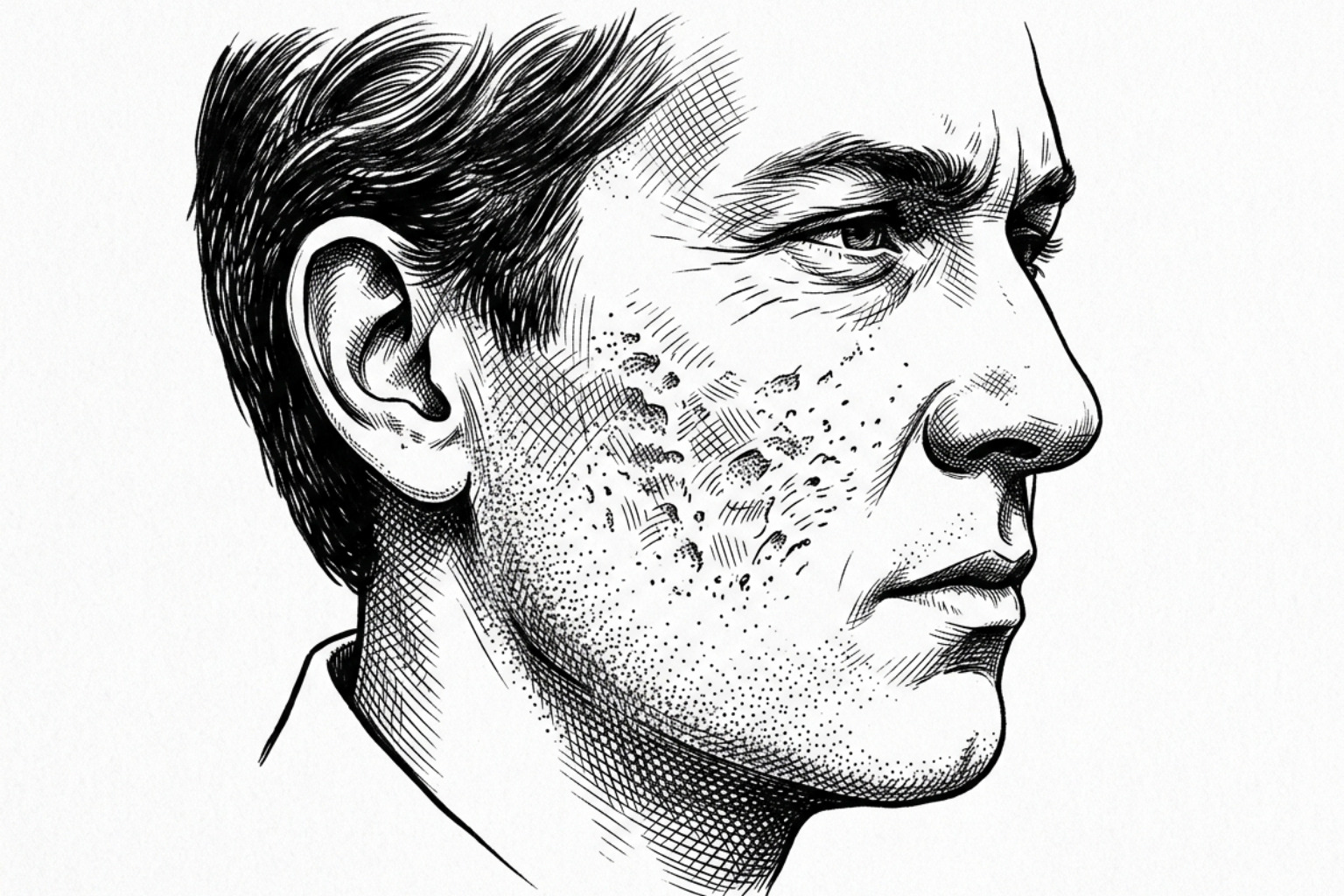
Ice pick scar fillers are injectable treatments used to raise deep, narrow pitted scars from beneath the skin — but not all fillers work equally well for this specific scar type.
Here is a quick overview of the most clinically relevant options:
| Filler Type | Key Mechanism | Evidence for Ice Pick Scars |
|---|---|---|
| PMMA | Collagen stimulation | Only FDA-approved filler material for atrophic acne scars; 64% improvement vs. 33% placebo |
| Hyaluronic acid | Immediate volumization | Limited benefit for narrow, deep pits; better for rolling/boxcar scars |
| Poly-L-lactic acid (PLLA) | Gradual neocollagenesis | Moderate evidence; works better combined with other treatments |
| Calcium hydroxylapatite | Biostimulatory | Longer-lasting but limited data specifically for ice pick morphology |
Ice pick scars are the deepest and narrowest of all atrophic acne scar types — typically less than 2 mm wide, extending vertically into the dermis or subcutaneous tissue in a V-shaped channel. That structural depth is exactly what makes them so resistant to treatment.
About 1 in 5 people who develop acne will form scars. Among those, ice pick scars are consistently rated the most difficult to treat. Unlike rolling or boxcar scars — which have a broader base that fillers can more easily lift — ice pick scars offer very little surface area for an injectable to work against.
The honest clinical picture: fillers alone are rarely sufficient for ice pick scars. Research and clinical guidelines consistently point toward combination approaches — pairing fillers with techniques like subcision or TCA CROSS (Chemical Reconstruction of Skin Scars) — to achieve meaningful improvement.
This article reviews what the evidence actually says about injectable filler options for ice pick scars, how they compare, and what realistic outcomes look like.
Why Are Ice Pick Scars So Hard to Treat?
Understanding why ice pick scar fillers face such significant hurdles requires a look at the underlying biology of the skin. Acne Scars are generally classified into two categories: hypertrophic (raised) and atrophic (depressed). Ice pick scars fall into the atrophic category, resulting from a profound loss of dermal collagen and subcutaneous fat during the inflammatory phase of acne.
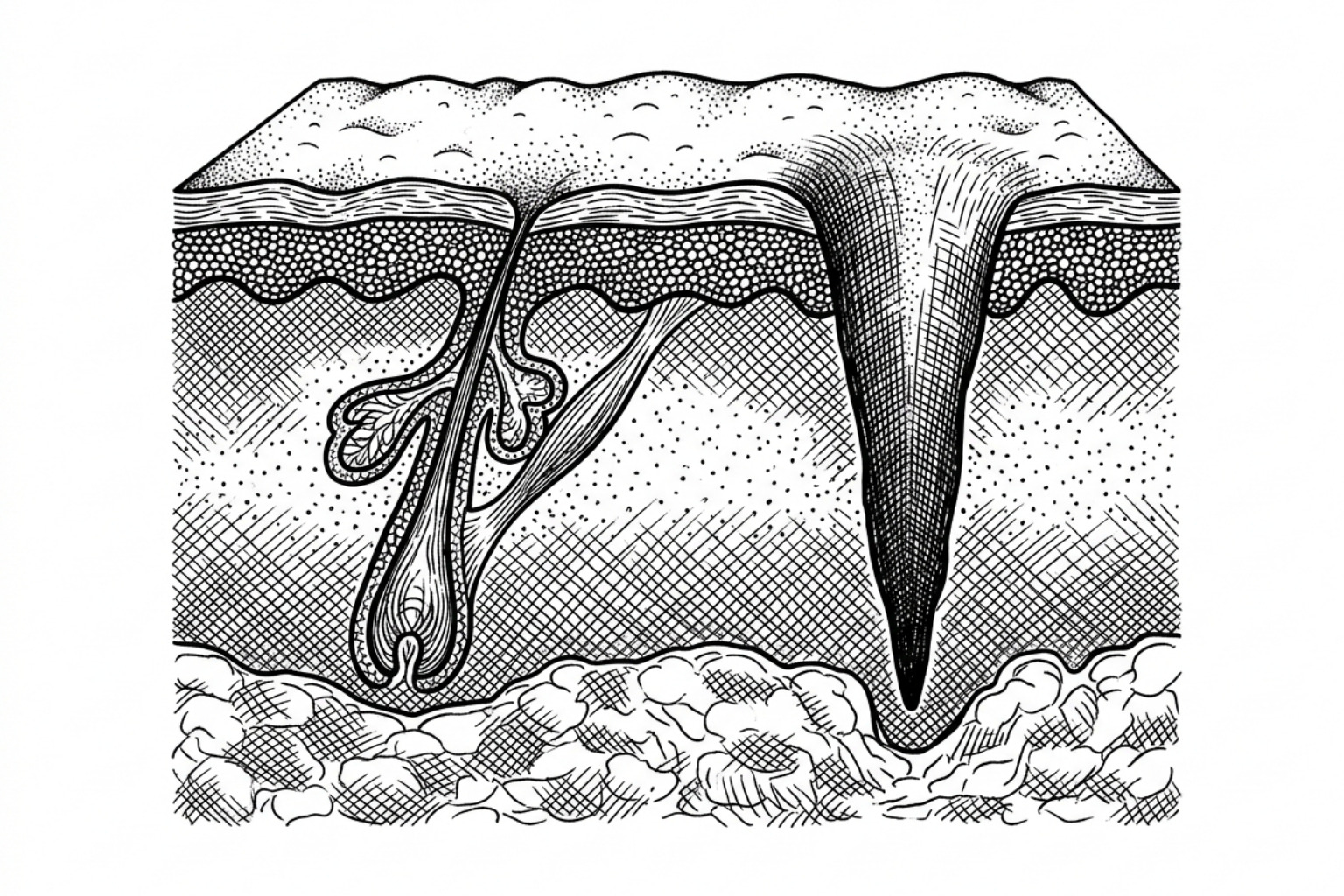
The Architecture of the "V-Shaped" Pit
According to scientific research on acne scar classification, ice pick scars are characterized by their narrow-bore, sharp-walled depressions. Pathologically, these scars often extend through the entire dermis and into the deep subcutaneous layer. This vertical depth is the primary reason why surface-level treatments often fail.
The challenge for dermal fillers is twofold:
- Dermal Fibrosis: The base of an ice pick scar is often composed of dense, fibrotic tissue. This "anchoring" makes it difficult for a soft filler material to push the floor of the scar upward.
- Narrow Diameter: Because the opening is often less than 2mm wide, the volume of filler required is minuscule, but the precision needed to place it exactly at the dermal-subcutaneous junction is high.
While rolling scars (which are wider and shallow) benefit from the "lifting" effect of fillers, ice pick scars often require the mechanical release of fibrotic bands or the chemical remodeling of the scar walls before a filler can provide a visible change in texture.
Fillers vs. Resurfacing: What Works Better?
The honest clinical verdict: fillers alone rarely fix true ice pick scars. Because these pits are narrow, deep, and tethered by fibrous bands, treatments that physically remodel the scar wall — TCA CROSS and punch excision — outperform volume replacement. Fillers add the most value as the refinement step after the scar has been shallowed or released.
| Treatment | Mechanism | Efficacy for Ice Pick Scars |
|---|---|---|
| TCA CROSS | Chemical reconstruction (70–100% TCA) | High (gold standard) |
| Punch Excision | Surgical removal of the scar | High (for isolated deep pits) |
| Dermal Fillers | Volume replacement & collagen induction | Moderate (best when combined) |
| CO2 Laser | Thermal ablation and remodeling | Moderate to high |
A study on 100% TCA CROSS reported that roughly 80% of patients saw excellent improvement (over 70% reduction in scar depth) after four sessions — which is why most protocols lead with structural remodeling and use fillers to refine what remains.
Which Fillers Work Best for Ice Pick Scars?
When considering ice pick scar fillers, clinicians must choose between materials that provide immediate volume and those that stimulate the body’s own regenerative processes. For a detailed look at all available modalities, readers may consult the Non-Invasive Acne Scars Complete Guide.
Polymethylmethacrylate (PMMA)
PMMA is a semi-permanent filler consisting of synthetic microspheres suspended in a bovine collagen carrier. It is currently the most robustly studied injectable for atrophic scarring.
Hyaluronic Acid (HA)
HA is a naturally occurring polysaccharide in the human extracellular matrix. While popular for facial contouring, its role in ice pick scars is largely supportive. It provides immediate hydration and volume, but because it is enzymatically degraded over time, it does not offer a permanent solution for deep pits.
Poly-L-lactic Acid (PLLA)
PLLA is a biostimulatory agent. Rather than filling a space, it triggers a sub-clinical inflammatory response that recruits fibroblasts to produce new Type I collagen. Clinical observations suggest PLLA is more effective for widespread volume loss rather than targeting individual, narrow pits.
Calcium Hydroxylapatite (CaHA)
CaHA is another biostimulator often used for deeper structural support. Some evidence indicates that when diluted (hyperdiluted), it can improve overall skin thickness, which may indirectly reduce the "shadowing" effect of ice pick scars.
Clinical Evidence and Long-Term Outcomes for PMMA Fillers
Polymethylmethacrylate (PMMA) is currently the only filler material with specific FDA approval for the treatment of moderate to severe atrophic acne scars on the cheeks in patients over 21.
The Mechanism of PMMA Microspheres
PMMA works via a dual-action process. Initially, the bovine collagen carrier provides immediate lift to the depression. Over the following 1 to 4 months, the body metabolizes the bovine collagen and replaces it with its own natural collagen, which encapsulates the PMMA microspheres. This creates a permanent structural scaffold.
Clinical Evidence for PMMA
In a double-blind, randomized, multicenter trial, 64% of patients treated with PMMA showed a 50% or greater improvement in their scars after six months, compared to only 33% in the control group. Furthermore, scientific research on long-term filler safety has demonstrated that these results can persist for up to five years, making it a highly cost-effective option for those seeking longevity.
Temporary vs. Semi-Permanent ice pick scar fillers
Choosing between temporary and semi-permanent options involves balancing immediate results against long-term safety and maintenance. For those interested in Professional Treatment, understanding these differences is vital.
- Hyaluronic Acid (Temporary):
- Pros: Reversible with hyaluronidase; low risk of long-term nodules; immediate results.
- Cons: Requires maintenance every 6–12 months; limited ability to "fix" deep vertical pits.
- Biostimulators (Semi-Permanent):
- Pros: Stimulates natural tissue regeneration; results can last 2–5 years.
- Cons: Non-reversible; higher risk of "clumping" or nodule formation if injected too superficially in thin-skinned areas.
How the procedure works (and what pairs with it)
As noted, ice pick scar fillers are rarely used in isolation for deep pits. The most successful clinical protocols involve a multi-step approach to address the different structural components of the scar.
TCA CROSS: The Primary Intervention
TCA CROSS (Chemical Reconstruction of Skin Scars) is often considered the first-line treatment for ice pick scars. A high concentration of trichloroacetic acid (70%–100%) is applied locally to the base of the scar using a toothpick or fine applicator. This causes a controlled chemical burn that triggers collagen remodeling from the bottom up. Once the scar has been "shallowed" by TCA CROSS, fillers can be used to refine the remaining depression.
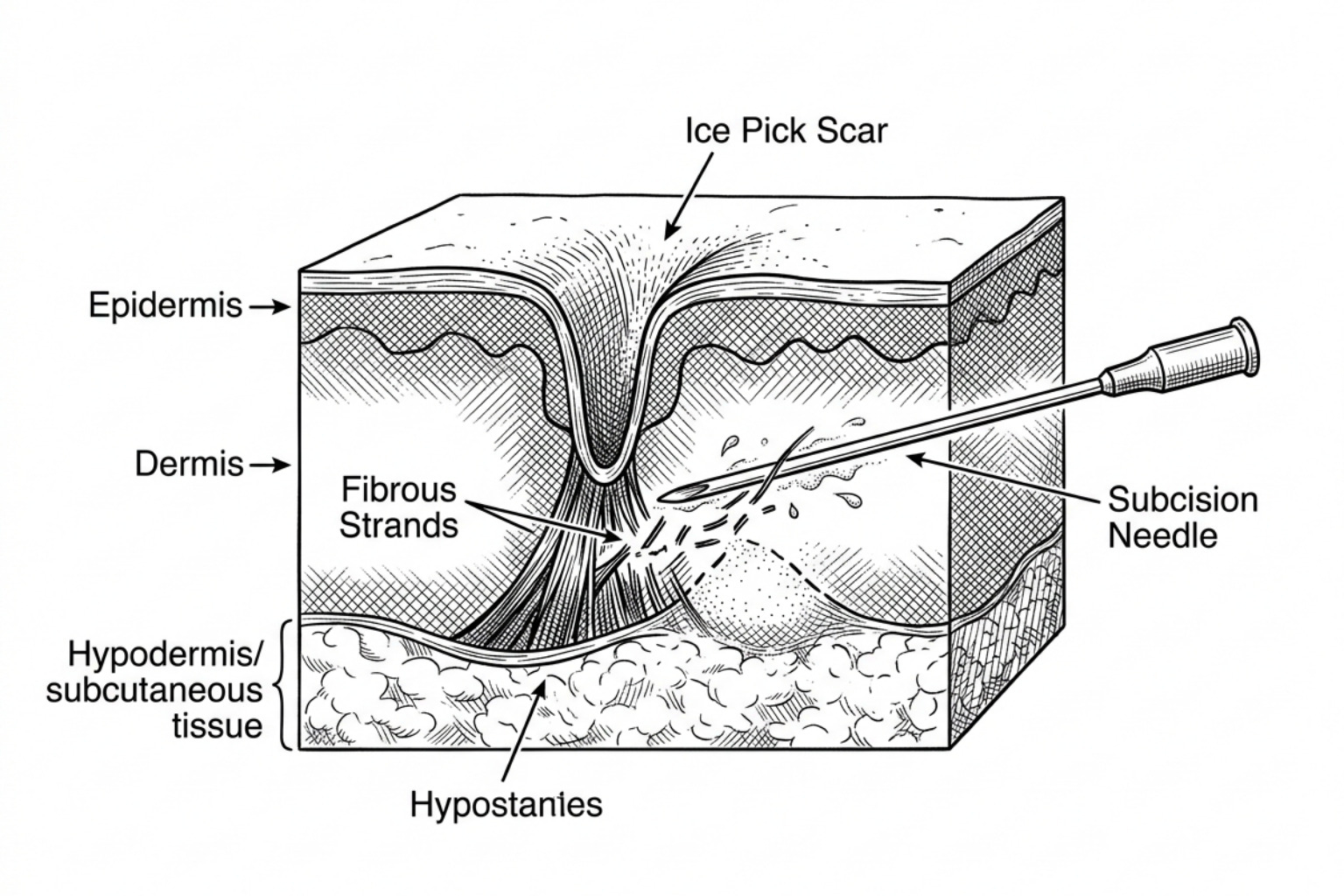
Subcision and Fillers
Subcision involves using a specialized needle to break the fibrotic strands that pull the skin downward. By releasing these attachments, a space is created. Injecting a filler immediately after subcision prevents the strands from re-attaching and provides a "buffer" that stimulates further collagen growth.
Laser Integration
Ablative lasers, such as CO2 or Erbium:YAG, are often used to plane down the edges of scars. For a comprehensive overview, see the Laser Treatment for Scars Complete Guide. Combining fillers with lasers allows for both "bottom-up" filling and "top-down" smoothing.
| Treatment | Target | Best For |
|---|---|---|
| TCA CROSS | Scar base/walls | Deep, narrow ice pick pits |
| Subcision | Fibrotic bands | Tethered rolling and deep boxcar scars |
| Dermal Fillers | Volume loss | Lifting depressions; immediate smoothing |
| Fractional Laser | Surface texture | Blending scar edges with surrounding skin |
Are injectable scar treatments safe?
While generally safe, ice pick scar fillers carry risks that must be managed by a qualified professional.
Potential Side Effects
- Nodules and Granulomas: This is the primary concern with semi-permanent fillers like PMMA or PLLA. If the material is placed too close to the surface, small, hard lumps may form.
- Allergic Reactions: Bovine-derived collagen fillers require a skin test 2–4 weeks before treatment to ensure the patient is not among the 3% who are allergic.
- Vascular Occlusion: A rare but serious risk where filler is accidentally injected into a blood vessel.
- Post-Inflammatory Hyperpigmentation (PIH): Patients with darker skin tones (Fitzpatrick IV-VI) are at a higher risk of developing dark spots at the injection site. For guidance on managing this, see the Pimple Marks Removal Complete Guide.
Scientific research on filler complications emphasizes that most adverse events are technique-related. Choosing a board-certified dermatologist or plastic surgeon who understands the complex anatomy of scarred tissue is essential for safety.
Frequently Asked Questions about Injectable Scar Treatments
How long do results from ice pick scar fillers typically last?
The duration depends entirely on the material used. Hyaluronic acid fillers typically last 6 to 12 months. Biostimulatory fillers like PLLA can last up to 2 years, while PMMA has been clinically shown to maintain results for up to 5 years.
Are fillers effective as a standalone treatment for deep pits?
Evidence suggests that for true ice pick scars, fillers alone provide limited improvement. Because these scars are narrow and deep, the filler has difficulty "lifting" the base. Most experts recommend using TCA CROSS or punch excision first to widen or shallow the scar before using fillers for final refinement.
What is the typical cost of filler treatment for acne scarring?
Costs vary significantly based on the geographic location, the expertise of the provider, and the type of filler used. Generally, patients can expect a range between $500 and $2,000 per session. Since most scar protocols require multiple sessions and combination treatments, the total investment may be higher.
Conclusion
The journey toward smooth skin after severe acne requires patience and a scientifically grounded approach. While ice pick scar fillers offer a powerful tool for volume restoration and collagen stimulation, they are most effective when integrated into a comprehensive treatment plan.
Before starting any procedure, a professional Scar Assessment is necessary to determine your specific scar morphology. Whether opting for the long-term scaffold of PMMA or the immediate lift of hyaluronic acid, the goal remains the same: stimulating the body's natural regenerative capacity to heal from within.
Works Cited
- Goodman, G. J., & Baron, J. A. (2006). Postacne scarring: a quantitative system of classification. Journal of Cosmetic Dermatology. https://pubmed.ncbi.nlm.nih.gov/17173571/
- Karnik, J., et al. (2014). A double-blind, randomized, multicenter, controlled trial of suspended polymethylmethacrylate (PMMA) microspheres for the treatment of atrophic acne scars. Journal of the American Academy of Dermatology, 71(1), 77-83. https://pubmed.ncbi.nlm.nih.gov/24725475/
- Lee, J. B., Chung, W. G., Kwahck, H., & Lee, K. H. (2002). Focal treatment of acne scars with trichloroacetic acid: chemical reconstruction of skin scars (CROSS) method. Dermatologic Surgery, 28(11), 1017-1021. https://pubmed.ncbi.nlm.nih.gov/12460296/
This content is for informational purposes only and does not constitute medical advice. Consult a qualified healthcare professional for diagnosis and treatment.