Laser Scar Removal for Dark Skin: The Melanin-Safe Guide
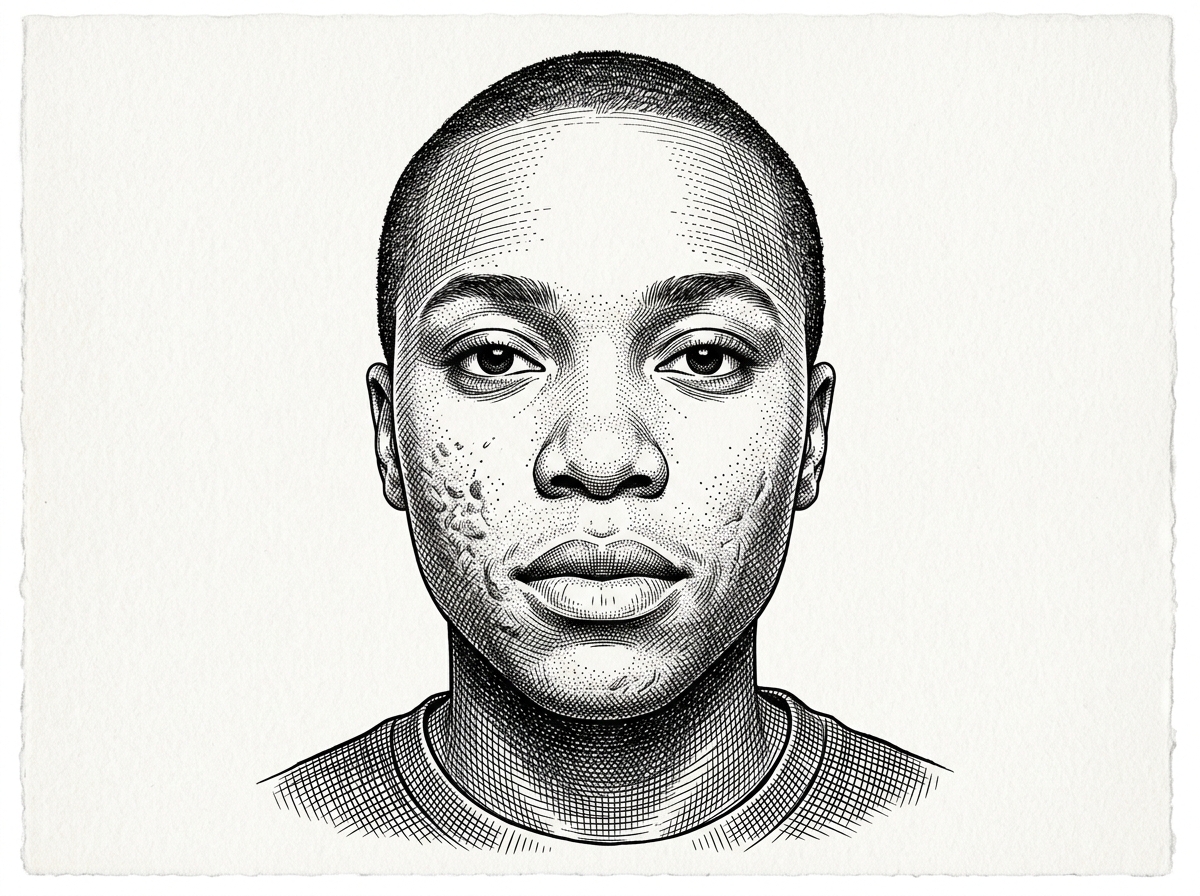
Laser scar removal on dark skin requires melanin-safe technology and expert settings. Learn which lasers work, which to avoid, and how to minimize hyperpigmentation risks.
Does Laser Scar Removal Work on Dark Skin
Laser scar removal for dark skin is safe and effective — but only when the right laser type, settings, and clinical expertise are applied.
Here is a quick summary for those who want the essentials:
| Factor | Key Point |
|---|---|
| Safest laser types | 1064 nm Nd:YAG, nonablative fractional lasers (e.g., 1540 nm Er:glass, 1450 nm diode) |
| Primary risk | Post-inflammatory hyperpigmentation (PIH) — darkening of treated skin |
| Who is most affected | Fitzpatrick skin types IV–VI (medium brown to dark skin) |
| Can scars be eliminated? | No — lasers significantly reduce scar appearance but do not erase scars completely |
| Sessions typically needed | 4–6 sessions, spaced 30–45 days apart, depending on scar type and depth |
| Key safety step | Test spots, conservative settings, and sun avoidance before and after treatment |
| Non-laser alternatives | Microneedling, superficial chemical peels, subcision, silicone sheets |
Scars can affect far more than skin. For many people, visible marks from acne, injury, or surgery quietly erode confidence and shape how they feel in social situations. That frustration is real — and it is valid.
The challenge for people with darker skin tones is that the melanin (the pigment that gives skin its color) absorbs laser energy differently than lighter skin does. This makes some laser treatments genuinely risky when used incorrectly. Epidermal melanin competes with the target tissue to absorb laser light, which can cause thermal injury, unwanted darkening, or lightening of the skin.
But this does not mean laser treatment is off-limits.
Research indicates that with the correct laser wavelength, conservative treatment parameters, and a clinician experienced in treating skin of color, laser scar revision can produce meaningful improvements — even for deeper Fitzpatrick skin types. A peer-reviewed review of nonablative fractional lasers in darker skin types found Level 2 evidence supporting their safety and efficacy for acne scars in patients with Fitzpatrick types IV and above.
The key is understanding why darker skin responds differently — and what clinical protocols protect against complications.
Why laser risk is higher for darker skin
To understand why laser scar removal for dark skin requires a specialized approach, one must look at the biology of the epidermis. Skin color is determined by melanin, a pigment produced by cells called melanocytes. While everyone has roughly the same number of melanocytes, individuals with Fitzpatrick skin types IV, V, and VI produce more eumelanin, which is highly effective at absorbing light energy.
In laser therapy, the principle of selective photothermolysis is used to target specific "chromophores" like water, hemoglobin (in blood vessels), or melanin. The challenge in darker skin is that the high concentration of epidermal melanin acts as a competing chromophore. If a laser wavelength is too short, it is absorbed by the surface melanin before it can reach the deeper scar tissue. This unintended absorption generates excessive heat in the upper layers of the skin, leading to thermal injury.
According to research on laser treatment of acne scarring in skin of colour, this thermal injury can trigger two main complications:
- Post-inflammatory hyperpigmentation (PIH): The skin overproduces melanin in response to heat or trauma, resulting in dark brown or grey patches.
- Hypopigmentation: The melanocytes are damaged or destroyed, leaving behind white patches where pigment is lost.
Because of these risks, clinicians must prioritize longer wavelengths and advanced cooling technologies to bypass the epidermis and target the dermis safely.
Best lasers for darker skin tones
Choosing the right device is the most critical step in ensuring safety. Not all lasers are created equal, and some traditional "gold standard" treatments for light skin can be hazardous for those with more melanin.
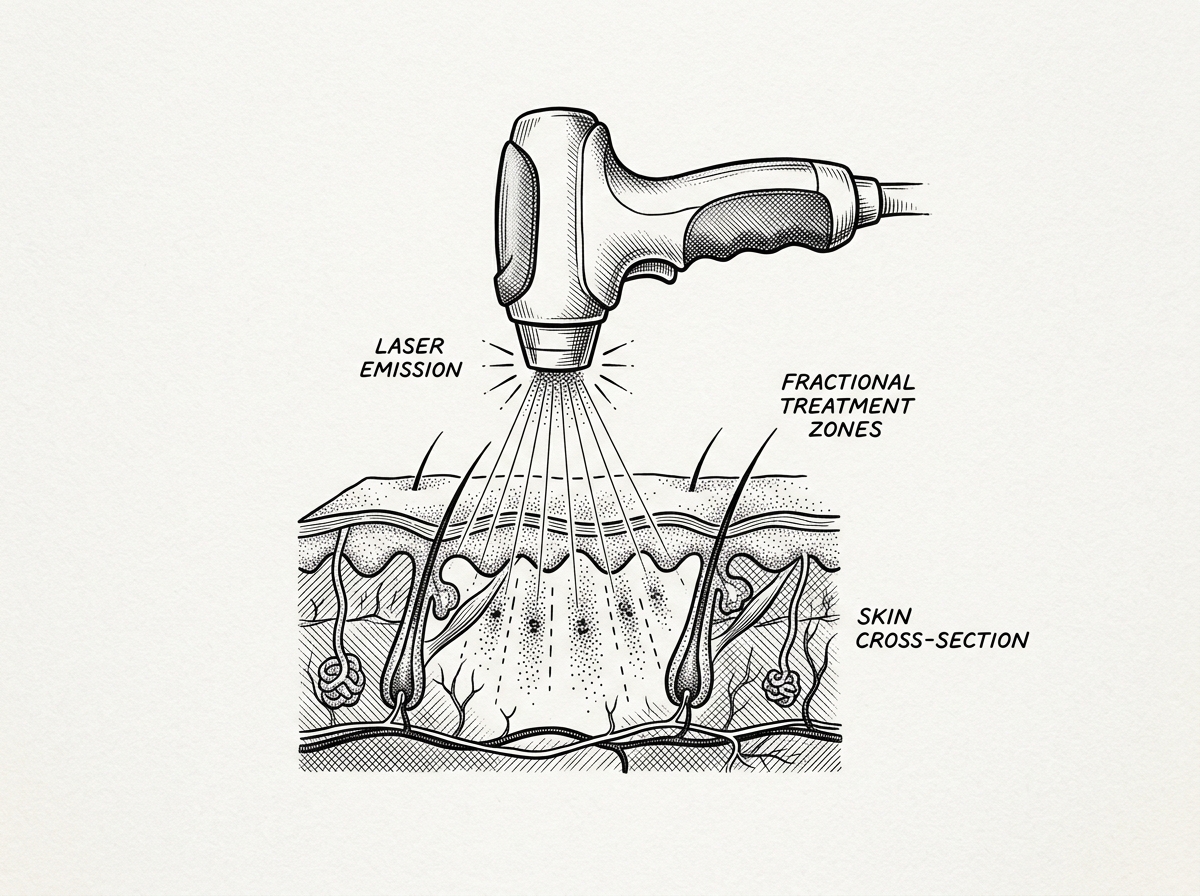
Evidence-based reviews suggest several modalities that are safer for Fitzpatrick types IV-VI:
- 1064 nm Nd:YAG: This laser has a long wavelength that penetrates deeply into the skin while being poorly absorbed by melanin. It is often used for vascular issues in scars and deep tissue remodeling.
- Fractional Non-Ablative Lasers (NAFL): These create "microthermal zones" of injury while leaving the surrounding skin intact, which significantly reduces the risk of PIH.
- Pulsed Dye Laser (PDL): Often used at low fluences to treat the redness and vascularity in hypertrophic or keloid scars.
- Clear + Brilliant and eMatrix: These are gentler options often used for superficial texture and mild scarring with minimal downtime.
Optimizing fractional CO2 outcomes for pigmented scars involves using lower densities and longer pulse durations to prevent heat buildup. For those dealing specifically with raised tissue, more information is available regarding laser for keloid scars.
Gentler fractional lasers for scars
Fractional non-ablative lasers are often considered the preferred choice for atrophic (pitted) acne scars in dark skin. Unlike older ablative lasers that vaporize the entire surface of the skin, fractional lasers create thousands of microscopic treatment zones (MTZ). These tiny columns of heat trigger neocollagenesis—the production of new collagen—deep within the dermis without destroying the protective top layer of skin.
Because these lasers target water rather than melanin, the risk of pigmentary changes is lower. A study of 60 Indian patients (Fitzpatrick III-V) found an excellent response in 43.3% of participants using fractional laser technology for atrophic acne scars. For a deeper look at how these devices work across all skin types, see this complete laser guide.
Why 1064 nm Nd:YAG suits darker skin
The 1064 nm Nd:YAG laser is a powerhouse for treating thicker, more stubborn scars. Its long wavelength allows it to bypass surface pigment and reach the deep dermis. Clinical observations show it is particularly effective at suppressing neovascularization—the formation of excess blood vessels—which is a key driver in scar growth.
Research involving 102 cases indicated that the Nd:YAG laser, especially when used in "contact mode" with a cooling tip, can significantly improve the height and pliability of scars. Studies have shown a 40-45% improvement in atrophic scars after just three sessions. This modality is frequently used in surgical scar laser treatment to blend the scar texture with the surrounding skin.
Preventing dark spots after laser
Safety in laser scar removal for dark skin is not just about the laser; it is about the preparation and aftercare. A standardized clinical protocol is essential to minimize the risk of PIH, which can occur in up to 71% of patients if aggressive settings are used without preparation.
Dermatologists often follow these steps as outlined in laser scar revision and PIH management resources:
- Pre-treatment priming: Using lightening agents for 2-4 weeks prior to the procedure.
- Sun avoidance: Absolute protection from UV rays for at least a month before treatment.
- Retinoid cessation: Stopping products like Tretinoin or Retinol 1-2 weeks before the session.
- Test spots: Performing a small trial on a hidden area of skin and waiting 48 hours to check for delayed pigmentary reactions.
- Active cooling: Using chilled tips or cold air during the procedure to protect the epidermis.
Prepping skin to lower the risk
Priming the skin is like preparing a canvas. Clinicians may prescribe hydroquinone (a lightening agent) to "quiet" the melanocytes before they are exposed to laser heat. This reduces the baseline pigment levels and lowers the chance of a reactive darkening post-treatment.
Additionally, broad-spectrum SPF 30+ is non-negotiable. Even a slight tan can increase the risk of a laser burn. For those treating scars with a red or purple hue, specialized red scar fading laser protocols are often combined with these priming steps.
Aftercare for darker skin
The 48 hours following a laser session are critical. The goal is to keep the skin cool and hydrated to prevent an inflammatory cascade that leads to PIH.
- Gentle Cleansing: Use a soap-free, fragrance-free cleanser.
- Moisturization: Apply bland emollients or petrolatum-based ointments to keep the skin barrier intact.
- Antioxidants: Topical Vitamin C or other antioxidants can help neutralize free radicals generated by the laser.
- Heat Avoidance: No saunas, hot showers, or intense exercise for at least 48 hours.
When these protocols are followed, research shows that even if transient PIH occurs, 90% of cases resolve within three months. This careful approach is especially vital for recovery after procedures like c-section scar laser treatments, where the skin may be under tension.
Do lasers work on raised scars?
Darker skin tones are statistically more susceptible to keloids—raised scars that grow beyond the original wound boundary. This is due to an overstimulation of fibroblasts, the cells responsible for producing collagen.
While keloids are notoriously difficult to treat, lasers offer a non-surgical alternative to flatten and soften them. Pulsed dye laser (PDL) combined with intralesional steroid injections has shown remarkable success. Statistics indicate:
- 60% improvement in lesion height.
- 40% improvement in redness (erythema).
- 75% reduction in symptoms like itching and pain.
For many, this combination therapy is a preferred route for laser treatment for surgical scars, as it addresses both the bulk and the discomfort of the tissue.
Non-laser options for skin of color
Sometimes, the best "laser" treatment is actually a non-laser modality. For patients with a very high risk of PIH or those seeking less downtime, several alternatives provide excellent results.
| Modality | Best For | Risk Level for Dark Skin |
|---|---|---|
| Microneedling | Pitted acne scars, texture | Low for pigment, because it is mechanical rather than thermal. Not advised if you have ever had a keloid. |
| Chemical Peels | Superficial pigment, fine lines | Moderate (must use superficial peels) |
| Subcision | Deep, "tethered" rolling scars | Low (physical release of scar tissue) |
| Silicone Sheets | Hypertrophic and keloid scars | Very Low (non-invasive) |
Microneedling, in particular, is often called "color-blind" because it does not use heat, which is why the risk of pigment change is lower than with a laser. That is a statement about pigment, not a clean bill of health: microneedling is contraindicated if you have, or have ever had, a keloid. The American Academy of Dermatology advises against it on that basis, and a keloid history anywhere on the body counts, not only at the treatment site. Because keloids are more common in darker skin, that exclusion applies to more readers of this page than of most, and it is worth raising with a clinician before booking. However, for those with significant textural irregularities, a CO2 laser for scars used at very conservative "fractional" settings may still be the most effective choice.
Common questions before treatment
Is laser scar removal safe for Fitzpatrick skin types V and VI?
Yes, it is safe when performed by a specialist using appropriate wavelengths (like the 1064 nm Nd:YAG) and fractional technologies. The risk of complications is higher than in lighter skin, but it can be managed through priming, cooling, and conservative energy settings.
How many sessions are typically required for visible improvement?
Most patients require a series of 4 to 6 sessions. Improvements in skin texture and scar depth are gradual, as the body takes 3 to 6 months to remodel collagen. Patience is key; aggressive, single-session treatments are generally avoided in dark skin to prevent burns.
Does health insurance cover laser scar revision?
In most cases, laser scar removal is considered a cosmetic procedure and is not covered by health insurance. However, if a scar causes functional impairment (such as restricting joint movement) or significant pain/itching (common with keloids), some insurers may provide coverage for specific parts of the treatment.
What the evidence shows
The journey toward smoother skin does not have to be high-stress for those with melanated tones. While the biology of dark skin requires a more cautious approach, the evolution of fractional technology and long-wavelength lasers has made laser scar removal for dark skin more accessible than ever before.
The most important factor in your success is not the machine itself, but the hands operating it. Seeking a board-certified dermatologist who specializes in skin of color is essential for creating a personalized treatment plan and setting realistic expectations. By combining advanced clinical protocols with diligent post-care, it is possible to significantly diminish the appearance of scars while protecting the natural beauty and integrity of your skin. For more information on the various paths available, explore these dark scar removal methods.
This content is for informational purposes only and does not constitute medical advice. Consult a qualified healthcare professional for diagnosis and treatment.
Works Cited
- Arsiwala, S. Z., & Desai, S. R. (2019). Fractional Carbon Dioxide Laser: Optimizing Treatment Outcomes for Pigmented Atrophic Acne Scars in Skin of Color. Journal of Cutaneous and Aesthetic Surgery, 12(2), 85-94. https://pubmed.ncbi.nlm.nih.gov/31413476/
- Sequeira Campos MB, Xiao A, Ettefagh L. "Laser Revision of Scars." StatPearls [Internet], StatPearls Publishing, 2025.
- Fitzpatrick, T. B. (1988). The Validity and Practicality of Sun-Reactive Skin Types I Through VI. Archives of Dermatology, 124(6), 869–871. https://pubmed.ncbi.nlm.nih.gov/3377516/
- Davis, E. C., & Callender, V. D. (2010). Postinflammatory Hyperpigmentation: A Review. Journal of Clinical and Aesthetic Dermatology, 3(7), 20–31. https://pmc.ncbi.nlm.nih.gov/articles/PMC2921758/
- Gold, M. H., et al. (2014). Updated international clinical recommendations on scar management: Part 1. Dermatologic Surgery, 40(8), 817–824. https://pubmed.ncbi.nlm.nih.gov/25068543/