When to Apply Scar Cream After Stitches: A Complete Timeline
Timing matters when applying scar cream after stitches. Learn when your wound is ready, which ingredients work best, and how to build an effective post-surgical scar care routine.

When to Apply Scar Cream After Stitches: What the Evidence Says
When to apply scar cream after stitches is one of the most common questions asked during post-operative recovery — and the timing genuinely matters.
The short answer: do not apply scar cream until the wound is fully closed. Here is a quick reference based on clinical guidance:
| Stage | Timeframe | What to Do |
|---|---|---|
| Wound open / stitches in place | Days 1–14 (varies) | Keep clean and moist with plain petrolatum; no scar cream |
| Stitches removed, wound sealed | ~2–3 weeks post-injury | Begin silicone gel or sheets once no scabs, drainage, or open areas remain |
| Early scar remodeling | Weeks 3–6 | Introduce gentle scar massage and consistent topical treatment |
| Active scar maturation | Months 1–18 | Continue silicone therapy, sun protection, and massage |
Timing scar cream too early — before the wound has fully re-epithelialized — can introduce infection risk, cause contact dermatitis, or disrupt the fragile new tissue underneath. Waiting too long, however, means missing the window when the scar is most responsive to treatment.
Scars take a full six weeks to develop their initial collagen structure, and continue to remodel for 12 to 18 months after surgery. That remodeling window is exactly when consistent, evidence-based topical care has the most impact.
The sections below explain why timing matters — grounded in the biology of wound repair — and provide a clinically informed framework for each phase of recovery.
Biological Phases of Cutaneous Wound Repair
Understanding when to apply scar cream after stitches requires a look at how the body repairs itself. Cutaneous wound healing is a complex, highly regulated process consisting of four overlapping phases: hemostasis, inflammation, proliferation, and remodeling (El Ayadi et al., 2020).
- Hemostasis (Minutes to Hours): Immediately after the injury or surgical incision, the body initiates blood clotting to stop bleeding.
- Inflammation (Days 1–3): White blood cells migrate to the site to clear debris and bacteria. During this time, the wound is often red and swollen.
- Proliferation (Days 4–21): This is a critical stage for scar formation. Fibroblasts—the cells responsible for connective tissue—begin producing collagen to fill the wound. New blood vessels form, and "re-epithelialization" occurs as new skin cells crawl across the wound surface to seal it (Waibel et al., 2021).
- Remodeling (Day 21 to 18 Months): Also known as the maturation phase, the initial disorganized collagen (Type III) is gradually replaced by stronger, more organized collagen (Type I).
Applying scar cream during the first two phases is counterproductive. These products are designed for "remodeling" tissue, not open wounds. Introducing topical creams too early can interfere with the extracellular matrix's ability to knit the skin back together.
Clinical Guidelines: When to Apply Scar Cream After Stitches
The transition from "wound care" to "scar care" occurs only after the skin is water-tight. For those recovering from surgery, Post-Surgery Scar Care begins with keeping the incision clean and protected while the stitches are still in place.
Clinical consensus indicates that scar treatments should only start once the following criteria are met:
- The sutures (stitches) have been removed or have fully dissolved.
- The wound is completely closed with no "wet" or raw spots.
- All scabbing has naturally fallen off.
- There is no active drainage, bleeding, or signs of infection.

Assessing Wound Closure: When to Apply Scar Cream After Stitches Safely
Most patients reach a safe "treatment window" between 2 and 4 weeks post-surgery. However, the exact timing depends on the type of closure used.
- Permanent Sutures: These are typically removed within 5–7 days for the face and up to 14 days for the body. Scar cream application usually begins 1–2 weeks after removal, provided the edges are sealed.
- Absorbable Sutures: These dissolve on their own, sometimes taking several weeks. Because they can occasionally cause minor irritation or "spit" to the surface, it is vital to wait until the skin surface is entirely smooth.
- Steri-Strips and Paper Tape: If a surgeon has applied adhesive strips, they should be allowed to fall off naturally. Research suggests that the proliferation phase (days 10–21) is when the skin is strong enough to begin introducing topical silicone support (Lumintang et al., 2021).
Protocol for Chronic Remodeling: When to Apply Scar Cream After Stitches for Optimal Maturation
Once the initial closure is achieved, the scar enters the maturation phase. This is a marathon, not a sprint. Clinical observations show that scars continue to change in texture, color, and height for 12 to 18 months.
During this long-term window, interventions like Hard Scar Softening Massage are used to maintain tissue pliability. The goal of scar cream at this stage is to regulate moisture and oxygen levels, preventing the overproduction of collagen that leads to raised (hypertrophic) scars.
Risks of Premature Topical Intervention on Healing Tissue
It is tempting to start scar treatment the moment the stitches are out, but premature application carries significant risks.
- Infection: Open or partially closed wounds provide a pathway for bacteria. Most scar creams are not sterile and can trap bacteria against the skin.
- Contact Dermatitis: Healing skin is hypersensitive. Ingredients in scar creams—such as fragrances, preservatives, or even Vitamin E—can cause redness and itching on fragile new tissue. A study in the Journal of Drugs in Dermatology found that certain popular ointments caused wound redness in 52% of cases compared to just 12% for plain white petrolatum (Morales-Burgos et al., 2013).
- Dehiscence (Wound Opening): Some creams can soften the newly formed bridge of skin too much, potentially causing the wound edges to pull apart, especially in high-tension areas like knees or elbows.
- Maceration: Over-hydrating a wound that is still trying to seal can lead to "soggy" tissue, which slows down the healing process and increases the risk of a wider scar.
For the first 2-3 weeks, research in JAMA supports the use of plain white petrolatum over antibiotic ointments. Petrolatum provides an occlusive barrier that prevents water loss with a 0% allergic reaction rate, whereas antibiotic ointments like bacitracin can cause allergic contact dermatitis in nearly 1% of patients (Smack et al., 1996).
Comparative Analysis of Evidence-Based Scar Ingredients
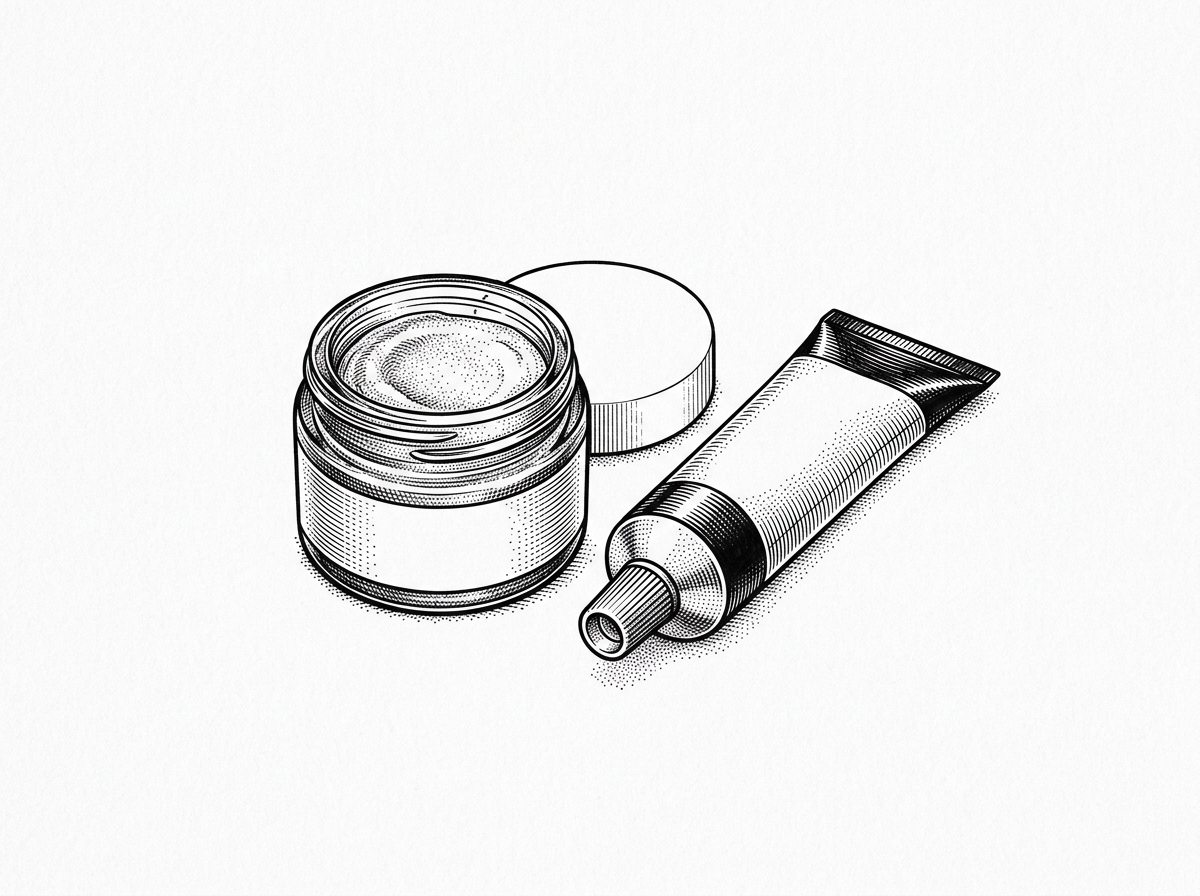
Not all scar creams are created equal. When determining when to apply scar cream after stitches, it is equally important to choose the right modality.
| Ingredient / Method | Clinical Evidence Level | Best For |
|---|---|---|
| Silicone Gel/Sheets | Gold Standard | Flattening raised scars, reducing redness, and hydrating tissue. |
| Onion Extract | Moderate | Improving scar color and softness, though less effective than silicone. |
| Vitamin E | Weak/Mixed | Moisturizing, but may cause contact dermatitis in up to 30% of users. |
| Petrolatum | High (Early Phase) | Keeping early wounds moist to prevent thick scabs. |
Silicone remains the most researched and recommended topical treatment. Scientific research on silicone-gel sheeting shows it significantly improves scar texture and color by creating a protective, hydrating barrier that mimics the skin's natural occlusion (Clugston et al., 1995).
For older scars that have become dark or discolored, an Old Scar Lightening Serum containing brighteners like Vitamin C or Niacinamide may be used, but only after the 6-week mark.
Mechanical and Environmental Factors in Scar Management
Topical creams are only one part of the equation. Physical and environmental factors play a massive role in how a scar matures.
Clinical Efficacy of Silicone-Based Occlusion
Silicone works through occlusion (sealing the skin) rather than absorption. By preventing "transepidermal water loss," silicone tells the body's fibroblasts to slow down collagen production. Clinical research supports that consistent use of silicone during the first month of remodeling significantly improves the final thickness and color of the scar (Waibel et al., 2021).
The Role of Scar Massage
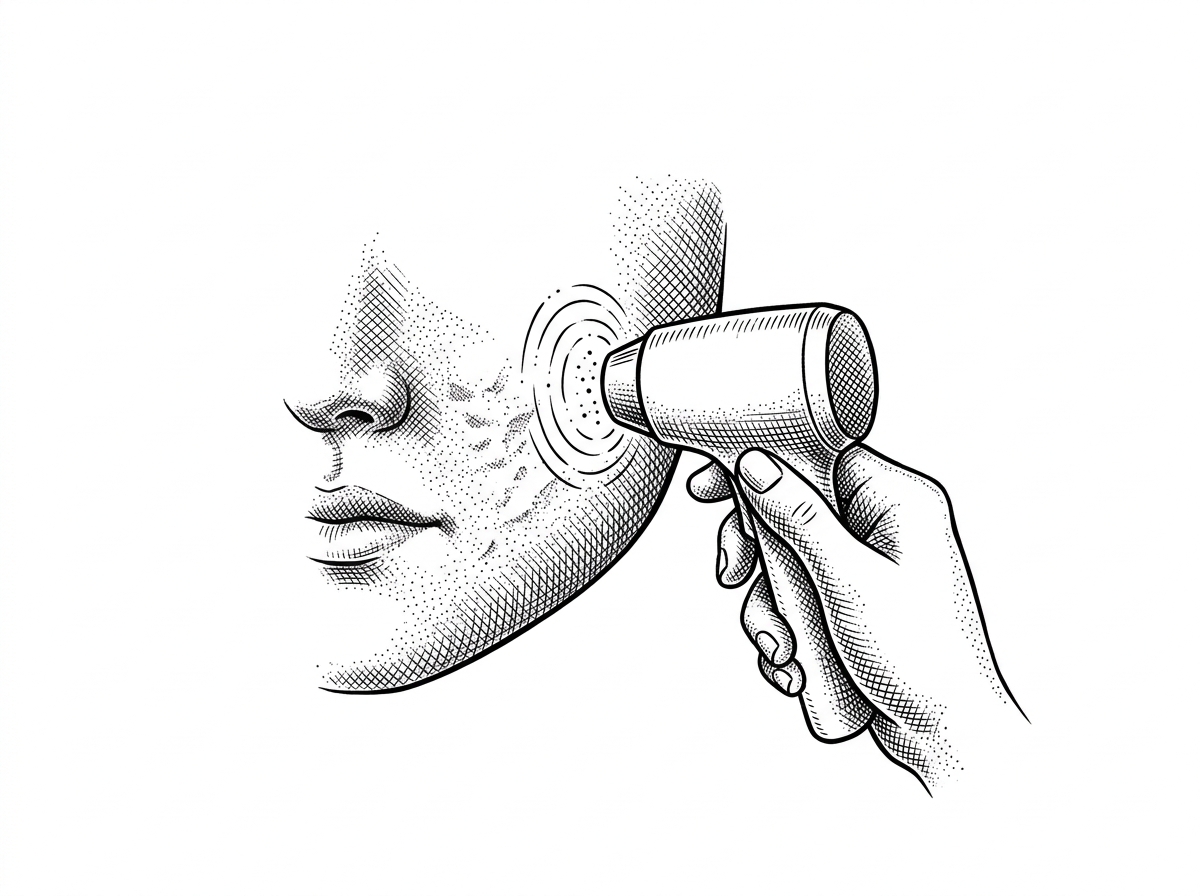
Once the wound is fully closed (typically week 3 or 4), Scar Tissue Massage Therapy can begin. Gentle, firm circular motions help break up dense collagen bundles and prevent the scar from "sticking" to underlying muscles or tendons (adhesions). Research indicates that mechanical forces help induce scar remodeling by realigning collagen fibers (Costa et al., 1999).
Integrating Photoprotection into Post-Suture Care
New scar tissue lacks the protective melanin of normal skin. UV exposure can cause permanent hyperpigmentation (darkening) of the scar. Experts recommend:
- Using a mineral-based sunscreen with at least SPF 30 (Zinc Oxide or Titanium Dioxide).
- Applying sunscreen daily starting at week 3.
- Maintaining strict sun protection for at least 12 to 18 months.
Frequently Asked Questions about Post-Stitch Scar Care
Can scar cream be applied over dissolvable stitches?
No. You should wait until the stitches have completely disappeared and the skin surface is intact. If the cream is applied while the body is still absorbing the sutures, it can cause localized inflammation or delay the absorption process.
How does the location of the stitches affect the treatment timeline?
Areas of high tension—like the knees, shoulders, or back—heal more slowly and are more prone to widening. In these areas, surgeons often recommend waiting longer (up to 4 weeks) before starting aggressive massage and may suggest using silicone sheets instead of gels to provide extra structural support. Conversely, facial incisions heal faster due to high blood flow and may be ready for treatment by day 14.
What are the clinical signs that a wound is not yet ready for scar cream?
A wound is not ready if you see any of the following:
- Yellow or white crusting (scabs).
- Any "open" areas where the skin hasn't fully met.
- Tenderness, heat, or spreading redness (potential infection).
- Oozing of clear or cloudy fluid.
Conclusion
Determining when to apply scar cream after stitches is a vital step in ensuring a successful recovery. By respecting the biological phases of wound repair and waiting for full closure—typically 2 to 4 weeks—patients can minimize the risk of complications and maximize the aesthetic outcome.
Evidence-based recovery involves a transition from simple moisture (petrolatum) to specialized occlusion (silicone) and mechanical support (massage). For more detailed guidance, patients can Request a new patient education resource or subscribe to our newsletter for the latest research on skin regeneration.
Works Cited
- Clugston, P., et al. (1995). Evaluation of Silicone-Gel Sheeting on Early Wound Healing of Linear Incisions. Annals of Plastic Surgery.
- Costa, A. M., et al. (1999). Mechanical forces induce scar remodeling. American Journal of Pathology.
- El Ayadi, A., et al. (2020). Current Approaches Targeting the Wound Healing Phases to Attenuate Fibrosis and Scarring. International Journal of Molecular Sciences.
- Lumintang, L., et al. (2021). The Effect of Topical Corticosteroid Time of Application on Fibroblast and Type III Collagen Expression. Open Access Macedonian Journal of Medical Sciences.
- Morales-Burgos, A., et al. (2013). Postoperative comparison of plain white petrolatum and Aquaphor. Journal of Drugs in Dermatology.
- Nahirniy, Y. P. (2022). Comparison of Conservative Methods of Prevention of Pathological Scarring of the Head and Neck. The Medical and Ecological Problems.
- Smack, D. P., et al. (1996). Infection and allergy incidence in ambulatory surgery patients using white petrolatum vs bacitracin ointment. JAMA.
- Waibel, J., et al. (2021). Prospective, Randomized, Double-Blind, Placebo-Controlled Study on Efficacy of Copaiba Oil in Silicone-Based Gel to Reduce Scar Formation. Dermatology and Therapy.
This content is for informational purposes only and does not constitute medical advice. Consult a qualified healthcare professional for diagnosis and treatment.