Flatten Your Scars with These Proven Techniques
Hard, raised scars can become softer and flatter with the right approach. Learn how scar tissue massage uses controlled pressure to remodel rigid scar tissue over time.

Why Hard Scar Softening Massage Works — And How to Do It
Hard scar softening massage is a technique that uses controlled manual pressure to remodel raised, rigid scar tissue — making it softer, flatter, and more flexible over time.
Here is a quick overview of how to do it:
- Wait until the wound is fully closed (typically 2–4 weeks post-injury or surgery)
- Apply a non-perfumed moisturiser or lubricant to the scar
- Use finger pads — not fingernails — to apply firm, tolerable pressure
- Move in circular, vertical, and horizontal directions across and along the scar
- Massage for 5–10 minutes, 2–3 times per day
- Continue for up to 6 months until the scar becomes paler, flatter, and softer
- Stop immediately if blistering, redness, or open skin develops
Scars form because the body repairs damaged tissue quickly rather than perfectly. The replacement collagen fibres are laid down in a disorganised pattern — dense, stiff, and poorly supplied with blood — unlike the flexible basket-weave structure of normal skin. This is why mature scars feel hard and tight.
Evidence suggests that consistent mechanical pressure from massage may help realign those collagen fibres and break down adhesions — the fibrous bonds that form between the scar and the tissues beneath it, including muscle and bone. Clinical guidelines from institutions such as the NHS recommend starting scar massage around four weeks after injury, continuing for approximately six months.
Scars can continue to change for up to two years. Early, regular intervention gives the best chance of improving both function and appearance.
This content is for informational purposes only and does not constitute medical advice. Consult a qualified healthcare professional for diagnosis and treatment.
Hard scar softening massage terms you need:
The Science of Hard Scar Softening Massage
To understand why a hard scar softening massage is effective, one must look at the cellular level. When the skin is injured, the body enters a state of emergency to close the gap. It floods the area with collagen, the primary structural protein in the extracellular matrix (ECM). However, in the rush to heal, this collagen is often deposited in a parallel, rigid orientation rather than the flexible, "basket-weave" pattern found in healthy dermis.
The primary mechanism behind massage is known as mechanotransduction. This is a biological process where cells convert mechanical stimuli—like the pressure from a finger—into biochemical signals. Research indicates that mechanical tension applied to a scar can influence the behavior of fibroblasts, the cells responsible for collagen production. Clinical observations suggest that controlled pressure may induce myofibroblast apoptosis (programmed cell death of the cells that cause scars to contract), effectively slowing down the "over-tightening" of the tissue.
Furthermore, manual manipulation promotes collagen fiber realignment. By stretching and compressing the tissue, massage encourages the dense bundles of collagen to reorient themselves into a more functional, pliable structure. This process also improves blood perfusion to the area. Because scar tissue typically has a poorer blood supply than healthy skin, increasing circulation helps deliver the nutrients and oxygen necessary for healthy tissue remodeling.
According to a systematic review on manual massages, these techniques have been shown to improve tissue elasticity and reduce skin fold thickness in burn and surgical scars. For those seeking a deeper dive into these physiological changes, more information about scar tissue massage therapy can provide additional insights into how the body responds to these manual interventions.
When to Begin and How to Prepare
Timing is the most critical safety factor when beginning a hard scar softening massage. Starting too early can disrupt the fragile new tissue, leading to inflammation or reopening the wound. Most clinical guidelines, including NHS guidelines on scar management, suggest waiting until the wound is fully healed. This usually occurs between 2 to 4 weeks post-injury or surgery.
Assessing Readiness: The Vitropression Test
A clinical method used by therapists to assess scar readiness is the vitropression test. A therapist or patient applies firm pressure to the scar for a few seconds and then releases it.
- If the skin takes less than 1.2 seconds to return to its original color (refill), the tissue is still highly inflammatory and fragile. Massage should only be performed around the scar, not directly on it.
- If the refill takes approximately 2 to 3 seconds, the tissue is likely stable enough for direct, firmer manipulation.
Preparation and Lubrication
Before beginning, the skin barrier function must be supported. Scar tissue is often prone to transepidermal water loss (TEWL), meaning it loses moisture faster than normal skin, which can lead to itching and further hardening.

Hydration and lubrication are essential. Using a non-perfumed moisturizer, such as E45 or a plant-based oil, serves two purposes:
- It reduces friction, preventing blisters or skin irritation.
- It hydrates the stratum corneum, making the tissue more pliable and responsive to the massage.
Clinicians recommend washing the area with mild soap and drying it thoroughly before applying the lubricant. This prevents the clogging of pores and reduces the risk of folliculitis (inflammation of the hair follicles) around the scar site.
Step-by-Step Guide to Effective Mobilization
The goal of a hard scar softening massage is to move the scar independently of the underlying tissue. If the skin is simply being rubbed on the surface, the treatment will be ineffective for deep-seated adhesions.
General Principles
- Pressure Levels: The pressure should be "tolerable." A helpful visual cue is the "blanching" of the fingernail; apply enough pressure so that the tip of the massaging finger turns white.
- Frequency: Consistency is more important than intensity. Most experts recommend 5 to 10 minutes per session, 2 to 3 times daily.
- Duration: Improvement is a slow process. It may take 6 months to a year of daily sessions to achieve significant softening.
Circular and Linear Techniques for Hard Scar Softening Massage
Using the pads of the index and middle fingers (or the thumb for larger scars), the patient should perform the following:
- Circular Motions: Apply firm pressure and move the fingers in small, slow circles clockwise, then counter-clockwise. Ensure the skin moves with the fingers over the underlying muscle or bone.
- Vertical and Horizontal Glides: Place the fingers on the scar and slide them up and down (longitudinal) and then side-to-side (transverse). This helps break the parallel alignment of collagen fibers.
- Pinching and Rolling: Once the scar is mature enough, one can gently pick up the scar between the thumb and fingers and "roll" it. This is particularly effective for releasing the scar from the deep fascia.
Advanced Cross-Friction and Stretching for Hard Scar Softening Massage
For scars that feel particularly "stuck" or adherent to the bone or muscle, advanced techniques may be required.
Cross-Friction Massage involves applying pressure perpendicular to the direction of the scar. This technique is specifically designed to "break up" the dense, knotted collagen bundles that characterize hard scars.
Morice Orthodermic Stretching is a specialized technique often used in burn rehabilitation. It involves placing fixed pressure on the scar and stretching the skin in the direction opposite to the scar's natural contraction. Unlike standard massage, there is no sliding friction; the goal is to provide a sustained stretch to the fibroblasts to encourage remodeling.
Maximizing Results with Complementary Therapies
While manual massage is a powerful tool, it is often most effective when used in conjunction with other evidence-based treatments.
Silicone Therapy
Silicone is considered the gold standard for non-invasive scar management. Products like Kelo-Cote Silicone Scar treatment create a protective, occlusive barrier over the scar. This barrier mimics the skin's natural moisture-retaining properties, which signals the body to slow down collagen production. Clinical data suggests that wearing silicone gel sheets for at least 12 hours a day for 3 to 6 months can significantly soften and flatten scars.
Vacuum Massage and Mechanobiology
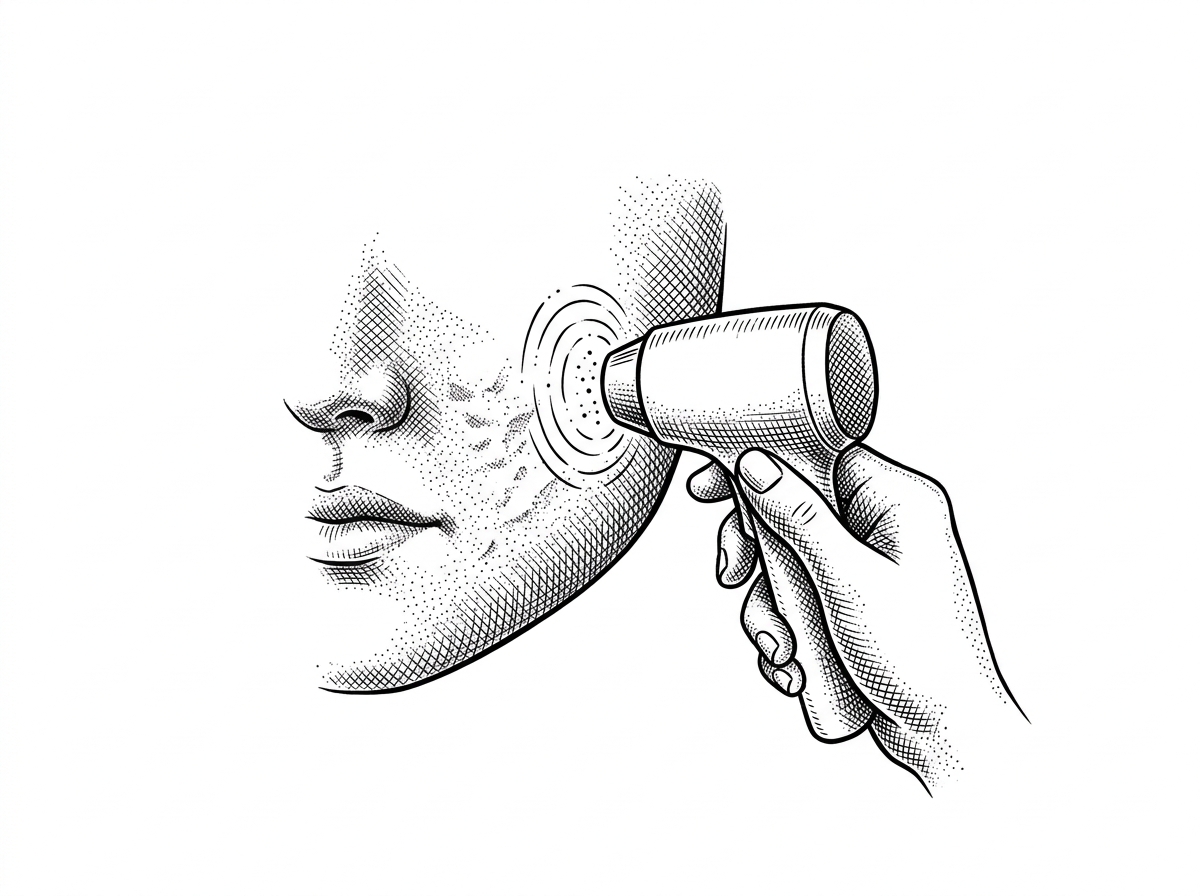
Vacuum massage uses a mechanical device to lift the skin into a suction cup, creating a skin fold. This provides a different type of mechanical stimulus than manual compression. While manual massage pushes tissue, vacuum massage pulls it, which can be highly effective for deep adhesion release.
| Feature | Manual Massage | Vacuum Massage |
|---|---|---|
| Action | Compression and Friction | Suction and Tension |
| Depth | Variable (Operator dependent) | Can reach deeper fascial layers |
| Evidence | Strong for pain/pliability | Emerging for burn rehabilitation |
| Accessibility | High (Self-administered) | Requires specialized equipment |
Safety Precautions and Long-Term Care
Performing a hard scar softening massage requires a balance between firmness and caution. Because scars only reach about 70 to 80% of the strength of normal skin, they are more susceptible to injury during the first year of healing.
Protecting Your Hard Scar Softening Massage Progress
The most common mistake in scar care is neglecting sun protection. New scar tissue is highly sensitive to ultraviolet (UV) radiation. Exposure to the sun can cause permanent hyperpigmentation, making the scar turn dark brown or purple. The British Skin Foundation advice on scar care emphasizes using a broad-spectrum SPF 30+ sunscreen on the scar for at least one year after the injury.
When to Stop and Seek Help
One should discontinue massage and consult a healthcare provider if any of the following occur:
- Blistering or Skin Breakdown: This indicates the pressure is too high or the tissue is not yet ready.
- Increased Redness or Heat: These are signs of inflammation or potential infection.
- Keloid Growth: If the scar begins to grow beyond the boundaries of the original wound, it may be a keloid. Keloids often require medical interventions like corticosteroid injections or laser therapy rather than massage alone.
- Severe Pain: While some discomfort is normal when "breaking up" adhesions, sharp or intolerable pain is a warning sign.
Frequently Asked Questions about Scar Softening
How long does it take to see visible results?
Patience is paramount. While some people notice a reduction in itching or sensitivity within a few weeks, visible changes in the flatness and hardness of a scar typically take 2 to 3 months of consistent, daily massage. Significant remodeling can continue for up to 2 years.
Can I massage a scar that is several years old?
Scars are most responsive to treatment during the "maturation phase," which lasts up to 18–24 months. After two years, the collagen structure is largely set. While massage may still provide some psychological benefit or minor improvements in flexibility, it is significantly less effective on "old" or fully matured scars.
What level of pressure is considered safe for new tissue?
For new tissue (4–6 weeks old), the pressure should be light—similar to the pressure one would use to check the ripeness of a piece of fruit. As the scar matures (12+ weeks), the pressure should increase to the point where the skin blanches (turns white) but does not cause pain or skin tearing.
Conclusion
The journey of scar healing is a marathon, not a sprint. A hard scar softening massage is a scientifically-backed, accessible way to take control of the healing process. By understanding the principles of mechanotransduction and maintaining a consistent routine of 5–10 minutes, several times a day, individuals can significantly improve the texture, flexibility, and appearance of their scars.
The goal of massage is to assist the body's natural 2-year maturation timeline. Combining manual techniques with hydration, sun protection, and silicone therapy provides the most robust defense against problematic scarring. For those looking to optimize their recovery, you can learn more at scar-healing.com to explore further resources on tissue regeneration and skin health.
This content is for informational purposes only and does not constitute medical advice. Consult a qualified healthcare professional for diagnosis and treatment.