Can You Actually Roll Away a Hypertrophic Scar?
Dermarolling for hypertrophic scars is a real clinical option — but results vary. Learn what the evidence shows about using microneedling to flatten raised, thickened scars.

Can a Dermaroller Actually Flatten a Hypertrophic Scar?
Dermaroller for hypertrophic scars is a legitimate clinical topic — and the short answer, based on available evidence, is: yes, it can help, but results vary by scar type, severity, and treatment protocol.
Here is what the research currently supports:
| Question | Evidence-Based Answer |
|---|---|
| Does it work? | Evidence suggests yes — microneedling can reduce scar thickness, redness, and stiffness |
| Best needle length? | 1.5 mm is most commonly used in clinical studies |
| How many sessions? | Typically 4 sessions, spaced 4–6 weeks apart |
| Who benefits most? | People with mature (not fresh), raised scars within the original wound boundary |
| Who should avoid it? | Those with keloids, active infections, or very dark skin types (without professional guidance) |
| What can you realistically expect? | Meaningful improvement — not complete removal |
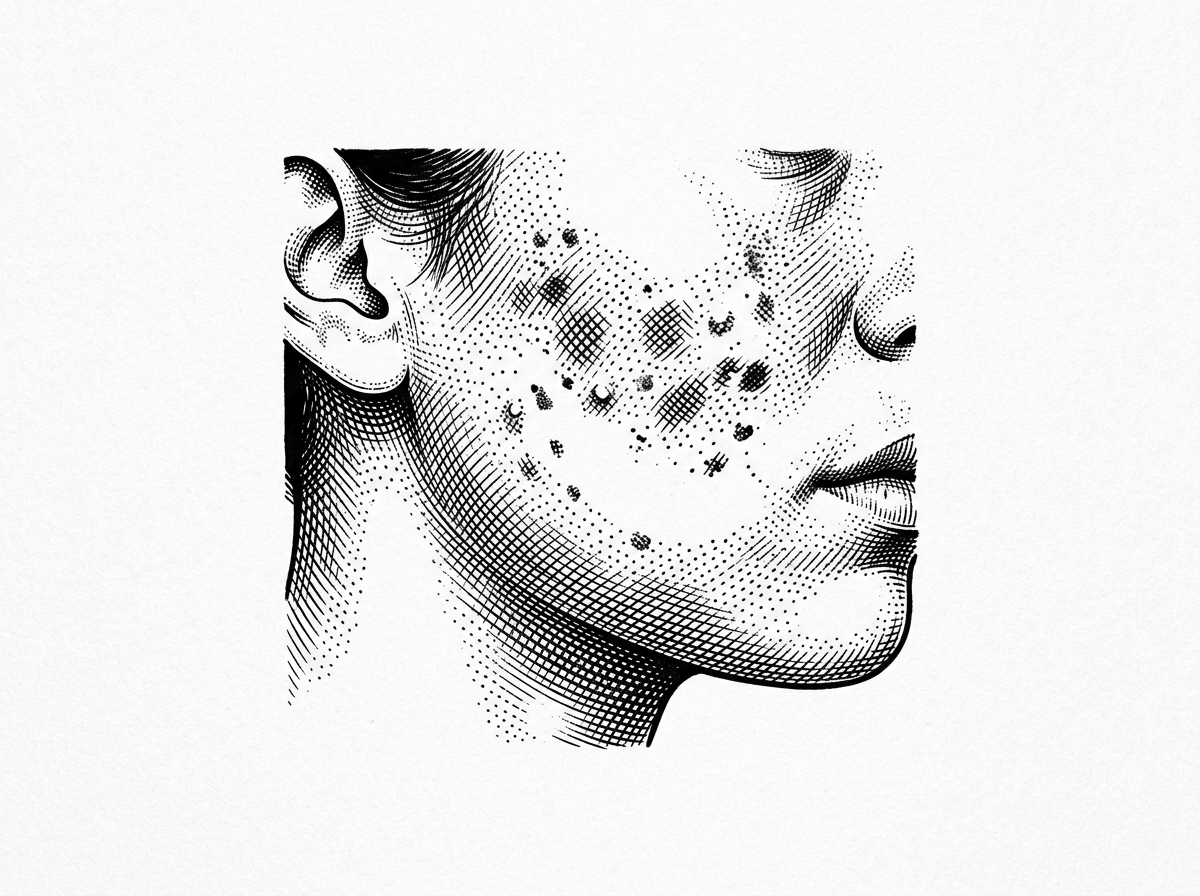
Hypertrophic scars form when the skin's repair process goes into overdrive. Instead of laying down collagen in an orderly pattern, fibroblasts (the cells responsible for producing collagen) keep working past the point of normal healing. The result is a raised, firm, often red or pink scar that stays within the boundary of the original wound.
This is different from a keloid, which spreads beyond the wound margins — an important distinction that changes how treatment is approached.
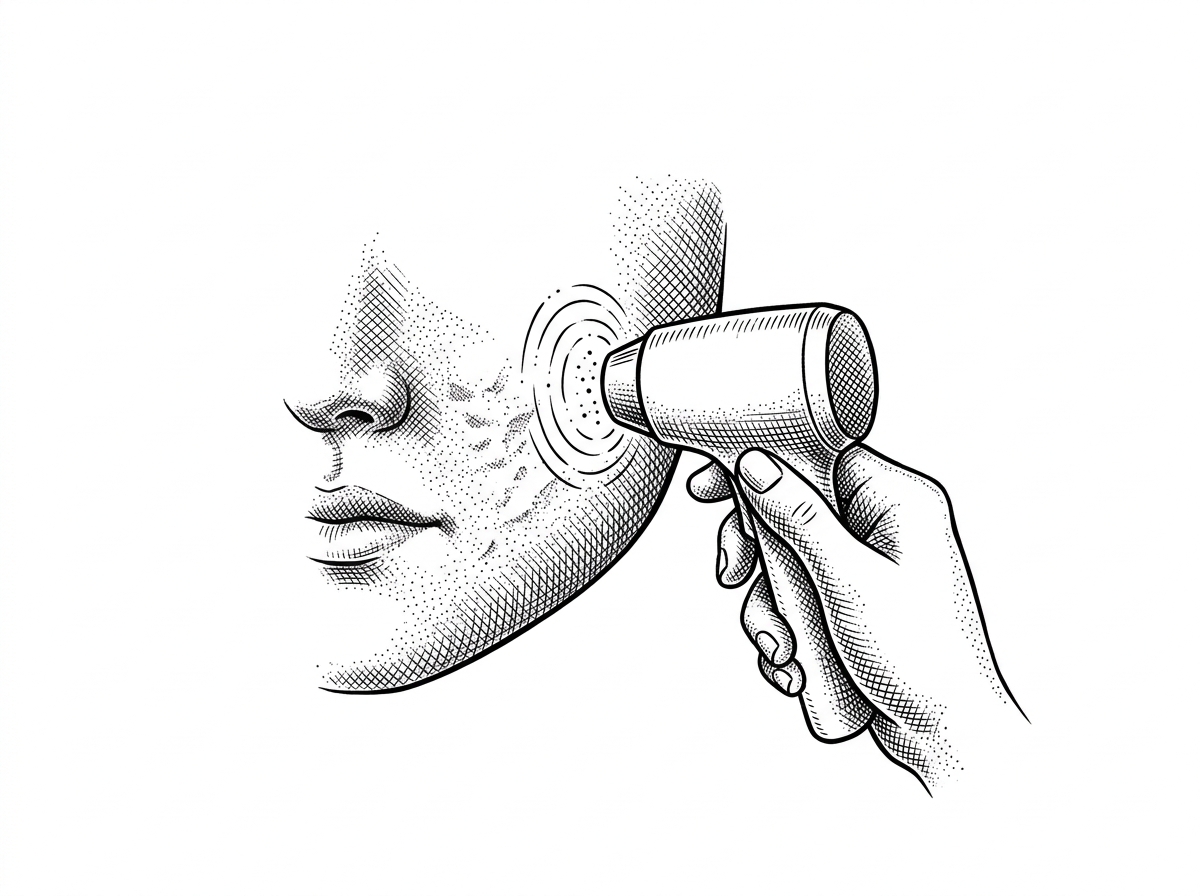
Dermarolling — also called percutaneous collagen induction therapy — works by creating controlled micro-injuries in the skin. This reactivates the wound-healing cascade, encouraging the breakdown and remodeling of the disorganized collagen that gives hypertrophic scars their raised, rigid texture.
The mechanism is biologically sound. But how well does it translate to real clinical outcomes? That is exactly what this guide examines — with reference to peer-reviewed research, not marketing claims.
Relevant articles related to dermaroller for hypertrophic scars:
Understanding Hypertrophic Scars vs. Keloids
To treat a scar effectively, one must first identify it correctly. Hypertrophic scars are often confused with keloids, yet their biological behavior and response to a dermaroller for scars differ significantly.
Hypertrophic scars are characterized by an overabundance of dermal collagen, primarily Collagen Type III, during the proliferation phase of healing. They typically appear within 4 to 8 weeks following a traumatic injury, surgery, or deep inflammatory acne. These scars are raised and firm, but they stay strictly within the boundaries of the original incision or wound. They often occur in areas of high wound tension, such as the shoulders, back, or over joints.
In contrast, keloids are more aggressive. They represent a more severe form of collagen dysregulation where the scar tissue extends beyond the original wound margin, invading healthy surrounding skin. While research explores laser for keloid scars, using a mechanical dermaroller on a keloid is generally discouraged by dermatologists because the trauma of the needles may trigger further growth in susceptible individuals.
Atrophic scars, such as "ice-pick" or "boxcar" acne scars, represent the opposite problem: a loss of tissue and collagen. While a dermaroller is highly effective for these indentations, treating a hypertrophic scar requires the device to perform a different task—breaking down an existing "wall" of excess tissue rather than just filling a hole.
How a Dermaroller for Hypertrophic Scars Remodels Tissue
The primary mechanism behind using a dermaroller for hypertrophic scars is known as Percutaneous Collagen Induction (PCI). When the fine needles of a dermaroller penetrate the skin, they create thousands of microscopic "conduits" or channels that reach into the dermis.
This process does not remove the epidermis (the top layer of skin); instead, it causes localized, controlled trauma. This trauma triggers the body’s natural healing response by releasing specific growth factors, such as Transforming Growth Factor-beta 3 (TGF-β3), which is associated with scarless healing, rather than TGF-β1, which is often linked to scar formation.
Furthermore, the physical action of the needles provides a "mechanical disruption" of the dense, cross-linked collagen fibers that make the scar feel hard. By breaking these thick bundles, the dermaroller allows the body to re-initiate the remodeling phase. During this phase, the body gradually replaces the disorganized Collagen Type III with more flexible and organized Collagen Type I, leading to a flatter and more pliable scar.
Biological Response to Microneedling for Scar Reduction
The journey of microneedling for scar reduction follows the classic phases of wound healing, but in a "reset" fashion:
- Inflammation Phase: Immediately after rolling, platelets release growth factors that initiate the repair process.
- Proliferation Phase: New blood vessels form (neovascularization), and fibroblasts begin producing new extracellular matrix components.
- Remodeling Phase: This is the most critical stage for hypertrophic scars. Over several months, myofibroblasts—the cells that cause scars to contract and tighten—decrease in number. The dense collagen bundles are slowly broken down by enzymes called matrix metalloproteinases (MMPs) and replaced with smoother tissue.
Research indicates that this process improves the cytokine balance within the scar tissue, reducing the signals that tell the body to keep building excess "emergency" collagen.
Clinical Efficacy and Scientific Evidence
Clinical studies provide a clear picture of how a dermaroller for hypertrophic scars performs in a medical setting. A study published in the IP Indian Journal of Clinical and Experimental Dermatology (2021) compared microneedling to other modalities and found that 86.7% of patients (13 out of 15) showed significant improvement in their scars after four sessions.
Another landmark study by Majid (2009) evaluated microneedling for various facial scars. The research showed that after four sessions with a 1.5 mm dermaroller, 88.7% of patients achieved a "good" to "excellent" response. While this study focused heavily on atrophic scars, the principle of collagen induction remains a cornerstone for treating raised tissue as well.
Dermaroller vs. Fractional CO2 Laser
When choosing a treatment, many patients compare dermarolling to lasers. Below is a summary of how they typically compare in clinical literature:
| Feature | Dermaroller (Microneedling) | Fractional CO2 Laser |
|---|---|---|
| Mechanism | Mechanical micro-injury | Thermal (heat) micro-injury |
| Downtime | 2–3 days (redness/swelling) | 5–7 days (crusting/peeling) |
| Risk of PIH | Very low; safe for dark skin | Higher; requires caution for dark skin |
| Cost | Generally more affordable | Generally more expensive |
| Efficacy | Excellent for mild to moderate | Often superior for very severe scars |
A study on microneedling vs. TCA CROSS also highlighted that microneedling scores higher in terms of safety for patients with Fitzpatrick skin types IV and V (darker skin tones). Because the dermaroller does not use heat, the risk of post-inflammatory hyperpigmentation (PIH)—dark spots caused by the treatment itself—is significantly reduced compared to lasers.
Expected Timeline for Dermaroller for Hypertrophic Scars
Patience is a requirement when treating raised scars. Collagen remodeling is a slow biological process. Clinical protocols typically involve:
- Session Frequency: Treatments are usually spaced 4 to 6 weeks apart. This interval is necessary to allow the skin to complete the "proliferation" phase and enter "remodeling" before the next session begins.
- Cumulative Results: While some softening of the scar may be felt after one or two sessions, visible flattening usually requires at least three to four treatments.
- 6-Month Follow-up: Studies often show that the most significant improvements are seen six months after the final treatment, as the collagen continues to reorganize long after the needles have touched the skin.

Step-by-Step Guide: Using a Dermaroller for Hypertrophic Scars
If a professional determines that a patient is a candidate for a dermaroller for hypertrophic scars, the procedure generally follows a strict medical protocol.
- Selection of Needle Length: For hypertrophic scars, clinical research typically utilizes needle lengths of 1.5 mm to 2.5 mm. Shorter needles (0.5 mm) are generally insufficient to reach the deep dermal bundles of a raised scar.
- Sterilization: The treatment area and the device must be thoroughly disinfected. In a clinical setting, medical-grade rollers are single-use only.
- Topical Anesthesia: Because 1.5 mm needles penetrate deeply, a topical numbing cream (such as EMLA) is applied for 45 to 60 minutes prior to the session.
- The Rolling Technique: The practitioner rolls the device over the scar in multiple directions—horizontally, vertically, and diagonally—approximately 15 to 20 times in each direction.
- Endpoint: The goal is "pinpoint bleeding." This indicates the needles have reached the papillary dermis, where the collagen-producing cells reside.
- Post-Treatment Care: Immediately after rolling, the skin is often wiped with saline. A soothing, non-comedogenic serum may be applied. Patients are instructed to avoid sun exposure and use high-SPF sunscreen, as the skin is temporarily more vulnerable to UV damage.
In some cases, professionals may combine this with scar tissue massage therapy to further encourage the softening of the fibrous tissue.
Safety Considerations and Contraindications
While the dermaroller for hypertrophic scars is considered safe for most, there are specific situations where it should be avoided:
- Active Acne or Infection: Rolling over an active infection can spread bacteria across the skin.
- History of Keloids: As mentioned, those prone to keloids may experience a worsening of the scar.
- Fresh Scars: The wound must be completely closed and the initial healing phase finished (usually at least 3 months post-injury) before microneedling should be considered.
- Darker Skin Tones: While safer than lasers, individuals with Fitzpatrick IV-V skin should still proceed with caution to ensure the "pinpoint bleeding" doesn't lead to irritation-induced darkening.
For those with very firm scars, a hard scar softening massage is often recommended as a preparatory step to increase tissue pliability before beginning a microneedling regimen.
Comparing Dermarolling to Alternative Treatments
Dermarolling is rarely the only option on the table. Understanding how it fits into the broader landscape of scar management is essential.
Fractional CO2 Lasers: As discussed in our laser treatment for scars complete guide, lasers are powerful tools that use light energy to vaporize columns of tissue. While highly effective, they often involve more downtime and a higher price point than dermarolling.
Steroid Injections: Intralesional triamcinolone (steroid) injections are a first-line treatment for very thick hypertrophic scars. They work by directly suppressing fibroblast activity and inflammation. In modern dermatology, a combination approach is often used: microneedling is performed to create channels, followed by the application of topical steroids or other medications to enhance their penetration into the scar.
Radiofrequency (RF) Microneedling: This is an evolved version of the traditional dermaroller. It uses needles to deliver heat (radiofrequency energy) directly into the dermis. A case report involving a 24-year-old male with hypertrophic scars showed that RF microneedling, combined with corticosteroids, successfully flattened scars that had previously failed to respond to lasers.
Frequently Asked Questions about Hypertrophic Scars
Can dermarolling completely remove a hypertrophic scar?
In most cases, no. The goal of treatment is "amelioration"—making the scar significantly flatter, softer, and less noticeable. While some patients report up to an 80-90% improvement, the original site of a deep wound will rarely return to 100% "perfect" skin.
Is dermarolling painful on raised scars?
Without numbing cream, yes, deep microneedling (1.5 mm+) is painful. However, with the proper application of a topical anesthetic, most patients describe the sensation as a mild "scratchy" feeling or pressure rather than sharp pain.
Can I use a dermaroller on a fresh scar?
No. Using a dermaroller on a wound that is still in the inflammatory or early proliferation phase can disrupt the delicate new tissue and potentially cause more scarring. It is vital to wait until the scar is mature and stable.
Conclusion
The use of a dermaroller for hypertrophic scars represents a cost-effective, clinically-backed method for improving the appearance of raised skin tissue. By leveraging the body's own healing mechanisms, microneedling helps break down the rigid "emergency" collagen of a scar and replaces it with a more natural, flexible matrix.
While it is not a "magic wand" that works overnight, the statistical evidence—showing over 85% of patients seeing meaningful improvement—makes it a compelling option for those looking to manage their scars. For the best results, consistency is key, and combining the procedure with proper post-care and sun protection is essential.
For those interested in exploring the technical side of this therapy further, you can find more info about microneedling and its various applications in modern dermatology.
Works Cited
- Majid I. Microneedling therapy in atrophic facial scars: An objective assessment. J Cutan Aesthet Surg. 2009;2(1):26-30. Google Scholar
- Fabbrocini G, Annunziata MC, D'Arco V, et al. Acne scars: pathogenesis, classification and treatment. Dermatol Res Pract. 2010. Crossref
- IP Indian Journal of Clinical and Experimental Dermatology. Efficacy and outcome of Microneedling (Dermaroller) in post-acne scars. 2021. Source
- Singh A, Yadav S. Microneedling: Advances and widening horizons. Indian Dermatol Online J. 2016. NCBI
- Minh P, et al. Microneedling Therapy for Atrophic Acne Scar: Effectiveness and Safety. Open Access Maced. J Med Sci. 2019. Google Scholar
This content is for informational purposes only and does not constitute medical advice. Consult a qualified healthcare professional for diagnosis and treatment.