Why Chicken Pox Scars Stay and How to Make Them Go
Chicken pox scars in adults can be stubborn, but treatments like laser resurfacing, microneedling, and chemical peels can deliver real improvements. Here's what the evidence supports.

What Clinical Evidence Says About Treatment for Chicken Pox Scars in Adults
Treatment for chicken pox scars in adults ranges from topical retinoids and silicone gels to professional procedures like laser resurfacing, microneedling, and chemical peels — with the best option depending on scar depth, skin type, and how long the scars have been present.
Quick-reference overview of evidence-based options:
| Treatment Type | Examples | Best For |
|---|---|---|
| Topical (OTC) | Retinoids, glycolic acid, silicone gel | Mild discoloration, shallow marks |
| Natural remedies | Rosehip seed oil | Recent post-surgical or superficial scars |
| Professional procedures | Fractional laser, microneedling, TCA CROSS | Pitted, atrophic (sunken) scars |
| Systemic medications | Low-dose isotretinoin, topiramate | Pigmented or persistent scars (prescription only) |
| Surgical options | Subcision, excision, dermal grafting | Deep, fibrotic, or isolated scars |
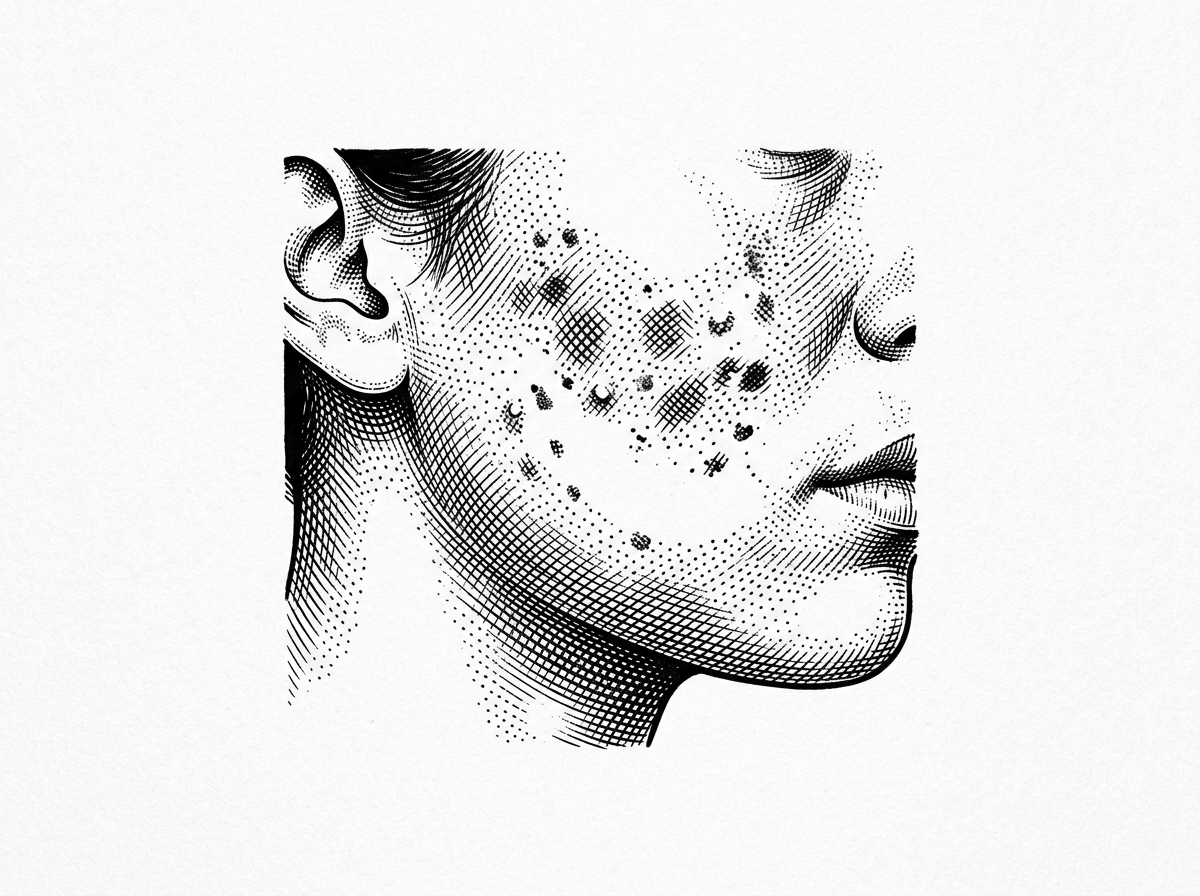
Chickenpox — caused by the varicella-zoster virus — leaves permanent depressed scars in an estimated 7 to 18% of people who contract it. Around 40% of those scars appear on the face, according to a 2021 tertiary review published in the Medical Journal of the Islamic Republic of Iran. That means millions of adults are living with visible reminders of a childhood illness.
The scars form when the immune system's inflammatory response disrupts the skin's collagen-producing cells (fibroblasts), leaving behind sunken pits in the dermis — the deeper layer of skin. Unlike surface discoloration, which often fades within 6 to 12 months, these structural changes do not resolve on their own.
Adults face a harder path to recovery than children. Skin regeneration slows with age, and the immune system's ability to remodel damaged tissue weakens over time. This is why scars contracted during adulthood — or scars from childhood that were never treated — tend to be more stubborn.
The good news: modern dermatology offers a range of effective interventions. The key is matching the right treatment to the right scar type.
This content is for informational purposes only and does not constitute medical advice. Consult a qualified healthcare professional for diagnosis and treatment.
Simple treatment for chicken pox scars in adults word guide:
Pathogenesis of Atrophic Scars and Why They Persist in Adulthood
To understand why chickenpox leaves a lasting mark, one must look beneath the surface. The varicella-zoster virus specifically targets the skin's structural integrity. During an active infection, the body initiates a robust inflammatory response to combat the virus. This inflammation, often exacerbated by the mechanical trauma of scratching, leads to the destruction of the extracellular matrix.
The primary architectural component of this matrix is collagen. When the inflammatory process is intense, it inhibits fibroblasts—the cells responsible for synthesizing new collagen. The result is a "deficit" in the dermal layer. Because there isn't enough new tissue to fill the void left by the healed vesicle, the skin effectively "collapses" into the space, creating an atrophic (sunken) scar.

Research published in Pediatric Dermatology indicates that approximately 1 in 5 individuals who have had chickenpox will develop at least one permanent scar. These are most commonly "boxcar" or "round" atrophic scars, measuring between 5mm and 10mm in diameter.
In adults, these scars persist because the natural "remodeling" phase of wound healing has long since concluded. Unlike children, whose skin possesses a high rate of cellular turnover and regenerative capacity, adult skin is more static. Once the fibrotic tissue has matured, the body views the scar as a "closed case," making professional intervention necessary to jumpstart new collagen production.
Evidence-Based Topical Treatment for Chicken Pox Scars in Adults
For shallow scars or post-inflammatory hyperpigmentation (dark spots), topical interventions can offer measurable improvement. The goal of these treatments is twofold: to accelerate cell turnover and to stimulate the underlying fibroblasts.
Retinoids and Glycolic Acid
Retinoids (derivatives of Vitamin A) are among the most studied compounds in dermatology. They function by increasing the rate of cellular regeneration and signaling the dermis to produce more collagen. A study in the Indian Dermatology Online Journal found that a combination of retinoic acid and glycolic acid led to a significant improvement in atrophic scars for over 90% of participants. Glycolic acid acts as a chemical exfoliant, removing the top layer of dead skin cells and allowing the retinoid to penetrate more deeply.
Silicone Gel and Sheets
While primarily used for raised (hypertrophic) scars, silicone sheets can help hydrate the skin and provide a protective barrier that may soften the edges of atrophic pox marks. Clinical consensus suggests that consistent use for at least six months is required for visible results.
Natural Remedies: Separating Fact from Fiction
Many popular "remedies" lack robust clinical support:
- Vitamin E: Despite its popularity, most clinical studies show no significant benefit for scar reduction. In fact, the American Academy of Dermatology notes that topical Vitamin E may actually cause contact dermatitis or worsen the scar's appearance in some individuals.
- Aloe Vera: While effective at soothing active burns and reducing skin temperature, research in Burns shows it has no proven ability to remodel established scar tissue.
- Rosehip Seed Oil: There is more promise here. A study in the Journal of Cosmetics, Dermatological Sciences and Applications observed that pure rosehip oil improved the appearance of surgical scars over a 12-week period, specifically reducing redness and discoloration.
Clinical Procedures and Professional Intervention
When topical creams are insufficient, clinical procedures become the primary treatment for chicken pox scars in adults. These treatments aim to physically break down old scar tissue and force the body into a new healing cycle.
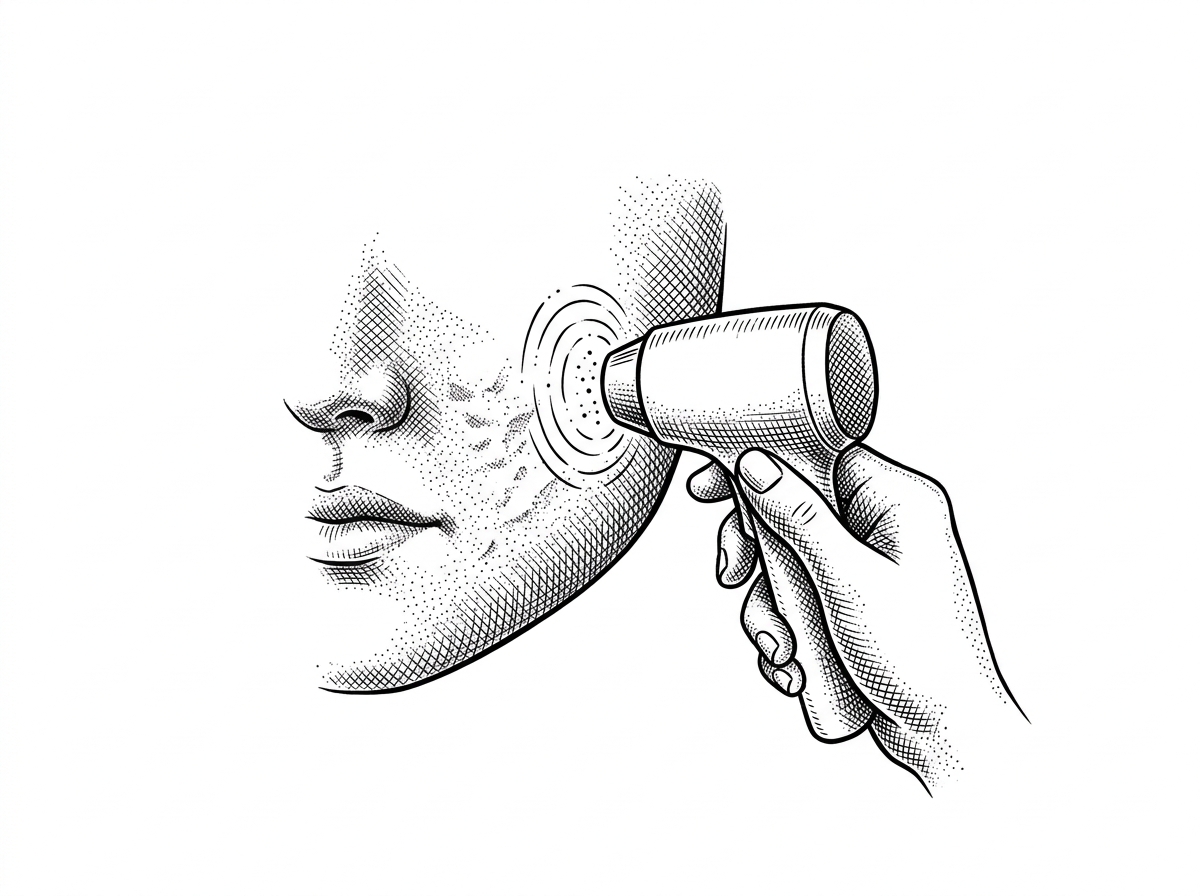
Laser Resurfacing
Laser therapy is currently one of the most effective methods for atrophic scar revision.
- Ablative Lasers (CO2 and Er:YAG): These remove thin layers of skin with extreme precision. Research indicates that pulsed CO2 lasers are particularly effective for raised scars, while Er:YAG lasers are often preferred for pitted facial scars due to their lower risk of heat-induced pigment changes.
- Non-Ablative Lasers: These heat the underlying tissue without damaging the surface, requiring more sessions but offering significantly less downtime.
Microneedling
Microneedling involves creating thousands of microscopic "micro-injuries" in the skin using sterile needles. This triggers a natural wound-healing response. A report in Dermatologic Surgery highlighted the success of microneedling for varicella scars, noting that it is particularly safe for patients with darker skin tones who might be at risk for hyperpigmentation from lasers.
Subcision-Suction Method
For "tethered" scars—those where fibrotic strands pull the skin surface downward—subcision is used. A dermatologist inserts a small needle under the scar to break those strands. A clinical trial demonstrated that combining subcision with post-operative suctioning can significantly lift the base of the scar, with some patients seeing over 70% improvement.
Comparison of Professional Treatment Requirements:
| Procedure | Typical Sessions | Downtime | Expected Improvement |
|---|---|---|---|
| Fractional CO2 Laser | 1–3 | 7–14 days | 50–80% |
| Microneedling | 3–6 | 1–3 days | 40–60% |
| Chemical Peels (Deep) | 1–3 | 7–10 days | 30–50% |
| Dermal Fillers | 1 | None | 80–90% (Temporary) |
The Efficacy of TCA CROSS for Deep Atrophic Pox Marks
One specialized treatment for chicken pox scars in adults is the TCA CROSS technique (Chemical Reconstruction of Skin Scars). This method is specifically designed for focal, deep pits where general resurfacing might not reach the base of the scar.
The procedure involves applying a high concentration (70% to 100%) of Trichloroacetic Acid (TCA) directly into the floor of the scar using a fine applicator. This causes a localized "chemical burn" or protein denaturation. The resulting inflammation triggers the body to synthesize new collagen fibers specifically within that small pit, effectively "filling" the scar from the bottom up.
According to data cited by DermNet NZ, the results are often impressive. In a study of 13 patients using 100% TCA, 69% of participants reported "excellent" improvement (greater than 75% reduction in scar depth). While this method is highly effective, it carries risks of temporary hyperpigmentation, especially in darker skin types, and should only be performed by an experienced professional.
Frequently Asked Questions
When to seek professional treatment for chicken pox scars in adults?
Individuals should consider professional intervention if the scars cause psychological distress or if the texture of the skin interferes with their quality of life. Unlike active acne, chickenpox scars are stable; therefore, treatment can begin at any time once the initial infection has completely resolved. However, older scars may require more aggressive modalities. The Mayo Clinic suggests that the best time for deep chemical peels or lasers is when the patient can commit to the necessary downtime and strict sun protection.
Realistic expectations for the treatment for chicken pox scars in adults?
It is vital to understand that "removal" usually means "significant improvement" rather than total eradication. Most patients should aim for a 50% to 75% improvement in depth and texture. Success depends on factors such as skin type (Fitzpatrick scale), the age of the scar, and the patient's biological ability to produce new collagen. For example, dermal grafting—where skin is transplanted from behind the ear to the scar site—can offer permanent results for very deep scars, but it is a more invasive surgical process.
How do chickenpox scars differ from acne scars in appearance and response?
While both are often atrophic, chickenpox scars tend to be more uniform and "punched out" compared to the varied "rolling" or "icepick" shapes seen in acne. Furthermore, chickenpox involves the epidermal layer more broadly due to the viral infection. Interestingly, some systemic medications show promise for both. Low-dose isotretinoin has been studied for its ability to improve pigmented scars, while topiramate—an epilepsy medication—has been observed to improve scar appearance, possibly by reducing skin-picking behaviors that interfere with healing.
Conclusion
The persistence of chickenpox scars into adulthood is a biological reality of how the varicella-zoster virus interacts with human dermal tissue. While the body's natural healing timeline for these scars has long passed, the skin remains a dynamic organ capable of remodeling when provided with the correct stimuli. Whether through at-home retinoids or clinical procedures like TCA CROSS and laser resurfacing, effective treatment for chicken pox scars in adults is achievable. By understanding the underlying science and setting realistic goals, individuals can significantly diminish these visible reminders of the past.
Works Cited
- Agarwal, N., et al. (2013). Chemical reconstruction of skin scars therapy using 100% trichloroacetic Acid in the treatment of atrophic facial post varicella scars. Journal of Cutaneous and Aesthetic Surgery. https://doi.org/10.4103/0974-2077.118408
- Barikbin, B., et al. (2012). Focal high-concentration trichloroacetic acid peeling for treatment of atrophic facial chickenpox scar. Dermatologic Surgery. https://doi.org/10.1111/j.1524-4725.2012.02541.x
- Chandrashekar, B. S., et al. (2015). Retinoic acid and glycolic acid combination in the treatment of acne scars. Indian Dermatology Online Journal. https://www.ncbi.nlm.nih.gov/pmc/articles/PMC4375771/
- Dave, D. D., & Abdelmaksoud, A. (2019). Low dose isotretinoin for pigmented post-varicella scars. Dermatologic Therapy. https://pubmed.ncbi.nlm.nih.gov/30296353/
- Leung, A. K., et al. (2001). Scarring resulting from chickenpox. Pediatric Dermatology. https://onlinelibrary.wiley.com/doi/abs/10.1046/j.1525-1470.2001.01975.x
- Pour Mohammad, A., & Ghassemi, M. (2021). Varicella-Zoster Scar Treatments: A Tertiary Review. Medical Journal of the Islamic Republic of Iran. https://doi.org/10.47176/mjiri.35.136
- Tanaydin, V., et al. (2016). The role of topical vitamin E in scar management: A systematic review. Aesthetic Surgery Journal. https://academic.oup.com/asj/article/36/8/959/2613951
- Valerón-Almazán, P., et al. (2015). Evolution of post-surgical scars treated with pure rosehip seed oil. Journal of Cosmetics, Dermatological Sciences and Applications. https://doi.org/10.4236/jcdsa.2015.52019
This content is for informational purposes only and does not constitute medical advice. Consult a qualified healthcare professional for diagnosis and treatment.