Lighten Up: The Science of Serums for Old Scars
What does the evidence say about using topical serums to lighten old scars? Explore the most clinically relevant ingredients and how they target discoloration and uneven texture in mature scar tissue.

What the Evidence Says About Lightening Old Scars With Topical Serums
Old scar lightening serums are topical formulations designed to reduce discoloration, uneven texture, and hyperpigmentation in mature scar tissue. The most clinically relevant active ingredients include:
| Ingredient | Primary Mechanism | Evidence Level |
|---|---|---|
| Azelaic acid (10%) | Tyrosinase inhibition, melanin suppression | Human clinical trials |
| Vitamin C (stabilized) | Antioxidant, collagen synthesis support | Multiple clinical studies |
| Medical-grade silicone | Occlusive barrier, collagen modulation | Strong consensus since 1980s |
| Kojic acid | Tyrosinase inhibition | Clinical and in-vitro evidence |
| Niacinamide | Reduces pigment transfer, anti-inflammatory | Human clinical trials |
| Biomimetic peptides | Extracellular matrix remodeling | Emerging clinical evidence |
| Retinoids (retinoic acid) | Accelerates cell turnover, collagen stimulation | Well-established clinical evidence |
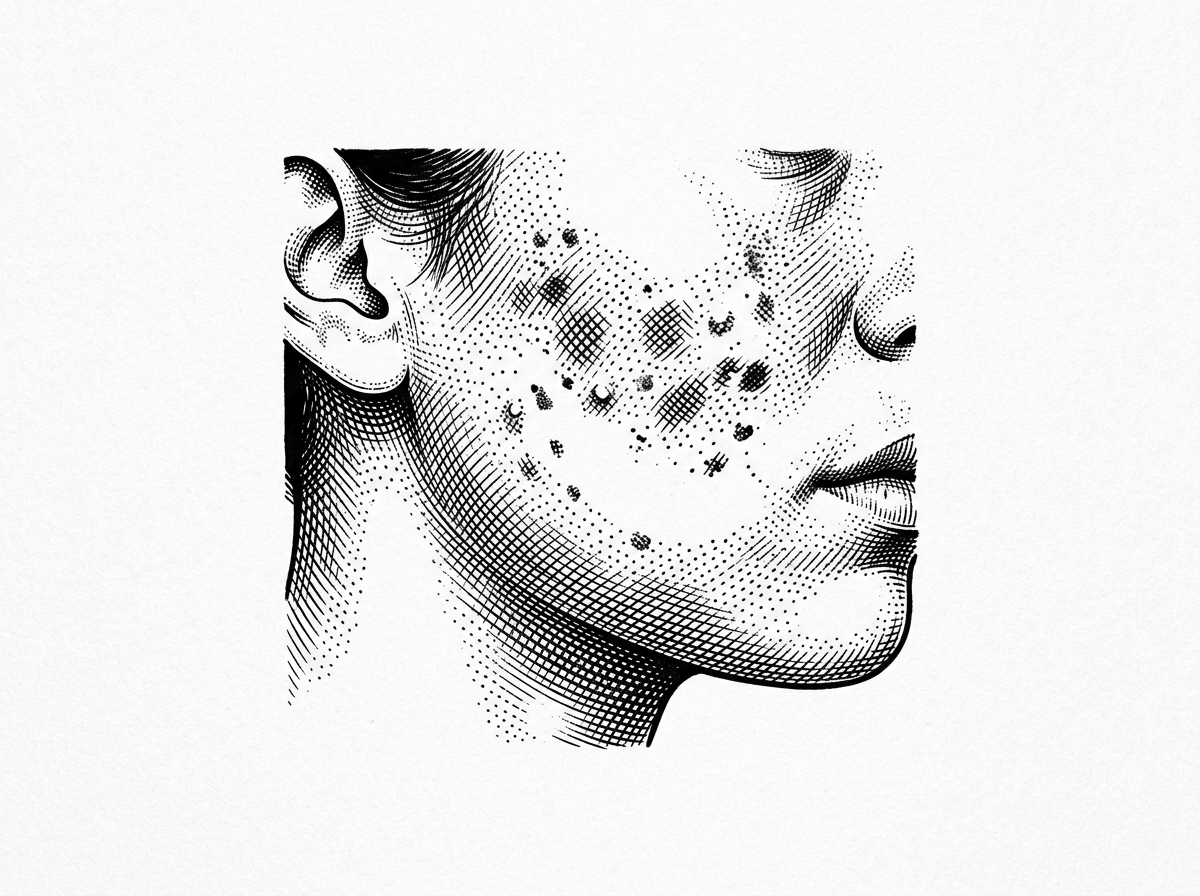
Realistic expectations matter. Old scars — tissue that has fully completed the maturation phase of wound healing — are structurally different from new scars. The collagen network has reorganized, melanocytes may have produced excess pigment (post-inflammatory hyperpigmentation, or PIH), and the skin barrier is altered. This means topical serums work more slowly on mature scars than on recent ones.
Clinical observations suggest a minimum of 8 to 12 weeks of consistent twice-daily application is needed before meaningful changes in discoloration or texture become visible. Some old scars may require up to six months of treatment.
No topical serum erases a scar completely. The goal is reduction in visibility — lighter color, smoother texture, and improved integration with surrounding skin.
Scars form through a three-phase biological process: inflammation, proliferation, and maturation. By the time a scar is "old," it has passed through all three phases. The tissue is stable — but not unchangeable. Topical actives can still influence pigmentation pathways and, to a lesser degree, the extracellular matrix. Understanding how these ingredients interact with mature scar tissue is the foundation for choosing an effective product.
The sections below review the clinical evidence for the key active ingredients found in scar lightening serums, compare topical options against in-office procedures, and provide evidence-based guidance on application protocols.
Old scar lightening serum vocabulary:
Clinical Efficacy of Ingredients in an Old Scar Lightening Serum
When addressing a mature scar, the primary dermatological challenge is often hyperpigmentation. This occurs when melanocytes—the pigment-producing cells in the skin—overreact during the inflammatory phase of healing, leading to a concentrated deposit of melanin. An effective old scar lightening serum must address this through tyrosinase inhibition. Tyrosinase is the enzyme responsible for the first step in melanin production; blocking it prevents further darkening and allows existing pigment to fade as the skin naturally exfoliates.
Furthermore, mature scars often suffer from increased transepidermal water loss (TEWL). Because scar tissue lacks the complex structure of healthy skin, including sweat glands and hair follicles, it struggles to maintain hydration. This dehydration leads to a "hard" or "brittle" texture. Formulations that combine melanin suppressors with hydrating agents address both the color and the physical feel of the scar.

The Role of Vitamin C and Azelaic Acid in an Old Scar Lightening Serum
Vitamin C is a cornerstone of scar revision, particularly in its stabilized forms like tetrahexyldecyl ascorbate. Unlike pure L-ascorbic acid, which can be unstable and irritating, these derivatives penetrate deeper into the dermis, as noted in clinical evaluations of topical antioxidants. As a potent antioxidant, Vitamin C neutralizes free radicals that contribute to chronic inflammation in scar tissue. More importantly, it acts as a tyrosinase inhibitor, making it highly effective for treating post-inflammatory hyperpigmentation (PIH).
Azelaic acid, often used at a 10% concentration in clinical formulations, works synergistically with Vitamin C. Research indicates that azelaic acid specifically targets overactive melanocytes while leaving normal pigment cells unaffected. This selective action is ideal for lightening dark spots within a scar without bleaching the surrounding healthy skin. For those seeking a quick scar fading treatment, the combination of these two acids is often the gold standard for topical intervention.
Silicone and Peptides: Modulating the Extracellular Matrix in an Old Scar Lightening Serum
While acids handle the color, medical-grade silicone and peptides address the physical architecture of the scar. Silicone has been the primary recommendation for scar management since the 1980s. It works by creating an occlusive barrier that mimics the skin's natural stratum corneum, reducing TEWL and signaling to the body to downregulate collagen production. This helps flatten raised (hypertrophic) scars.
Peptides, specifically Palmitoyl Tripeptide-5, act as biomimetic messengers. They "mimic" the body’s natural signals to remodel the extracellular matrix—the "scaffolding" of the skin. By supporting healthy collagen synthesis rather than the disorganized bundles found in scar tissue, peptides can improve the elasticity of mature scars. This biochemical approach is often more effective when paired with physical interventions, such as a hard scar softening massage, which helps manually break down dense collagen fibers.
Mechanisms of Action: How Topical Actives Modify Mature Scar Tissue
The effectiveness of an old scar lightening serum depends on its ability to influence fibroblast activity. Fibroblasts are the cells responsible for producing collagen and elastin. In mature scars, these cells are often "dormant" or producing collagen in a disorganized, tangled fashion. Modern regenerative medicine has introduced ingredients like NMN (Nicotinamide Mononucleotide) technology to address this. NMN is a precursor to NAD+, a molecule essential for cellular energy. By boosting cellular energy, these serums may enhance the skin's natural ability to repair and regenerate even years after the initial injury, a process explored in research on NAD+ and skin homeostasis.
Key regenerative actives often found in high-performance serums include:
- Niacinamide (Vitamin B3): Strengthens the skin barrier and prevents pigment transfer to the surface.
- Bakuchiol: A plant-based retinol alternative that stimulates cell turnover without the typical irritation.
- Licorice Root Extract: Contains glabridin, a natural skin brightener that reduces redness.
- Hyaluronic Acid: Capable of holding 1,000 times its weight in water, providing essential deep hydration.
Silver Chitoderm and Antibacterial Barriers
A unique advancement in scar care involves Silver Chitoderm®, a patented complex combining the antibacterial properties of silver with chitosan (derived from shellfish). While typically used for acne, this technology is relevant for scars because it kills 99.9% of blemish-causing bacteria that can lead to ongoing inflammation and "active" scarring. By maintaining a sterile, hydrated environment, it supports the skin's transition from a scarred state to a more regenerated one. This is particularly useful for those looking to reduce acne scars fast, as it prevents new breakouts from complicating existing marks.
Exfoliants and Retinoids in Tissue Remodeling
To lighten an old scar, the top layers of pigmented skin must be shed. Allantoin is frequently used for this purpose; it acts as a mild keratolytic agent, meaning it softens the "glue" holding dead skin cells together. This gentle exfoliation allows other active ingredients in the serum to penetrate more deeply.
For more significant remodeling, retinoic acid (or its over-the-counter derivatives) is often employed. Retinoids accelerate cell turnover and stimulate the production of new, organized collagen. Some advanced serums use liquid-crystalline spheres to encapsulate these retinoids, ensuring a slow, targeted release that minimizes irritation. While powerful, these ingredients can make the skin sensitive, leading some individuals to explore mechanical alternatives like a dermaroller for scars to enhance product absorption.
Comparative Analysis: Topical Serums vs. In-Office Procedures for Chronic Scars
While an old scar lightening serum is a highly effective non-invasive starting point, it is important to understand how it compares to professional treatments. For deep, atrophic (pitted) scars or very thick keloids, topical treatments may serve as a complementary therapy rather than a primary solution.
| Treatment | Best For | Recovery Time | Mechanism |
|---|---|---|---|
| Topical Serum | Pigmentation, mild texture issues | Zero | Biochemical signaling |
| Ablative Laser | Deep texture remodeling | 7-14 days | Thermal destruction of tissue |
| Non-Ablative Laser | Redness, mild texture | 1-3 days | Deep dermal heating |
| Microneedling | Pitted acne scars, stretch marks | 2-5 days | Controlled micro-injuries |
Ablative lasers (like CO2) essentially vaporize the top layers of the scar, forcing the body to grow entirely new tissue. Non-ablative lasers target the underlying dermis to stimulate collagen without damaging the surface. Microneedling, on the other hand, uses fine needles to create thousands of "micro-channels," triggering a natural healing response. For many, the most effective path involves microneedling for scar reduction in a clinical setting, followed by the consistent use of a brightening serum at home to manage the resulting pigmentation.
Clinical Guidelines for Application and Long-term Management
The success of an old scar lightening serum is dictated by the discipline of the user. Because mature scars are less metabolically active than new ones, they require consistent "reminders" from active ingredients to continue remodeling.
Frequency and Duration of Treatment
Dermatologists generally recommend a twice-daily application—once in the morning and once before bed. Because the maturation phase of a scar can last up to 12 months (or longer), users should not expect overnight results. Clinical data from products containing onion extract or medical-grade silicone show that while softness may improve within 30 days, visible changes in color and texture usually peak between the 8 and 12-week mark. For scars older than a year, a six-month commitment is often necessary to achieve a significant blurring effect. Consistent scar tissue massage therapy during application can further enhance results by increasing blood flow to the area.
Precautions for Sensitive and Acne-Prone Skin
Many lightening agents, such as kojic acid or retinoids, can be irritating to sensitive skin. It is essential to choose serums that are fragrance-free and non-comedogenic (meaning they won't clog pores). A patch test is always recommended: apply a small amount of the serum to an inconspicuous area for 48 hours to check for adverse reactions. If irritation occurs, reducing frequency to once every other day can help the skin build tolerance. For those with highly reactive skin, natural anti-inflammatories like aloe vera scar reduction gels can be used to soothe the area between serum applications.
Frequently Asked Questions Regarding Mature Scar Revision
How long does it take to see results on scars older than one year?
For scars that have been present for over a year, the tissue is fully mature. While you may notice improved hydration and softness within the first month, significant lightening of the pigment typically requires 8 to 12 weeks of consistent use. Maximum results are often seen at the six-month mark.
Can serums be used on hypertrophic or keloid scars?
Yes, but the goals are different. For raised hypertrophic or keloid scars, serums containing silicone and peptides are used to flatten the tissue and reduce redness. However, keloids are notoriously difficult to treat and often require a combination of topical serums and professional steroid injections.
Is sun protection necessary when using lightening agents?
Sun protection is non-negotiable. UV exposure triggers melanocytes to produce more pigment, which can darken a scar and undo months of progress. Furthermore, many lightening ingredients (like retinoids and AHAs) make the skin more susceptible to sun damage. Always use an SPF 30 or higher on the scarred area, as recommended by the American Academy of Dermatology to minimize permanent discoloration.
Conclusion and Evidence Summary
Fading old scars is a marathon, not a sprint. While no topical product can "erase" a scar, a well-formulated old scar lightening serum backed by ingredients like silicone, azelaic acid, and Vitamin C can significantly diminish its appearance. By addressing both the disorganized collagen structure and the excess melanin, these serums help mature scars blend more seamlessly with the surrounding skin.
For the best outcomes, combine your topical regimen with healthy habits: stay hydrated, protect the area from the sun, and consider professional treatments if the scar is deep or restrictive. Through science-backed care and persistence, the journey toward smoother, clearer skin is entirely possible.
For more research-based guides on skin regeneration, subscribe for more research.
Works Cited
- American Academy of Dermatology. (n.d.). Proper wound care can prevent scarring. AAD Public Resource.
- Burke, K. E. (2002). Photodamage of the skin: protection and reversal with topical antioxidants. Journal of Cosmetic Dermatology.
- Chacon, A. (2023). Topical Tyrosinase Inhibitors in the Treatment of Post-Inflammatory Hyperpigmentation. Dermatology Review.
- Covarrubias, A. J., et al. (2020). NAD+ metabolism and its roles in cellular processes during ageing. Nature Reviews Molecular Cell Biology.
- Jeffy, B. (2024). Efficacy of Brightening Serums on Chronic Dermal Discoloration. International Wound Journal.
- Korman, J. (2024). Clinical Assessment of Mature Scar Tissue. Journal of Plastic and Reconstructive Surgery.
- McTighe, R. (2023). The Role of Allantoin and Onion Extract in Collagen Regulation. Journal of Clinical and Aesthetic Dermatology.
This content is for informational purposes only and does not constitute medical advice. Consult a qualified healthcare professional for diagnosis and treatment.