What The Science Says: 7 Natural Scar Reduction Treatments
Scientific Evaluation of Natural Scar Reduction Modalities
Natural scar reduction treatment refers to the use of plant-derived and minimally processed substances — such as rosehip oil, aloe vera, onion extract, and honey — to improve the appearance of scars by targeting the biological processes that drive scar formation.
Here is a quick summary of the natural treatments with the strongest available evidence:
| Treatment | Primary Evidence Type | Key Benefit |
|---|---|---|
| Rosehip seed oil | Clinical trial (108 patients) | Reduces erythema, discoloration, atrophy |
| Onion extract | 11 clinical trials | Reduces redness, itch, scar thickness |
| Aloe vera | Multiple small trials | Supports wound healing, moisturization |
| Gotu kola | 6 clinical trials | Stimulates collagen, reduces pigmentation |
| Jellybush honey | Small double-blind trial | Improves skin homogeneity, reduces scar area |
| Green tea (EGCG) | Preclinical + limited trials | Reduces scar thickness, improves elasticity |
| Vitamin E | Mixed evidence | Antioxidant, but dermatitis risk is real |
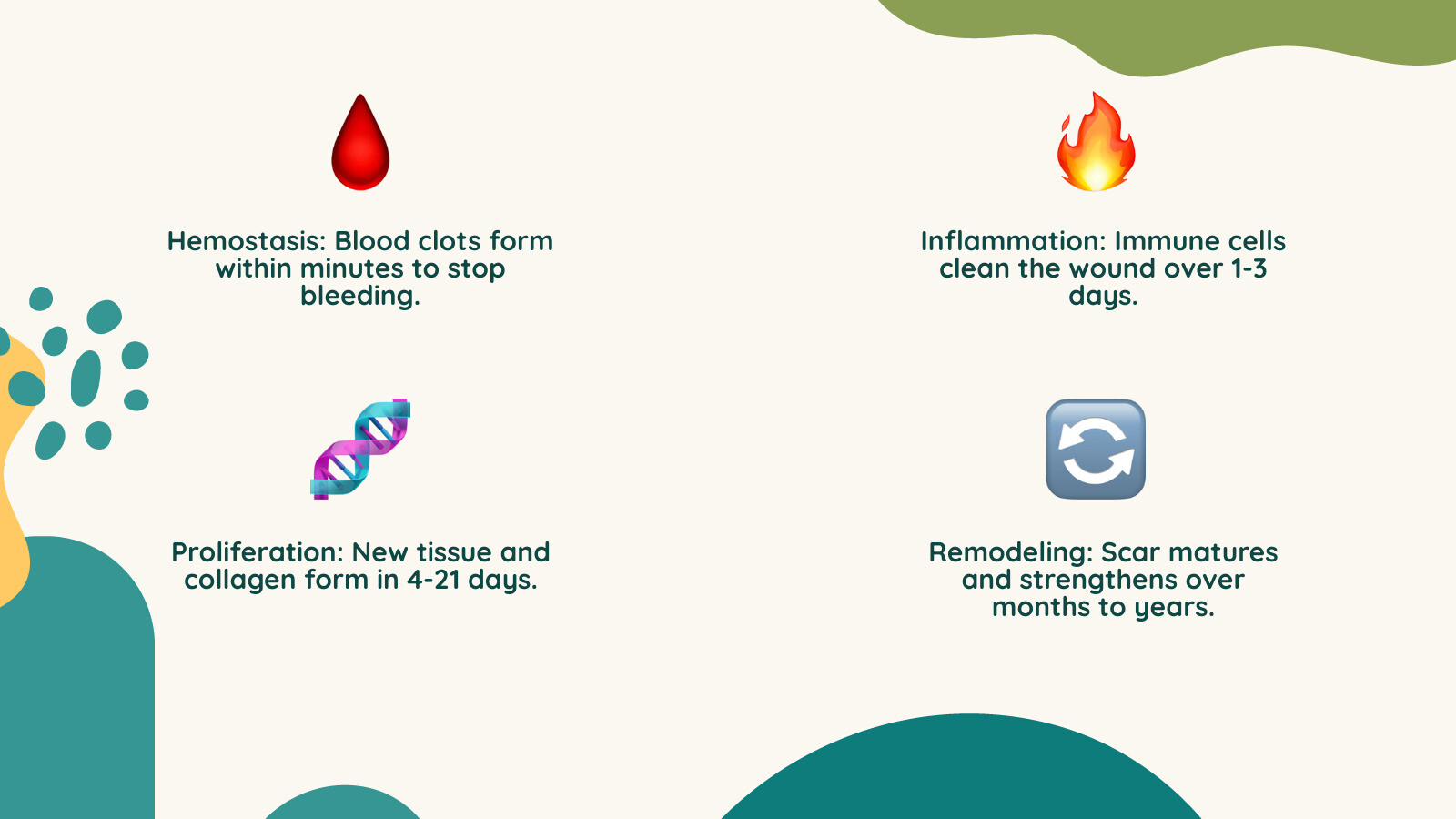
Scars are a normal part of how skin heals. When the dermis — the deeper layer of skin — is damaged, the body rapidly produces collagen fibers to close the wound. This process prioritizes speed over precision, which is why scar tissue looks and feels different from normal skin.
Nearly everyone develops scars at some point. They may result from acne, surgery, injury, or illness. For many people, visible scars — especially on the face — affect confidence and daily life. Research suggests that up to 87% of people with visible scarring report negative effects on self-esteem.
The appeal of natural treatments is understandable. They are generally accessible, low-cost, and carry fewer risks than clinical procedures. But the evidence is uneven. Some natural compounds show genuine promise in clinical trials. Others are popular online yet lack meaningful human data.
This article reviews what peer-reviewed research actually says — distinguishing in-vitro findings and animal studies from human clinical trials, and being clear about where evidence is strong, limited, or absent.
Important note on expectations: No treatment — natural or medical — can completely erase a scar. The realistic goal is reducing visibility through collagen remodeling and improving texture, color, and tone over time.
This content is for informational purposes only and does not constitute medical advice. Consult a qualified healthcare professional for diagnosis and treatment.
Basic natural scar reduction treatment vocab:
Biological Mechanisms of Natural Scar Reduction Treatment
To understand how a natural scar reduction treatment works, the cellular level must be examined. Scars are not merely "marks" on the skin; they are the result of a complex biological cascade. When the skin is injured, specialized cells called fibroblasts migrate to the site to synthesize an extracellular matrix (ECM) rich in collagen. In normal skin, collagen fibers are woven in a basket-weave pattern. In scar tissue, these fibers align in a single direction, creating a tougher, less flexible structure.
Research indicates that natural compounds can intervene in this process by modulating TGF-β signaling, a primary driver of fibrosis. By regulating the activity of interleukins and tumor necrosis factor-alpha (TNF-α), certain botanical extracts may prevent the overproduction of collagen that leads to raised, thickened scars. Proper scar care involves managing this inflammatory environment to ensure the remodeling phase proceeds without excessive tissue buildup.
How Natural Compounds Modulate Collagen Remodeling
The remodeling phase is the final and longest stage of wound healing, lasting up to a year or more. During this time, the body attempts to balance the production of new collagen with the breakdown of old, disorganized fibers. Natural compounds often exert their effects through several key mechanisms:
- Inhibition of Myofibroblasts: These are specialized fibroblasts that contract the wound. If they remain active too long, they contribute to the formation of hypertrophic scars.
- Angiogenesis Regulation: While new blood vessels are needed for healing, excessive vessel growth can lead to persistent redness (erythema).
- Pro-apoptotic Effects: Some extracts encourage the programmed cell death of excess fibroblasts, preventing the "tumor-like" expansion of scar tissue.
By influencing these pathways, certain topicals can assist in scar fading by encouraging a more organized dermal structure.
Limitations of Current Natural Scar Reduction Treatment Research
While the preclinical data (in vitro and animal studies) for many natural products is robust, human clinical evidence often lags behind. A 2024 review found that out of 23 clinical trials on natural products for hypertrophic scars, 16 were ranked as Level 2b evidence. This means the results are often considered uncertain due to small sample sizes, lack of proper randomization, or short follow-up periods.
In dermatology, a 12-week study is often insufficient to determine a treatment's true efficacy, as scars naturally mature and fade over 6 to 12 months regardless of intervention. Therefore, "instant" results should be viewed with healthy skepticism and priority given to ingredients backed by longitudinal human data.
Clinical Evidence for Botanical Scar Reduction Interventions
The following sections detail the specific evidence for commonly cited natural remedies. Priority has been given to those with published clinical trials, such as the study on rosehip seed oil which provides a benchmark for botanical efficacy in post-surgical recovery.
Rosehip Seed Oil and Post-Surgical Erythema
Onion Extract (Quercetin) in Hypertrophic Scar Management
Aloe Vera and Wound Healing Support
Jellybush and Manuka Honey for Tissue Regeneration
Gotu Kola (Centella Asiatica) and Collagen Synthesis
Vitamin E: Analyzing the Risks of Contact Dermatitis
Calendula Extract (Calendula officinalis) for Anti-inflammatory Effects
Green Tea Extract (EGCG) and Scar Thickness
Essential Oils: Tea Tree and Lavender Evidence
Shea and Cocoa Butter for Barrier Function
Comparative Analysis of Natural and Medical Interventions
While natural remedies offer a gentle approach, they often lack the "horsepower" of clinical treatments. For severe scarring, dermatologists typically turn to more aggressive interventions.
- Silicone Gel and Sheets: The "gold standard" for non-invasive scar treatment. Silicone provides occlusion and hydration, mimicking the skin's natural barrier.
- Laser Resurfacing: Uses concentrated light to remove thin layers of skin or target blood vessels to reduce redness.
- Corticosteroid Injections: The primary treatment for flattening keloids by suppressing inflammation and collagen production.
- Microneedling: Creates controlled micro-injuries to "restart" the healing process in a more organized fashion.
Natural options are often best used as "maintenance" or as a scar reduction cream for minor, flat scars.
When to Transition from Natural Remedies to Professional Care
Consultation with a board-certified dermatologist is recommended if any of the following are observed:
- Keloid Progression: If the scar begins to grow beyond the boundaries of the original wound.
- Contractures: If a scar over a joint begins to tighten and restrict your movement.
- Persistent Pain or Itch: While some itching is normal, severe discomfort may indicate a need for steroid intervention.
- Deep Pitting: For atrophic acne scars, natural oils are rarely enough; pimple scar removal usually requires clinical procedures like chemical peels or subcision.
Therapeutic Optimization via Lifestyle and Application Protocols
Clinical Considerations and Frequently Asked Questions Regarding Natural Scar Reduction
Conclusion
The science of natural scar reduction treatment is a growing field that offers several promising options, particularly rosehip oil, onion extract, and medical-grade honey. While these remedies can support the body's natural healing process and improve the cosmetic appearance of scars, they have limitations.
For the best results, combine these natural approaches with proven lifestyle habits like sun protection and scar massage. If you are dealing with a complex scar, such as a keloid or deep acne pitting, it is always best to assess your scar type with a professional before beginning a DIY regimen.
Works Cited
- ScienceDirect. (2024). Natural products for the treatment of hypertrophic scars: Preclinical and clinical studies.
- SCIRP. (2015). Evolution of Post-Surgical Scars Treated with Pure Rosehip Seed Oil.
- SAGE Journals. (2024). Evidence of Potential Natural Products for the Management of Hypertrophic Scars.
- International Wound Journal. (2019). Systematic review of topical treatments for scar management.
- Journal of Investigative Dermatology. (2021). Mechanisms of fibroblast inhibition in keloid tissue.
This content is for informational purposes only and does not constitute medical advice. Consult a qualified healthcare professional for diagnosis and treatment.