Acne Keloid Scars: Should You Microneedle or Move On?
Microneedling can help some acne scars, but keloids are a different story. Learn when microneedling is safe for acne keloid scars and when alternative treatments are the smarter choice.

Microneedling Acne Keloid Scars: What the Clinical Evidence Actually Shows
Microneedling acne keloid scars is a topic where the answer is rarely simple — and getting it wrong can make scarring significantly worse.
Here is a direct answer to the core question:
Standard microneedling is generally contraindicated for keloid-prone skin. The controlled micro-injuries that help flatten atrophic (indented) acne scars can trigger runaway collagen production in keloid-prone individuals, potentially enlarging existing scars or forming new ones. However, specialized protocols — particularly microneedle electroporation combined with intralesional corticosteroids — show early clinical promise for treating existing keloid scars under medical supervision.
Quick reference: Microneedling and acne keloid scars at a glance
| Situation | Evidence-Based Recommendation |
|---|---|
| Keloid-prone skin, no current keloids | Avoid standard microneedling; consult a dermatologist |
| Existing keloid scar, want microneedling | Only consider specialized protocols (e.g., microneedle electroporation + corticosteroids) under clinical supervision |
| Atrophic (indented) acne scars | Standard microneedling is appropriate and well-supported by research |
| Hypertrophic scars (raised, within wound boundary) | Microneedling may help but requires careful patient selection |
Acne scars form when deep inflammatory lesions disrupt the skin's normal wound-healing process. When healing goes as expected, collagen fills the damaged area and the skin surface levels out. But in some individuals, the wound-healing response is dysregulated — fibroblasts (the cells responsible for collagen production) become overactive, producing excessive amounts of type I collagen and growth factors like TGF-β (transforming growth factor-beta). The result is a keloid: a raised, firm scar that extends beyond the original wound boundary and can cause significant itching and pain. Research indicates that 86% of keloid patients experience itch, and 46% experience pain.
This biological overreaction is precisely what makes keloid scars so difficult to treat — and why any intervention that creates new skin trauma, including microneedling, carries real risk in susceptible individuals.
Simple guide to microneedling acne keloid scars:
Understanding the Biology of Acne Keloid Scars vs. Atrophic Scars
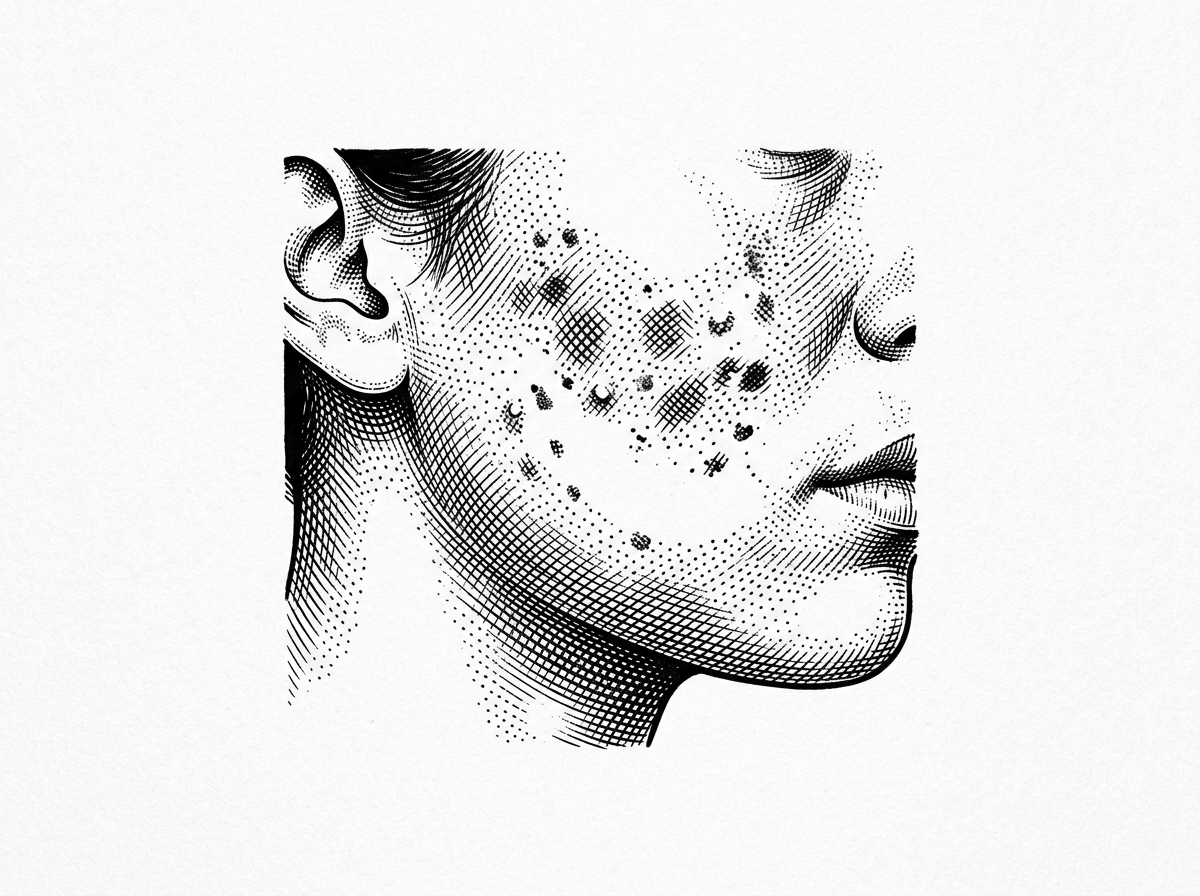
To understand why microneedling acne keloid scars is controversial, one must first distinguish between the two primary ways skin heals after inflammatory acne. Most acne patients suffer from atrophic scars, which are characterized by a loss of tissue. In these cases, the body fails to produce enough collagen to fill the "pit" left by a cystic lesion.
In contrast, keloid scars represent a pathological over-healing. The extracellular matrix (ECM) becomes flooded with disorganized collagen fibers. While atrophic scar microneedling therapy works by intentionally causing tiny wounds to trigger fresh collagen, this same mechanism can backfire in a keloid-prone environment.
Comparison of Acne Scar Types
| Scar Type | Visual Characteristics | Biological Mechanism | Response to Microneedling |
|---|---|---|---|
| Ice Pick | Deep, narrow, V-shaped pits | Vertical collagen loss | Often recalcitrant; requires depth |
| Boxcar | Wide, U-shaped depressions | Focal loss of dermal collagen | Good to very good improvement |
| Rolling | Wide, shallow waves | Fibrous tethering to sub-dermis | Excellent; often combined with subcision |
| Keloid | Raised, thick, firm, extends beyond wound | Excess Type I collagen; TGF-β overactivity | High risk; may worsen with trauma |
Pathogenesis of Keloid Formation
The formation of a keloid is driven by overactive fibroblasts. These cells produce procollagen at rates significantly higher than in normal skin. Furthermore, the ratio of collagen types is skewed, and the natural "off switch" for the inflammatory phase of healing is absent. In keloid-prone individuals, even minor trauma — such as the puncture of a needle — can re-ignite the tag/keloid-scars cycle. This is why many dermatologists view a history of keloids as a major contraindication for any elective cosmetic procedure that breaks the skin barrier.
Distinguishing Keloids from Hypertrophic Scars
It is common to confuse keloids with hypertrophic scars, but the clinical distinction is vital for treatment planning. Hypertrophic scars are raised but stay within the boundaries of the original acne lesion. They often flatten over time on their own. Keloids, however, are essentially benign tumors of scar tissue. They grow outward, invading healthy surrounding skin, and rarely regress without medical intervention.
Common locations for acne-induced keloids include the jawline, chest, upper back, and shoulders. According to Scientific research on scar classification, keloids are more prevalent in individuals with darker skin tones (Fitzpatrick IV-VI), though they can affect any skin type.
The Clinical Risks of Standard Microneedling for Keloid-Prone Skin
The primary concern with microneedling acne keloid scars using standard techniques (like a home dermaroller or a basic spa facial) is the induction of "secondary trauma." Standard microneedling works by creating thousands of micro-injuries to stimulate the wound-healing cascade. In a healthy individual, this leads to organized collagen remodeling. In a keloid-prone individual, this same cascade can lead to keloidogenesis — the birth of a new keloid or the aggressive expansion of an existing one.
Potential for New Keloid Formation
When a needle enters the dermis, it triggers an inflammatory response. For those with a genetic predisposition, this inflammation signals fibroblasts to enter a hyper-accelerated state. Instead of fine, organized collagen, the body produces thick, hyalinized collagen bundles. This risk makes microneedling for scar reduction a high-stakes gamble for these patients. Even if the patient has no keloids on their face, a history of keloids on the chest or ears suggests a systemic tendency toward this type of scarring.

Who is a Candidate for Microneedling Acne Keloid Scars?
Before undergoing any microneedle scar removal procedure, a board-certified dermatologist must perform a thorough risk assessment.
- Poor Candidates: Individuals with active keloids, a history of keloids on the trunk/ears, or those currently experiencing a flare-up of inflammatory acne.
- Cautious Candidates: Individuals with a family history of keloids but no personal history, or those who have successfully healed from surgery without keloids.
- Ideal Candidates: Individuals with atrophic (pitted) scars and no history of keloid formation.
According to Scientific research on microneedling safety, clinicians must also consider the Fitzpatrick skin type. While microneedling is generally safe for dark skin because it does not use heat (unlike some lasers), the mechanical trauma remains a keloid risk factor.
Evidence-Based Protocols for Microneedling Acne Keloid Scars
While standard microneedling is risky, modern medicine has developed specialized ways to use the technology to treat existing keloids. The most promising method is microneedle electroporation. This technique uses needles not just to puncture, but to act as conduits for medication.
Synergistic Effects of Electroporation and Corticosteroids
Traditional treatment for keloids involves injecting corticosteroids (like triamcinolone acetonide) directly into the dense, rubbery scar tissue. This is notoriously painful and often yields inconsistent results because the medication doesn't spread evenly through the tough collagen.
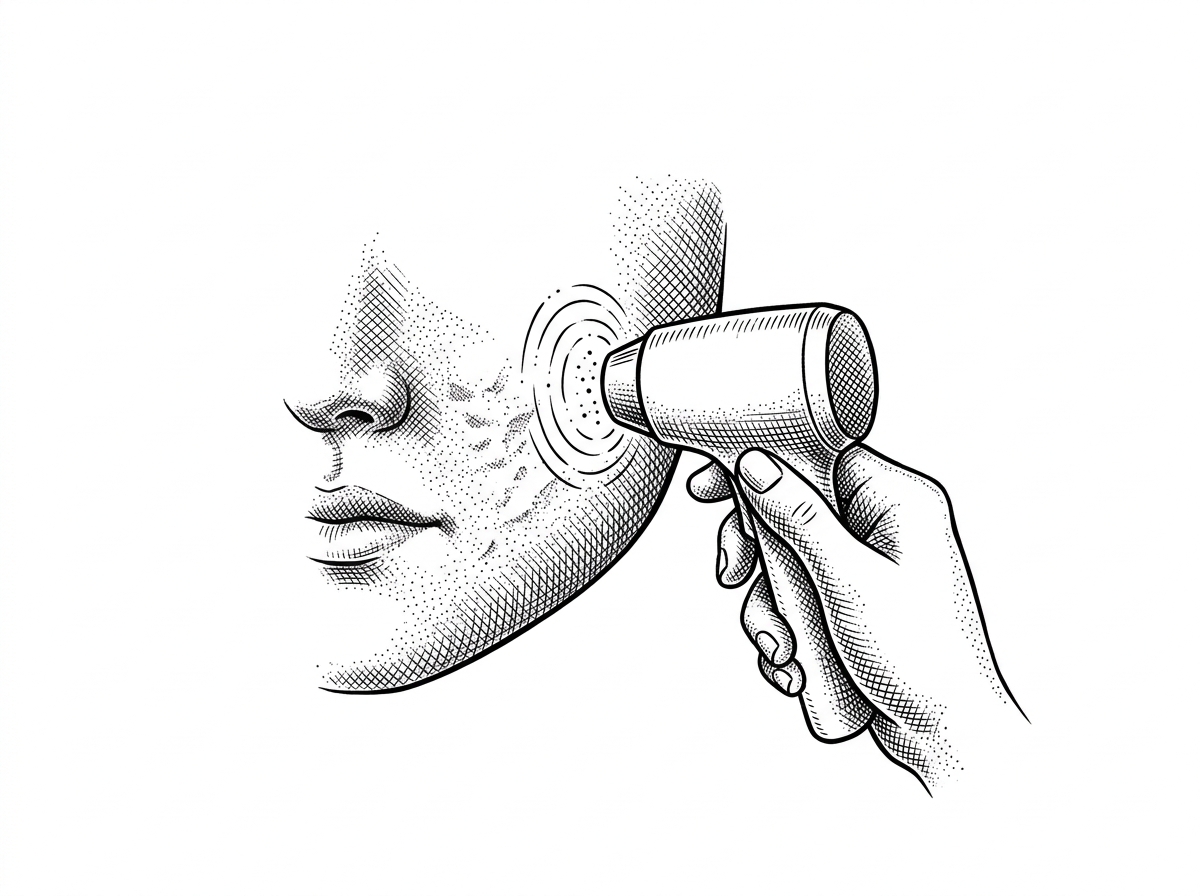
Microneedle electroporation changes the game. High-voltage, short-duration pulses are applied to the skin via the needles, creating temporary pores in the cell membranes. When combined with topical corticosteroids, the medication permeates the scar much more effectively. Scientific research on microneedle drug delivery reported a case where a patient’s Vancouver Scar Scale (VSS) score dropped from 6/13 to 1/13 after 15 sessions of this combination therapy.
Alternative Modalities and Combination Therapies
Beyond electroporation, other tag/microneedling variations are being explored:
- Fractional Radiofrequency (FRF): This adds heat to the needles. While heat can sometimes worsen keloids, FRF can also help "melt" and reorganize dense collagen when used at specific depths.
- Platelet-Rich Plasma (PRP): Using the patient's own growth factors can sometimes modulate the healing response. Studies suggest microneedling with PRP can improve atrophic scars by 50-70%, but its effect on keloids is still being researched.
- Silicone Gel/Sheets: After any microneedling procedure, keloid-prone patients are often instructed to use silicone products to maintain hydration and suppress fibroblast activity.
Clinical Expectations: Sessions, Results, and Aftercare
If a medical professional determines that you are a candidate for a specialized microneedling protocol, patience is required. Results for reducing acne scars fast are rarely seen after a single session.
Realistic Outcomes for Microneedling Acne Keloid Scars
For atrophic scars, patients typically need 3 to 6 sessions spaced 2 to 4 weeks apart. For existing keloid scars being treated with drug-delivery microneedling, the timeline is longer. In the case study mentioned earlier, it took 15 sessions over 8 months to achieve a near-complete flattening of the scar.
Expected improvements include:
- Softening of tissue: The scar becomes less "rubbery."
- Reduced height: The scar flattens toward the level of the surrounding skin.
- Symptom relief: Significant reduction in the itching and pain associated with keloids.
However, the risk of recurrence is real. Traditional steroid injections have a recurrence rate of 33% after one year and up to 50% after five years. Specialized microneedling aims to lower these numbers, but long-term data is still emerging.
Post-Procedure Management and Monitoring
Proper aftercare is non-negotiable for keloid-prone individuals. The goal is to minimize inflammation and prevent the "over-healing" response.
- Sun Protection: UV exposure can worsen pigmentation and trigger inflammation. Broad-spectrum SPF 30+ is essential.
- Bland Emollients: Keeping the skin hydrated reduces the mechanical stress on the wound, which can help prevent keloid triggers.
- No Picking: Any secondary trauma, like scratching at scabs, significantly increases the risk of a keloid forming.
- Monitoring: Patients must watch for signs of the scar "rebounding" or growing larger, which requires immediate medical attention.
Frequently Asked Questions about Microneedling Acne Keloid Scars
Can microneedling cause new keloids in prone individuals?
Yes. Any procedure that penetrates the dermis can trigger keloid formation in susceptible people. This is due to a dysregulated inflammatory cascade where the body produces excess collagen in response to injury. A risk assessment by a professional is the only way to weigh the benefits against the dangers.
Is microneedling effective for existing keloid scars?
Standard microneedling is generally ineffective and risky for existing keloids. However, specialized microneedling used for drug delivery (to get steroids deeper into the scar) has shown clinical success in softening and flattening the tissue.
How does microneedling compare to laser therapy for keloids?
Ablative lasers (like CO2) carry a high risk of heat-induced inflammation, which can trigger keloids. Microneedling is "cold," making it theoretically safer for dark skin types regarding pigmentary changes. However, for actual scar removal, many experts still prefer a combination of pulsed-dye laser (PDL) and steroid injections over microneedling alone. According to Scientific research on laser vs microneedling, the choice depends heavily on the scar's vascularity and the patient's history.
Conclusion
The decision to pursue microneedling acne keloid scars should never be made lightly or performed outside of a clinical setting. For those with atrophic scars, microneedling remains a "gold standard" for skin regeneration. But for the keloid-prone, the line between healing and harming is incredibly thin.
If you struggle with raised, itchy acne scars, the best path forward is a personalized consultation with a dermatologist who specializes in scar revision. They can determine if you are a candidate for advanced drug-delivery protocols or if you should "move on" to safer alternatives like silicone therapy or targeted cryotherapy.
For more information on managing various scar types, visit our resources on tag/microneedling.
Works Cited
- Juhasz, M. L. W., & Cohen, J. L. (2020). Microneedling for the Treatment of Scars: An Update for Clinicians. Clinical, Cosmetic and Investigational Dermatology. https://doi.org/10.2147/CCID.S267192
- Zhang, Y., et al. (2021). Microneedle Electroporation for Intralesional Administration of Corticosteroid Treatment of Keloid Scar. Journal of Cosmetic Dermatology. http://www.ncbi.nlm.nih.gov/pubmed/34084010
- American Academy of Dermatology (AAD). (2024). Microneedling can fade scars, uneven skin tone, and more. https://www.aad.org/public/cosmetic/scars-stretch-marks/microneedling-fade-scars
- Surendra, B. B., et al. (2024). Microneedling with PRP for Acne Scars: A New Tool in the Dermatologist's Arsenal. Journal of Pharmacy and Bioallied Sciences. https://journals.lww.com/jpbs/fulltext/2024/16002/microneedlingwithprpforacne_scars__anewtool.87.aspx
- Fabbrocini, G., et al. (2014). Microneedling Therapy for Atrophic Acne Scars: An Objective Evaluation. Journal of Cosmetic Dermatology. http://www.ncbi.nlm.nih.gov/pubmed/26748836
This content is for informational purposes only and does not constitute medical advice. Consult a qualified healthcare professional for diagnosis and treatment.