Top Rated Scar Reduction Creams for Legs and Body
Looking for the best scar reduction cream? We review the clinical evidence behind top-rated creams for leg and body scars, from silicone gels to onion extract formulas.

What Clinical Evidence Says About the Best Scar Reduction Cream for Legs and Body
The search for the best scar reduction cream is one shared by millions of people dealing with visible marks from surgery, injury, acne, or burns — marks that can affect confidence long after the wound has healed.
Before diving into the full analysis, here is a quick reference based on current clinical evidence:
Top scar reduction cream categories by evidence strength:
| Ingredient / Type | Best For | Evidence Level |
|---|---|---|
| Medical-grade silicone gel | Surgical, hypertrophic, keloid scars | Strong (multiple RCTs) |
| Silicone + SPF (e.g., SPF 30) | Sun-exposed scars on legs/body | Strong |
| Retinoids + glycolic acid | Atrophic acne scars | Moderate (91% improvement in 12-week studies) |
| Onion extract (Allium cepa) | New superficial scars | Limited/mixed |
| Vitamin C / antioxidants | Discoloration, hyperpigmentation | Moderate |
| Growth factor formulations | Post-procedure, surgical scars | Emerging |
Note: No topical cream eliminates scars completely. Realistic outcomes involve improvement in texture, color, and height — not full removal.
Scars form when the body lays down collagen rapidly to close a wound. This process — called tissue remodeling — continues for up to two years after injury. The collagen produced during healing is structurally different from normal skin, which is why scars look and feel distinct from surrounding tissue.
The good news: this remodeling window is exactly when topical treatments can have the most impact.
Choosing the right cream depends on scar type, skin tone, location on the body, and how long the scar has been present. A cream that works well for a raised surgical scar on the thigh may do little for a depressed acne scar on the chest.
This guide reviews the clinical evidence behind the most widely used scar reduction creams for legs and body — so the decision can be based on science, not marketing claims.
How Scar Type Influences the Selection of the Best Scar Reduction Cream
Selecting the best scar reduction cream requires an understanding of the specific biological "error" that occurred during the healing process. Scars are not uniform; they represent different manifestations of the body's attempt to restore the dermal barrier.
Hypertrophic Scars
Hypertrophic scars are characterized by a raised, red appearance that remains within the boundaries of the original wound. They often occur in areas of high skin tension, such as the knees or shoulders. Research indicates that these scars result from an overproduction of collagen during the proliferative phase. Clinical guidelines, such as those published in Plastic and Reconstructive Surgery, suggest that silicone is the primary non-invasive treatment for managing these elevations.
Keloid Formation
Keloids are more aggressive than hypertrophic scars. They extend beyond the original site of injury and can continue growing over months or years. This is due to a persistent activation of fibroblasts—the cells responsible for creating the extracellular matrix. While topical creams can help manage the itching and redness associated with keloids, they often require combination therapy, such as corticosteroid injections, which have been shown to reduce scar size by 50% or more.
Atrophic Scars
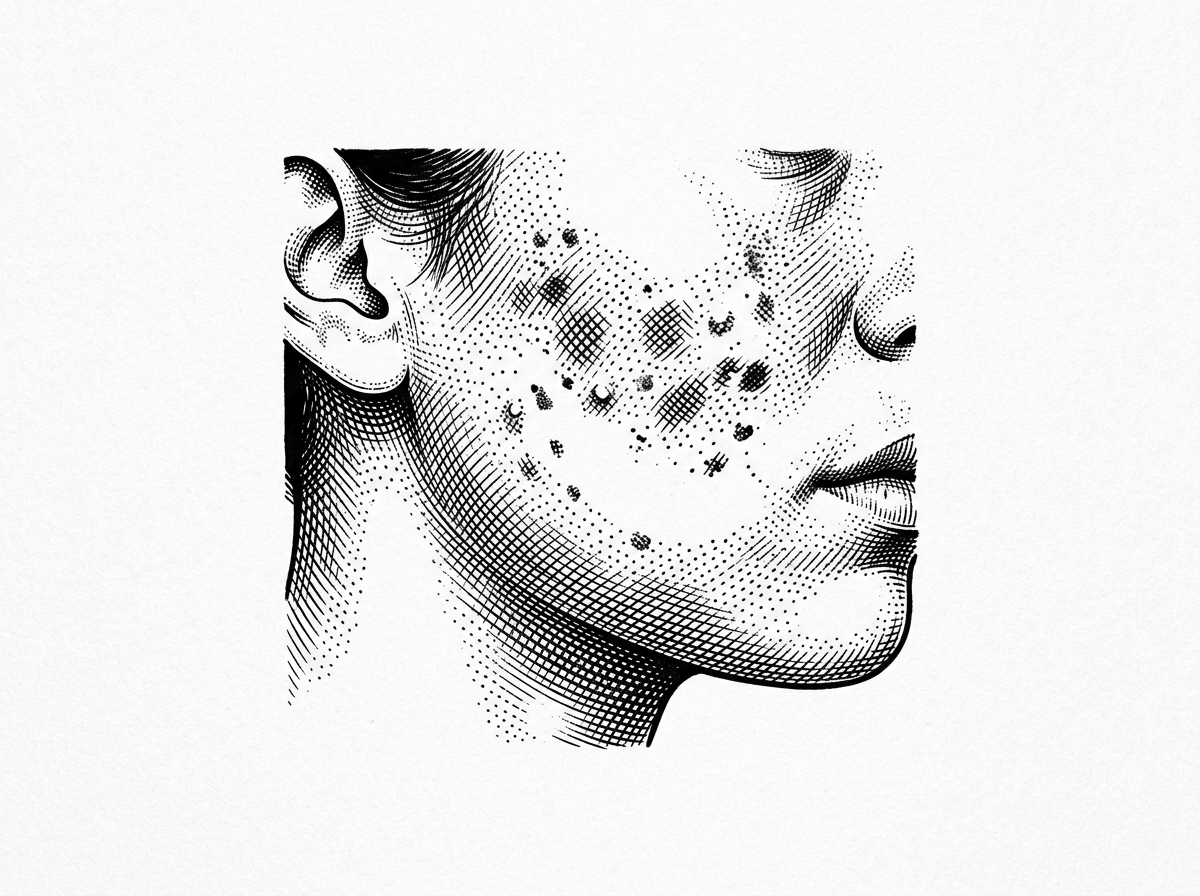
Commonly seen on the chest or back following acne or chickenpox, atrophic scars appear as indentations or "pits" in the skin. These occur when the underlying support structures, like fat or muscle, are lost during inflammation. Topical creams for these scars focus on "resurfacing" rather than flattening.
Contracture Scars
Often resulting from burn injuries, contracture scars tighten the skin, which can impair movement. Treatment for these requires highly occlusive barriers to maintain elasticity in the newly formed tissue. Scientific research on silicone efficacy in scar management highlights that topical silicone gel significantly reduces scar height and pigmentation in postoperative and burn-related scarring.

Evaluating the Best Scar Reduction Cream for Atrophic and Hypertrophic Scars
The biological requirements for treating a "hole" in the skin versus a "bump" are polar opposites. For hypertrophic scars, the goal is to signal the fibroblasts to stop producing excess collagen. This is achieved through hydration and occlusion. By creating a semi-permeable barrier, the best scar reduction cream mimics the stratum corneum (the skin's outermost layer), signaling the body to normalize collagen production.
For atrophic scars, the focus shifts to stimulation. Scientific research on retinoids and glycolic acid for acne scars found that 91% of participants saw significant improvement after 12 weeks of combined treatment. Retinoids, derived from Vitamin A, promote cell turnover and collagen synthesis to help "fill" the depressions from within.
Clinical Evidence for Active Ingredients in Topical Scar Therapy
When browsing for a best scar reduction cream, the ingredient list serves as the roadmap for expected results. Not all ingredients carry the same weight in peer-reviewed literature.
Medical-Grade Silicone: The Gold Standard
Since 1982, silicone has been the undisputed first-line therapy recommended by dermatologists and plastic surgeons. It works through two primary mechanisms:
- Hydration: It prevents transepidermal water loss, which keeps the scar tissue soft.
- Biofeedback: The occlusion creates a micro-environment that downregulates the activity of TGF-beta, a cytokine that triggers excessive scarring.
Allium Cepa (Onion Extract)
Onion extract is a common alternative to silicone. It contains quercetin, which has anti-inflammatory and antibacterial properties. While some studies, such as those by Draelos et al. (2012), show improvement in redness and texture for new scars, the evidence for flattening raised tissue is generally considered weaker than that for silicone.
Growth Factors and Peptides
Modern formulations are increasingly incorporating synthetic growth factors. These proteins mimic the body's natural signaling molecules to coordinate "orderly" healing rather than the chaotic collagen deposition that leads to scarring. Clinical data suggests these formulations may be up to 73% more effective than silicone alone for certain surgical marks.
Natural Botanicals: Aloe and Vitamin E
- Aloe Vera: Known for its soothing properties, Aloe Vera Scar Reduction is supported by research showing it can accelerate the remodeling phase of wound healing. It is particularly valued for its anti-inflammatory effects on fresh, pink scars.
- Vitamin E: Despite its popularity, Vitamin E Scar Healing is a subject of debate in dermatology. While it is a potent antioxidant, some clinical trials have shown it may cause contact dermatitis in up to 30% of users, and its efficacy in reducing scar size is not consistently proven.
| Ingredient | Primary Action | Best Scar Type |
|---|---|---|
| Silicone | Occlusion & Hydration | Hypertrophic, Surgical |
| Retinoids | Cell Turnover | Atrophic, Acne |
| Vitamin C | Melanin Inhibition | Hyperpigmented (Dark) |
| Hyaluronic Acid | Moisture Retention | New, Dry Scars |
Safety Considerations for Using the Best Scar Reduction Cream on Sensitive Skin
The skin on the legs and body is generally hardier than facial skin, but the compromised nature of a scar makes it susceptible to irritation.
Contact Dermatitis: Fragrances and certain preservatives can trigger redness and itching. When selecting a product, look for "fragrance-free" and "hypoallergenic" labels. If a scar is on the face or a highly visible area, a Old Scar Lightening Serum containing niacinamide or licorice root may be gentler than harsh chemical lighteners.
Pediatric and Pregnancy Safety: Most silicone-based products are considered safe for children over six months and for use during pregnancy because they are not absorbed systemically. However, active ingredients like retinoids must be avoided during pregnancy and breastfeeding. Always perform a patch test on a small, unaffected area of skin before applying a new cream to a large surgical site.
Optimizing Results: Clinical Guidelines for Application Timing and Frequency
The most common reason a best scar reduction cream "fails" is not the formula, but the timing and consistency of application.
When to Start
Treatment should never begin on an open wound. The "golden rule" of scar management is to wait until the wound has undergone full epithelialization. This means:
- Stitches have been removed.
- No active scabbing or oozing is present.
- The wound is "closed" (usually 2–4 weeks post-injury).
Post Surgery Scar Care emphasizes that starting too early can interfere with the initial inflammatory phase necessary for healing, while starting too late (after 12 months) may miss the most active period of tissue remodeling.
Frequency and Technique
Most clinical studies utilize a twice-daily application protocol.
- Cleanse: Use a mild, soap-free cleanser.
- Dry: Ensure the area is completely dry; silicone does not adhere well to damp skin.
- Massage: For raised scars on the legs or body, applying the cream with gentle circular pressure for 1–2 minutes can help break up dense collagen bundles.
- Consistency: Tissue remodeling is a marathon. Early changes may be seen at 4–8 weeks, but meaningful results typically require 3–6 months of daily use.
The Role of UV Protection in Preventing Scar Hyperpigmentation
One of the most overlooked factors in scar appearance is sun exposure. Healing tissue is highly sensitive to ultraviolet (UV) radiation. When a scar is exposed to the sun, the body may overproduce melanin in that specific area, leading to permanent darkening known as post-inflammatory hyperpigmentation (PIH).
Why SPF is Essential:
- Melanocyte Activity: Scars lack the natural protective mechanisms of mature skin. UV rays trigger melanocytes to darken the scar, making it stand out against the surrounding skin.
- Erythema: Heat and UV can increase blood flow to the area, making a pink scar appear bright red and angry.
Dermatologists recommend a broad-spectrum SPF 30 or higher for any scar exposed to the sun. Physical blockers like zinc oxide or titanium dioxide are often preferred for scars because they sit on top of the skin and reflect light without causing the chemical irritation sometimes associated with organic filters. Some of the best scar reduction cream formulations now include integrated SPF 30 to simplify the routine for users.
Conclusion
Managing scars on the legs and body is a clinical process that requires patience and the right tools. While no "miracle" exists to erase a scar overnight, the evidence-based use of medical-grade silicone, combined with targeted actives like retinoids for atrophic marks or antioxidants for discoloration, can significantly improve the skin's aesthetic outcome.
For those recovering from surgery or injury, the gold standard remains a high-silicone gel or sheet used consistently for at least 90 days. Protecting the site from UV damage and maintaining hydration are the most effective ways to support the body’s natural remodeling process. For more detailed insights into the science of skin regeneration, users can subscribe for research updates.
Works Cited
- Wang, F., et al. (2020). "Efficacy of topical silicone gel in scar management: A systematic review and meta-analysis of randomized controlled trials." NCBI/PubMed.
- Mustoe, T. A., et al. (2002). "International clinical recommendations on scar management." Plastic and Reconstructive Surgery.
- Draelos, Z. D., et al. (2012). "A new proprietary onion extract gel improves the appearance of new scars." Journal of Clinical and Aesthetic Dermatology.
- Wong, V. (2023). "Acne scarring: Pathogenesis and treatment options." DermNet NZ.
- Sidgwick, G. P., et al. (2015). "A comprehensive evidence-based review on the role of topicals and dressings in the management of skin scarring." Archives of Dermatological Research.
This content is for informational purposes only and does not constitute medical advice. Consult a qualified healthcare professional for diagnosis and treatment.