Professional Scar Reduction Therapies for Acne Cysts and Hip Surgery
When scars from acne or surgery won't fade on their own, professional treatments like microneedling can help. Explore what the clinical evidence says about minimally invasive options.

When Scars Won't Fade: What the Evidence Says About Microneedling
Microneedling for scar reduction is one of the most clinically studied minimally invasive treatments available today — and for good reason. Research indicates it can meaningfully improve the appearance of acne scars, surgical scars, and other scar types across all skin tones.
Here is a quick overview of what the evidence shows:
| Treatment Goal | What Research Indicates |
|---|---|
| Acne scar improvement | Evidence suggests 50-70% fading after 3-5 sessions |
| Overall scar improvement | A large prospective study found all scars improved at least 50% after an average of 2.5 treatments |
| Patient satisfaction | Clinical reviews of 58 studies (1,845 patients) report 50-100% satisfaction rates |
| Surgical scars | Early treatment (6-7 weeks post-surgery) shows significantly better outcomes than delayed treatment |
| Skin tone safety | Considered safe across Fitzpatrick skin types I-VI, including darker skin tones |
Scars form when the skin's normal repair process is disrupted, producing collagen that is structurally different from healthy tissue. The result — whether a pitted acne scar or a raised surgical scar — can persist for years and resist most topical treatments. For many people, this has a real impact on confidence and daily life.
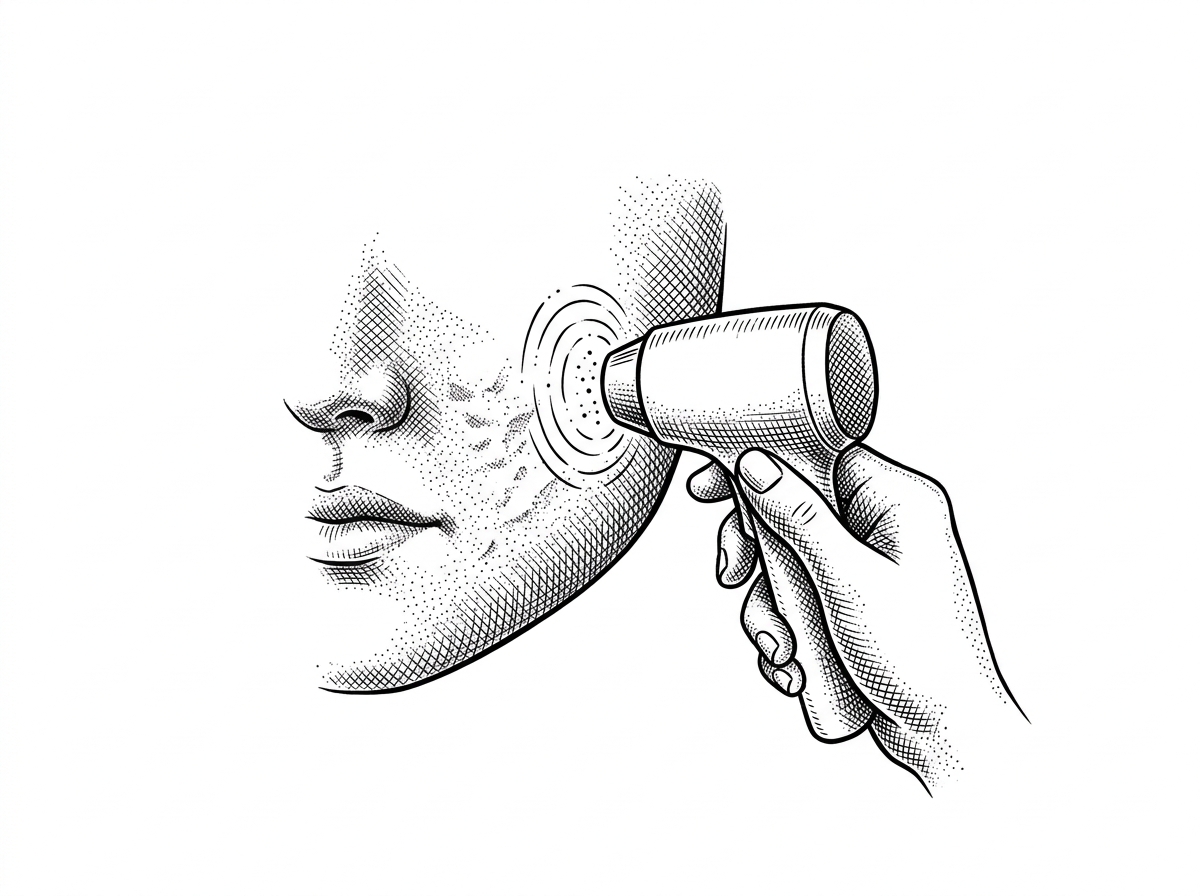
Microneedling works by creating controlled micro-injuries in the skin, triggering the body's own wound-healing response. This stimulates the production of new collagen and elastin — the structural proteins that give skin its texture and firmness. Unlike ablative laser treatments, microneedling leaves the surface layer of skin largely intact, which reduces recovery time and makes it a viable option for a broader range of patients.
This article reviews the clinical evidence for professional microneedling as a scar reduction therapy, compares it to alternative treatments, and outlines what patients with acne cyst scarring or post-surgical scars (such as from hip surgery) should realistically expect.
Mechanisms of Microneedling for Scar Reduction
To understand why microneedling for scar reduction is effective, one must look at the microscopic level of skin repair. The procedure, scientifically known as Percutaneous Collagen Induction (PCI), utilizes fine needles to create thousands of invisible punctures in the epidermis and dermis.
When these needles penetrate the skin, they break up old, tethered strands of collagen that pull the skin downward (forming pits) or push it upward (forming ridges). This physical disruption is the first step. The second step is the biological "reboot." These micro-injuries trigger a controlled inflammatory response. Platelets release clotting factors and essential growth factors, such as Transforming Growth Factor-beta (TGF-β), Vascular Endothelial Growth Factor (VEGF), and Fibroblast Growth Factor (FGF).
Fibroblasts, the workhorse cells of the skin, are then activated. In a healthy state, fibroblasts produce a balanced extracellular matrix. In a scarred state, the collagen is often clumped or disorganized. Research on microneedling mechanisms suggests that the procedure encourages the production of Type III collagen, which is eventually replaced by the more permanent and flexible Type I collagen. Over several months, this "collagen remodeling" fills in atrophic acne pockmarks and flattens raised tissue.
Furthermore, these micro-channels act as temporary "highways," allowing topical treatments like hyaluronic acid or vitamin C to penetrate much deeper than they could on their own. This synergy enhances the skin's ability to regenerate from the inside out.
Clinical Efficacy for Acne Cysts and Surgical Scars
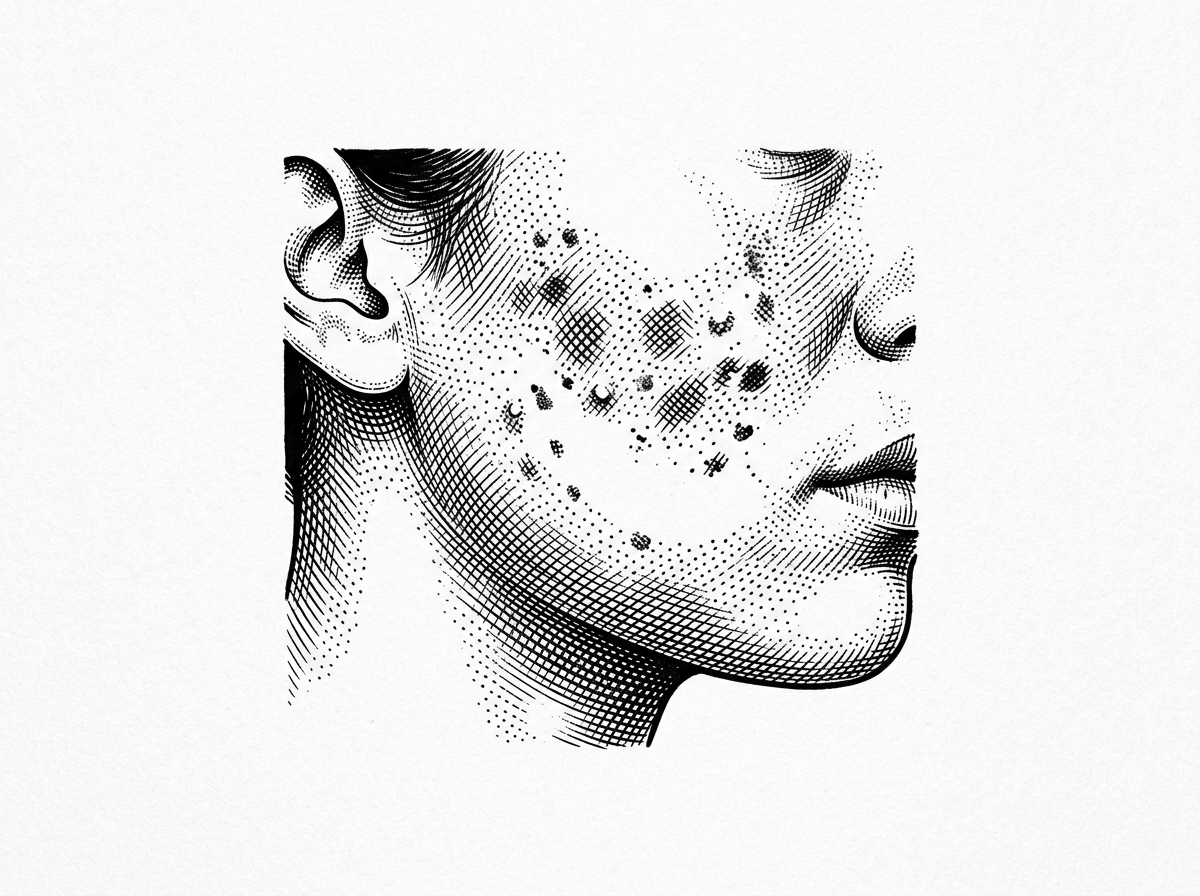
Acne cysts are notorious for leaving behind atrophic scars — those stubborn "icepick," "rolling," or "boxcar" indentations. Because cystic acne occurs deep in the dermis, the resulting damage is significant. Clinical evidence shows that microneedling for scar reduction is particularly effective for rolling and boxcar scars. A 2018 study noted that 80% of participants saw a visible improvement in their acne scars following treatment.
For surgical scars, such as those resulting from hip surgery or facelifts, the timing of treatment appears to be a critical factor. Traditionally, clinicians advised waiting 6 to 12 months for a scar to "mature" before attempting intervention. However, a study on early postsurgical microneedling has sparked a "paradigm shift."
The study found that treating scars as early as 6 to 7 weeks post-surgery yielded significantly better results than waiting longer. Researchers used the Patient and Observer Scar Assessment Scale (POSAS), where scores range from 6 (normal skin) to 60 (worst possible scar). In the early treatment group, average POSAS scores dropped from 16.8 to 8.1. In contrast, those who started treatment later (13-16 weeks) saw a less dramatic improvement, moving from 26.1 to 14.2.
Comparing Professional Microneedling for Scar Reduction to Alternative Therapies
When comparing professional options, patients often weigh microneedling against fractional CO2 lasers or deep chemical peels. While lasers are powerful, they work by using heat (thermal energy) to vaporize skin layers. This can lead to longer recovery times and, in some cases, a higher risk of post-inflammatory hyperpigmentation (PIH), particularly in darker skin tones.
Research on acne scar management indicates that microneedling offers a favorable safety profile because it is "non-thermal." It preserves the epidermis, the skin's protective outer layer, which minimizes the risk of infection and reduces downtime to just 2–3 days.
| Feature | Microneedling | Fractional CO2 Laser |
|---|---|---|
| Mechanism | Mechanical (Needles) | Thermal (Light/Heat) |
| Recovery Time | 2–3 Days | 7–14 Days |
| Risk for Darker Skin | Low | Moderate to High |
| Epidermal Integrity | Preserved | Partially Ablated |
While lasers might require fewer sessions for some deep scars, the cumulative effect of a microneedling series often reaches a similar endpoint with significantly less risk of scarring or "tramtrack" textures when performed by a professional.
Advanced Combinations: PRP and Radiofrequency Microneedling for Scar Reduction
To push results further, many dermatologists now use "boosted" versions of the treatment.
- Radiofrequency (RF) Microneedling: This device uses needles to deliver heat directly into the deeper layers of the dermis. This combines the mechanical benefits of needling with the skin-tightening benefits of heat. Because the heat is delivered under the surface, the top layer of skin remains safe, making it a "best of both worlds" approach for deep surgical or acne scars.
- Platelet-Rich Plasma (PRP): Often called a "vampire facial," this involves applying a concentrate of the patient's own platelets to the skin during or after needling. A 2020 study found that microneedling combined with PRP was significantly more effective for acne scars than needling alone. The growth factors in the PRP act like "fertilizer" for the new collagen growing in the micro-channels.
According to a clinical update on scar treatments, these combination therapies are becoming the gold standard for complex cases where monotherapy might fall short.
Safety, Recovery, and Considerations for All Skin Tones
One of the greatest strengths of microneedling for scar reduction is its inclusivity. Many light-based therapies are risky for people with higher scores on the Fitzpatrick scale (darker skin tones) because the laser energy can mistakenly target the melanin in the skin, causing dark spots or white patches. Microneedling avoids this by using mechanical action rather than light.
What to Expect During Recovery
- Day 1-2: The skin typically looks and feels like a moderate sunburn. Some swelling and pinpoint bleeding are normal.
- Day 3-5: Redness fades. Skin may feel tight or dry. Some light peeling may occur as the old skin cells shed.
- Day 7+: Most patients can return to their full skincare routine, including makeup.
Contraindications and Risks
While safe, microneedling is not for everyone. Individuals should avoid the treatment if they have:
- Active acne or skin infections (which could spread bacteria).
- A history of keloid scars (microneedling might trigger more abnormal growth in keloid-prone individuals).
- Active eczema or psoriasis in the treatment area.
- Recent use of certain acne medications like isotretinoin (typically a 6-month wait is required).
Consultation with a qualified healthcare professional is recommended to assess suitability and risks.
Frequently Asked Questions about Scar Reduction
How many sessions are typically required for visible results?
While some see a "glow" after one session, scar reduction is a marathon, not a sprint. For acne scars or surgical scars, a series of 3 to 5 sessions is usually required. These are typically spaced 2 to 4 weeks apart to allow the skin's natural remodeling cycle to complete. Full results are often not visible until 3 to 6 months after the final session, as collagen takes time to mature.
Is professional microneedling safe for darker skin tones?
Yes. Because it does not use heat to ablate the skin, it carries a much lower risk of post-inflammatory hyperpigmentation compared to many lasers. It is considered one of the safest professional options for Fitzpatrick types IV-VI.
How does professional treatment compare to at-home dermarolling?
There is a significant difference in both safety and efficacy.
- Needle Length: At-home rollers usually have needles 0.2mm to 0.25mm long, which are mostly for increasing product absorption. Professional devices use needles up to 3.0mm to reach the deep dermis where scars live.
- Precision: Professional "pens" go straight up and down (vertically), whereas rollers enter and exit the skin at an angle, which can cause unnecessary "tracking" or tearing.
- Safety: At-home rollers are difficult to sterilize and can become dull, leading to infections or further scarring.
Conclusion
The evidence is clear: microneedling for scar reduction is a robust, scientifically backed therapy that offers a "second chance" for skin damaged by acne cysts or surgery. From the 80% improvement rates in acne studies to the paradigm-shifting benefits of early intervention for surgical scars, the procedure provides a minimally invasive path to smoother skin.
Whether used alone or combined with PRP and radiofrequency, microneedling harnesses the body's innate biological power to heal itself. For those struggling with the physical and emotional weight of scarring, professional microneedling represents a high-satisfaction, low-downtime solution. Further information on scar healing and treatment options can be found on this resource at Scar Healing.
This content is for informational purposes only and does not constitute medical advice. Consult a qualified healthcare professional for diagnosis and treatment.