Ankle Scars: Why Microneedling is a Step in the Right Direction
Ankle scars face unique healing challenges due to constant movement. Learn how microneedling stimulates collagen repair to improve scar appearance in this tricky area.


Ankle Scars and Microneedling: What the Evidence Actually Shows
Microneedling for ankle scars is a clinically supported approach to improving scar appearance by stimulating the skin's natural collagen repair process — and research suggests it can be meaningfully effective across multiple scar types.
Quick answer for those evaluating microneedling for ankle scars:
| Question | Short Answer |
|---|---|
| Does it work? | Evidence suggests yes — studies show at least 50% improvement in every scar treated |
| Best scar types | Atrophic (sunken) and surgical scars respond best |
| When to start | Around 6-7 weeks post-surgery, once the wound is fully closed |
| Sessions needed | Typically 3-6 sessions, spaced 4-6 weeks apart |
| Safe for all skin tones? | Yes — non-thermal mechanism minimises pigmentation risk |
| Can it be combined? | PRP combination shows superior outcomes over microneedling alone |
| Downtime | Redness and mild swelling lasting 24-48 hours |
Ankle scars are particularly challenging. The skin over the ankle is thin, sits close to bone and tendon, and endures near-constant movement and pressure. Whether the scar comes from surgery, trauma, or a skin condition, healing in this area is slower and more prone to visible scarring than almost anywhere else on the body.
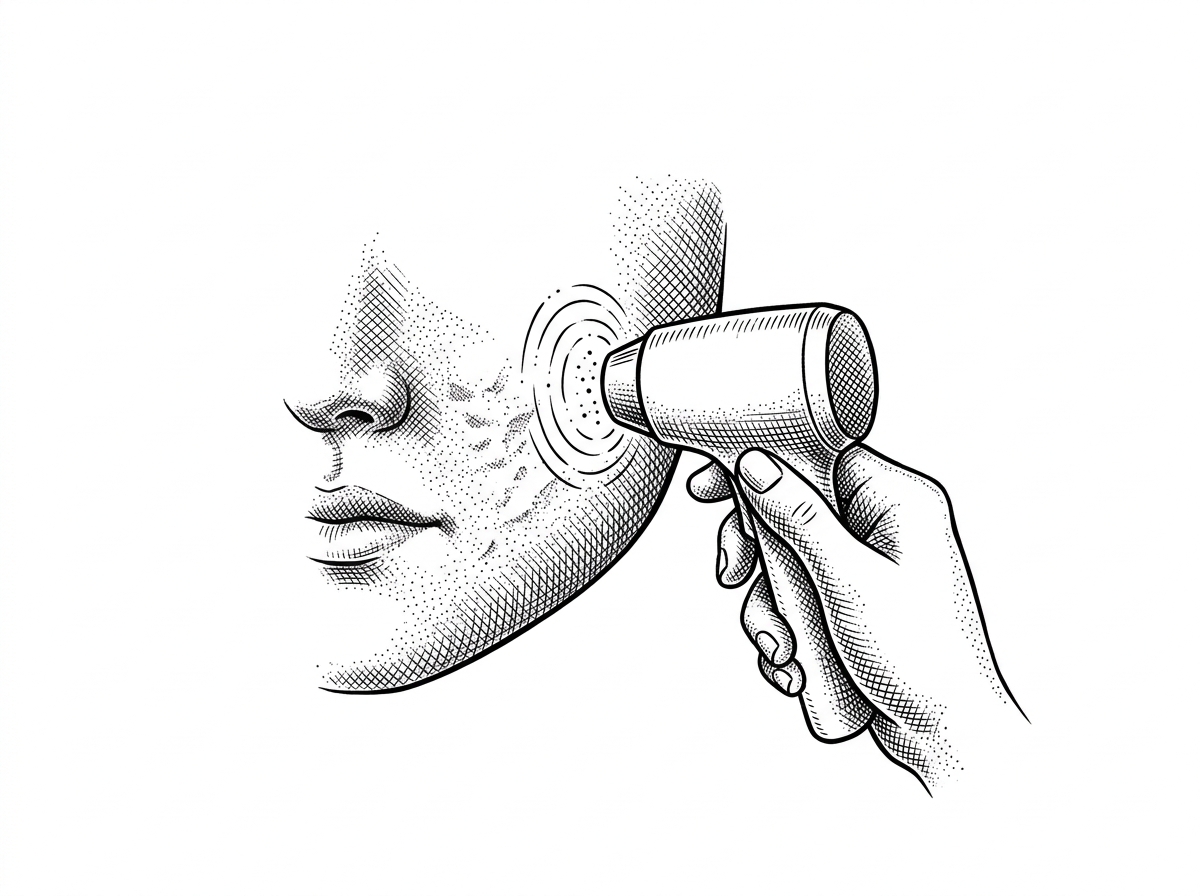
Microneedling — also called percutaneous collagen induction therapy — addresses this by creating controlled micro-injuries in the dermis (the deeper layer of skin beneath the surface). This triggers a wound healing cascade: fibroblasts activate, growth factors are released, and the body begins rebuilding the scar tissue with more organised collagen.
The results are not instant, and microneedling does not erase scars completely. But the clinical evidence is encouraging. A systematic review of 58 studies covering 1,845 patients found high rates of clinical improvement across scar types, with patient satisfaction rates between 50% and 100%. A separate body of research found that every single scar treated with microneedling improved by at least 50%, with 65% of patients seeing greater than 75% improvement.
For ankle scars specifically, those findings matter — because options for this area are more limited than for facial scars, and many patients feel frustrated by marks that are visible every time they wear shorts, sandals, or go to the gym.
This guide reviews what the science says, what realistic outcomes look like, and what anyone considering this treatment for an ankle scar should know before starting.
The Science of Microneedling for Ankle Scars
To understand why microneedling for ankle scars is effective, one must look at the biological process of percutaneous collagen induction. When a professional-grade device—equipped with fine, sterile needles—penetrates the skin, it creates thousands of microscopic "channels." These are not random tears; they are controlled micro-injuries that bypass the epidermis to reach the dermis.
This action triggers a three-stage wound healing cascade:
- Inflammation: Immediately following the micro-injury, platelets release growth factors (such as TGF-beta and VEGF) that signal the body to begin repairs.
- Proliferation: Fibroblasts—the cells responsible for skin structure—are activated. They begin producing new extracellular matrix components, including elastin and collagen.
- Remodeling: This is the most critical phase for scar reduction. Over several months, the initial "emergency" collagen (Type III) is replaced by stronger, more organized Type I collagen.
Research published in PubMed highlights that this process leads to significant epidermal thickening and a more normalized skin texture. In the context of the ankle, where skin can become thin and parchment-like following surgery or injury, this thickening helps the scar blend more naturally with the surrounding healthy tissue. Unlike laser treatments that use heat, microneedling relies purely on mechanical stimulation, which preserves the skin's integrity while forcing it to "re-do" the healing process more efficiently.

Clinical Efficacy Across Different Scar Types
Not all scars are created equal, especially on the lower extremities. Ankle injuries often result in a variety of scar morphologies, including surgical incisions from ORIF (Open Reduction Internal Fixation) procedures, atrophic depressions from trauma, or hypertrophic remodeling where the body produced too much collagen.
Surgical and Atrophic Scars
Research indicates that surgical and atrophic (sunken) scars respond exceptionally well to microneedling. Because atrophic scars represent a "collagen deficit," the induction of new fibers helps "plump" the depression from underneath. A study featured by the American Society of Plastic Surgeons demonstrated that early intervention can significantly drop scar severity scores.
Hypertrophic Scars
Hypertrophic scars—which are raised and firm—require a different mechanism. Here, microneedling works by breaking up the dense, disordered bundles of collagen that cause the raised appearance. By creating micro-channels through this tough tissue, the body is encouraged to remodel the area into a flatter, softer configuration.
| Scar Type | Primary Benefit of Microneedling | Expected Outcome |
|---|---|---|
| Surgical | Softens edges and improves color blending | High improvement in 3-6 sessions |
| Atrophic | Stimulates collagen to fill depressions | Significant texture normalization |
| Hypertrophic | Breaks down dense collagen bundles | Flattening and increased flexibility |
Clinical assessment tools like the Manchester Scar Scale (MSS) are often used to measure these changes. MSS scores track parameters such as color, matte vs. shiny finish, and contour. Studies have shown that microneedling can reduce these scores significantly, moving a "severe" scar into the "mild" or "moderate" category.
Optimizing Results: Timing and Combination Therapies
While microneedling is powerful as a monotherapy, its efficacy for ankle scars can be amplified through strategic timing and the addition of biological boosters.
Enhancing microneedling for ankle scars with PRP
One of the most significant advancements in scar management is the combination of microneedling with Platelet-Rich Plasma (PRP). In this procedure, a small amount of the patient's own blood is processed to concentrate the platelets, which are then applied to the skin during or after microneedling.
The micro-channels created by the needles act as direct conduits, allowing the PRP's concentrated growth factors to reach the deep dermis. A comparative study found that patients receiving the MN+PRP combination saw their mean Manchester Scar Scale scores drop from 11.87 to 6.87 after just three sessions. This was statistically superior to microneedling alone, with 93.3% of patients achieving moderate to excellent improvement.
Identifying the ideal window for microneedling for ankle scars
Timing is arguably the most overlooked factor in scar healing. Historically, clinicians advised waiting 6 to 12 months for a scar to "mature" before treating it. However, recent research suggests a "sweet spot" for intervention.
Starting microneedling for ankle scars around the 6-7 week mark—once the wound is fully closed and scabs have fallen off—can yield "markedly better" results. Think of a scar in its early weeks like "wet cement." It is still being formed and is highly responsive to guidance. By intervening early, microneedling can guide the remodeling process before the scar tissue becomes permanent and rigid.
Practical Considerations for the Ankle Area
Treating the ankle requires more finesse than treating the face or abdomen. The anatomy of the lower leg presents unique challenges that both the provider and the patient must navigate.
Skin Thickness and Joint Mobility
The skin over the malleolus (the bony bits of the ankle) is remarkably thin. There is very little subcutaneous fat to cushion the area. Consequently, needle depth must be precisely adjusted. While a 2.0mm depth might be appropriate for a thick scar on the thigh, it could be too aggressive directly over the ankle bone. Professional devices allow for 0.1mm incremental adjustments to ensure safety.
Furthermore, the ankle is a high-mobility joint. Scar tissue here can become "tethered" to underlying structures, restricting movement and causing discomfort during walking. Microneedling helps by increasing the pliability of the tissue, effectively "loosening" the scar.
Weight-Bearing and Edema
Gravity is not always a friend to healing. Because the ankles are at the lowest point of the body, they are prone to swelling (edema) after any procedure. Patients may notice more redness and "tightness" in the ankle area post-treatment compared to other body parts. Elevating the leg for the first 24 hours can mitigate this effect.
Safety of microneedling for ankle scars on diverse skin tones
One of the greatest advantages of microneedling for ankle scars is its safety profile for all Fitzpatrick skin types. Many laser treatments carry a risk of Post-Inflammatory Hyperpigmentation (PIH) in darker skin tones because they use thermal energy. Microneedling is a mechanical, non-thermal treatment. Research in the Journal of Drugs in Dermatology confirms that it is an excellent option for patients with melanin-rich skin, as it achieves results without the high risk of darkening the treated area.
Frequently Asked Questions about Ankle Scar Treatment
How many sessions are typically required for visible improvement?
Collagen synthesis is a marathon, not a sprint. While some patients notice a subtle softening of the scar texture after one session, most clinical protocols recommend a series of 3 to 6 sessions. These are typically spaced 4 to 6 weeks apart to allow the body's remodeling phase to complete. Optimal results are usually seen 3 to 6 months after the final session, as the new collagen continues to mature.
How does professional treatment compare to at-home derma rollers?
It is tempting to try at-home rollers, but for surgical or traumatic ankle scars, they are often ineffective and potentially risky.
- Depth: At-home rollers usually only reach 0.25mm to 0.5mm—not deep enough to remodel tough scar tissue. Professional devices can reach 2.0mm or 3.0mm.
- Precision: Rollers enter the skin at an angle, which can cause "track-mark" tearing. Professional pens enter vertically, minimizing trauma.
- Safety: The risk of infection is significantly higher with at-home devices, especially on the lower legs where circulation is slower.
What is the expected downtime and aftercare for ankle treatments?
The downtime is generally minimal. For the first 24-48 hours, the ankle will look and feel like it has a mild sunburn.
- Erythema: Redness is normal and expected.
- Sun Protection: The treated skin is highly sensitive to UV rays. Sunscreen is non-negotiable if the ankle is exposed.
- Footwear: It is best to avoid tight boots or straps that rub directly against the treated scar for the first few days.
- Hydration: Using a gentle, hyaluronic acid-based serum can support the healing micro-channels.
Conclusion
Microneedling for ankle scars represents a significant step forward in non-invasive scar management. By tapping into the body's innate ability to regenerate and remodel tissue, this treatment offers a path toward smoother, more flexible skin. Whether dealing with a recent surgical incision or an older traumatic mark, the clinical evidence suggests that a proactive, professional approach can yield substantial improvements in both appearance and quality of life.
While no treatment can promise the total "erasure" of a scar, the statistics are clear: with the right timing and a consistent treatment plan, significant regeneration is possible. For those looking to move past the reminder of an old injury, microneedling is indeed a step in the right direction.
For more information on the science of skin regeneration and scar management, visit Scar Healing.
This content is for informational purposes only and does not constitute medical advice. Consult a qualified healthcare professional for diagnosis and treatment.