Microneedle Scar Removal: The Ultimate Guide to Smoother Skin
Microneedling uses fine needles to trigger your skin's natural healing response. Learn how this clinically studied procedure works, what results to expect, and whether it's right for your scars.
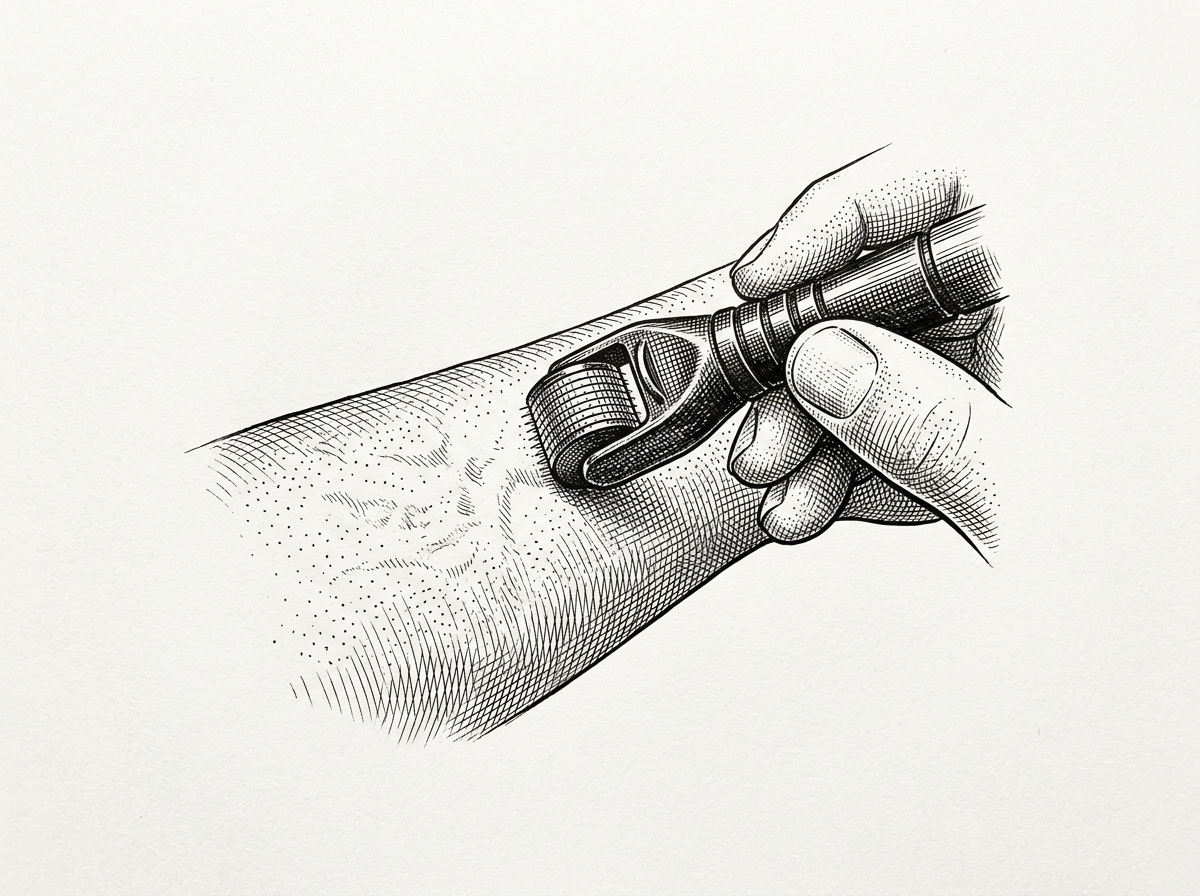
What Is Microneedle Scar Removal — and Does It Actually Work?
Microneedle scar removal is a clinically studied procedure that uses fine, sterile needles to create controlled micro-injuries in the skin, triggering the body's natural wound-healing response to remodel scar tissue and produce new collagen.
Here is what the evidence currently shows:
| Question | Short Answer |
|---|---|
| What scars can it treat? | Acne (atrophic), surgical, traumatic, hypertrophic |
| How many sessions are typically needed? | 3 to 5, spaced 2 to 4 weeks apart |
| How much improvement is possible? | Evidence suggests 50–70% fading of acne scars after multiple sessions |
| Is it safe for darker skin tones? | Yes — research indicates lower hyperpigmentation risk than lasers or chemical peels |
| How long before results are visible? | Gradual improvement over 3 to 6 months |
| Is professional treatment better than at-home? | Evidence strongly favors professional treatment for safety and efficacy |
Scars form when the skin's normal collagen structure — a random, basket-weave pattern — is disrupted during wound healing. The replacement tissue lays down collagen in a different pattern, creating the raised, sunken, or discolored marks that many people find distressing.
For many individuals, visible scarring goes beyond a cosmetic concern. It can affect confidence, social comfort, and daily life — particularly when scars are on the face or other exposed areas.
Microneedling, also called percutaneous collagen induction therapy, addresses this by reactivating the skin's repair process in a targeted, controlled way. Rather than removing the outer skin layer (as lasers or chemical peels do), it works below the surface — stimulating fibroblasts, the cells responsible for producing collagen and elastin.
A systematic review published in Clinical, Cosmetic and Investigational Dermatology (Juhasz & Cohen, 2020) analyzed 58 studies covering 1,845 patients and found clinical improvement across multiple scar types, with patient satisfaction rates ranging from 50% to 100%. That is a meaningful evidence base — though it is worth noting that study protocols varied considerably, and standardized treatment guidelines are still being developed.
This guide explains the biology behind how microneedling works, what the clinical research actually shows for different scar types, and what realistic expectations look like.
Microneedle scar removal word list:
How Microneedle Scar Removal Works

To understand how microneedle scar removal functions, one must first look at the anatomy of a scar. Normal, uninjured skin consists of collagen fibers arranged in a flexible, random "basket-weave" pattern. When the skin is injured, the body prioritizes closing the wound quickly over aesthetic perfection. This results in collagen being laid down in dense, parallel bundles, which creates the stiff, often raised or depressed texture of a scar.
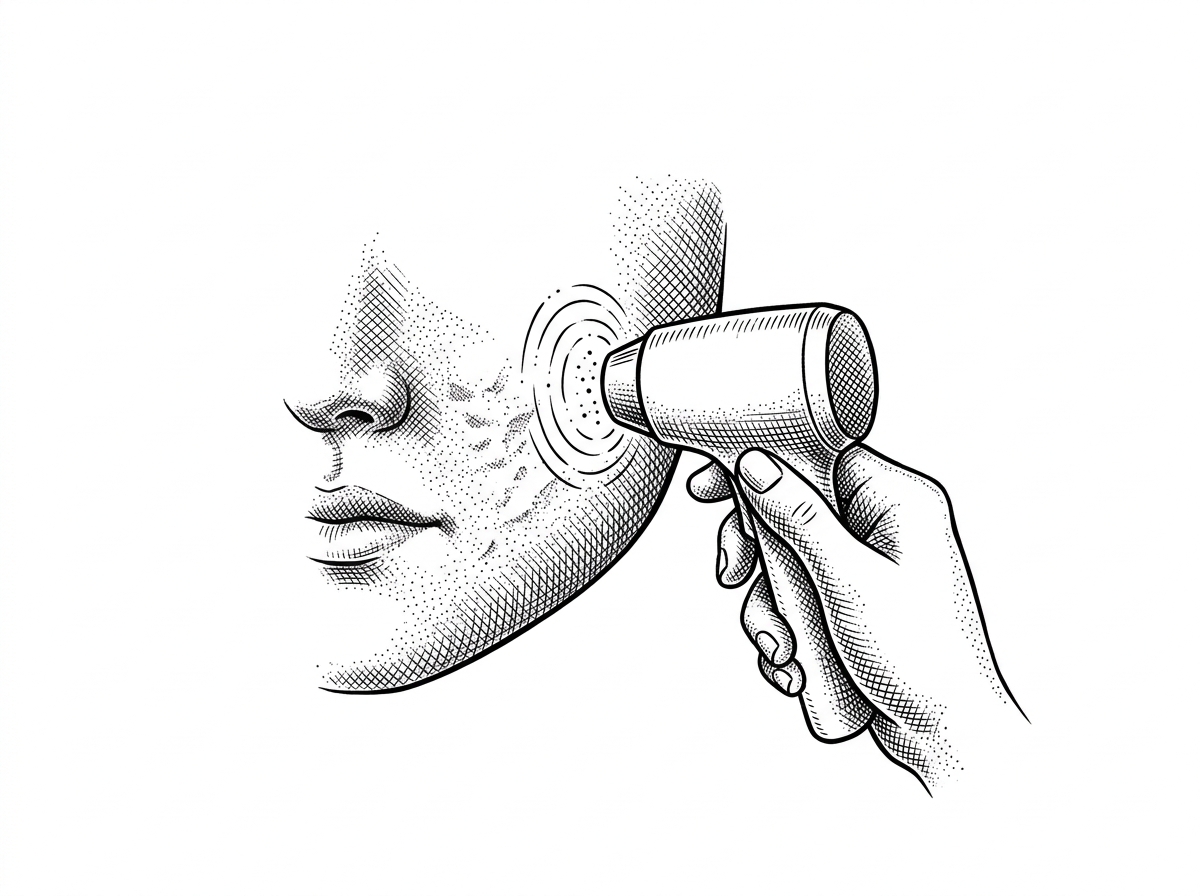
Microneedling uses a device equipped with hair-fine, sterile needles — ranging from 0.5 to 3.0 millimeters in length — to create thousands of microscopic channels in the skin. These micro-injuries serve two primary biological purposes:
- Mechanical Disruption: The needles physically break apart the dense, tethered collagen bundles that characterize old scar tissue.
- Biological Signaling: The tiny wounds trigger a cascade of growth factors. Research indicates an upregulation of Vascular Endothelial Growth Factor (VEGF), Fibroblast Growth Factor-7 (FGF-7), and Epidermal Growth Factor (EGF).
These growth factors signal fibroblasts — the skin's "construction workers" — to migrate to the area. Once there, they begin producing a new extracellular matrix (ECM) rich in Type III collagen, which eventually matures into the more flexible Type I collagen found in healthy skin. According to research on microneedling mechanisms, this process also stimulates elastin production, which helps the skin regain its original elasticity and "snap-back" quality.
Unlike more aggressive treatments, microneedling leaves the epidermis (the outermost skin layer) largely intact. This preservation of the skin barrier is why the procedure typically involves less downtime and a lower risk of infection than ablative lasers.
Clinical Applications for Different Scar Types
The effectiveness of microneedle scar removal depends heavily on the type of scar being treated. Clinical observations show that while most scars show some improvement, the degree of success varies based on the scar's depth, age, and biological characteristics.
The Goodman and Baron Scarring Grading System is often used by clinicians to measure these changes. In a systematic review of 58 studies, researchers found that microneedling provided consistent clinical improvement for a wide range of concerns, including:
- Atrophic scars: Sunken areas often caused by acne or chickenpox.
- Surgical scars: Linear marks resulting from incisions.
- Traumatic scars: Resulting from accidents, cuts, or burns.
- Hypertrophic scars: Raised, red scars that stay within the boundary of the original injury.
Atrophic Acne Scars and Microneedle Scar Removal
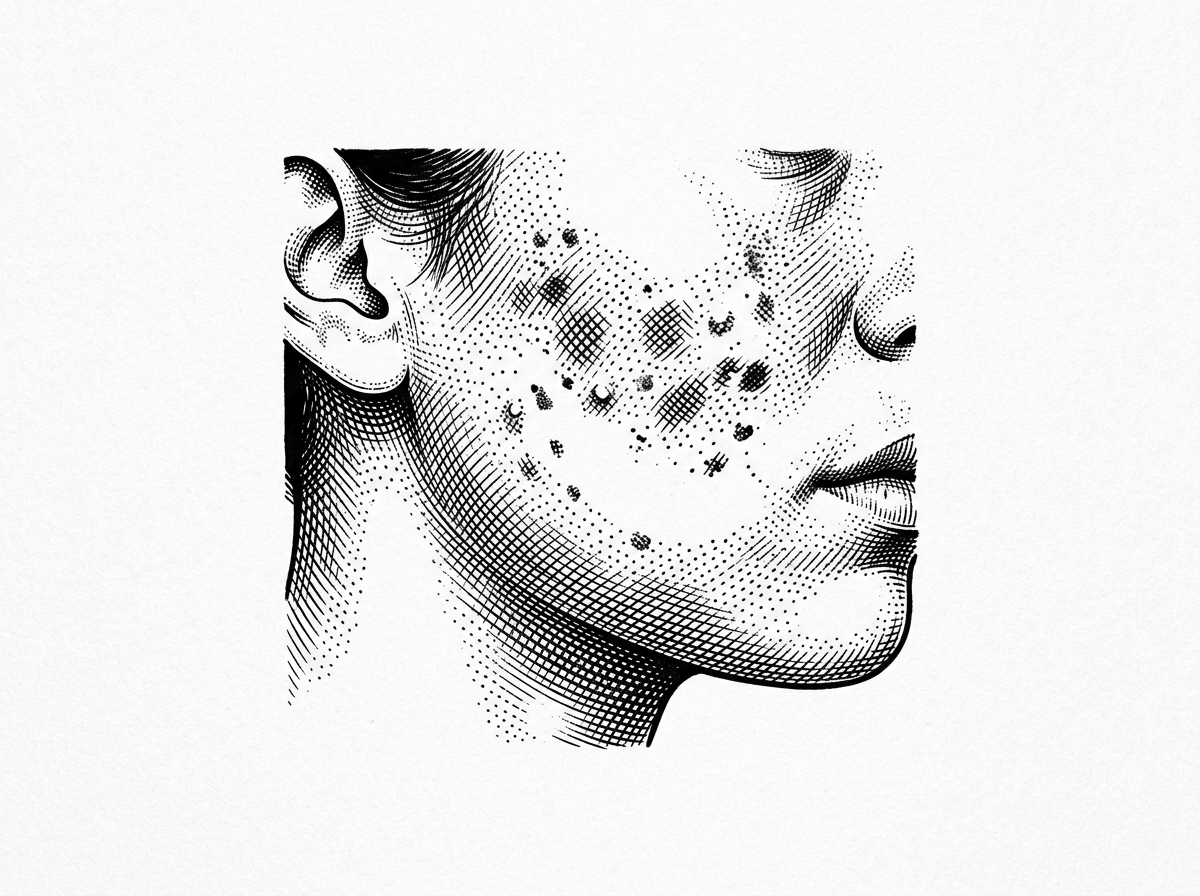
Atrophic acne scars are categorized into three main types: ice pick, boxcar, and rolling scars. Clinical evidence suggests that rolling and boxcar scars respond most favorably to microneedling, as the treatment effectively breaks up the fibrous bands pulling the skin downward. Ice pick scars, which are very narrow and deep, are often more recalcitrant and may require higher needle depths or combination therapies.
A significant finding in recent years concerns skin tone. A scientific study on microneedling vs chemical peels for dark skin conducted by researchers at Rutgers found that microneedling is notably more effective for patients with Fitzpatrick Skin Phototypes IV through VI. In this study, 73% of microneedling patients saw an improvement of two points or more on the scarring scale, compared to only 33% of those treated with 35% glycolic acid peels. This makes microneedling a preferred option for individuals with darker skin who may be at higher risk for permanent discoloration from strong chemical treatments.
Surgical and Hypertrophic Scars
For surgical scars, timing appears to be a critical factor. A study published in Plastic and Reconstructive Surgery suggests a "paradigm shift" in how we view scar management. Traditionally, clinicians waited for a scar to "mature" (often 6 to 12 months) before attempting revision. However, research on early postsurgical microneedling indicates that starting treatment as early as 6 to 7 weeks post-surgery yields superior results.
In a study of 25 women, those who began microneedling early saw their Patient and Observer Scar Scale (POSAS) scores drop from 16.8 to 8.1. Those who started later (13 to 16 weeks) still improved, but their scores only moved from 26.1 to 14.2. This suggests that microneedling can "reactivate" the healing process during the phase when collagen production naturally begins to decline, leading to a more seamless blend with the surrounding tissue.
Comparing Microneedling to Other Resurfacing Treatments
When considering microneedle scar removal, it is helpful to compare it against other common dermatological procedures like fractional lasers, chemical peels, and microdermabrasion.
| Feature | Microneedling | Fractional Laser | Chemical Peels |
|---|---|---|---|
| Mechanism | Mechanical micro-channels | Thermal (heat) energy | Chemical exfoliation |
| Epidermal Integrity | Mostly preserved | Often compromised | Layers removed |
| Downtime | 24–72 hours | 3–7 days | 1–10 days |
| Dark Skin Safety | High | Moderate (PIH risk) | Variable (Risk of discoloration) |
| Primary Goal | Deep collagen induction | Resurfacing and tightening | Surface texture and tone |
Microneedling is often preferred over microdermabrasion for scar removal because microdermabrasion only treats the very surface of the skin. While microdermabrasion can make skin feel softer, it cannot reach the dermal layers where scar tissue resides. Microneedling, by contrast, penetrates deep enough to trigger actual atrophic scar microneedling therapy and structural change.
The Clinical Procedure and Expected Outcomes
A professional microneedle scar removal session typically begins with the application of a topical anesthetic. This numbing cream usually stays on for 30 to 45 minutes to ensure the patient feels only a mild scratching sensation or warmth during the procedure.
Once the skin is numb, the clinician cleanses the area with isopropyl or ethyl alcohol to maintain a sterile environment. The microneedling device is then passed over the scar tissue. The clinical "endpoint" — or the sign that the treatment has been effective — is uniform pinpoint bleeding. This indicates the needles have reached the dermis where collagen remodeling occurs.
According to a scientific update for clinicians on scar treatment, needle depths are often adjusted based on the location: thinner skin (like near the eyes or over bone) requires shallower settings, while thick scar tissue on the back or limbs may require depths of 2.0mm to 3.0mm.
Professional Microneedle Scar Removal Sessions
Most patients require a series of 3 to 5 sessions to see significant results. These are typically spaced 2 to 4 weeks apart. The timeline for skin repair follows three distinct biological phases:
- Inflammatory Phase (Days 1-3): The skin is red (erythema) and may have minor swelling (edema). Platelets release growth factors to begin the repair.
- Proliferative Phase (Weeks 1-3): New tissue and blood vessels form. Fibroblasts begin laying down temporary collagen.
- Remodeling Phase (Months 3-6): The temporary collagen is replaced by stronger, more organized Type I collagen. This is why the full results of microneedling for scar reduction are not visible until several months after the final session.
Aftercare and Long-Term Maintenance
Proper aftercare is essential to maximize results and prevent complications like secondary infections.
- Hydration: Clinicians often recommend applying pure hyaluronic acid to keep the skin hydrated and support the healing barrier.
- Protection: Sun protection is non-negotiable. The skin is highly sensitive to UV damage immediately following treatment, which can lead to post-inflammatory hyperpigmentation (PIH).
- Avoidance: Patients should avoid makeup for at least 24 hours and stay away from irritating "active" ingredients (like retinoids or Vitamin C) for 3 to 5 days.
To sustain results long-term, many individuals opt for a single maintenance session once a year. This helps preserve the new collagen levels and continues to improve skin texture over time.
Advanced Techniques and Combination Therapies
While standard microneedling is effective, clinical research is increasingly focusing on "microneedling plus" — combining the procedure with other modalities for enhanced outcomes.
One of the most significant advancements is Fractional Radiofrequency Microneedling (FRF-MN). This technique uses insulated needles to deliver heat energy directly into the dermis. The combination of mechanical wounding and thermal injury can lead to even greater skin tightening and scar contraction. Studies show patient satisfaction rates for FRF-MN are exceptionally high, with 94% of patients in some trials recommending the procedure to others.
Another common adjunct is Platelet-Rich Plasma (PRP), often referred to as a "vampire facial." In this process, a small amount of the patient's blood is drawn, spun in a centrifuge to concentrate the platelets, and then applied to the skin during or after microneedling. The micro-channels allow the PRP to penetrate deep into the skin, delivering a massive "boost" of growth factors. Evidence suggests this combination can fade acne scars by 50% to 70% faster than microneedling alone.
Finally, researchers are exploring microneedle-mediated drug delivery for pathological scars. This involves using microneedles to deliver medications like triamcinolone acetonide (a corticosteroid) or 5-fluorouracil (an anti-fibrotic) directly into dense keloid or hypertrophic tissue. This method is often more effective and less painful than traditional needle injections, as it ensures a more even distribution of the drug.
Frequently Asked Questions about Microneedling
Is at-home microneedling safe for scar removal?
While consumer devices (often called dermarollers) are widely available, they carry significant risks when used for scar removal. Professional devices are vertical, meaning the needles enter and exit the skin straight up and down. At-home rollers enter the skin at an angle and exit at an angle, which can create "sideways" tearing of the tissue. This often leads to a complication known as "tramtrack scarring." Furthermore, the risk of infection is much higher in a home environment, and consumer needles are typically too short (0.25mm) to reach the dermal layers where scar remodeling actually happens. For effective tag microneedling results, professional treatment is strongly recommended.
How much does microneedling for scars cost?
Microneedling is considered a cosmetic procedure, meaning it is rarely covered by health insurance. The cost varies significantly based on geographic location, the size of the area being treated, and whether adjuncts like PRP or radiofrequency are used. Most clinics offer package deals for the recommended 3 to 5 sessions, which is generally more cost-effective than paying for individual appointments.
Who should avoid microneedling treatments?
While safe for most, certain individuals should avoid the procedure:
- Those with active acne or skin infections (as the needles can spread bacteria).
- Individuals with a history of unstable keloid scarring (though some stable keloids may be treated with specific protocols).
- People currently using anticoagulants (blood thinners).
- Those who have taken isotretinoin (Accutane) within the last 1 to 6 months, as the skin's ability to heal may be compromised.
Conclusion
The evidence for microneedle scar removal is robust, particularly for atrophic acne scars and early-stage surgical marks. By leveraging the body's own regenerative potential, microneedling offers a minimally invasive path to smoother, more resilient skin. While results appear gradually, the high rates of patient satisfaction and the procedure's safety profile across diverse skin tones make it a cornerstone of modern scar management.
For those considering treatment, a consultation with a qualified professional is the first step toward establishing a personalized protocol and setting realistic expectations. Whether used alone or in combination with advanced therapies like PRP or radiofrequency, microneedling represents a powerful tool in the science of skin repair.
Works Cited
- Abbas, M., et al. (2024). "Iontophoresis and electroporation-assisted microneedles: Advancements and therapeutic potentials." Drug Delivery and Translational Research.
- Cleveland Clinic. (2023). "Microneedling: What It Is, Uses, Benefits & Results."
- Juhasz, M. L. W., & Cohen, J. L. (2020). "Microneedling for the Treatment of Scars: An Update for Clinicians." Clinical, Cosmetic and Investigational Dermatology.
- Long, W., et al. (2022). "Microneedling Outcomes in Early Postsurgical Scars." Plastic and Reconstructive Surgery.
- Rao, B., et al. (2022). "Microneedling vs. Chemical Peels for Acne Scars in Darker Skin Types." Rutgers Robert Wood Johnson Medical School.
- ScienceDirect. (2023). "Microneedle-mediated drug delivery for scar prevention and treatment." Drug Discovery Today.
This content is for informational purposes only and does not constitute medical advice. Consult a qualified healthcare professional for diagnosis and treatment.