Laser for Keloid Scars: Can You Really Flatten Them?
Keloid scars are notoriously hard to treat, but laser therapy can reduce their size, redness, and firmness. Here's what the evidence shows about using lasers on keloids.

What Laser for Keloid Scars Actually Does — and What to Expect
Laser for keloid scars is a medical treatment that uses focused light energy to reduce the size, redness, and firmness of keloid tissue. Here is a quick overview of what the evidence shows:
| Question | Short Answer |
|---|---|
| Does it work? | Evidence suggests it can help — but certainty is low based on current research |
| Best-studied laser type | Pulsed-dye laser (PDL, 585–595 nm) |
| Typical sessions needed | 3–6 sessions, spaced 4–8 weeks apart |
| Permanent cure? | No — recurrence is common without combination therapy |
| Who benefits most? | Smaller, less inflamed keloids in low-tension skin areas |
| Main risks | Skin discoloration, purpura, blistering — especially in darker skin tones |
Keloid scars form when the skin's wound-healing process goes into overdrive. Instead of producing just enough collagen to repair damaged tissue, the body keeps producing it — long after the wound has closed. The result is a raised, firm, often itchy or painful growth that extends beyond the original wound boundary.
This is not simply a cosmetic quirk. Keloids are classified as fibroproliferative disorders — meaning they involve a pathological overgrowth of fibrous tissue driven by dysregulated cell activity. They can develop after something as minor as a piercing or an acne breakout, and they disproportionately affect people with darker skin tones.
For many people living with keloids, the psychological impact is significant. Visible scars on the chest, shoulders, or earlobes can affect confidence and daily social interactions — especially when the scar has resisted previous treatments.
Laser therapy has emerged as one of several medical approaches for managing keloids. It works by targeting the blood vessels and collagen structures within the scar using specific wavelengths of light. However, it is important to be clear: laser treatment is not a guaranteed cure. A Cochrane systematic review of 15 randomised controlled trials (604 participants) found the overall quality of evidence to be low or very low, due to high risk of bias and significant variation between studies.
That said, research does indicate measurable improvements in scar height, redness, and pliability — particularly with the pulsed-dye laser — and laser is increasingly used as part of a broader, multimodal treatment strategy.
This guide explains how laser therapy works for keloid scars, what types are used, what the clinical evidence actually shows, and what realistic expectations look like.
This content is for informational purposes only and does not constitute medical advice. Consult a qualified healthcare professional for diagnosis and treatment.
Basic laser for keloid scars terms:
Understanding Keloid Pathophysiology and Risk Factors
To understand why laser for keloid scars is used, one must first look at the biology of the scar itself. Keloids are the result of an "aberrant" healing process. In a typical wound, cells called fibroblasts produce collagen to bridge a gap in the skin. Once the wound is closed, the body enters a remodeling phase where excess collagen is broken down.
In a keloid, this "off switch" is missing. Myofibroblasts, a specialized type of cell, remain active for much longer than necessary. They pump out thick bundles of hyalinized collagen into the extracellular matrix, creating a dense, rubbery mass. This process is often fueled by chronic inflammation and high skin tension.

Prevalence and Demographic Risk
While anyone can develop a keloid, certain populations are at a significantly higher risk. Clinical data shows a strong correlation between skin pigmentation and keloid formation:
- Black and Hispanic populations: Keloids affect between 4.5% and 16% of these groups.
- Black Africans: Some studies suggest an incidence as high as 16%.
- White populations: The prevalence is much lower, though hypertrophic scars (a related but different condition) occur in roughly 5% to 37% of this demographic.
Genetic predisposition plays a massive role. If a biological parent has a history of keloids, their children are more likely to develop them after minor skin trauma, such as ear piercings or vaccinations.
Distinguishing Keloids from Hypertrophic Scars
It is common to confuse keloids with hypertrophic scars, but the clinical distinction is vital for choosing the right treatment.
| Characteristic | Hypertrophic Scar | Keloid Scar |
|---|---|---|
| Growth Boundary | Stays within the original wound edges | Spreads beyond the original wound |
| Regression | Often flattens spontaneously over 1–2 years | Rarely regresses; may grow indefinitely |
| Timing | Appears within weeks of injury | Can appear months or years later |
| Common Sites | Any area of injury | Chest, shoulders, earlobes, upper back |
| Tension | Highly dependent on skin tension | Influenced by tension but can occur anywhere |
Scientific research on scar pathophysiology suggests that while both involve excessive collagen, the keloid is a much more aggressive and persistent disorder.
How Laser for Keloid Scars Works: Mechanisms of Action
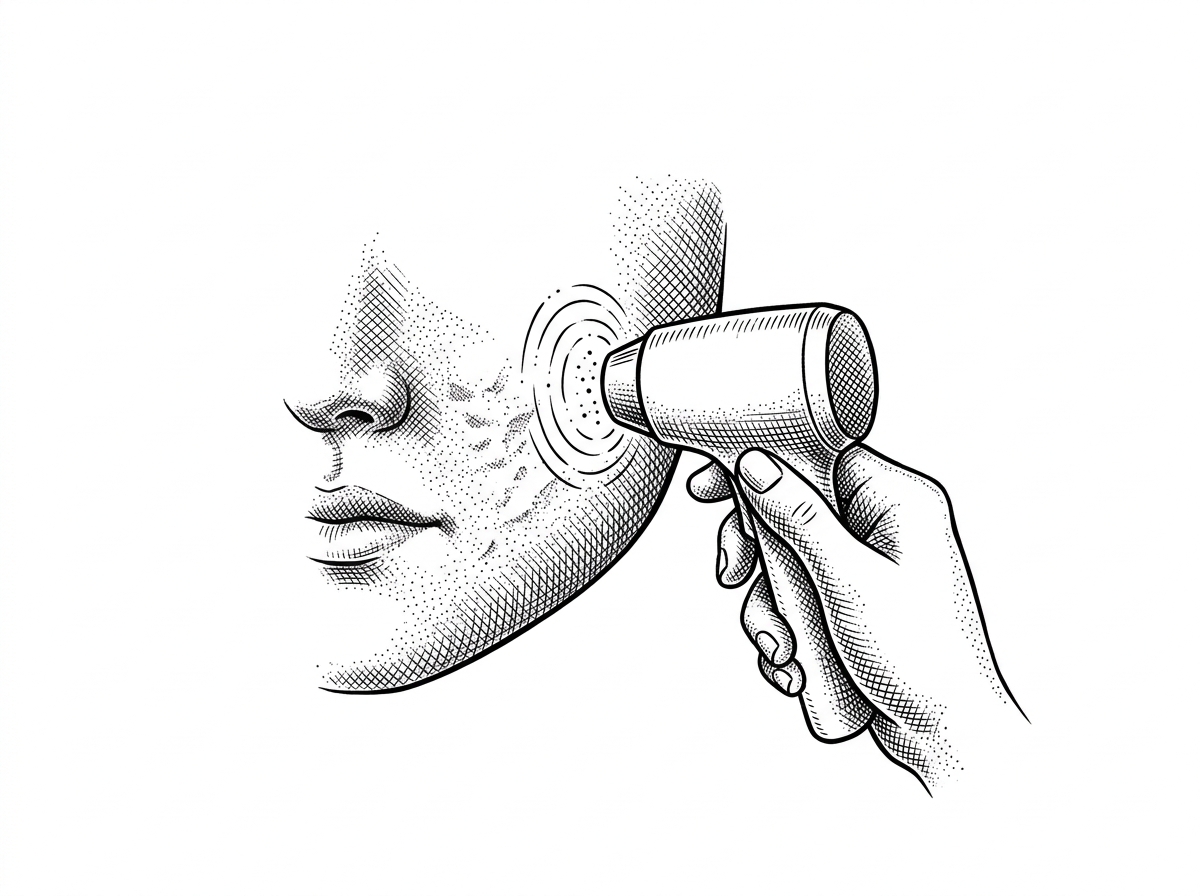
Laser therapy relies on the principle of selective photothermolysis. This means the laser uses a specific wavelength of light to target a "chromophore" (a light-absorbing molecule) without damaging the surrounding healthy skin.
In the context of laser for keloid scars, the primary targets are:
- Hemoglobin: Found in the tiny blood vessels (neovascularization) that "feed" the scar.
- Water: Found within the scar tissue itself, targeted by ablative lasers to vaporize tissue.
By shutting down the blood supply, the laser starves the myofibroblasts of the nutrients they need to keep producing collagen. This triggers a shift in the tissue remodeling process, often leading to a softer, flatter, and less symptomatic scar.
Efficacy of Pulsed-Dye Laser for Keloid Scars
The Pulsed-Dye Laser (PDL), typically operating at a 585-nm or 595-nm wavelength, is often the first choice for red, itchy keloids. The yellow light is specifically absorbed by the red pigment in blood vessels.
Clinical observations indicate that PDL can significantly reduce erythema (redness) and itching. A Cochrane review noted that in two small trials, PDL showed a relative risk (RR) of 1.96 for achieving more than 50% improvement compared to no treatment. However, the researchers cautioned that this is based on "low-certainty evidence" due to the small number of participants.
Fractional CO2 Laser for Keloid Scars and Remodeling
While PDL targets blood vessels, the fractional CO2 laser is an ablative technology that targets water. It creates thousands of "microscopic treatment zones" (MTZs)—tiny columns of thermal damage—leaving bridges of untouched skin in between.
This "fractional" approach triggers a vigorous healing response that replaces old, stiff collagen with new, more organized fibers. Furthermore, these tiny channels can be used for Laser-Assisted Drug Delivery (LADD). By applying a corticosteroid or 5-FU immediately after the laser, the medication can penetrate deep into the thick keloid tissue, which is often too hard to reach with a standard needle.
Research on fractional laser technology suggests this combination is more effective than either treatment alone.
Long-Pulsed Nd:YAG and Diode Lasers
For thicker, deeper keloids, the 1064 nm Nd:YAG laser is often preferred. Because of its longer wavelength, it penetrates deeper into the reticular dermis than the PDL. It is particularly useful for targeting the deeper vascular networks that sustain larger keloid masses.
A more recent innovation involves the intralesional 1470 nm diode laser. Instead of firing light through the surface of the skin, a thin bare-fibre is inserted directly into the scar tissue. This allows the heat to be delivered precisely where the collagen is densest. Research on Nd:YAG applications and diode lasers has shown promising results in reducing scar volume with fewer surface side effects.
Clinical Evidence and Treatment Outcomes
When considering laser for keloid scars, it is important to look at the hard data. The gold standard for medical evidence is the systematic review.
A major Cochrane review examined 15 randomized controlled trials (RCTs) involving 604 participants. The findings were mixed:
- Pulsed-dye laser: May improve scar severity compared to no treatment, but the evidence is low-certainty.
- Fractional CO2: Shows some benefit in reducing scar height and pliability, but more high-quality trials are needed.
- Ablative vs. Non-ablative: Ablative lasers (like CO2) are generally considered more effective for thick keloids, though they carry a higher risk of side effects.
Clinicians typically measure success using the Vancouver Scar Scale (VSS) or the Patient and Observer Scar Assessment Scale (POSAS), which look at height, vascularity, pliability, and pigmentation. Research on intralesional laser efficacy has demonstrated that while total removal is rare, significant improvements in these metrics are achievable.
Success Rates and Recurrence Risks
The "elephant in the room" with keloid treatment is recurrence. Keloids are notorious for coming back, often larger than before, especially after surgery.
- Surgery alone: Recurrence rates range from 45% to 100%.
- Laser therapy: While lower than surgery, recurrence is still a risk if the underlying inflammatory process isn't addressed.
Most dermatologists now use multimodal therapy. This involves combining laser sessions with monthly corticosteroid injections, cryotherapy (freezing), or silicone gel sheets. This multi-pronged attack addresses both the blood supply and the cellular activity of the scar.
Potential Side Effects and Safety
Laser treatment is a medical procedure with inherent risks. The most common side effects include:
- Purpura: Small purple spots or bruising (common after PDL).
- Blistering and Crusting: Occurs if the laser energy is too high.
- Pigmentation Changes: Post-inflammatory hyperpigmentation (PIH) or hypopigmentation (lightening of the skin) is a significant concern, particularly for those with darker skin (Fitzpatrick scales IV-VI).
To minimize these risks, many practitioners use cooling systems (like cold air or chilled tips) and perform "test patches" before treating the entire scar.
Practical Guidance for Laser Therapy
If you are considering laser for keloid scars, the process usually begins with a thorough consultation. A board-certified dermatologist will assess the scar's age, location, and "activity" (whether it is still growing or itchy).
Candidate Selection and Consultation
Not every keloid is a good candidate for laser.
- Ideal candidates: Those with smaller, symptomatic (itchy/painful) scars that have not responded to silicone or basic injections.
- Red Flags: In some cases, a doctor may perform a biopsy to rule out malignancy (like dermatofibrosarcoma protuberans), which can mimic a keloid.
Expectations must be managed. Laser therapy is rarely a "one-and-done" solution. Most patients require a series of treatments over several months to see meaningful changes.
Post-Treatment Care and Prevention
What happens after the laser is just as important as the treatment itself. The skin will be sensitive and prone to further scarring if not handled correctly.
- Sun Protection: UV exposure can darken the scar permanently. Strict sun avoidance or high-SPF mineral sunscreen is mandatory.
- Silicone Therapy: Using silicone gel or sheets between laser sessions helps maintain hydration and provides constant pressure, which can inhibit further collagen growth.
- Wound Care: Following the specific cleaning and moisturizing routine provided by the clinic is essential to prevent infection.
Frequently Asked Questions about Laser for Keloid Scars
How many laser sessions are typically needed for keloids?
Most clinical protocols involve 3 to 6 sessions. These are usually spaced 4 to 8 weeks apart to allow the skin to remodel between treatments. Thicker, older keloids may require more sessions or a combination of different laser types.
Is laser treatment for keloids permanent?
There is no "permanent cure" for the keloid-prone individual. While the laser can flatten and soften an existing scar, the genetic tendency to form keloids remains. Maintenance therapy or prompt treatment of new injuries is often necessary.
Does insurance cover laser scar removal?
This is a gray area. Most insurance providers view scar removal as a cosmetic procedure. However, if the keloid causes functional impairment (limiting movement) or significant physical symptoms (chronic pain and itching), a dermatologist may be able to provide documentation of "medical necessity" for partial coverage.
Conclusion
Managing keloids is a marathon, not a sprint. While laser for keloid scars offers a sophisticated way to target the vascular and structural components of these difficult growths, it is most effective when used as part of a comprehensive plan.
The science of scar healing is constantly evolving. Ongoing research into topical imiquimod, botulinum toxin (Botox), and even stem cell therapy provides hope for even more effective treatments in the future. For now, the combination of laser technology and traditional therapies remains the most evidence-based path toward "taming the bump" and regaining skin confidence.
For more information on the latest in skin regeneration, visit Scar Healing.
This content is for informational purposes only and does not constitute medical advice. Consult a qualified healthcare professional for diagnosis and treatment.