Stop the Growth: How to Manage Raised Keloid Scars

What Clinical Evidence Says About Hypertrophic Scar Silicone Gel
Hypertrophic scar silicone gel is one of the most widely used non-invasive treatments for raised, thickened scar tissue — and among the few therapies backed by consistent clinical evidence.
Quick answer: Silicone gel works by creating a thin, occlusive barrier over a scar. This hydrates the outer skin layer, which research suggests helps regulate collagen production and soften raised scar tissue over time. A standard treatment course runs 8 to 12 weeks, applied twice daily to fully healed skin.
What the evidence shows at a glance:
| Outcome | Reported Improvement |
|---|---|
| Scar texture | Up to 86% reduction |
| Scar color | Up to 84% improvement |
| Scar height | Up to 68% reduction |
| Scars reaching normal appearance | ~60% of cases at 6 months |
Based on a 30-patient clinical study of topical silicone gel over a 6-month follow-up period.
Raised scars are far more common than most people realize. Research indicates that hypertrophic scarring occurs in 40% to 70% of patients after surgery, and in up to 91% of burn injury cases. For many people, these scars are not just a cosmetic concern — they can cause itching, pain, and significant psychological distress.
Silicone-based treatments have been used in clinical settings since the early 1980s. Today, alongside intralesional corticosteroid injections, they represent one of only two treatment categories with sufficient evidence to support routine use in scar management.
Yet despite decades of use, questions remain. How exactly does silicone gel work? How does it compare to silicone sheeting? And is it equally effective for hypertrophic scars and keloids? This article reviews the current science to answer those questions clearly.
Similar topics to hypertrophic scar silicone gel:
Understanding the Mechanism of Hypertrophic Scar Silicone Gel
To understand how hypertrophic scar silicone gel functions, one must first look at the skin's outermost layer: the stratum corneum. When skin is injured, the body rushes to repair the gap, often resulting in increased transepidermal water loss (TEWL). This dehydration signals the body to produce more collagen to "strengthen" the area, which can lead to the overgrowth seen in hypertrophic scars.
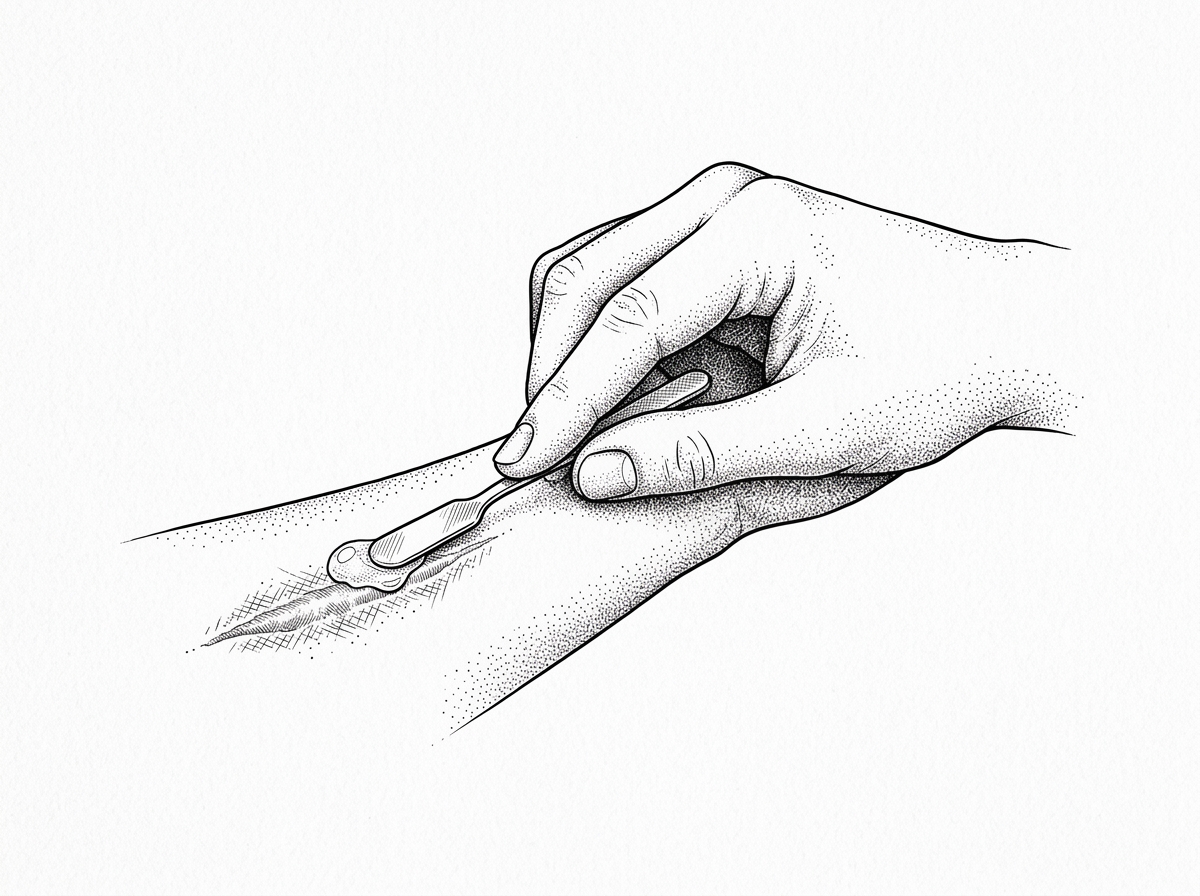
The primary mechanism of action for silicone gel is occlusion. By forming an ultra-thin, transparent sheet composed of polymerized siloxanes, the gel mimics the barrier function of healthy skin. This layer traps moisture, significantly increasing the hydration of the stratum corneum.
This hydration does more than just soften the skin. It facilitates a complex "conversation" between different skin cells. Research suggests that well-hydrated keratinocytes (surface skin cells) signal to fibroblasts (the cells that produce collagen) to slow down their activity. Specifically, silicone application is thought to modulate growth factors like TGF-β and FGF-β. By balancing these signals, the gel helps restore the equilibrium between fibrogenesis (building tissue) and fibrolysis (breaking it down).
Furthermore, the gel acts as a physical barrier against bacterial invasion. Bacteria can induce the production of excessive collagen by keeping the immune system in a state of constant high alert. By protecting the site, silicone gel allows the scar to mature in a stable, hydrated environment.
Biological Impact on Collagen Synthesis
In a normal healing environment, the extracellular matrix is carefully organized. In hypertrophic and keloid scars, however, the collagen fibers are often disorganized and overproduced. This excessive fibrogenesis is often driven by mechanical tension on the wound.
By providing a protective layer, silicone gel may help reduce the "stress" the skin feels. When the skin is properly hydrated and protected, the signaling pathways that drive excessive collagen deposition are dampened. This reduction in tissue tension is a critical component of successful scar remodeling.
Occlusion and Skin Barrier Function
The occlusion provided by hypertrophic scar silicone gel addresses several physiological symptoms of abnormal scarring. It has been observed to reduce capillary hyperemia—the excessive blood flow that gives scars their bright red or purple appearance. Additionally, it helps resolve dermal edema (swelling) by normalizing the fluid balance within the skin layers. This comprehensive approach to skin barrier function is why silicone remains the first-line recommendation for many dermatologists.
Clinical Evidence for Silicone-Based Scar Management
The scientific community has scrutinized silicone treatments for decades. While many "scar home remedies" lack data, silicone-based management is supported by numerous trials. In clinical assessments, the Vancouver Scar Scale (VSS) is often used to measure four variables: vascularity, height, pliability, and pigmentation.
| Feature | Silicone Gel | Silicone Sheeting |
|---|---|---|
| Primary Mechanism | Occlusion & Hydration | Occlusion & Hydration |
| Best For | Face, joints, irregular surfaces | Large areas, flat surfaces (torso) |
| Compliance | High (easy to apply) | Moderate (can be cumbersome) |
| Visibility | Transparent (can wear makeup) | Visible (flesh-colored or clear) |
| Durability | Needs reapplication | Washable and reusable |
Clinical research into the molecular basis of keloid formation80541-2) highlights that these scars are essentially "wounds that never heal" properly. Silicone gel provides the environment necessary for the healing process to finally reach its maturation phase.
Efficacy of Hypertrophic Scar Silicone Gel in Clinical Trials
A notable study involving 30 patients demonstrated that topical self-drying silicone gel is highly effective. After six months of consistent use, 60% of the participants' scars were graded as "normal" (Grade I). Only 10% remained in the more severe "hypertrophic" or "keloid" categories.
The data from Ahn et al. (1989) and subsequent researchers confirm that the most significant changes occur in texture and color. Patients often report that the "itchiness" and "tightness" of the scar decrease within weeks, even before the physical height of the scar begins to flatten.
Comparative Analysis of Gel vs. Sheeting
While both forms are effective, the choice often comes down to the scar's location and the patient's lifestyle. Silicone sheeting is excellent for large, flat scars on the abdomen or back, providing a constant level of pressure and occlusion. However, sheeting can be difficult to use on the face, near the eyes, or on highly mobile joints like the elbow or knee.
Hypertrophic scar silicone gel offers a "self-drying" technology that is particularly useful for visible areas. Once applied, it dries into a flexible film within 4 to 5 minutes. This allows the patient to apply sunscreen or makeup over the treatment, making it a more "cosmetically acceptable" option for many. For those interested in alternative mechanical approaches, some also look into the ultimate guide to hypertrophic scars for information on microneedling, though silicone remains the non-invasive gold standard.
Application Guidelines for Optimal Scar Remodeling
The effectiveness of hypertrophic scar silicone gel is highly dependent on how it is used. It should only be applied once the wound has achieved full epithelialization—meaning the skin is closed, there is no oozing or scabbing, and any sutures have been removed.
How to Apply Silicone Gel
- Clean the area: Use mild soap and water, then pat the scar completely dry.
- Apply a thin layer: You only need a very small amount. A 15g tube is typically enough to treat a 3-inch scar twice daily for 90 days.
- Massage gently: Rub the gel into the scar for 2-3 minutes.
- Let it dry: If the gel takes longer than 5 minutes to dry, you have likely applied too much. You can use a hair dryer on a "cool" setting to speed up the process if necessary.
Research on silicone application duration suggests that the gel should be present on the skin for as much of the day as possible. Ideally, it should be applied twice daily to ensure 24-hour coverage.
Long-term Use of Hypertrophic Scar Silicone Gel
Scar maturation is a slow process. While some improvement may be seen in as little as 4 weeks, the typical treatment cycle is 8 to 12 weeks. For individuals with a history of keloids or those with very large scars, clinicians may recommend continuing the protocol for up to 6 months. Adherence is the most important factor; skipping days reduces the cumulative effect of the hydration barrier.
Contraindications and Side Effects
Silicone gel is generally very safe and is frequently used on children and those with sensitive skin. However, there are a few precautions:
- Never apply to open wounds: It is not a dressing for fresh injuries.
- Skin Maceration: If the skin becomes "soggy" or white, it may be a sign of over-hydration. Allow the skin to breathe for a few hours.
- Rashes: While rare (occurring in roughly 1-2% of patients), some may experience contact dermatitis or an allergic reaction to the silicone or the gel's carrier ingredients. If redness or itching increases, discontinue use and consult a professional.
Distinguishing Between Hypertrophic and Keloid Scars
It is important to know which type of scar is being treated, as expectations may differ.
- Hypertrophic Scars: These stay within the original borders of the wound. They are often red and raised but may eventually flatten on their own over several years. They respond very well to silicone gel.
- Keloid Scars: These are more aggressive. They grow beyond the original wound site, invading healthy surrounding tissue. They do not regress spontaneously and have a high recurrence rate.
According to the international clinical recommendations on scar management, keloids often require a multi-modal approach. While silicone gel is a vital component, it is often used in conjunction with steroid injections or laser therapy to manage the growth. High-risk areas for keloids include the presternum (chest), deltoid (shoulders), and earlobes.
Frequently Asked Questions about Silicone Gel
When is the best time to start using silicone gel?
The best time is immediately after the wound has closed and the skin is intact. For surgical scars, this is usually 10 to 14 days after the procedure, once the stitches are out and no scabs remain. Starting early helps prevent the "over-healing" signal that leads to raised tissue.
Can silicone gel be used on old scars?
Yes. While the most dramatic results are seen on "immature" scars (those less than a year old), clinical studies have shown significant improvements in scars that are several years old. One study even noted improvements in scars that were decades old, though the treatment may take longer to show visible results.
Is silicone gel safe for children and sensitive skin?
Generally, yes. Silicone is chemically inert and does not absorb into the bloodstream. It sits on top of the skin. This makes it a preferred choice for pediatric patients who may not tolerate the pain of injections or the discomfort of adhesive tapes.
Conclusion
Managing raised scars requires patience and a scientifically sound approach. Hypertrophic scar silicone gel provides a non-invasive, evidence-based method to improve the appearance and comfort of thickened skin. By maintaining a hydrated environment and modulating the body's natural healing signals, it helps scars transition from red and raised to flat and pale.
For those navigating the complexities of skin regeneration, staying informed through resources like Scar Healing can help in making the best decisions for long-term skin health. Always consult with a healthcare professional to ensure that your specific scar type is being managed with the most appropriate clinical protocol.
Works Cited
- Puri, N., & Talwar, A. (2009). The Efficacy of Silicone Gel for the Treatment of Hypertrophic Scars and Keloids. Journal of Cutaneous and Aesthetic Surgery. doi:10.4103/0974-2077.58527.
- Tuan, T. L., & Nichter, L. S. (1998). The molecular basis of keloid and hypertrophic scar formation. Molecular Medicine Today. doi:10.1016/S1357-4310(97)80541-2.
- Ahn, S. T., et al. (1989). Topical silicone gel: A new treatment for hypertrophic scars. Surgery.
- Mustoe, T. A., et al. (2002). International clinical recommendations on scar management. Plastic and Reconstructive Surgery. doi:10.1097/00006534-200208000-00031.
- O'Brien, L., & Pandit, A. (2006). Silicon gel sheeting for preventing and treating hypertrophic and keloid scars. Cochrane Database of Systematic Reviews.
This content is for informational purposes only and does not constitute medical advice. Consult a qualified healthcare professional for diagnosis and treatment.