CO2 Laser for Surgical Scars Before and After: Real Results
CO2 laser consistently shows measurable improvements in surgical scar texture, height, and pigmentation. See what real before-and-after evidence reveals about this treatment.

What CO2 Laser Actually Does to Surgical Scars: Results, Evidence, and Realistic Expectations
CO2 laser for surgical scars before and after comparisons consistently show measurable improvements in scar texture, height, pigmentation, and flexibility — but results vary widely depending on scar type, skin tone, and treatment timing.
Here is a quick summary of what the clinical evidence shows:
| What Changes | Typical Improvement |
|---|---|
| Texture and surface smoothness | 30–70% improvement |
| Raised (hypertrophic) scar height | Noticeable flattening |
| Redness and pigmentation | Significant reduction |
| Scar stiffness and pliability | Measurable softening |
| Blending with surrounding skin | Improved integration |
Key facts at a glance:
- Most patients need 2–6 sessions, spaced 6–8 weeks apart
- Treatment can begin as early as 4–12 weeks after surgery in some cases
- Downtime is typically 5–14 days of redness, swelling, and peeling
- CO2 laser cannot erase a scar entirely — it remodels it
- Results continue improving for 3–6 months after each session as new collagen forms
Scars affect an estimated 4.5–16% of the general population, and for many people they carry a real psychological weight — affecting confidence, social comfort, and daily life. Fractional CO2 laser has emerged as one of the most clinically studied tools for surgical scar revision, with a randomized controlled trial of 116 patients finding significantly better outcomes compared to injection therapy across multiple validated scar scales (Vancouver Scar Scale, POSAS, and Visual Analog Scale).
But what does the evidence actually show — and what should someone considering this treatment realistically expect?
This guide reviews the clinical research, explains the biological mechanisms behind how CO2 laser remodels scar tissue, and breaks down before and after outcomes by scar type.
This content is for informational purposes only and does not constitute medical advice. Consult a qualified healthcare professional for diagnosis and treatment.
How CO2 Laser Resurfacing Remodels Surgical Scars
To understand how a laser can improve a scar, one must first look at what a scar actually is: a disorganized "patch" of collagen. When the skin is injured during surgery, the body rushes to close the wound. In this haste, it often produces collagen fibers that are thicker and more haphazardly arranged than the original skin. This results in the raised, stiff, or discolored tissue we recognize as a surgical scar.
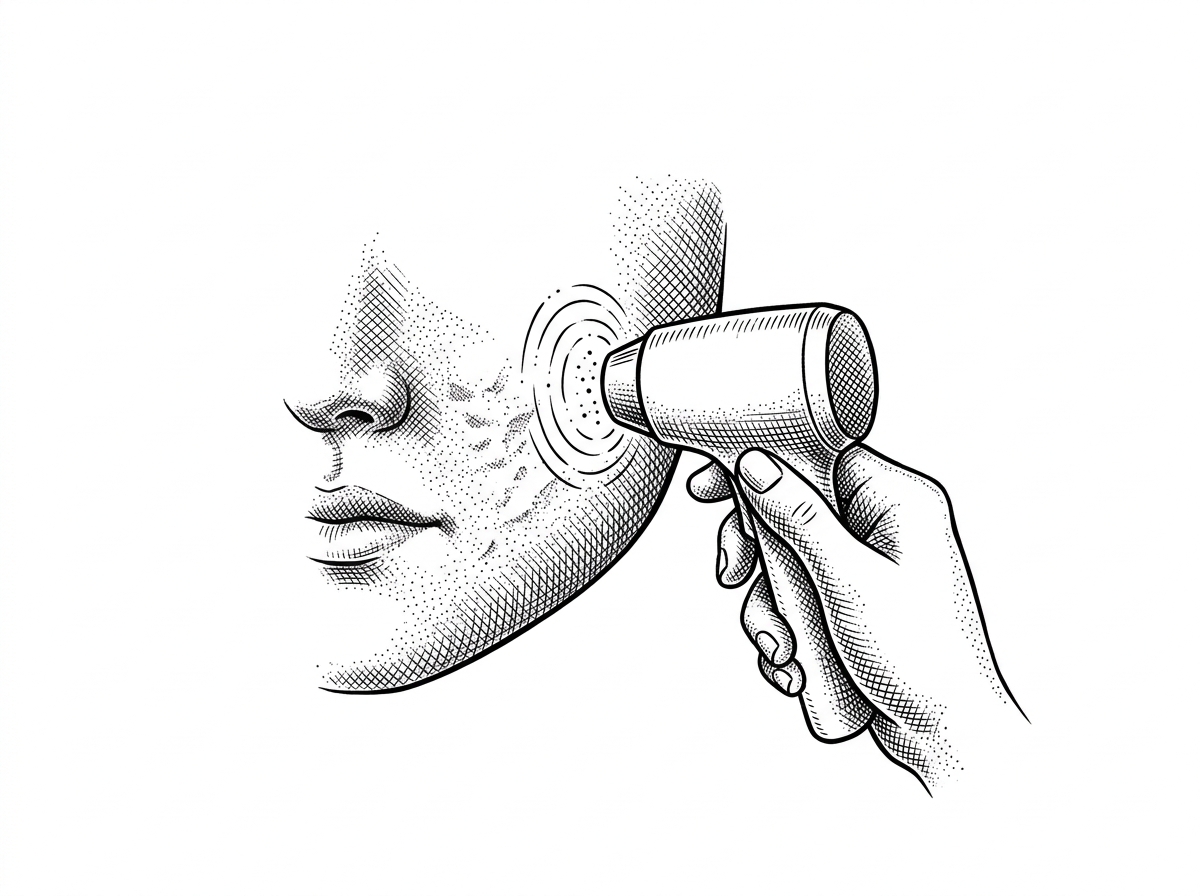
CO2 laser resurfacing works through a process called fractional photothermolysis. Unlike older "fully ablative" lasers that removed the entire top layer of skin (leading to long, painful recoveries), modern fractional lasers create thousands of microscopic, vertical "columns" of thermal injury in the skin. These are known as microthermal zones (MTZs).
A scientific review on fractional CO2 efficacy explains that these MTZs trigger the body’s natural healing response without damaging the surrounding tissue. This untreated skin acts as a reservoir for healthy cells, allowing the treated areas to heal much faster.
Mechanisms of Ablative vs. Fractional Technology
The CO2 laser uses a 10,600 nm wavelength, which is highly absorbed by the water in our skin cells. When the laser hits the scar tissue, the water inside the cells vaporizes instantly. This process provides:
- Ablative Resurfacing: It physically removes the irregular, "bumpy" surface layers of the scar.
- Dermal Heating: The heat penetrates deep into the dermis (the lower layer of skin), causing immediate tissue contraction.
- Coagulation: The laser seals small blood vessels, which helps reduce the intense redness often seen in fresh surgical scars.
By adjusting the depth and density of these laser columns, a clinician can target the specific thickness of a scar. A meta-analysis on scar remodeling confirms that this precision allows for the breakdown of old, rigid scar tissue while preserving the integrity of the skin.
Cellular Response to Laser-Induced Trauma
The "magic" of the co2 laser for surgical scars before and after transformation happens at the cellular level. The controlled thermal injury "wakes up" specialized cells called fibroblasts. These cells are the body's primary collagen factories.
When stimulated by the laser, fibroblasts begin producing a more organized lattice of Type I and Type III collagen, as well as elastin. This process is further supported by the release of:
- Cytokines and Growth Factors: Chemical signals that coordinate tissue repair.
- Matrix Metalloproteinases (MMPs): Enzymes that help break down the old, "bad" collagen so it can be replaced by new, healthy fibers.
- Heat Shock Proteins: Molecules that protect cells during the remodeling phase and ensure proper protein folding.

Analyzing CO2 Laser for Surgical Scars Before and After Results
When patients look at co2 laser for surgical scars before and after photos, they often notice a significant "softening" of the scar's appearance. Clinical data suggests that most patients achieve a 30–70% reduction in the visibility of their scars.
A landmark quantitative volumetric scar improvement study utilized 3D imaging to prove that fractional CO2 laser actually reduces the physical volume of atrophic (pitted) and hypertrophic (raised) scars. This isn't just a visual trick; the physical structure of the skin is changing.
Key improvements observed in clinical settings include:
- Texture: Rough or "cobblestoned" surgical scars become smoother to the touch.
- Height: Raised scars are flattened as the laser breaks down the excess collagen.
- Pliability: Scars that feel tight or restrict movement (common after joint surgery or abdominal procedures) become softer and more flexible.
- Vascularity: The "angry" red color of a scar fades as the laser targets the excess blood vessels feeding the scar tissue.
Visual Evidence: CO2 Laser for Surgical Scars Before and After Case Studies
Different types of surgery leave behind different "scar signatures." The response to CO2 laser varies accordingly:
- C-Section Scars: These often present as a raised, indented, or "shelf-like" line. Research shows that 2–4 sessions can significantly flatten the raised areas and improve the color, making the scar blend better with the abdominal skin.
- Facelift and Eyelid Scars: Because the skin on the face is thinner and has a rich blood supply, these scars often respond very well. Improvements in texture and the fading of redness can often be achieved in just 1–3 sessions.
- Breast Surgery Scars: Whether from augmentation, reduction, or mastectomy, these scars can be prone to tightness. Laser treatment helps reduce this "pulling" sensation while smoothing irregular surfaces.
- Trauma and Orthopedic Scars: These are often deeper and more complex. They may require 3–6 sessions to achieve significant remodeling of the deep collagen layers.
Factors Influencing CO2 Laser for Surgical Scars Before and After Outcomes
Not every scar reacts to the laser in the same way. Several biological and environmental factors play a role:
- Skin Type (Fitzpatrick Scale): Patients with darker skin tones (Fitzpatrick IV-VI) have a higher risk of post-inflammatory hyperpigmentation (PIH). While the laser is still effective, lower energy settings and pre-treatment with skin-lightening agents are often required.
- Scar Age: While "old" scars (years old) can still be improved, research suggests that treating scars while they are still in the remodeling phase (under one year) may yield more dramatic results.
- Location: Scars in areas with high tension, like the shoulders or chest, are more difficult to treat than those on the face or neck.
| Scar Type | Typical Sessions | Expected Improvement | Primary Benefit |
|---|---|---|---|
| Atrophic (Pitted) | 3–5 | 50–70% | Volume increase / Smoothing |
| Hypertrophic (Raised) | 2–4 | 40–60% | Flattening / Softening |
| Red/Vascular | 1–3 | 60–80% | Color fading |
| Contracture (Tight) | 4–6 | 30–50% | Increased mobility |
Clinical Timelines: When to Start Treatment
One of the most common questions regarding co2 laser for surgical scars before and after is: "How soon can I start?"
Historically, surgeons advised waiting a full year for a scar to "mature" before attempting laser revision. However, modern research has flipped this script. Evidence now suggests that early intervention—sometimes as early as 4–8 weeks after the initial surgery—can actually prevent a "bad" scar from forming in the first place.
A research study on early fractional CO2 intervention found that treating scars during the "proliferative phase" of healing (when the body is actively laying down new collagen) can help guide the collagen into a more organized, natural pattern.
Early Postoperative Laser Application
The wound healing process follows a strict timeline:
- Inflammatory Phase (Days 1–5): The body stops the bleeding and clears out bacteria.
- Proliferative Phase (Weeks 1–4): New tissue and blood vessels are formed.
- Remodeling Phase (Months 2–12+): The "bridge" of collagen is refined and strengthened.
By intervening at the 6–12 week mark, the CO2 laser can "reset" the remodeling phase. Some advanced surgical protocols even involve using the laser intraoperatively (during the surgery) just before the final sutures are placed to optimize the healing environment.
Long-term Stability of Results
Unlike dermal fillers, which the body eventually absorbs, the results of CO2 laser scar treatment are essentially permanent. The laser induces a physical change in the tissue architecture. While the skin will continue to age naturally, the remodeled scar tissue will not "revert" to its original scarred state.
However, long-term stability depends heavily on sun protection. New collagen is incredibly sensitive to UV damage. Failing to use broad-spectrum SPF can lead to permanent discoloration or the breakdown of the newly formed fibers.
Safety, Side Effects, and Recovery Protocols
While the co2 laser for surgical scars before and after results are impressive, the treatment does involve a recovery period. Because the laser is "ablative" (meaning it removes tissue), the skin will be raw and sensitive immediately following the procedure.
A long-term effectiveness and side effects study notes that while side effects are common, they are almost always temporary if proper aftercare is followed.
The Healing Timeline:
- Days 1–2: Intense redness and swelling (similar to a severe sunburn). The skin may "ooze" a clear fluid.
- Days 3–5: The skin begins to turn a brownish color and starts to "grid" or crust. This is the dead tissue being pushed out.
- Days 7–10: Peeling occurs. It is vital not to pick at the skin during this stage, as this can cause new scarring.
- Weeks 2–4: The skin may remain pink. This is a sign of increased blood flow and active collagen production.
Post-Treatment Care and Wound Management
The goal of post-laser care is to maintain a "moist wound environment." Dry skin heals slowly and is more likely to scar.
- Moisturization: Use of thick, petroleum-based ointments or specialized barrier creams is usually required for the first 7 days.
- Gentle Cleansing: Use only lukewarm water and very mild, fragrance-free cleansers.
- Sun Avoidance: Total sun avoidance is mandatory for the first 2 weeks, followed by strict daily SPF use.
Contraindications and Patient Selection
CO2 laser is not suitable for everyone. A qualified provider will screen for:
- Keloid History: Patients prone to keloids (scars that grow far beyond the original wound) must be treated with extreme caution, as the laser itself is a form of injury.
- Active Infection: Treatment cannot proceed if there is a cold sore or bacterial infection in the area.
- Recent Isotretinoin Use: Patients who have taken certain acne medications in the last 6–12 months may have a compromised ability to heal and are usually advised to wait.
- Tanned Skin: Treating tanned skin significantly increases the risk of permanent pigment loss or darkening.
Frequently Asked Questions about CO2 Laser for Scars
Can CO2 laser completely remove a surgical scar?
No. It is a biological impossibility to "erase" a scar and return the skin to its 100% pre-surgery state. However, the laser can make the scar so soft, flat, and well-colored that it becomes difficult to notice with the naked eye.
How many sessions are typically required for optimal results?
While some patients see a "wow" factor after one session, most clinical protocols recommend a series of 3 sessions for mild scars and up to 6 sessions for deep or traumatic scars.
Is the procedure painful, and what is the downtime?
With the application of a strong topical numbing cream, most patients describe the sensation as a "prickling" or "snapping" heat. Afterward, the area feels like a hot sunburn for about 24–48 hours. Social downtime (when you might not want to go to a party) is typically 7–10 days.
Conclusion
The journey of co2 laser for surgical scars before and after is one of patience and biological remodeling. By leveraging the body's own healing mechanisms through controlled thermal injury, fractional CO2 lasers provide a scientifically backed method for reducing the physical and emotional burden of surgical scars.
Whether you are dealing with a fresh C-section scar or a decades-old trauma mark, the evidence suggests that significant improvement is possible. Success relies on three pillars: choosing an experienced provider, starting treatment at the right clinical window, and being diligent with post-treatment sun protection.
For more evidence-based information on how skin repairs itself, explore the resources at Scar Healing.
This content is for informational purposes only and does not constitute medical advice. Consult a qualified healthcare professional for diagnosis and treatment.