How to Fade Your C-Section Scar with Lasers
Laser treatment is one of the most studied approaches for improving C-section scars. Find out what it can and can't do for postpartum scar appearance, texture, and flexibility.

What a C-Section Scar Laser Can (and Can't) Do for Postpartum Skin
C-section scar laser treatment is one of the most clinically studied approaches for improving the appearance, texture, and pliability of caesarean scars after childbirth. With one in three babies in the United States now born by C-section, postpartum scar management is a question millions of women face.
Here is a quick summary of what the evidence shows:
- Best timing: Wait 6-12 months after delivery for the scar to mature before starting laser treatment
- Most studied technology: Ablative fractional CO2 laser, with strong clinical trial support
- Expected improvement: Evidence suggests 50-80% reduction in scar appearance is achievable across multiple sessions
- Sessions needed: Typically 3-6 treatments, spaced 4-6 weeks apart
- Works on older scars: Yes — dermal remodeling benefits are not limited to new scars
- Not a removal: Laser treatment significantly improves scars but does not erase them entirely
A randomized controlled split-scar trial published in the dermatology literature found that three sessions of fractional CO2 laser produced measurable improvements in scar pliability and surface texture within one month, with continued overall improvement at six months — and 64% of patients preferred the laser-treated side of their scar over the untreated side.
That kind of result doesn't happen overnight. Understanding why requires a brief look at how surgical scars form and how laser energy interacts with healing tissue.
C-section incisions are typically 4-6 inches long, made horizontally just above the pubic line. After the wound closes, the body enters a multi-phase repair process that can take up to two years to complete. During this time, scar tissue is actively remodeling — which is exactly the window laser treatments are designed to work within.
The scar's appearance at any given point depends heavily on where it is in the healing process. This matters a great deal when choosing when and how to treat.
Easy c section scar laser glossary:
- laser treatment for scars
- laser treatment for surgical scars
- co2 laser for surgical scars before and after
Types of Caesarean Scars and the Biology of Healing
The physical journey of a C-section scar begins with the surgical technique. Most modern deliveries utilize a horizontal bikini line incision, placed low on the abdomen to be easily concealed by clothing. In emergency situations or specific medical circumstances, a vertical incision extending from the navel to the pubic bone may be necessary. Vertical incisions often face higher tension during movement, which can influence how the scar matures.
The biology of scarring is driven by cells called fibroblasts. These cells are the "construction workers" of the skin, rushing to the wound site to deposit collagen, a structural protein. While collagen is essential for closing the wound, an overproduction or disorganized deposition of these fibers leads to visible scarring.
In some individuals, this process goes into overdrive, resulting in specialized scar types:
- Hypertrophic Scars: These are raised, red, and firm but remain within the boundaries of the original incision. Research indicates they often occur due to excess tension or inflammation during the proliferation phase.
- Keloid Scars: More aggressive than hypertrophic scars, keloids grow beyond the original wound site. Clinical reviews, such as those found in Scientific research on hypertrophic scars and keloids, highlight that keloids are more common in individuals with darker skin tones (Fitzpatrick types IV-VI) and rarely regress on their own.
Understanding these biological foundations is key to selecting the right abdomen scar reduction methods and managing expectations for long-term recovery.
The Science Behind C-Section Scar Laser Technology
To understand how a c section scar laser works, one must understand the principle of selective photothermolysis. This is a clinical process where specific wavelengths of light energy target specific structures in the skin—such as water in the cells or hemoglobin in red blood cells—without damaging the surrounding healthy tissue.
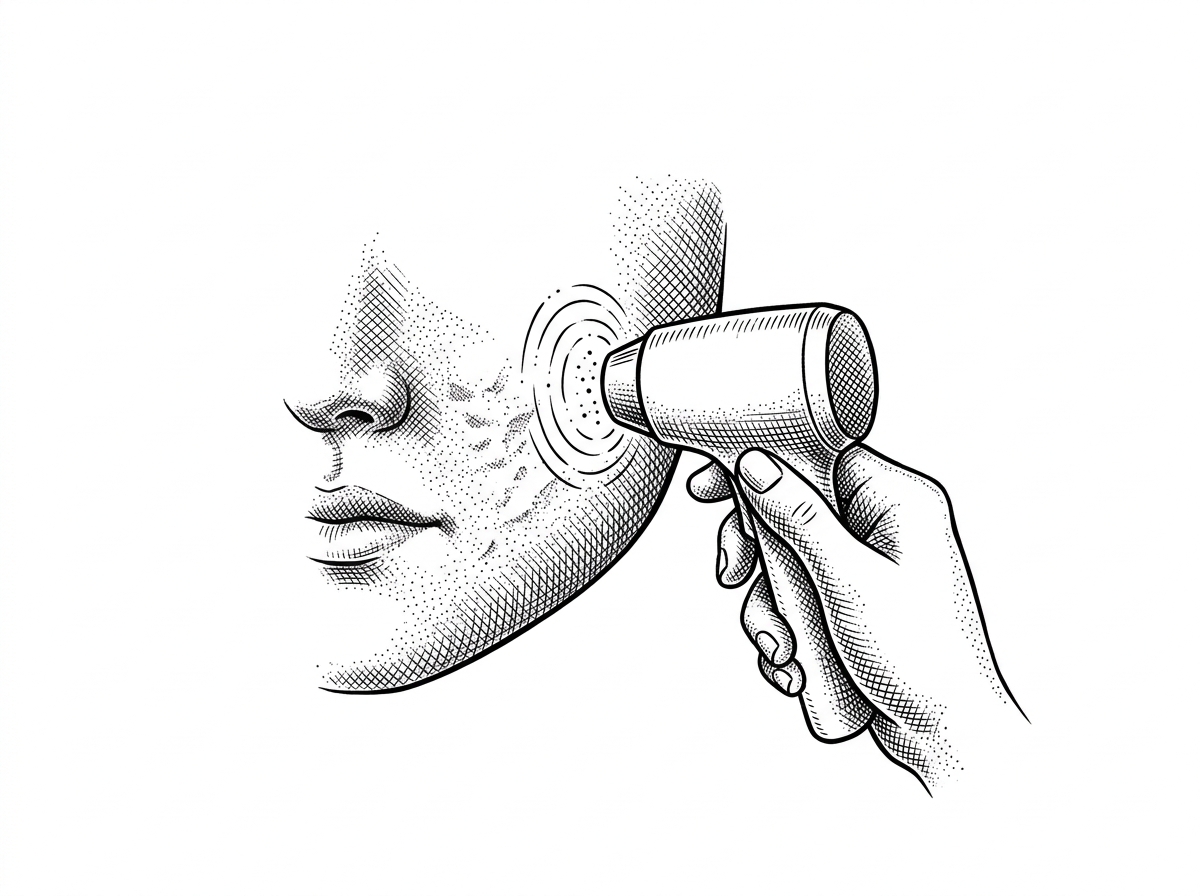
When laser energy is applied to a C-section scar, it creates controlled "micro-injuries." This triggers a secondary healing response, signaling the body to break down old, rigid scar tissue and replace it with new, organized collagen and elastic fibers. This process, known as collagen remodeling, is the gold standard for improving surgical scar laser treatment outcomes.

Ideal candidates for c section scar laser treatment
Not everyone is an immediate candidate for laser therapy. Clinical consensus suggests that the ideal candidate:
- Has a scar that is fully closed and free of infection.
- Is at least 6 months postpartum (to allow for natural scar maturation).
- Understands their Fitzpatrick skin type. Those with darker skin require specialized laser settings to prevent Post-Inflammatory Hyperpigmentation (PIH).
- Is not currently experiencing active skin diseases or infections in the abdominal area.
For those who are breastfeeding, most non-ablative lasers are considered safe, though it is vital to discuss the use of topical anesthetics with a provider.
Most effective laser modalities for surgical scars
Different lasers target different aspects of a scar. A specialist may use a combination of the following:
- Fractional CO2 Laser: This is an ablative technology that removes thin layers of skin while leaving "bridges" of untouched tissue to speed up healing. It is highly effective for smoothing texture and reducing thickness. Learn more about co2 laser scar removal.
- Pulsed Dye Laser (PDL): This laser targets the blood vessels (hemoglobin) within the scar. It is the primary choice for reducing the persistent redness or "erythema" often seen in new or hypertrophic scars.
- Pico Laser: Utilizing ultra-short pulses, Pico technology is often used for pigment correction and subtle texture refinement with very low downtime.
- Er:YAG Laser: A gentler alternative to CO2, the Erbium laser is often preferred for patients with lighter skin tones who require precision resurfacing.
More detailed insights into these technologies can be found in Scientific research on laser revision of scars.
Clinical Efficacy and Expected Outcomes
How much can a c section scar laser really change a scar? Clinical studies, including a randomized controlled split-scar trial, suggest that patients can expect a 50-80% improvement in the overall appearance of their scar.
While "removal" is a misnomer—scars are permanent alterations to the dermal structure—lasers excel at:
- Texture Smoothing: Breaking down the "cord-like" feel of surgical scars.
- Redness Reduction: Fading the pink or purple hues to match the surrounding skin.
- Pliability: Making the scar softer and less "tethered" to the underlying muscle or fascia.
A recent Scientific research on fractional CO2 for surgical scars meta-analysis confirmed that timing and technology choice significantly impact these percentages.
| Laser Type | Primary Target | Best For |
|---|---|---|
| Fractional CO2 | Water (Ablative) | Thick, raised, or textured scars |
| Pulsed Dye (PDL) | Hemoglobin (Vascular) | Redness and early hypertrophic scars |
| Non-Ablative Fractional | Water (Thermal) | Mild texture issues, low downtime |
Long-term expectations for c section scar laser results
Patience is a requirement in scar revision. Most clinical protocols involve 3 to 6 sessions, spaced roughly one month apart. Because collagen remodeling is a biological process, the full results of a treatment session may not be visible for 3 to 6 months.
Follow-up assessments at the 12-month mark often show continued improvement as the new collagen fibers organize themselves. For visual evidence of these transitions, clinicians often refer to co2 laser for surgical scars before and after documentation.
The Treatment Process: What to Expect
A typical c section scar laser session is a straightforward outpatient procedure that usually lasts about 30 minutes.
- Preparation: The area is cleaned, and a topical anesthetic (numbing cream) is applied for 30–60 minutes to ensure comfort.
- Protection: Both the patient and the clinician wear protective eyewear specific to the laser's wavelength.
- The Procedure: The clinician passes the laser handpiece over the scar. Patients often describe the sensation as a series of warm pinpricks or the snapping of a rubber band.
- Immediate Aftercare: A cooling gel or ointment is applied to the site to soothe the skin.
For more details on the clinical environment, see laser treatment for surgical scars.
Safety, Risks, and Post-Treatment Recovery
While generally safe, laser treatments are medical procedures with potential side effects. The most common reactions include transient erythema (temporary redness) and edema (swelling), which typically resolve within 3 to 7 days.
A significant concern, particularly for those with darker skin, is Post-Inflammatory Hyperpigmentation (PIH). This is a temporary darkening of the skin caused by the heat of the laser. To mitigate this risk, specialists may prescribe "bleaching" creams like hydroquinone before treatment or use lower energy settings.
Other considerations include:
- Sun Protection: The treated area must be strictly shielded from the sun to prevent permanent pigment changes.
- Antiviral Prophylaxis: Patients with a history of the herpes simplex virus may need medication, as the laser can trigger an outbreak.
- Infection: Rare, but possible if post-care instructions are not followed.
Clinical data on these risks is extensively documented in Scientific research on laser side effects.
Non-Surgical Alternatives and Complementary Therapies
Lasers are powerful, but they are often more effective when combined with other abdomen scar reduction methods.
- Microneedling & Radiofrequency (RF): These treatments use physical needles to create micro-channels, often combined with RF heat to tighten the skin. This is excellent for "crepey" skin around a C-section scar.
- Silicone Gel and Sheets: The medical gold standard for at-home care. Silicone hydrates the scar and provides occlusion, which helps flatten raised tissue.
- Steroid Injections: Often used for keloids or very thick hypertrophic scars to reduce inflammation and "melt" the excess collagen.
- Scar Massage: Once the incision is fully healed (usually around 6 weeks), gentle massage can help prevent the scar from adhering to the underlying tissue.
Frequently Asked Questions about C-Section Lasers
When is the best time to start laser treatment after a C-section?
While some studies suggest early intervention (as soon as 6–8 weeks) can prevent hypertrophic scarring, the clinical consensus for resurfacing is usually 6 to 12 months postpartum. This ensures the body's natural inflammatory response has subsided and the scar has reached "maturation."
Is laser treatment for C-section scars covered by insurance?
In the vast majority of cases, laser scar revision is classified as a cosmetic procedure and is not covered by insurance. However, if the scar causes documented functional impairment—such as severe pain, restricted movement, or nerve entrapment—some portions of the treatment or surgical revision might be considered. Most clinics offer financing options to manage out-of-pocket costs.
Can lasers effectively treat old C-section scars?
Yes. While younger scars (6–24 months) are often more "active" and responsive, older scars can still be improved. The laser's ability to trigger dermal remodeling is age-independent; it can still break down old collagen and stimulate new growth to improve texture and pliability, even years later.
Conclusion
Managing a C-section scar is a personal choice that involves balancing biological reality with aesthetic goals. C section scar laser technology offers a scientifically backed, non-invasive path toward significant improvement. Whether dealing with a new incision or a decade-old mark, evidence-based care and consultation with a specialist can help restore both the skin's appearance and the individual's confidence.
For more information on managing your recovery, explore our laser treatment for scars complete guide.
Works Cited
- Ji Q, Luo L, Ni J, et al. Fractional CO2 Laser to Treat Surgical Scars: A System Review and Meta-Analysis on Optimal Timing. J Cosmet Dermatol. 2025.
- Niessen FB, Spauwen PH, Schalkwijk J, Kon M. On the nature of hypertrophic scars and keloids: a review. Plast Reconstr Surg. 1999.
- StatPearls Publishing. Laser Revision of Scars. NCBI Bookshelf. 2023.
- Graber EM, Tanzi EL, Alster TS. Side effects and complications of fractional laser photothermolysis: experience with 961 treatments. Dermatol Surg. 2008.
This content is for informational purposes only and does not constitute medical advice. Consult a qualified healthcare professional for diagnosis and treatment.