Best Chemical Peel for Leg Scars and How They Work
Choosing the best chemical peel for leg scars depends on scar type, skin tone, and acid strength. Explore how glycolic, TCA, and other peels resurface leg tissue.

Mechanism of Action: How Chemical Solutions Resurface Leg Tissue
The best chemical peel for leg scars depends on scar type, skin tone, and acid composition — but clinical evidence points to a clear shortlist of effective options:
| Acid Type | Best For | Skin Tone Suitability |
|---|---|---|
| Glycolic acid (AHA) | Superficial atrophic scars, texture | All types; use caution on darker tones |
| Salicylic acid (BHA) | Acne scars, folliculitis-related marks | Fitzpatrick I-IV |
| Mandelic acid (AHA) | Pigmented scars, sensitive or darker skin | Fitzpatrick I-VI |
| Lactic acid (AHA) | Post-inflammatory hyperpigmentation | Fitzpatrick I-VI; clinically validated for darker tones |
| TCA (trichloroacetic acid) | Moderate-to-deep atrophic scars | Fitzpatrick I-IV; higher PIH risk in darker tones |
| Jessner's / VI Peel blends | Mixed scarring and pigmentation | All types when professionally administered |
Most people with leg scars have tried moisturizers, serums, and over-the-counter fade creams — often with limited results. This is partly a biology problem. Leg skin is typically thicker than facial skin, which means surface-level products rarely reach the dermal layer where scar tissue actually forms.
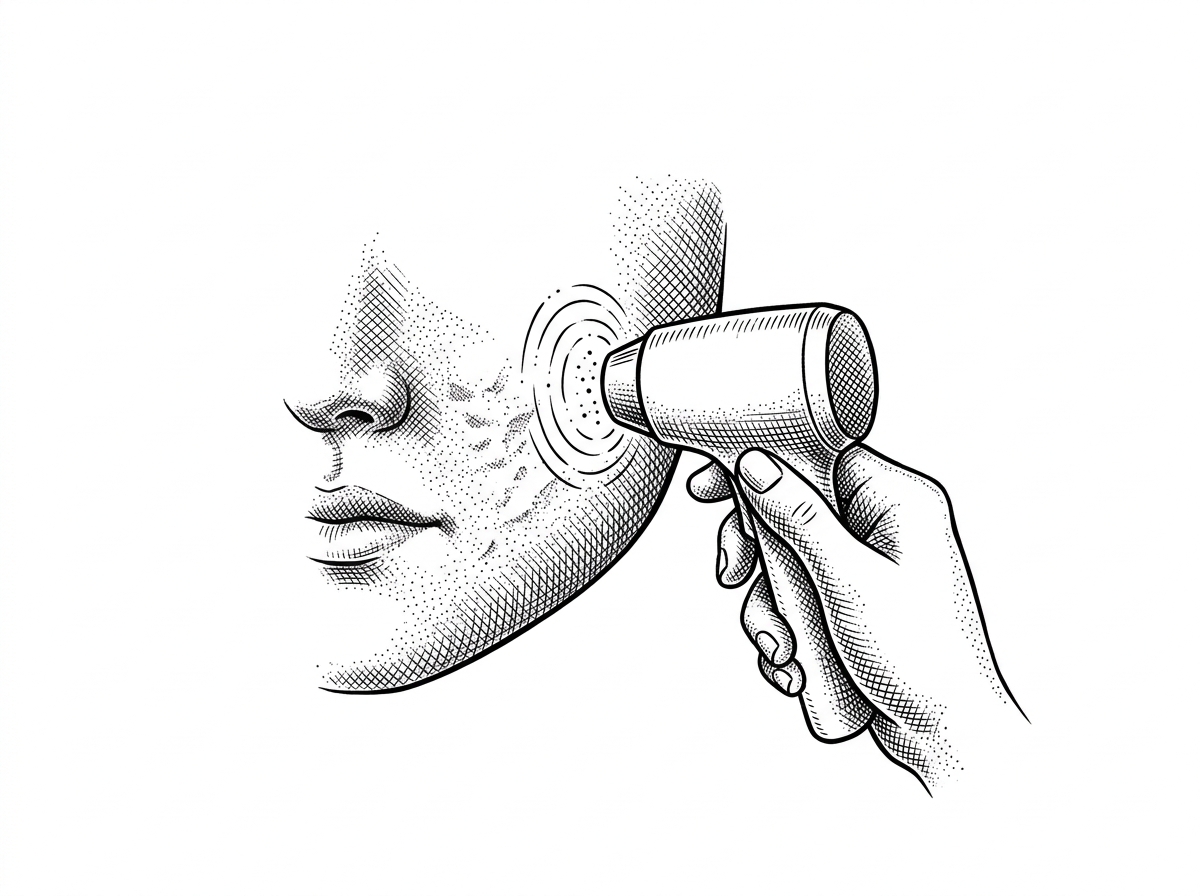
Chemical peels work differently. By applying an acid solution to the skin, they lower the skin's pH and trigger a controlled injury response — one that prompts the body to shed damaged surface cells and stimulate the production of new collagen and elastin beneath. This is not the same as passive exfoliation. It is a structured, depth-dependent process with measurable effects on scar tissue remodeling.
Evidence suggests that for most leg scar conditions — including post-acne marks, hyperpigmentation, and superficial atrophic scars — a series of 3 to 6 professionally administered or carefully selected at-home peels, spaced several weeks apart, produces the most clinically meaningful improvement. Deeper or older scars often require combination approaches.
This guide explains the science behind chemical peeling, reviews which acid types the evidence supports for leg scars specifically, and outlines realistic expectations based on scar type and skin tone.
Best chemical peel for leg scars vocabulary:
Chemical peels function by inducing a controlled chemical burn on the skin surface. When a specialized solution is applied to the legs, it initiates a rapid reduction in the skin's surface pH, typically moving from a natural 5.5 down to approximately 3.8 or lower. This acidic environment causes protein denaturation within the stratum corneum—the outermost layer of dead skin cells.
As the bonds between keratinocytes (skin cells) are dissolved, the damaged upper layers begin to shed. This process, known as desquamation, signals the underlying dermis to accelerate epidermal turnover. Beyond simple exfoliation, deeper-penetrating acids reach the papillary dermis to trigger fibroblast activation. Fibroblasts are the primary cells responsible for collagen synthesis and extracellular matrix remodeling. By stimulating these cells, chemical peels encourage the replacement of disorganized scar tissue with structured, healthy collagen fibers.
On the legs, specific concerns like "strawberry legs" (folliculitis) or hemosiderin staining (pigmentation from iron deposits in the skin) require targeted mechanisms. Certain acids, such as thioglycolic acid, act through hemosiderin chelation, effectively solubilizing iron deposits that contribute to persistent dark marks. Because leg skin responds as well to chemical peels as facial skin, these mechanisms can effectively address textural irregularities and dyspigmentation simultaneously.
Identifying the Best Chemical Peel for Leg Scars Based on Acid Composition
Selecting the best chemical peel for leg scars requires an understanding of acid categories and their molecular weights. Leg skin is characterized by a thicker epidermis and a different skin-to-fat ratio than the face, often necessitating higher concentration gradients or lower pH formulations to achieve therapeutic results.
Efficacy of TCA and Glycolic Acid as the Best Chemical Peel for Leg Scars
Trichloroacetic acid (TCA) is often considered the gold standard for scar revision due to its ability to cause protein coagulation. Unlike alpha-hydroxy acids (AHAs) which primarily exfoliate, TCA penetrates deeper into the dermis to denature keratin proteins, leading to a "frosting" effect where the skin turns white. This intense reaction is highly effective for atrophic (pitted) scars, as it forces a significant regenerative response.
Glycolic acid, derived from sugarcane, has the smallest molecular weight of all AHAs. This allows it to penetrate the skin quickly and deeply. Clinical observations indicate that glycolic acid is particularly effective for refining skin texture and addressing superficial acne scarring on the legs. When used in high-strength body exfoliants, often at concentrations of 30% to 50%, it can significantly improve the appearance of rough, scarred tissue.
Selecting the Best Chemical Peel for Leg Scars for Darker Skin Tones
For individuals with darker skin tones (Fitzpatrick types IV-VI), the primary risk associated with chemical peels is post-inflammatory hyperpigmentation (PIH). When the skin is injured too deeply or too quickly, melanocytes—the cells that produce pigment—can become overactive, leading to dark patches that are harder to treat than the original scar.
Mandelic acid is frequently recommended as the best chemical peel for leg scars on sensitive or dark skin. It has a molecular size approximately twice that of glycolic acid. This larger structure ensures slower, more uniform penetration, which significantly reduces the risk of irritation and PIH. Research indicates that mandelic acid also has antibacterial properties and can down-regulate melanocytes, making it an ideal choice for treating "exotic" skin tones or hyperpigmented scars on the legs. Lactic acid is another safe alternative, as it is a natural humectant that exfoliates while maintaining the skin's moisture barrier.

Clinical Considerations for Different Scar Types and Skin Tones
The success of a chemical peel is heavily influenced by the morphology of the scar being treated.
- Atrophic Scars: These indented scars (common after chickenpox or severe acne) respond best to TCA or glycolic acid peels that stimulate collagen to "fill" the depression from below.
- Hypertrophic Scars: Raised scars can be softened with repeated superficial peels, though they often require combination therapy with silicone or corticosteroids.
- Post-Inflammatory Hyperpigmentation (PIH): Dark marks left after injuries or insect bites respond well to lactic, mandelic, or citric acid peels which focus on pigment inhibition.
- Keloids: These are a major contraindication for chemical peels. Because keloids involve an overgrowth of scar tissue beyond the original wound, the controlled injury of a peel can actually trigger further keloid growth.
It is important to note that chemical peels do not effectively treat very deep scars or structural bulges. In such cases, surgical revision or laser therapy may be more appropriate.
Procedural Protocols: Application and Post-Treatment Recovery
Treating leg scars with chemical peels requires a strict protocol to ensure safety and efficacy. Because the legs have fewer sebaceous glands and a slower healing rate than the face, post-treatment care is critical.
- Patch Testing: Always perform a patch test on a small, inconspicuous area of the leg 48 hours before a full treatment to check for adverse reactions.
- Skin Preparation: Cleanse the area thoroughly. In some professional settings, a "pre-peel" solution containing low-strength retinol or hydroquinone may be used for several weeks to prepare the melanocytes.
- Application: The acid is applied in layers. For at-home products, the first application should typically last no more than one minute to gauge skin tolerance.
- Neutralization: Most AHAs require a neutralizer (often a sodium bicarbonate solution) to stop the acid's activity. Some peels, like certain TCA formulations, are self-neutralizing.
- Desquamation (Peeling): Within 3 to 7 days, the skin will begin to flake or peel. It is imperative not to pick or pull at this skin, as doing so can lead to new scarring or PIH.
Post-peel hydration is essential. Use thick, fragrance-free moisturizers and avoid sun exposure entirely during the healing phase. Leg skin is highly susceptible to UV damage post-peel, so an SPF 30+ mineral sunscreen should be applied daily.
Comparative Efficacy: Chemical Peels vs. Alternative Resurfacing Modalities
While chemical peels are a versatile tool for leg scar revision, they are often compared to fractional lasers and microneedling.
| Modality | Depth of Injury | Primary Benefit | Downtime |
|---|---|---|---|
| Chemical Peel | Superficial to Medium | Pigmentation & Texture | 3–14 days |
| Microneedling | Deep (Dermal) | Collagen Induction | 1–3 days |
| Fractional CO2 Laser | Deep (Dermal) | Severe Scar Remodeling | 7–14 days |
Chemical peels generally offer a better cost-benefit ratio for pigmentation and superficial texture issues. However, for deep structural scars, microneedling or fractional lasers may provide more significant collagen remodeling by creating physical micro-channels deeper into the dermis.
Frequently Asked Questions
How many sessions are required for significant leg scar reduction?
Clinical observations suggest a series of 3 to 6 treatments, spaced 4 to 6 weeks apart, are typically necessary for noticeable remodeling of leg scar tissue. Stubborn hyperpigmentation or older scars may require a longer maintenance plan.
Are deep chemical peels safe for the legs?
Deep peels, such as high-concentration phenol, are generally avoided on the legs. The skin on the lower extremities has a lower density of hair follicles and sweat glands (which provide the stem cells needed for re-epithelialization), leading to a higher risk of delayed healing, infection, and systemic absorption of the chemicals.
Can chemical peels treat old or white (striae alba) scars on the legs?
Chemical peels are most effective for pigmented (red or brown) and superficial textural scars. Older white scars, which lack pigment and have dense, stagnant collagen, are notoriously difficult to treat with peels alone. They may require combination therapy with microneedling to stimulate new melanocyte activity.
Conclusion
Chemical peels remain a cornerstone of evidence-based dermatology for leg scar revision. By selecting the appropriate acid—whether it be the deep-reaching TCA or the gentle, pigment-regulating mandelic acid—patients can achieve significant improvements in skin clarity and texture. For those unsure of their scar type, a Scar Assessment can help determine the best path toward tissue regeneration and healing.
Works Cited
- Gupta, S., et al. "10% Thioglycolic Acid Peel in the Treatment of Pigmented Purpuric Dermatoses: A Pilot Study." Journal of Cutaneous and Aesthetic Surgery.
- Fitzpatrick, T. B. "The Validity and Practicality of Sun-Reactive Skin Types I Through VI." Archives of Dermatology.
- FDA. "Alpha Hydroxy Acids in Cosmetics." U.S. Food and Drug Administration Guidelines.
- American Academy of Dermatology (AAD). "Acne Scars: Diagnosis and Treatment." AAD clinical resources.
- Roberts, W. E. "Chemical Peeling in Ethnic/Dark Skin." Dermatologic Therapy.
Disclaimer: This content is for informational purposes only and does not constitute medical advice. Consult a qualified healthcare professional for diagnosis and treatment.