Pitting Microneedling Against Scars for Smoother Skin
Atrophic scars respond well to microneedling therapy. Discover how this minimally invasive procedure stimulates your skin's natural repair process to improve pitted and depressed scars.

Why Atrophic Scar Microneedling Therapy Is Worth Understanding Before Choosing a Treatment
Atrophic scar microneedling therapy is a minimally invasive procedure that uses fine needles to stimulate the skin's natural repair process — and clinical evidence suggests it can reduce the appearance of depressed acne scars by 50–70% over a course of treatments.
For anyone weighing their options, here is a quick summary:
| Question | Quick Answer |
|---|---|
| What does it treat? | Depressed (atrophic) acne scars — rolling, boxcar, and icepick types |
| How does it work? | Fine needles create controlled micro-injuries that trigger collagen production |
| How many sessions? | Typically 3–6 sessions, spaced 2–4 weeks apart |
| Who can use it? | Most skin types, including darker tones (Fitzpatrick III–V) |
| Is it safe? | Evidence suggests a strong safety profile; side effects are generally mild and short-lived |
| How does it compare? | Less downtime than ablative lasers; may be more cost-effective than many alternatives |
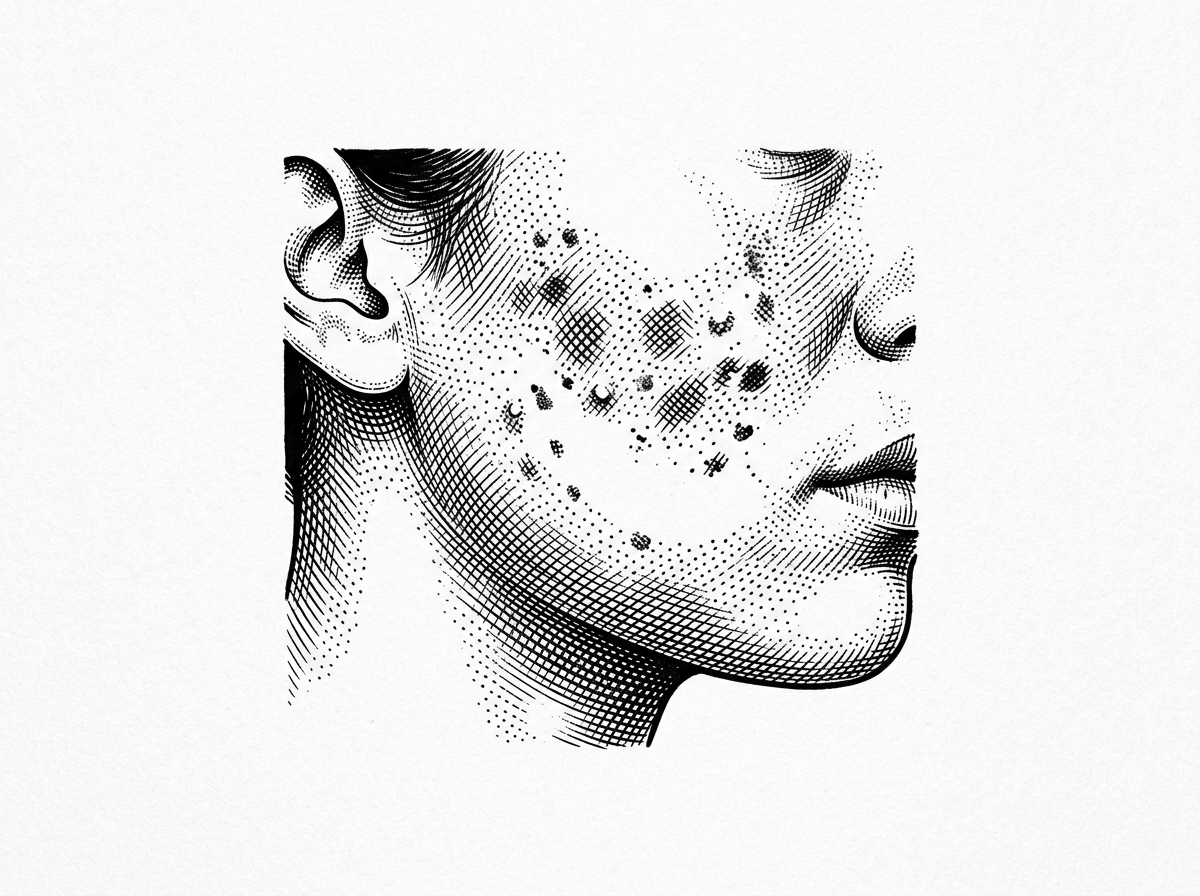
Acne is one of the most common skin conditions worldwide, affecting up to 80% of adolescents. For roughly 1 in 10 people with acne vulgaris, it leaves behind atrophic scars — depressed marks caused by tissue loss during the inflammatory healing process. These scars can persist for years and, for many people, quietly erode confidence in social and professional settings.
Treating atrophic scars has long been a clinical challenge. Lasers, chemical peels, dermabrasion, and fillers all have roles — but each comes with trade-offs in downtime, risk, and accessibility. Microneedling, also called percutaneous collagen induction (PCI) therapy, has emerged as a well-studied option that works with the skin's own biology rather than removing or replacing tissue.
The core idea is straightforward: controlled injury prompts repair. Research indicates microneedling can stimulate significant increases in collagen types I, III, and VII, thicken the epidermis, and improve overall skin texture — all without removing the outer layer of skin.
Understanding how and why it works — and where its evidence is strong versus limited — helps set realistic expectations before committing to any treatment path.
This content is for informational purposes only and does not constitute medical advice. Consult a qualified healthcare professional for diagnosis and treatment.
Discover more about atrophic scar microneedling therapy:
Mechanism of Atrophic Scar Microneedling Therapy
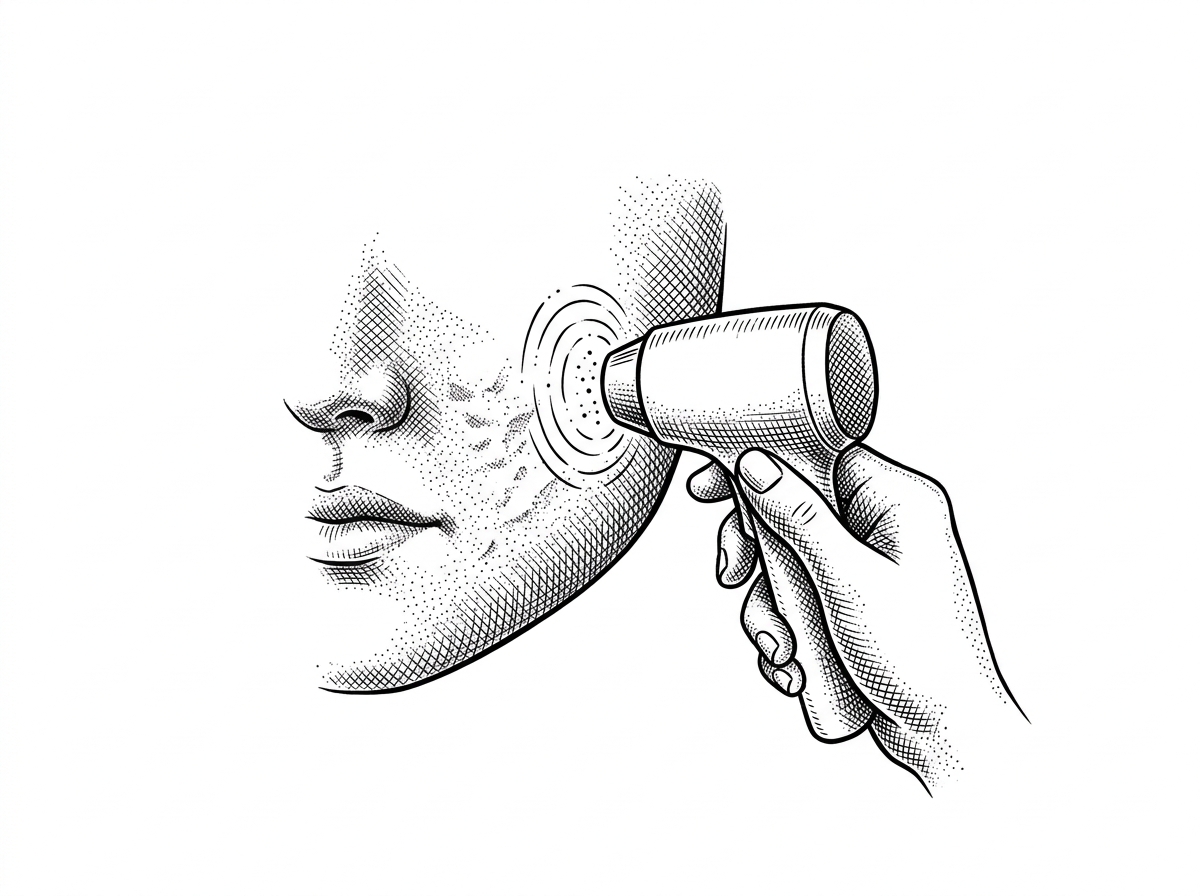
To understand how atrophic scar microneedling therapy works, one must look beneath the surface at the skin's regenerative capacity. When a professional device—whether a manual dermaroller or an automated pen—punctures the skin, it creates thousands of microscopic "micro-injuries." These punctures are deep enough to reach the dermis but fine enough to leave the epidermis largely intact.
This controlled trauma triggers a cascade of biological events known as percutaneous collagen induction. The process begins with the release of growth factors that activate fibroblasts, the cells responsible for creating the skin's structural framework. According to scientific research on histological changes, these micro-injuries lead to a significant increase in several key components of the extracellular matrix.
The histological evidence is compelling. Studies have shown that after three months of treatment:
- Epidermal thickness can increase significantly, with one study showing a rise from 63 µm to over 80 µm.
- Collagen Type I levels, the most abundant collagen in the skin, have been observed to increase by approximately 16.5%.
- Collagen Type III and VII levels also see marked improvements, which are essential for structural integrity and the anchoring of skin layers.
- Tropoelastin synthesis increases, providing the "snap-back" quality to the skin, while total elastin (often associated with aged or sun-damaged skin) may actually decrease as part of the healthy remodeling process.
Unlike older methods that essentially "sand down" the skin, microneedling preserves the skin barrier function. Because the needle channels close within hours, the risk of infection is low, and the body begins synthesizing new, healthy tissue immediately.
Clinical Efficacy Across Different Scar Morphologies
Not all scars are created equal, and their shape dictates how they respond to atrophic scar microneedling therapy. Dermatologists typically categorize atrophic scars into three main types: rolling, boxcar, and icepick.
Rolling Scars
These scars appear as broad depressions with sloping edges, giving the skin an undulating or "wavy" appearance. Clinical observations show that rolling scars often respond best to microneedling. Because they are caused by fibrous bands pulling the skin down from below, the repetitive vertical needling helps break up these bands and fill the depressions with new collagen.
Boxcar Scars
Boxcar scars are round or oval depressions with sharp, vertical edges. Research indicates that shallow boxcar scars show "good to very good" improvement with microneedling. However, very deep boxcar scars may require more sessions or combination therapies to achieve the desired level of smoothness.
Icepick Scars
These are narrow, deep, V-shaped scars that look as though the skin has been punctured by a sharp instrument. While scientific research on scar improvement rates shows that icepick scars do improve, the response is often more moderate compared to rolling scars. This is because the damage in icepick scars often extends deeper into the dermis than a standard needle might reach effectively.
Measuring Success
To quantify these results, researchers use standardized tools like the Goodman-Baron scale or the Lipper-Perez score. In one study of 31 patients, the mean Goodman and Baron grade dropped from 3.29 (severe) to 1.77 (mild to moderate) after three months of treatment. Beyond the numbers, patient satisfaction remains high; studies frequently report that over 80% of participants are "very satisfied" with the texture refinement and overall appearance of their skin post-therapy.
Comparing Atrophic Scar Microneedling Therapy to Alternative Resurfacing
When evaluating scar resurfacing options, it is helpful to compare microneedling against the "gold standards" of dermatology.
| Feature | Microneedling | Fractional CO2 Laser | Chemical Peels (TCA) |
|---|---|---|---|
| Action | Physical micro-injury | Thermal (heat) injury | Chemical exfoliation |
| Epidermis | Stays intact | Partially removed | Partially removed |
| Downtime | 24–48 hours | 5–10 days | 3–7 days |
| PIH Risk | Very low | Moderate to high | Moderate |
| Anesthesia | Topical cream | Topical + sometimes local | Usually none/Topical |
Ablative vs. Non-Ablative
Ablative lasers work by vaporizing the top layers of skin. While effective, they carry a significant risk of post-inflammatory hyperpigmentation (PIH), especially in patients with darker skin. Atrophic scar microneedling therapy is non-ablative, meaning it leaves the surface of the skin intact. This results in a much shorter erythema (redness) duration—usually resolving in just 1 to 2 days—compared to the weeks of redness possible with laser treatments.
The Cryoroller and Subcision Synergy
Newer variations like the "cryoroller"—which uses liquid nitrogen to cool the skin during needling—have shown promising results, sometimes outperforming standard microneedling in quantitative scar reduction. However, one of the most effective strategies is combining microneedling with subcision. Subcision involves using a needle to manually release the fibrous tethers under a scar. A study of 45 patients found that this combination led to at least one grade of improvement in over 95% of participants.
Professional Protocols and Safety Considerations
While the concept of needles in the skin might seem simple, professional atrophic scar microneedling therapy is a precise medical protocol.
Professional vs. At-Home Devices
There is a significant gap between professional treatments and at-home rollers. Professional devices used by dermatologists typically utilize needles ranging from 1.5mm to 2.0mm for atrophic scars. At-home devices are generally limited to 0.25mm or 0.5mm. While shorter needles can help with product absorption, they do not reach the deep dermis where scar-remodeling collagen is produced. Furthermore, professional environments ensure a sterile technique, preventing the risk of infection or "track-mark" scarring caused by poor-quality needles.
Fitzpatrick Skin Types and Safety
One of the greatest advantages of microneedling is its safety profile across all Fitzpatrick skin types (I–VI). Because the procedure does not use heat and does not damage the melanocytes (pigment-producing cells), the risk of hyperpigmentation is minimal. Studies in Vietnamese and Indian populations have confirmed that microneedling is a safe, effective option for those with darker skin tones who might otherwise be at risk from laser therapy.
Contraindications and Care
Ideal candidates are those with stable, non-active acne and realistic expectations. Contraindications include:
- Active skin infections or herpes simplex outbreaks.
- A history of keloid (raised) scarring.
- Recent use of isotretinoin (usually within the last 6 months).
- Poor wound healing or immunosuppression.
Pre-treatment care often involves stopping retinoids a few days prior. Post-treatment, strict photoprotection (sunscreen) is mandatory, as the skin is temporarily more sensitive to UV damage. For more detailed insights into professional standards, you can find more info about scar healing services.
Frequently Asked Questions about Atrophic Scar Microneedling Therapy
How many sessions of atrophic scar microneedling therapy are required for visible results?
Most patients require a series of 3 to 6 sessions to see a significant transformation. These are typically spaced 2 to 4 weeks apart. While some initial "glow" may be visible shortly after the first session, the real work of collagen remodeling takes time. Newly synthesized collagen can continue to form for 3 to 6 months after the final treatment, meaning results often continue to improve long after the sessions have ended.
Is atrophic scar microneedling therapy safe for darker skin tones?
Yes. Clinical data, including studies on patients with Fitzpatrick types III–V, shows that microneedling is exceptionally safe for darker skin. Unlike lasers, which can accidentally target the melanin in the skin and cause light or dark spots, microneedling only targets the physical structure of the dermis. Research specifically focused on Vietnamese patients found zero cases of long-term hyperpigmentation after treatment.
What is the difference between professional and at-home atrophic scar microneedling therapy?
The primary differences are needle depth, sterility, and safety. Professional microneedling is performed under dermatologist supervision using medical-grade stainless steel needles that penetrate deep enough to break up scar tissue. At-home rollers are often made of lower-quality materials that can dull or hook, causing "micro-tears" rather than clean punctures. Additionally, the risk of infection is significantly higher when needles are reused in a home environment without medical-grade sterilization.
Conclusion
The journey to smoother skin is rarely a sprint, but atrophic scar microneedling therapy offers a scientifically backed marathon route. By harnessing the body’s innate wound-healing response, it provides a way to rebuild the skin from the inside out.
Whether used as a standalone treatment or as part of a multimodality approach—perhaps paired with subcision or radiofrequency—microneedling stands out for its balance of efficacy and safety. It remains one of the few high-impact resurfacing options that offers significant texture improvement with minimal downtime and almost no risk of pigment changes. For those living with the physical reminders of past acne, this therapy represents a reliable path toward tissue remodeling and renewed confidence.
For those looking to explore further resources on skin regeneration and recovery, visit more info about scar healing services.
This content is for informational purposes only and does not constitute medical advice. Consult a qualified healthcare professional for diagnosis and treatment.