How to Fade Ankle Scars After Surgery
Ankle surgery scars can be improved with the right treatment plan. Discover evidence-based options from laser therapy to topical treatments offered at specialized scar clinics.

What an Ankle Scar Fading Clinic Can Do for Surgical Scars
An ankle scar fading clinic specializes in reducing the appearance of scars left by ankle surgery, injury, or trauma — using evidence-based treatments ranging from laser therapy to topical silicone and corticosteroid injections.
Quick answers for those looking to act now:
- When to start treatment: Wait until the wound is fully closed — ideally around 6 months post-surgery — before beginning laser or advanced interventions
- Most effective non-invasive options: Laser therapy (especially 1064nm wavelength), silicone gel, scar massage, and sun protection
- Realistic improvement: Clinical evidence suggests 60–80% improvement in scar appearance is achievable, depending on scar type and treatment approach
- How many sessions: Typically 2–5 laser sessions, spaced weeks apart, for noticeable collagen remodeling
- Can scars be fully removed? No — scar tissue cannot be completely eliminated, but its appearance can be significantly reduced
- Who benefits most: Non-smokers in good general health, with mature scars that are pliable and stable
Ankle surgery — particularly ankle arthroscopy, a minimally invasive procedure using incisions less than half a centimeter — leaves behind scars that are generally small but still visible and sometimes uncomfortable. For many people, these marks are more than a cosmetic concern. They can affect confidence, serve as persistent reminders of injury or trauma, and in some cases cause tightness, itching, or restricted movement.
Scar formation is a biological certainty. As one clinical observation puts it plainly: any time surgery is performed, there is a 100% chance of some scar forming. What varies — and what treatment can influence — is how that scar looks, feels, and functions over time.
The good news is that scar tissue is not static. Collagen remodeling continues for up to 18 months after an injury, which means there is a meaningful window during which targeted interventions can shift how a scar develops.
This guide explains the biology behind ankle scar formation, the types of scars that can develop, and what current evidence says about the most effective strategies for fading them — whether through home care, clinic-based laser therapy, or advanced revision procedures.
This content is for informational purposes only and does not constitute medical advice. Consult a qualified healthcare professional for diagnosis and treatment.
Biology of Healing After Ankle Arthroscopy
Ankle arthroscopy has become a cornerstone of modern orthopedics. This minimally invasive technique allows surgeons to address complex joint issues — such as ligament tears, bone spurs, or cartilage damage — through incisions that are often less than 0.5 cm in diameter. While these small "portals" significantly reduce trauma compared to traditional open surgery, the body still responds to these micro-injuries with a complex cascade of biological events.
The healing process begins with the inflammation phase, occurring immediately after the incision. During this time, the body sends specialized cells to the site to prevent infection and clear debris. Following this, the proliferation phase sees fibroblasts (the primary connective tissue cells) migrating to the wound to produce an extracellular matrix of collagen. This new tissue acts as a "scaffold" to close the gap.
However, the collagen produced during initial repair is different from the collagen in healthy skin. It is often laid down in a haphazard, dense pattern, which results in the characteristic look and feel of a scar. Mark D. Fisher, M.D. Scar Revision | Johns Hopkins Medicine notes that a scar is essentially the body's natural way of replacing lost or damaged skin with fibrous tissue.
The final and longest stage is collagen remodeling. During this period, which can last up to two years, the body slowly replaces the initial, disorganized collagen with a more organized structure. Clinical observations suggest that the tensile strength of a scar never reaches 100% of the original skin's strength, usually peaking at about 80%. In the ankle, this process is complicated by constant movement and mechanical tension, which can influence how much scar tissue the body produces.
Identifying Scar Types at an Ankle Scar Fading Clinic
When visiting an ankle scar fading clinic, the first step is a professional evaluation to determine the specific type of scar tissue present. Because the skin around the ankle is thin and under frequent tension from walking and joint rotation, different types of scars can form:
- Hypertrophic Scars: These are raised, red, and firm marks that remain within the boundaries of the original incision. They often develop within weeks of surgery but may naturally flatten or fade over 12 to 18 months.
- Keloid Scars: Unlike hypertrophic scars, keloids grow beyond the edges of the original wound. They are thick, irregular clusters of scar tissue that can be painful or itchy. Research indicates that individuals with darker skin tones or red hair may have a higher genetic predisposition to keloids.
- Atrophic Scars: These appear as small depressions or "pitted" areas, often occurring if there was a loss of underlying fat or muscle tissue during the healing process.
- Contractures: These are more severe scars that pull the edges of the skin together, potentially affecting the underlying muscles, joints, and tendons. In the ankle, a contracture can significantly restrict range of motion.

The appearance of these scars is influenced by several factors, including the direction of the surgical wound, the patient's age, and mechanical shear forces. For a deeper understanding of these variations, experts often refer to resources like the Watch on Scar Revision | Johns Hopkins Medicine video series, which details how fibrous tissue accumulation differs among patients.
Evidence-Based Laser Therapy for Ankle Scars
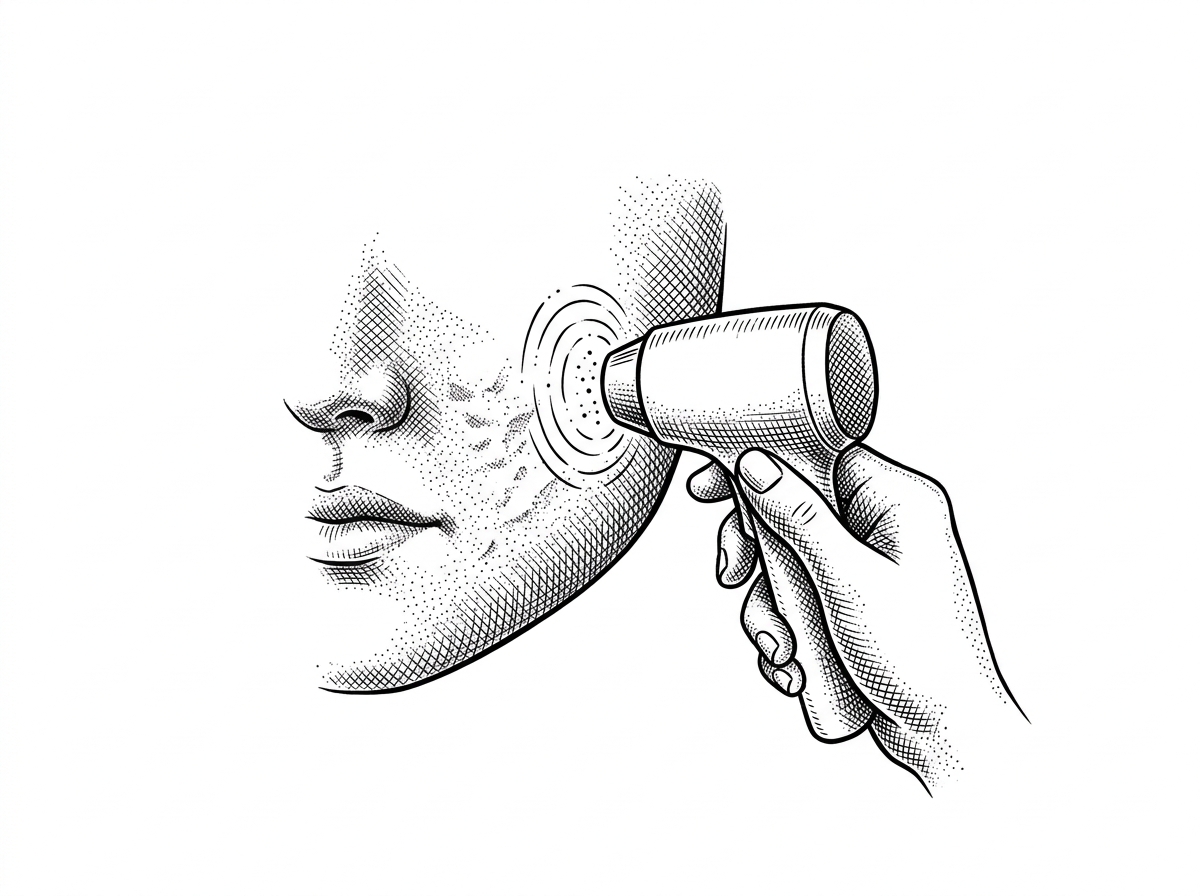
Laser therapy is widely considered one of the most effective non-invasive methods for scar reduction. At an ankle scar fading clinic, specialists use light energy to penetrate the skin and stimulate the body’s natural regenerative processes.
One of the most common technologies used is the 1064nm Nd:YAG laser (often branded as Laser Genesis). This specific wavelength is highly effective because it penetrates deep into the papillary dermis. By gently heating the upper dermis, it stimulates the production of new collagen (neocollagenesis) and reorganizes existing fibers. This process helps to soften the texture of the scar and reduce redness by targeting the microvasculature (small blood vessels) within the tissue.
Another advanced option is the MLS Robotic Laser, which is frequently used in podiatry settings to treat both inflammation and scar tissue simultaneously. For more significant texturing issues, Fractional CO2 lasers create microscopic columns of thermal damage, prompting the skin to replace old scar tissue with fresh, healthy cells.
Comparison of Laser Modalities for Ankle Scars
| Laser Type | Mechanism | Best For | Recovery Time |
|---|---|---|---|
| Non-Ablative (e.g., 1064nm) | Heats tissue without removing surface skin | Redness, mild texture, safe for all skin tones | Minimal (hours of redness) |
| Ablative (e.g., Fractional CO2) | Removes thin layers of skin surface | Deep scars, significant thickening, contractures | 5–7 days of peeling |
| Vascular Laser (e.g., V-Beam) | Targets hemoglobin in blood vessels | Bright red or purple "fresh" scars | Minimal |
Clinical data suggests that 3 to 5 sessions are typically required for noticeable improvement. While results vary, many patients see a 60% to 80% improvement in the scar's color and height after a full course of treatment.
Safety and Efficacy in an Ankle Scar Fading Clinic
A primary concern for many patients is whether laser treatment is safe for their specific skin type. Clinicians use the Fitzpatrick scale to assess skin pigment levels. For patients with darker skin tones, non-ablative lasers are generally preferred because they have a lower risk of causing post-inflammatory hyperpigmentation (PIH).
The sensation of laser scar treatment is often described as a mild "rubber band snap" or a warm tingling. Most modern systems incorporate cooling mechanisms to protect the skin surface and ensure patient comfort. Because these treatments are non-invasive, there is typically no downtime, allowing patients to return to their daily activities immediately.
Topical and Manual Management Strategies
While clinical treatments are powerful, daily home care plays a vital role in how an ankle scar matures. Evidence-based topical treatments focus on two main goals: hydration and the reduction of mechanical tension.
- Silicone Gel and Sheeting: Clinical guidelines frequently recommend medical-grade silicone as a first-line therapy. Silicone creates a protective barrier that mimics the skin's natural occlusion, reducing transepidermal water loss. This hydration tells the fibroblasts to "slow down" collagen production, which helps flatten raised scars.
- Scar Massage: Once the incision is fully closed and sutures are removed, gentle massage can be highly beneficial. Massaging the scar for approximately 5 minutes, 2 to 3 times a day, helps break up dense fibrous bands and improves the pliability of the tissue.
- Polyurethane Dressings: Similar to silicone, these specialized dressings provide pressure and hydration, which can be particularly useful for preventing hypertrophic growth in the early months after surgery.
According to the Clinical guidance on post-surgical wound care, keeping the wound moist with petroleum jelly or specialized ointments during the initial two-week healing phase is one of the most effective ways to minimize the eventual scar's size.
When to Consult an Ankle Scar Fading Clinic for Revision
If non-invasive methods like silicone and massage do not yield results after several months, more advanced medical interventions may be necessary. An ankle scar fading clinic may offer:
- Corticosteroid Injections: These are highly effective for keloids and hypertrophic scars. The steroids break down the bonds between collagen fibers, causing the scar to shrink and soften. Injections are typically repeated every 4 to 6 weeks.
- Cryotherapy: Using liquid nitrogen to freeze the scar tissue from the inside out can be combined with steroid injections to improve efficacy.
- 5-Fluorouracil (5-FU): An injectable medication that inhibits the overproduction of fibroblasts.
- Surgical Revision: In cases of functional impairment or severe contracture, a surgeon may perform a Z-plasty or W-plasty. These techniques involve re-orienting the scar to follow the natural lines of the skin, reducing tension and making the mark less conspicuous.
Experts generally advise waiting 12 to 18 months for a scar to fully "mature" before opting for surgical revision, as many scars improve significantly on their own during this period.
Lifestyle Factors Influencing Dermal Repair
The body’s ability to repair skin is not just about what is applied topically; it is also heavily influenced by internal health and lifestyle choices.
- Smoking Cessation: Smoking is perhaps the most detrimental habit for wound healing. Nicotine causes vasoconstriction, which reduces oxygen delivery to the healing tissue. Research indicates that smokers have a significantly higher risk of wound dehiscence (opening) and wider, more prominent scars. Most surgeons recommend quitting at least four weeks before surgery.
- Nutrition: A diet rich in protein is essential for providing the building blocks of new tissue. Vitamins C and D, along with the mineral zinc, are critical co-factors in collagen synthesis.
- UV Protection: New scar tissue is extremely sensitive to sunlight. UV exposure can cause permanent hyperpigmentation, turning a scar dark brown or deep red. Specialists recommend applying an SPF 30+ sunscreen to the ankle for at least one year following surgery.
For more information on the standard recovery protocols, patients can review the Latest research on ankle arthroscopy recovery provided by leading medical institutions.
Frequently Asked Questions about Ankle Scar Recovery
Can ankle scars be completely removed?
No. Once the dermis (the deeper layer of skin) is damaged, the resulting scar tissue is a permanent change to the skin's structure. However, "fading" is a very realistic goal. Through a combination of laser therapy, silicone, and proper wound care, a professional ankle scar fading clinic can often achieve a 60% to 80% improvement in appearance, making the scar blend significantly better with the surrounding skin tone and texture.
When is the best time to start laser treatment?
While immediate wound care starts on day one, laser treatments for fading are usually most effective once the scar has entered the remodeling phase. Many clinicians recommend waiting until the scar is at least 6 months old. However, vascular lasers that target redness can sometimes be used earlier if the wound is fully closed and the surgeon provides clearance.
Does smoking affect ankle scar healing?
Yes, significantly. Nicotine reduces blood flow to the skin, which starves the healing wound of oxygen and nutrients. This not only slows down the healing process but also increases the risk of infection and can lead to the formation of wider, thicker, and more unsightly scars. Clinical consensus suggests that the best outcomes are seen in patients who remain smoke-free throughout the entire maturation period (12–18 months).
Conclusion
Fading an ankle scar is a journey that requires patience and a multi-faceted approach. From the initial 0.5 cm incisions of an arthroscopy to the long-term remodeling of collagen fibers, the body’s healing process is a biological marvel that can be guided with the right interventions. By combining professional care at an ankle scar fading clinic with diligent home management like silicone therapy and sun protection, most patients can achieve a result that is both functionally comfortable and aesthetically pleasing.
Understanding the biology of your skin and setting realistic expectations are the first steps toward successful regeneration. Whether your scar is new or years old, modern medical technology offers more options than ever before to help your skin look its best.
For more evidence-based resources on tissue remodeling and skin health, visit Scar Healing.
This content is for informational purposes only and does not constitute medical advice. Consult a qualified healthcare professional for diagnosis and treatment.